Source: Wikimedia Commons
Dyeing Poison Frog
IntermediateDendrobates tinctorius
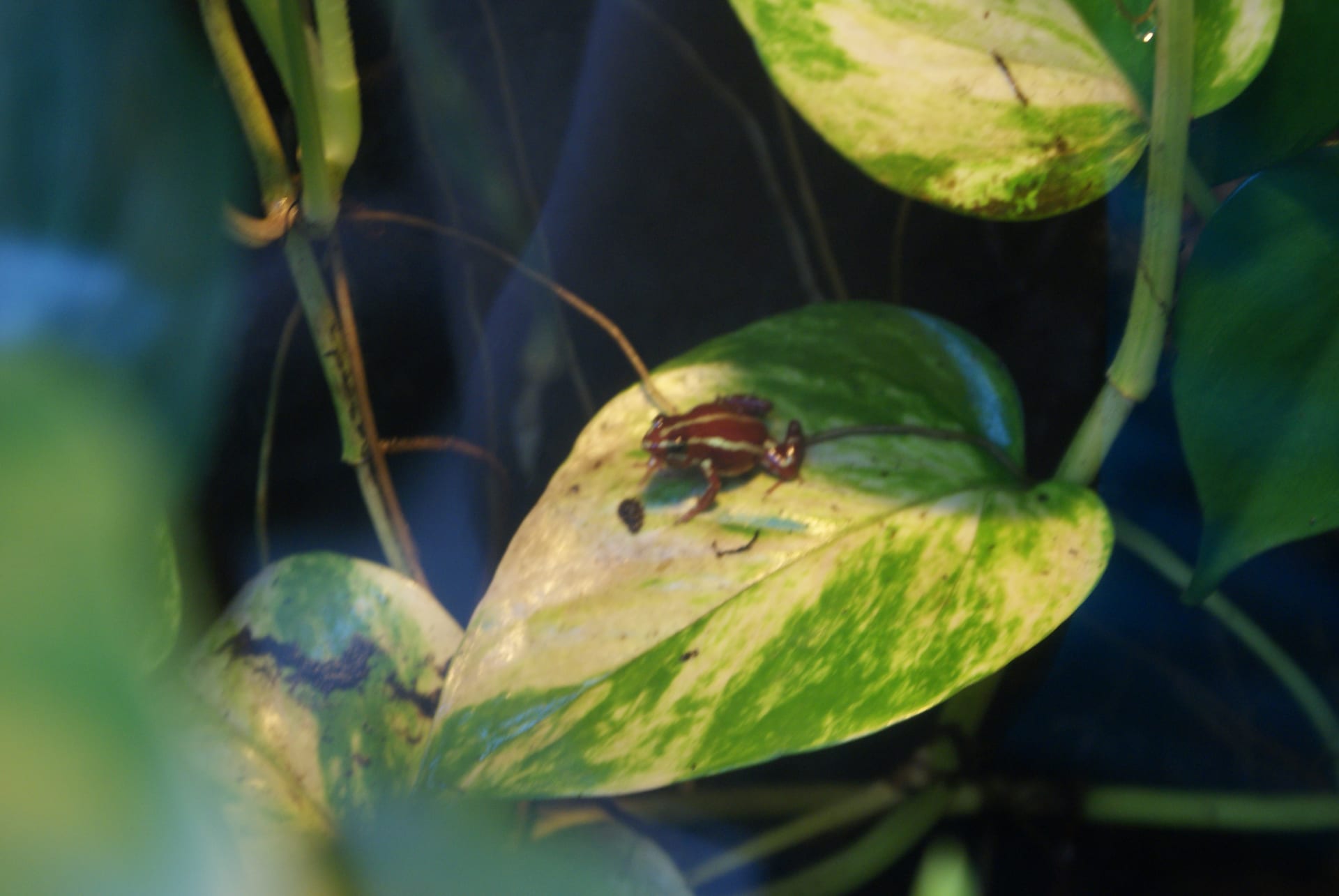
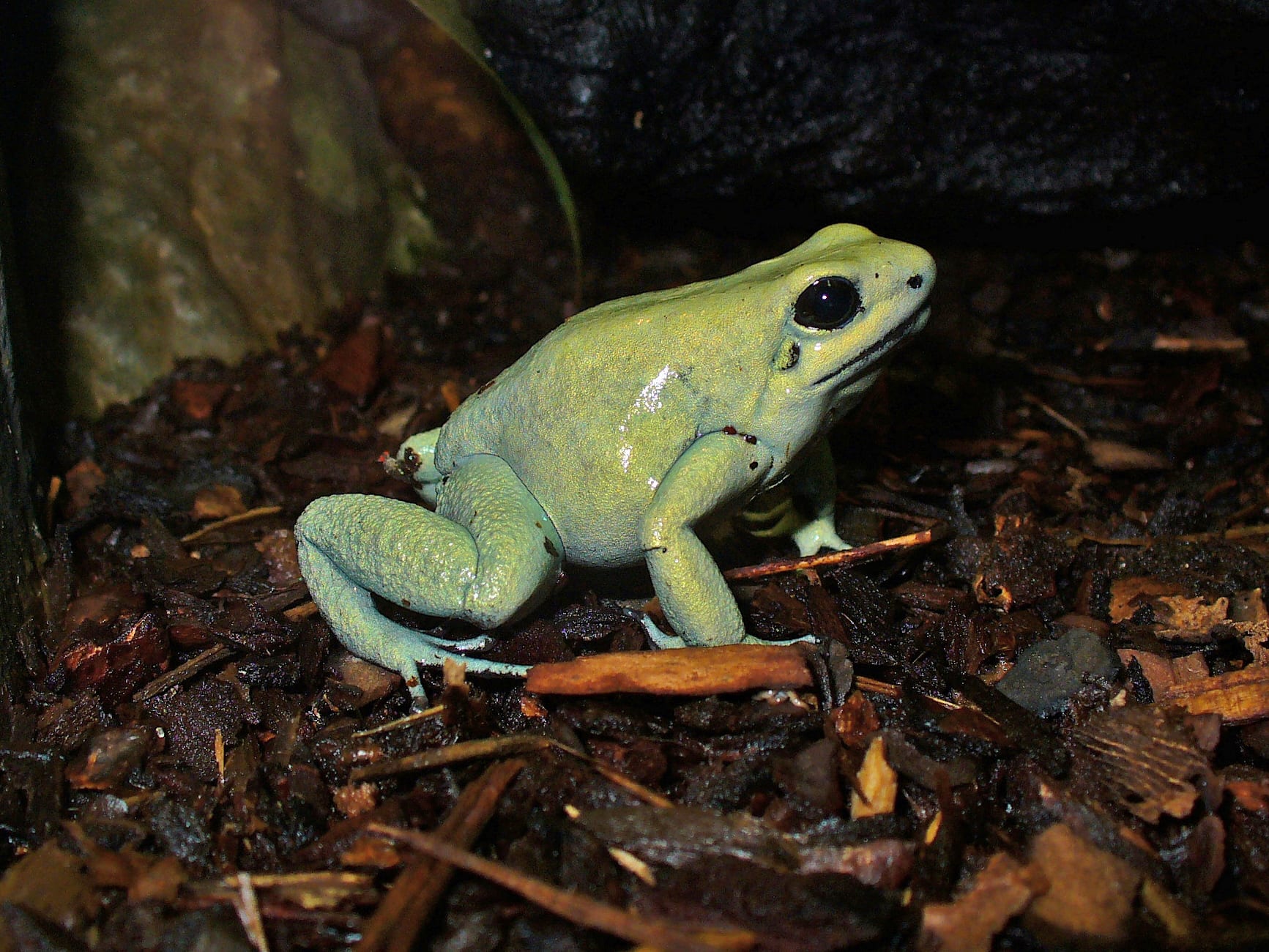
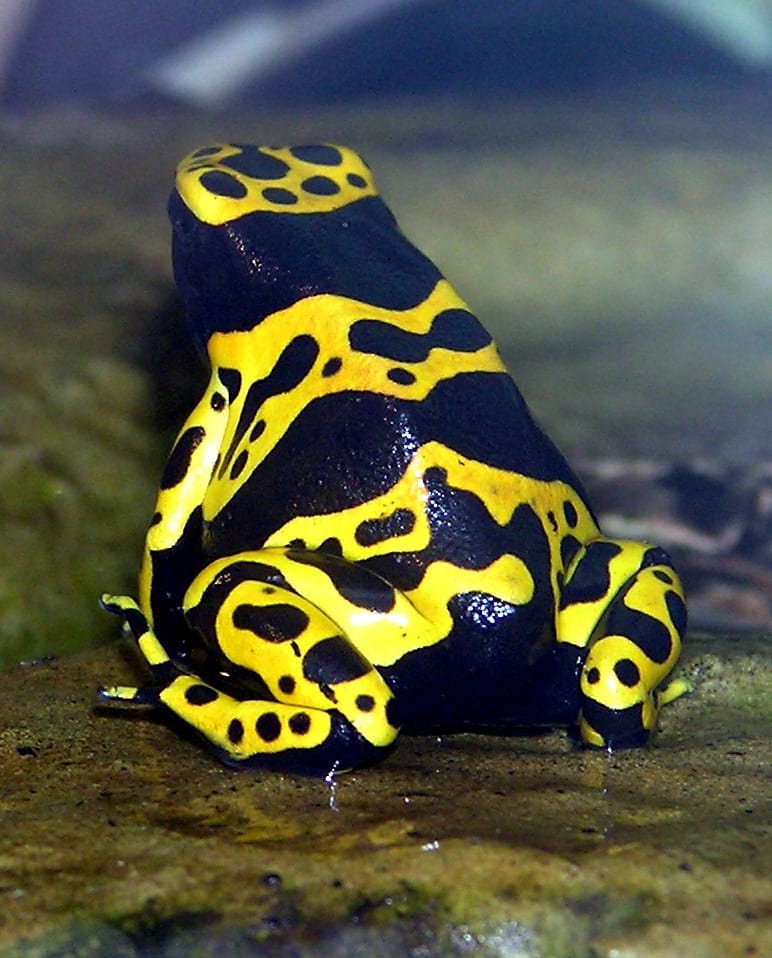
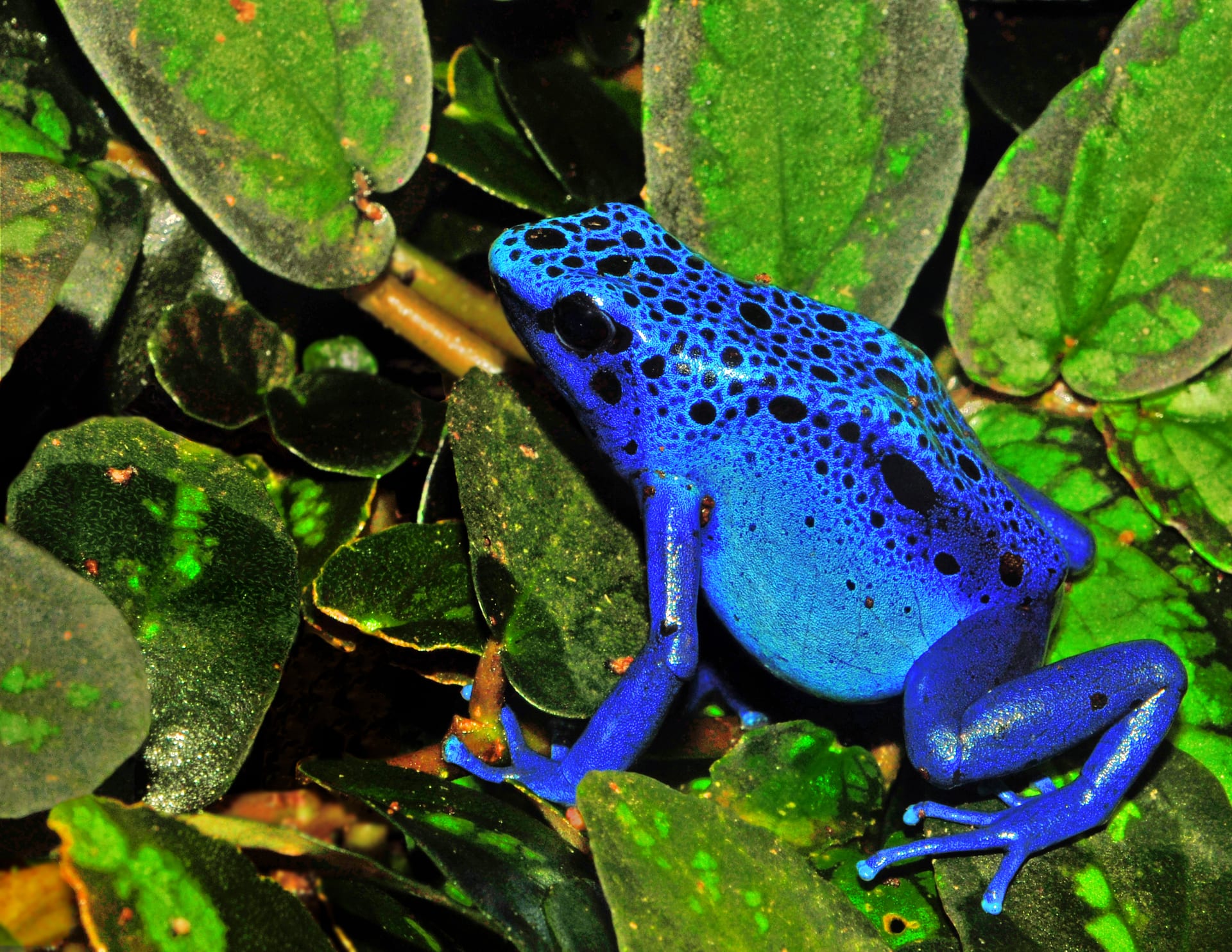
A large poison dart frog with yellow or whitish stripes on a black body and blue-peppered limbs. More than 30 locality morphs are known, including the all-blue cobalt form. Captive-bred animals are not poisonous.
Difficulty
Intermediate
Temperature
23〜28℃
Lifespan
10-15 years
Size
3.5-7cm
Humidity
70〜100%
Diet
Fruit flies, pinhead crickets, springtails
About
Dendrobates tinctorius is a terrestrial dendrobatid from the eastern Guiana Shield. Small forms reach 3.5 cm snout-vent length, most variants around 5 cm, and the largest up to 7 cm, making it one of the biggest in the genus. It is among the most variable poison frogs, with more than 30 recognised locality morphs; the all-blue cobalt form (formerly Dendrobates azureus) is now treated as a synonym of this species. It occurs in primary rainforest up to 600 m and breeds in phytotelmata formed in treefall gaps. Adults are territorial and are normally kept as male-female pairs. Wild frogs sequester dietary alkaloids, but captive-bred animals are not poisonous, and almost all frogs in the Japanese trade are captive bred.
Source: Wikipedia (CC BY-SA 4.0)
Lifespan of the Dyeing Poison Frog
The Dyeing Poison Frog lives 10-15 years.
Size of the Dyeing Poison Frog
The Dyeing Poison Frog grows to 3.5-7cm.
Temperature & humidity for the Dyeing Poison Frog
The ideal temperature for the Dyeing Poison Frog is 23〜28℃. Ideal humidity is 70〜100%.
In captivity it is kept in a planted terrarium with a moisture-retaining substrate, hides and live plants, at 23-28 C by day, 18-21 C at night and 70-100% humidity.
Basic Info
Origin
Eastern Guiana Shield (French Guiana, Guyana, Suriname, northern Brazil)
Care Specifications
Semi-aggressivePairBreeding: Moderate
Sources: Amphibian Care: Poison Dart Frogs / Wikipedia (English) / GBIF
References & Sources
Edited & verified by: BreederDirect editorial team
The taxonomic, regulatory, and husbandry data on this page are compiled and verified against the authoritative primary sources below.
Taxonomy & Authority
Accepted name: Dendrobates tinctorius (Cuvier, 1797)
Synonyms: Dendrobates azureus Hoogmoed, 1969, Rana tinctoria Cuvier, 1797, Hylaplesia tinctoria (Cuvier, 1797)
Authority databases: GBIF
Nomenclature follows global taxonomic authority databases.
Regulations & Conservation Status
CITES Appendix IIIUCN LC · Least Concern
Sources: CITES Appendices (Dendrobatidae spp., Appendix II) / IUCN Red List
Regulations may change. Always verify the latest information with the relevant authorities.
Dyeing Poison Frog Listings
Loading latest listingsFind listings for this species