Source: Wikimedia Commons
Anthony's Poison Frog
IntermediateEpipedobates anthonyi
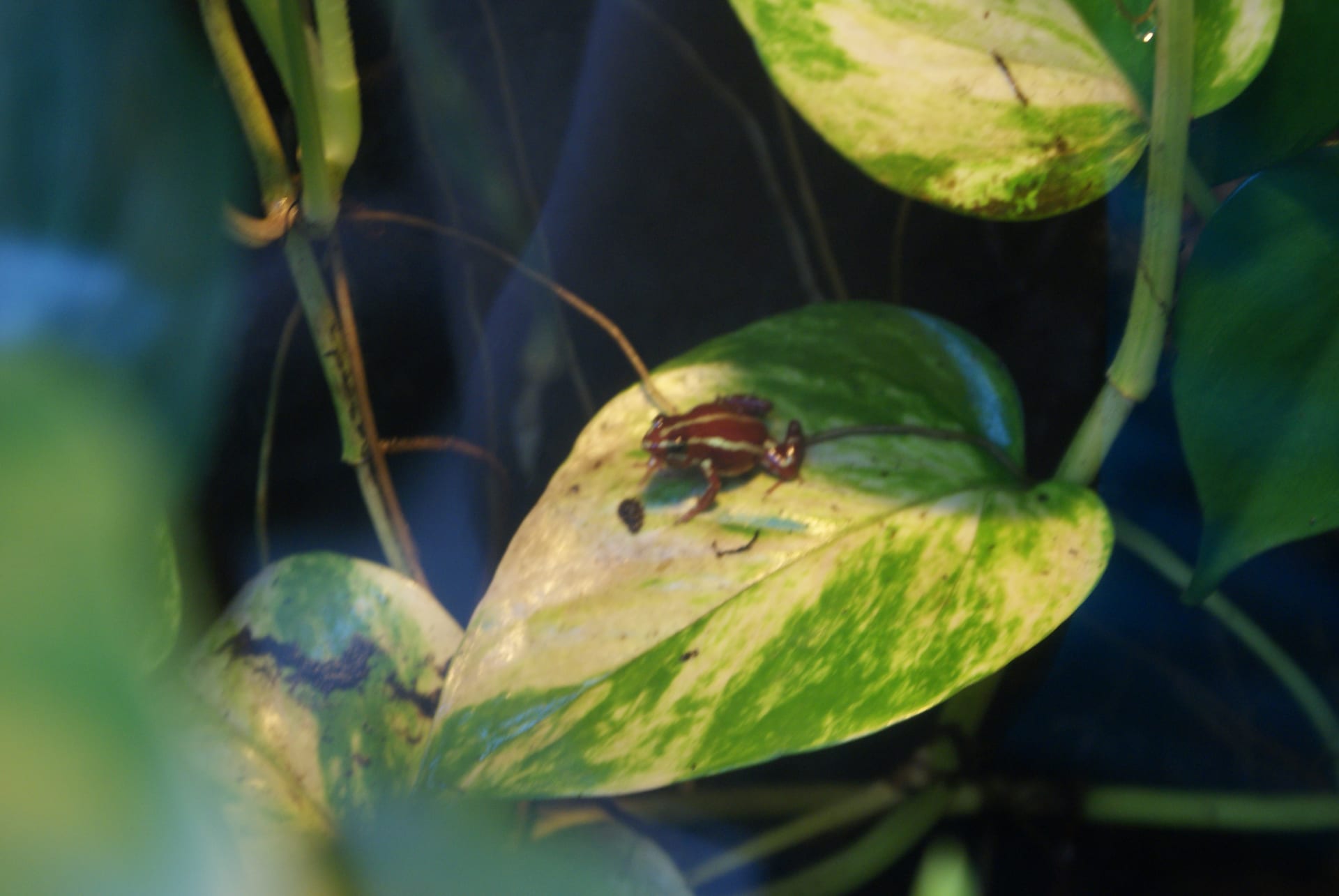
A small poison dart frog with yellowish-white oblique stripes and a dorsal line over a dark red or brown body. It is the species from which the analgesic alkaloid epibatidine was first isolated, and it does well in groups.
Difficulty
Intermediate
Temperature
18〜27℃
Lifespan
5-10 years
Size
1.9-2.6cm
Humidity
80〜100%
Diet
Fruit flies, pinhead crickets
About
Epipedobates anthonyi occurs in southwestern Ecuador and northwestern Peru between 153 and 1,769 m. It measures 1.9-2.6 cm with short, robust hind legs, and bears yellowish-white oblique stripes and a central dorsal line on a dark red or brown ground. It lives in leaf litter on the floor of tropical dry forest, especially near streams, and also persists in modified habitat such as roadsides and banana and cacao plantations. Diurnal and terrestrial, males hold territories, guard a clutch of 15-40 eggs laid among leaf litter for about two weeks, then carry the tadpoles to water. Epibatidine, an extremely toxic nicotine-like alkaloid once investigated as an analgesic, was first derived from this species.
Source: Wikipedia (CC BY-SA 4.0)
Lifespan of the Anthony's Poison Frog
The Anthony's Poison Frog lives 5-10 years.
Size of the Anthony's Poison Frog
The Anthony's Poison Frog grows to 1.9-2.6cm.
Temperature & humidity for the Anthony's Poison Frog
The ideal temperature for the Anthony's Poison Frog is 18〜27℃. Ideal humidity is 80〜100%.
In captivity keep it at 18-27 C and 80-100% humidity; it does well in groups, commonly living 5-8 years and sometimes over 10.
Basic Info
Origin
Southwestern Ecuador and northwestern Peru (153-1,769 m)
Lifespan
Care Specifications
PeacefulGroupBreeding: Easy
Sources: Amphibian Care: Poison Dart Frogs / Josh's Frogs: Epipedobates anthonyi / Wikipedia (English)
References & Sources
Edited & verified by: BreederDirect editorial team
The taxonomic, regulatory, and husbandry data on this page are compiled and verified against the authoritative primary sources below.
Taxonomy & Authority
Accepted name: Epipedobates anthonyi (Noble, 1921)
Synonyms: Phyllobates anthonyi Noble, 1921, Dendrobates anthonyi (Noble, 1921), Colostethus anthonyi (Noble, 1921), Ameerega anthonyi (Noble, 1921)
Authority databases: GBIF
Nomenclature follows global taxonomic authority databases.
Regulations & Conservation Status
CITES Appendix IIIUCN NT · Near Threatened
Sources: CITES Appendices (ヤドクガエル科 Dendrobatidae spp. 附属書II) / IUCN Red List
Regulations may change. Always verify the latest information with the relevant authorities.
Anthony's Poison Frog Listings
Loading latest listingsFind listings for this species