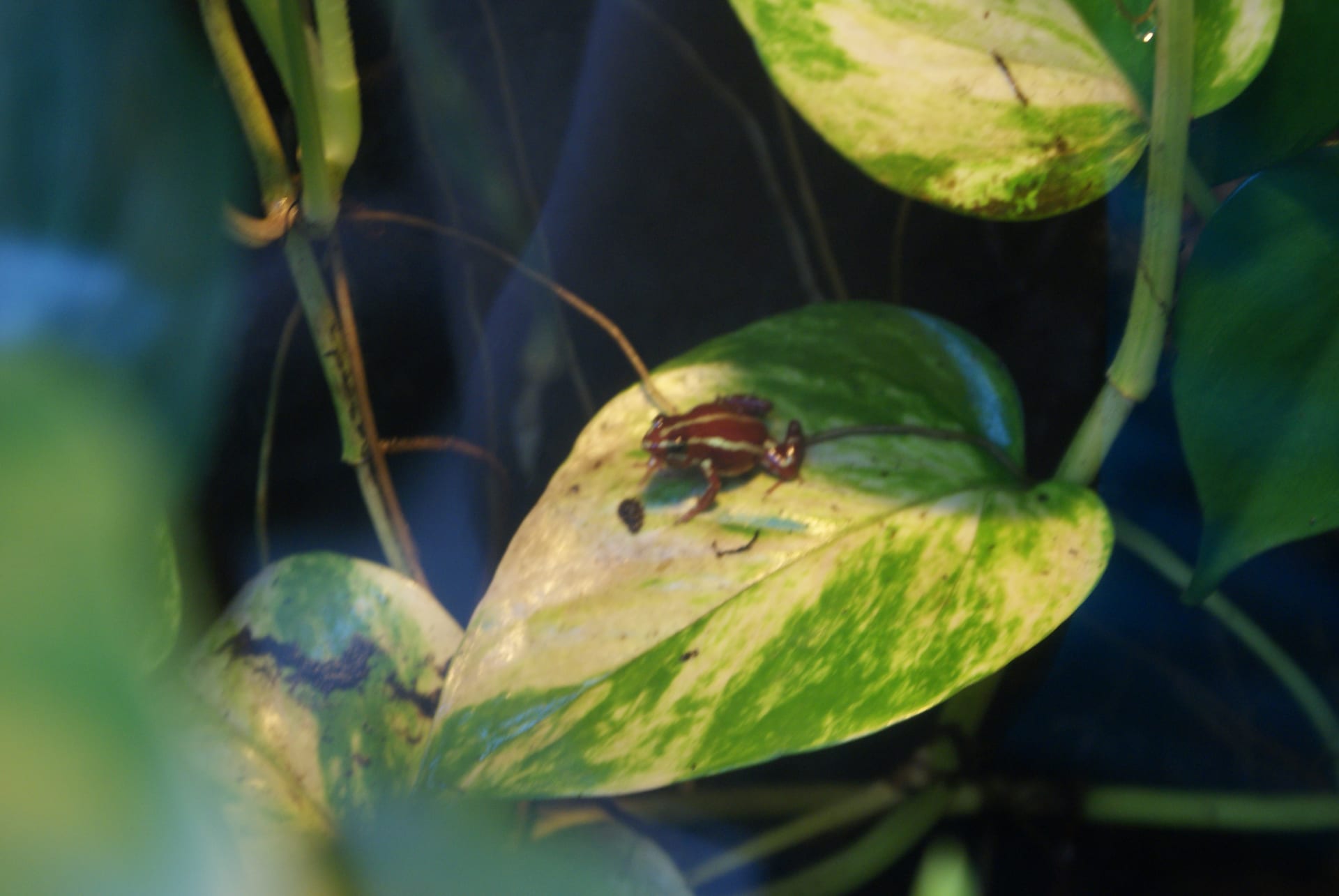
 © Хомелка / CC BY-SA 3.0
Anthony's Poison Frog
Anthony's poison frog is a small dart frog native to the rainforests of Ecuador and Peru, its dark red or brown skin marked with bold yellow-white diagonal bands and a dorsal stripe. It holds a notable place in pharmacological history as the species from which the painkiller compound epibatidine was first isolated. Active and visible during the day, these frogs are engaging to watch and tend to do well when kept in small groups, making for a lively terrarium display. Because keeping them well requires some care with temperature and humidity, this species is generally considered a better fit for keepers with a bit of prior experience.
View Anthony's Poison Frog encyclopedia →0% commission on your first sales!Register by September 30, 2026 and your first 2 sales are commission-free!
Breeder Wanted!
List on BreederDirect and sell directly to customers nationwide!
6 Transparency Promises from Br-Choku
Every Reptiles & Amphibians from verified Breeder breeders includes complete information: morph, genetics, feeding requirements, and temperament details.
- Morph Information
- Actual Photos
- Feeding Information
- Temperament Information
- Genetics Information
- Age (Months)
Browse all 280 breeds
Difficulty Level
Feeding Type
Temperament
Verified breeders wanted for Reptiles & Amphibians
Breeders are signing up now ahead of launch. Subscribe to be notified when new listings go live.
Getting alerts is free with a member account. When new listings match your saved search, we'll notify you by email and in-app.
Browse other categories
Verified breeders (preview)
Are you raising reptiles & amphibians?
Register as a breeder and connect with buyers directly.
Apply as a breederAnthony's Poison Frog key facts
- Care level
- Intermediate
- Lifespan
- 5-10 years
- Size
- 1.9-2.6cm
- Temperature
- 18〜27℃
- Humidity
- 80〜100%
- Diet
- Fruit flies, pinhead crickets
- Temperature & Humidity
- Tolerates 18-27 C, with 23-24 C ideal; above 29 C is dangerous. Keep humidity high at 80-100%.
- Enclosure
- A 38 litre tank suits two or three frogs; use 60 x 30 x 45 cm or larger for a group, allowing about 19 litres per frog, with leaf litter and plants as visual barriers.
- Diet & Feeding
- All ages take D. melanogaster fruit flies readily; adults also eat D. hydei and pinhead crickets. Dust every feeding with supplement.
- Temperament
- Diurnal and active, and suited to group housing, though the social dynamic shifts once frogs mature at 5-8 months and females may eat each other's eggs.
- Notes
- Captive-bred frogs are not toxic. It is sometimes traded under the name E. tricolor, so check the scientific name given by the source.
About Anthony's Poison Frog
A small poison dart frog from Ecuador and Peru, marked with dark red and yellow-white bands and well suited to group keeping. Known as the species from which the analgesic epibatidine was first isolated, it suits keepers with some prior experience.
7 things to know before welcoming a Anthony's Poison Frog
1High-Humidity Terrarium
Coming from tropical rainforest habitats, these frogs need a terrarium that keeps humidity consistently high. Regular misting or an automated fogging system, along with sphagnum moss and cork bark hides, helps recreate their natural environment. Balancing humidity with adequate ventilation is key when choosing an enclosure.
2Low Toxicity in Captivity
Wild individuals build up toxins from alkaloid-rich insects in their diet, but captive-bred frogs raised on non-toxic feeder insects are generally considered to lose most of that toxicity. Their skin remains thin and sensitive, though, so frequent bare-hand handling is best avoided.
3Thrives in Small Groups
Anthony's poison frog is a species that does well when kept in groups. With relatively weak territorial behavior, individuals can often be observed living together. Provide multiple hiding spots so each frog has somewhere to retreat.
4Tiny Size, Escape Risk
Adults grow to only about 1.9 to 2.6 cm, making them one of the smaller dart frog species. Because they can slip through the smallest gaps, sealing every opening in the lid and any wiring holes in the enclosure is essential.
5Live Insect Diet
With such small mouths, they mainly eat tiny live feeder insects such as springtails, fruit flies, and young crickets. Dusting feeders with calcium and vitamin supplements before feeding also supports their health.
6Intermediate Care Needs
This species is generally rated as suited to intermediate keepers, since maintaining stable temperature, humidity, and water quality takes some experience. Sudden temperature swings or dryness can cause stress or health problems, so daily checks with a thermometer and hygrometer matter.
7A 5-10 Year Commitment
Their lifespan runs roughly 5 to 10 years, a surprisingly long companionship for such a small animal. Before bringing one home, it's worth discussing with your household whether you can keep up their care and environment over the long term.
Frequently asked questions about Anthony's Poison Frog
- Q.Are Anthony's poison frogs venomous or toxic?
- A.In the wild, these frogs accumulate toxins from the insects they eat, but captive-bred individuals raised on non-toxic feeder insects are generally considered to have little to no toxicity. Even so, their skin is delicate, so always wash your hands after handling one.
- Q.Are they suitable for beginner keepers?
- A.This species is generally considered better suited to keepers with some prior experience, since maintaining stable temperature and humidity takes practice. With the right setup in place, a motivated beginner can still take on the challenge.
- Q.How many should be kept together?
- A.Because this species does well in groups, many keepers house several individuals in the same terrarium. If the enclosure feels crowded, adding more hiding spots helps give each frog its own space.
- Q.How large do they grow?
- A.Adults reach only about 1.9 to 2.6 cm, making them one of the smaller dart frog species. Their tiny size also means extra care is needed to prevent escapes or injury.
- Q.How long do they typically live?
- A.Their lifespan is generally around 5 to 10 years. With consistent temperature, humidity, and feeding care, they can be a long-term companion.
Useful tools for Anthony's Poison Frog care
Learn more about Anthony's Poison Frog in the encyclopedia
View Anthony's Poison Frog encyclopedia entry →
Care difficulty, lifespan, size and diet — all basics covered.
More in this category
Can't find the one you're looking for?
Post your wishes for free and breeders with matching animals will contact you with introductions.