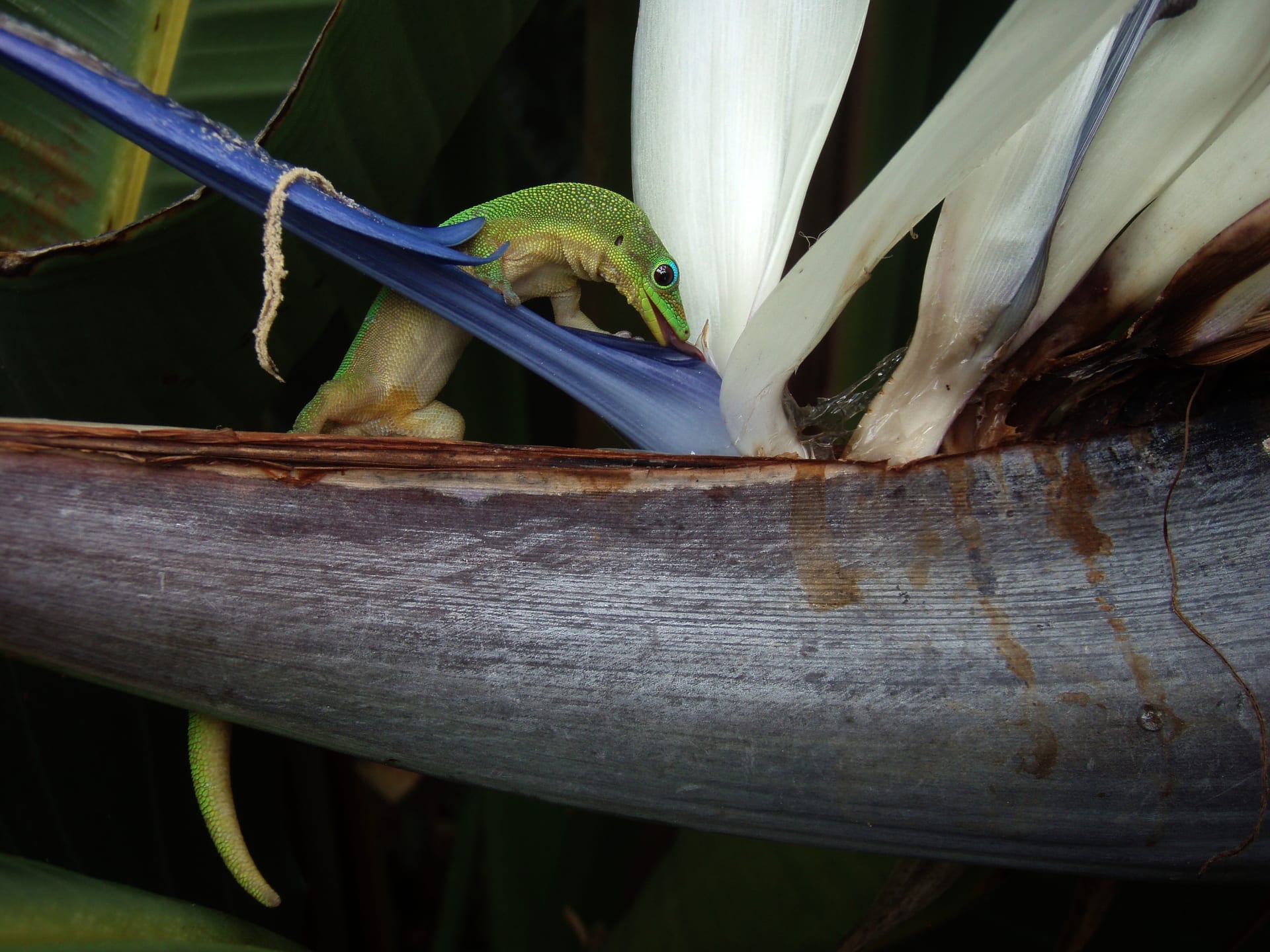
 © Brocken Inaglory / CC BY-SA 3.0
Gold Dust Day Gecko
The Gold Dust Day Gecko is a small, day-active gecko from Madagascar named for the shimmering, gold-flecked speckles that run from its neck across its upper back on a yellow-green body. Active and easy to watch during daylight hours, it makes for an especially visual pet, though its total length of about 10 to 13 cm means it needs relatively little floor space. Males are strongly territorial and are typically kept alone, and because they need UV lighting and a carefully maintained setup, this species suits keepers who already have some reptile experience rather than absolute beginners.
View Gold Dust Day Gecko encyclopedia →Breeder Wanted!
List on BreederDirect and sell directly to customers nationwide!
BreederDirect's 6 Transparency Commitments
Every Reptiles & Amphibians from verified Breeder breeders includes complete information: morph, genetics, feeding requirements, and temperament details.
- Morph Information
- Actual Photos
- Feeding Information
- Temperament Information
- Genetics Information
- Age (Months)
Browse all 319 breeds
Difficulty Level
Feeding Type
Temperament
Verified breeders wanted for Reptiles & Amphibians
Breeders are signing up now ahead of launch. Subscribe to be notified when new listings go live.
Getting alerts is free with a member account. When new listings match your saved search, we'll notify you by email and in-app.
Browse other categories
Verified breeders (preview)

Are you raising reptiles & amphibians?
Register as a breeder and connect with buyers directly.
Apply as a breederGold Dust Day Gecko key facts
- Care level
- Intermediate
- Lifespan
- Up to about 15 years
- Size
- 10-13cm total length
- Temperature
- Basking 32°C / 28-32°C by day / 21-25°C at night
- Humidity
- 40〜70%
- Diet
- Crickets and fruit flies, prepared fruit-based gecko diet, nectar
- Temperature & Humidity
- Keep the basking spot at 32C, general daytime temperatures at 28-32C and night-time temperatures at 21-25C. Aim for average humidity of 40-70 per cent, misting in the morning and in the evening if needed. As a diurnal species it requires UVB, with a target UV index of 3.0-4.0 at the basking site.
- Enclosure
- Being arboreal it needs a tall enclosure of at least 30 x 30 x 45 cm even for a single animal. Bamboo, driftwood and live plants provide climbing routes and cover. Substrate is used mainly to hold humidity, and a layer of leaf litter helps keep it stable. Suspend heat lamps clear of the mesh top to prevent burns.
- Diet & Feeding
- In the wild it is an omnivore, taking insects and other invertebrates as well as soft fruit, pollen and nectar. In captivity use a prepared fruit-based gecko diet as the base with crickets and fruit flies alongside, dusting feeders with calcium.
- Temperament
- Males are strongly territorial and will not accept other males, so never house males together. In a confined enclosure a male may also injure a female, so unless breeding, keep one animal or a group of females only. Hatchlings squabble as well and should be separated within the first month.
- Notes
- It belongs to Phelsuma, listed on CITES Appendix II, so import requires an export permit from the exporting country; Appendix II animals need no Japanese registration certificate. It shows temperature-dependent sex determination, with incubation temperature shifting the sex ratio. Introduced populations are established in Hawaii and elsewhere, so animals must never be released.
About Gold Dust Day Gecko
A guide to the Gold Dust Day Gecko's traits, temperament, and care basics. This small day gecko reaches 10-13 cm and suits intermediate keepers, with key points and FAQs to know before bringing one home.
7 things to know before welcoming a Gold Dust Day Gecko
1UVB Lighting Is Essential
As a day-active species, the Gold Dust Day Gecko relies on UV exposure to synthesize vitamin D3. In captivity, running a dedicated UVB light during daylight hours is essential rather than optional.
2Best Kept Alone
Males are strongly territorial and will fight if housed together in the same enclosure. As a rule, keep one gecko per enclosure, and only consider group housing with generous space and plenty of hiding spots.
3Very Delicate Skin
This species has unusually thin, fragile skin that can tear if grasped too firmly. Handle it gently — guiding it into a container is safer than picking it up directly by hand.
4Fast and Escape-Prone
When startled, this gecko can leap and dart away in an instant, so it's easy for it to slip out when the enclosure is opened. Use a lid or door that closes securely, and open the enclosure calmly and deliberately.
5Eats Both Insects and Fruit
In the wild, this gecko eats insects as well as nectar and fruit, so captive diets typically combine feeder insects like crickets with a fruit-based nectar mix. Don't forget to dust food with a calcium supplement as well.
6Needs Vertical Space
This is a highly arboreal species that prefers vertical space over floor area. Set up a tall enclosure with climbing branches and plants to provide both hiding spots and room to move around.
7Temperature and Humidity Matter
Maintaining an appropriate temperature gradient and humidity level supports normal activity and smooth shedding. If the enclosure gets too dry, incomplete sheds become more likely, so check humidity regularly and mist as needed.
Frequently asked questions about Gold Dust Day Gecko
- Q.Is this gecko suitable for reptile beginners?
- A.The Gold Dust Day Gecko is generally considered an intermediate-level pet because of the UVB lighting and temperature/humidity management it needs. If you're new to reptile keeping, it helps to build up some basic gecko care experience before bringing one home.
- Q.Can I keep a male and female together, or in groups?
- A.Two males will fight and should never be housed together. A single male with one or more females can sometimes cohabit if they get along, but housing each gecko alone is the safer default.
- Q.Can I handle this gecko?
- A.Its skin is extremely delicate and can tear, and the tail can drop off if it's grabbed too firmly, so frequent handling isn't recommended. Treat it more as an animal to observe, and when you do need to move it, guide it gently into a container instead of grabbing it.
- Q.How long do these geckos typically live?
- A.In captivity, they can live up to around 15 years, so this is a long-term commitment. That makes it important to set up an environment — UVB lighting, temperature, and humidity — that you can maintain consistently over the long run.
- Q.How big of an enclosure does it need?
- A.At 10 to 13 cm in total length, this gecko has a compact body, but because it's highly arboreal, enclosure height matters more than floor space. Provide a vertically oriented setup with climbing branches and plants.
Useful tools for Gold Dust Day Gecko care
Learn more about Gold Dust Day Gecko in the encyclopedia
View Gold Dust Day Gecko encyclopedia entry →
Care difficulty, lifespan, size and diet — all basics covered.
More in this category
Can't find the one you're looking for?
Post your wishes for free and breeders with matching animals will contact you with introductions.