Source: Wikimedia Commons
Gold Dust Day Gecko
IntermediatePhelsuma laticauda
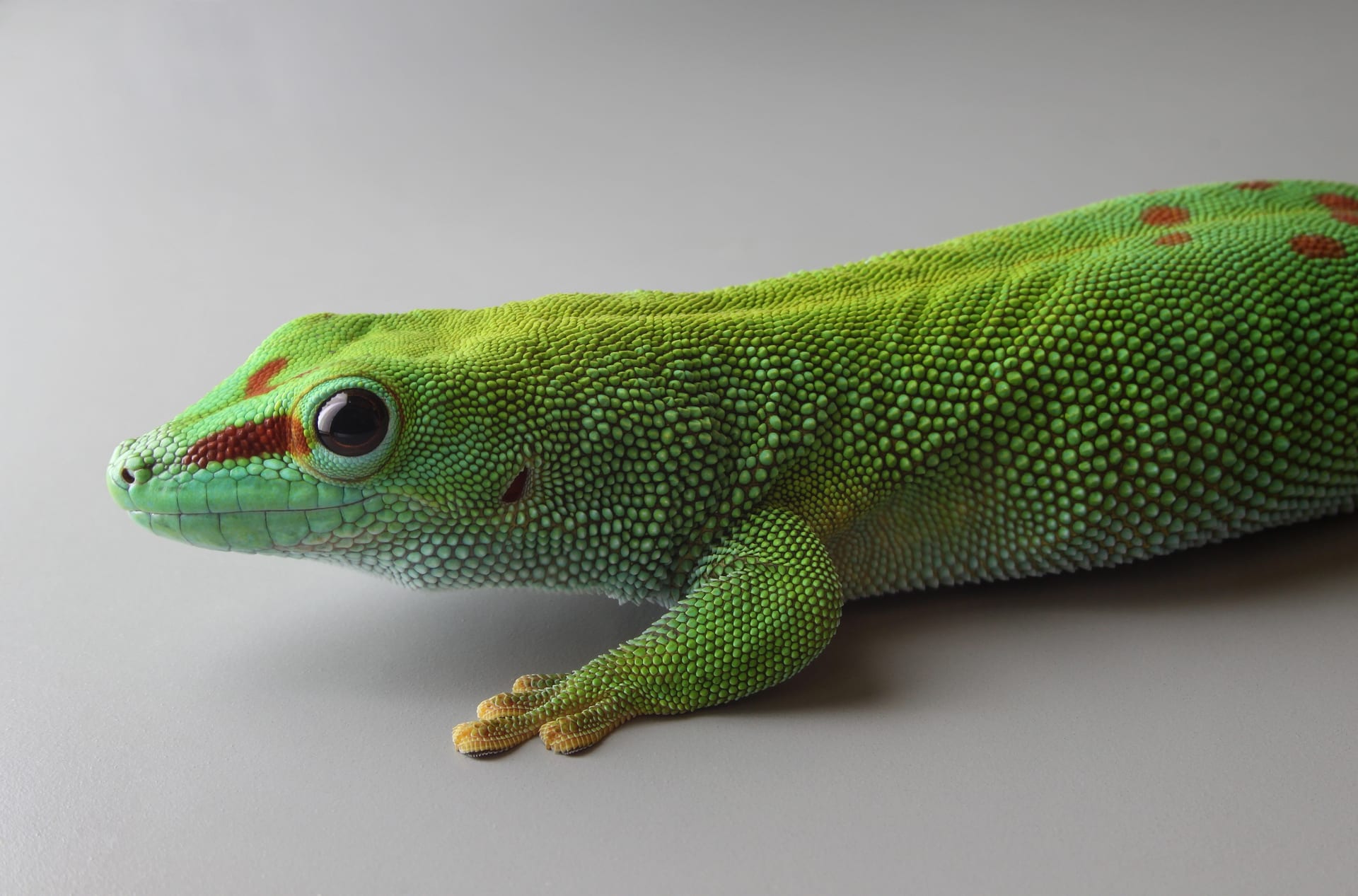
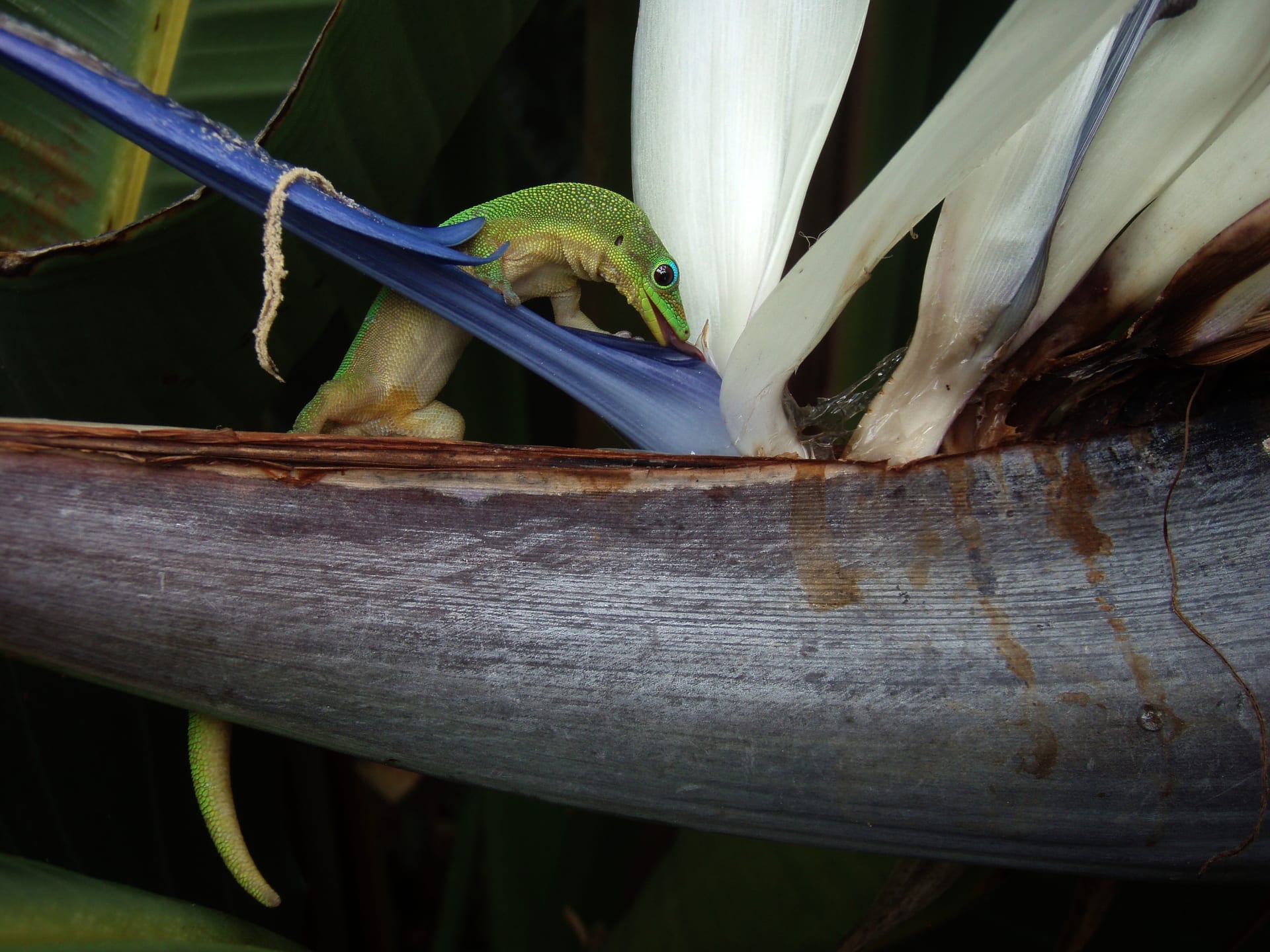
A small day gecko, yellowish green with gold speckling over the neck and upper back and a slightly flattened tail. It reaches 10-13 cm, is diurnal, needs UVB, and males are strongly territorial.
Difficulty
Intermediate
Lifespan
Up to about 15 years
Size
10-13cm total length
Humidity
40〜70%
Diet
Crickets and fruit flies, prepared fruit-based gecko diet, nectar
About
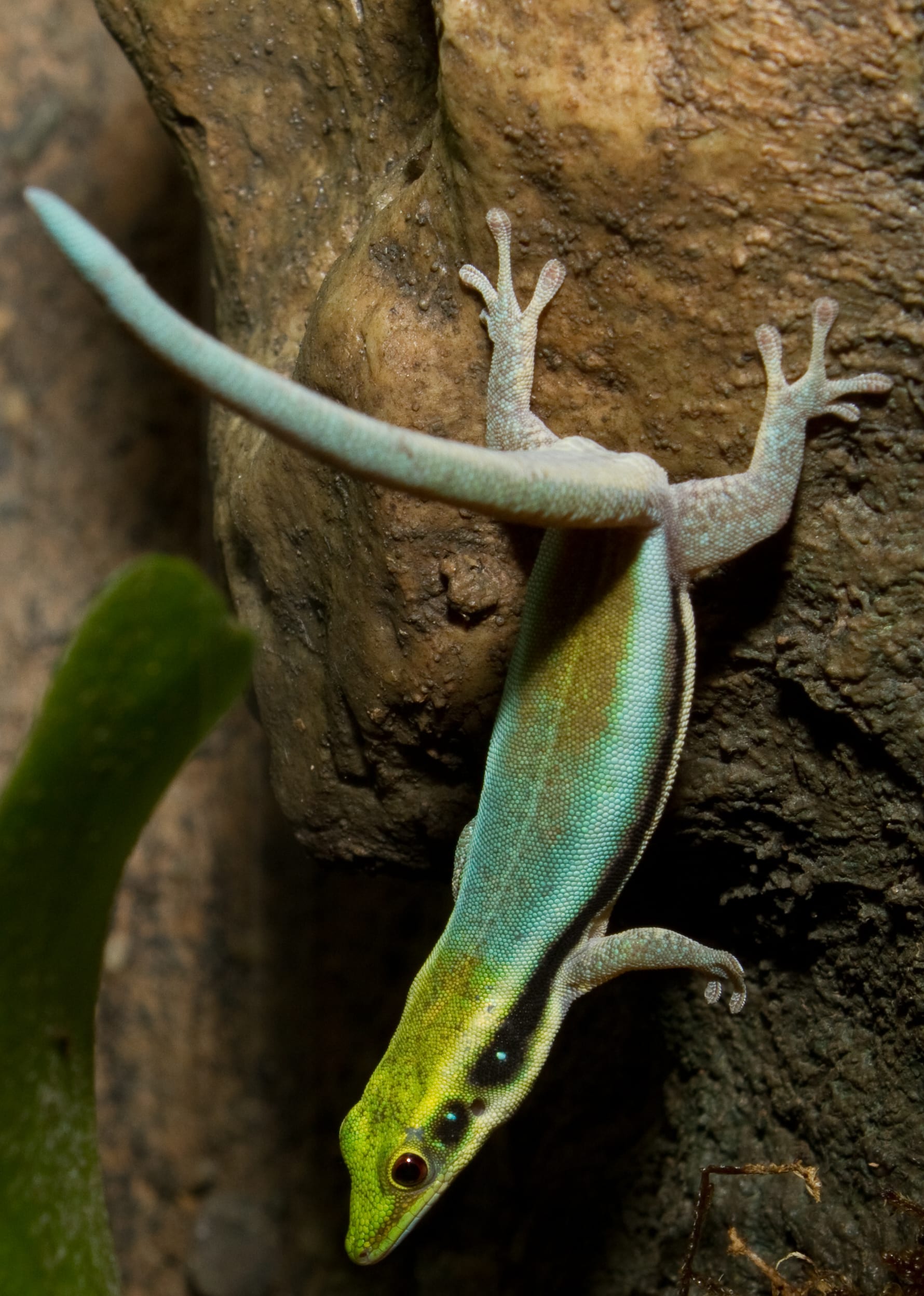
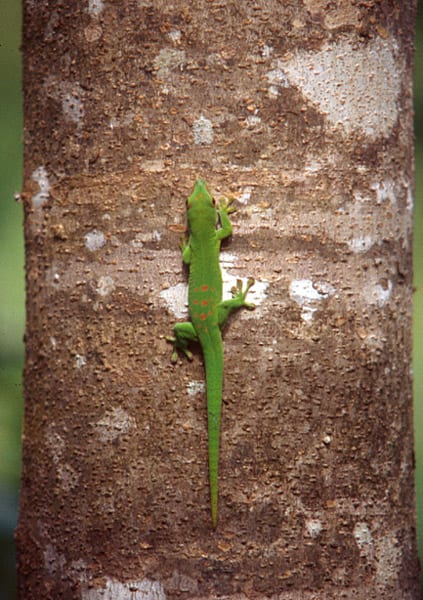
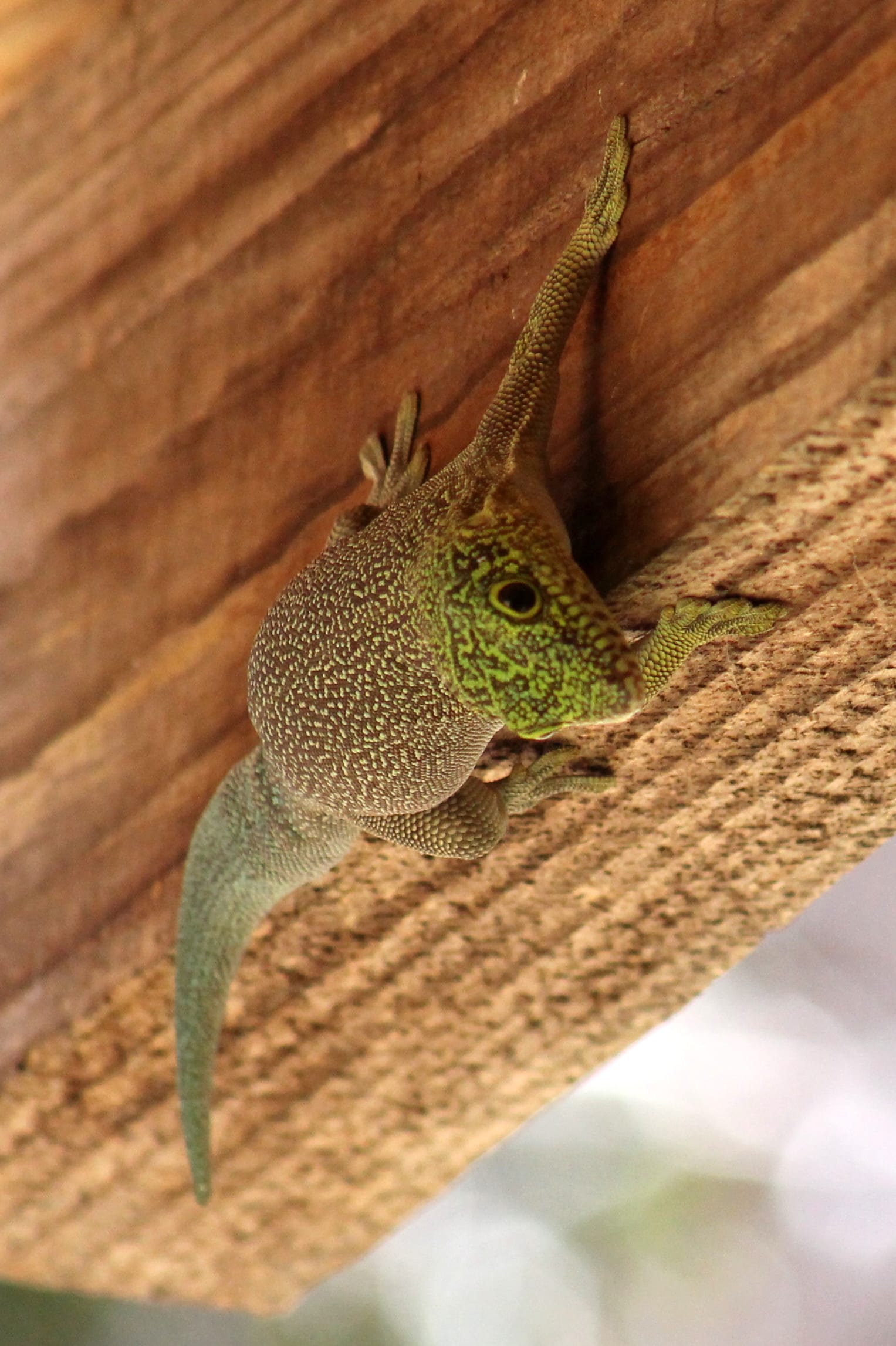
Phelsuma laticauda is a diurnal, arboreal gecko of the family Gekkonidae ranging from northern Madagascar to the Comoros. It is a small species of 10 to 13 cm, bright green or yellowish green in colour. Gold speckling across the neck and upper back gives the species its common name, and there are three rust-coloured bars across the snout and head and three tapering red bars on the lower back. The skin above the eye is bluish and the tail is slightly flattened. Juveniles lack the red markings and have pale tails and limbs. In the wild it takes insects as well as nectar and soft fruit, often gathering in numbers to feed on a single plant. Males are strongly territorial and will not tolerate other males; in captivity, where a female cannot escape, a male may injure her. Females lay one or two eggs, which hatch in about 40 to 45 days at 28 degrees C, and sexual maturity follows at 10 to 12 months. Introduced populations are established in Hawaii and French Polynesia.
Source: Wikipedia (CC BY-SA 4.0)
Lifespan of the Gold Dust Day Gecko
The Gold Dust Day Gecko lives Up to about 15 years.
Size of the Gold Dust Day Gecko
The Gold Dust Day Gecko grows to 10-13cm total length.
Basic Info
Origin
Northern Madagascar, the Comoros including Mayotte, Nosy Be and the Seychelles; introduced to Hawaii and French Polynesia
Lifespan
Up to about 15 years
Size
10-13cm total length
Care Specifications
Semi-aggressivePairBreeding: Easy
Sources: ReptiFiles: Gold Dust Day Gecko Care Sheet / Reptiles Magazine: Breeding Gold Dust Day Geckos / Wikipedia (English) / Reptile Database
References & Sources
Edited & verified by: BreederDirect editorial team
The taxonomic, regulatory, and husbandry data on this page are compiled and verified against the authoritative primary sources below.
Taxonomy & Authority
Accepted name: Phelsuma laticauda (Boettger, 1880)
Synonyms: Pachydactylus laticauda Boettger, 1880
Authority databases: GBIF · Reptile Database
Nomenclature follows global taxonomic authority databases.
Regulations & Conservation Status
CITES Appendix IIIUCN LC · Least Concern
Phelsuma spp. has been listed under Appendix II since February 4, 1977 (current listing effective February 1, 2017). Because it is listed under Appendix II, no registration certificate as an internationally rare wild animal or plant species is required; however, an export permit issued by the exporting country is required for importation. It is neither listed as a specified animal under the Ordinance for the Enforcement of the Act on the Welfare and Management of Animals, nor designated as a specified alien species under the Invasive Species Act.
Sources: CITES Appendices (Phelsuma spp., Appendix II) / IUCN Red List
Regulations may change. Always verify the latest information with the relevant authorities.
Gold Dust Day Gecko Listings
Loading latest listingsFind listings for this species