Source: Wikimedia Commons
Madagascar Day Gecko
IntermediatePhelsuma madagascariensis
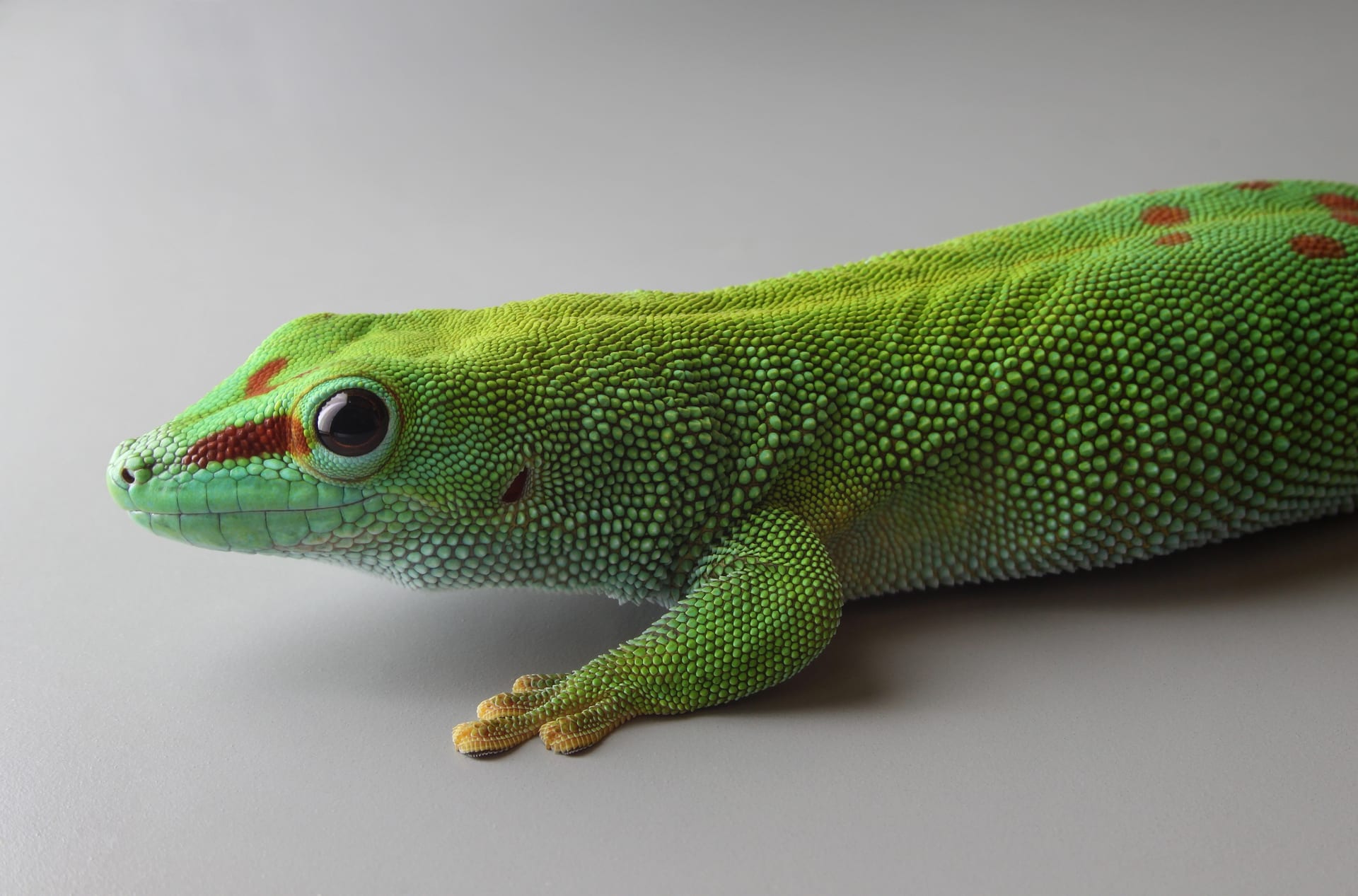
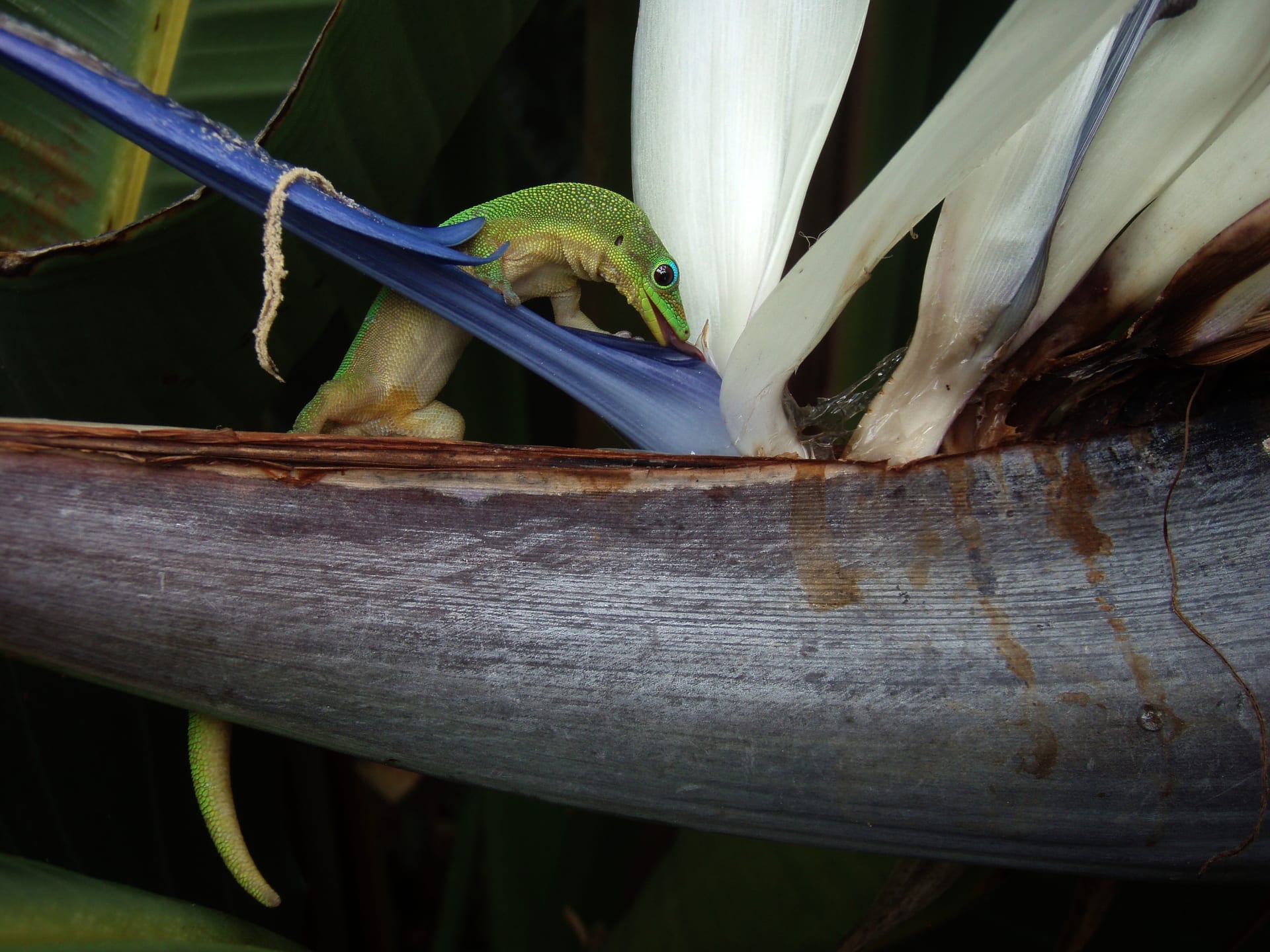
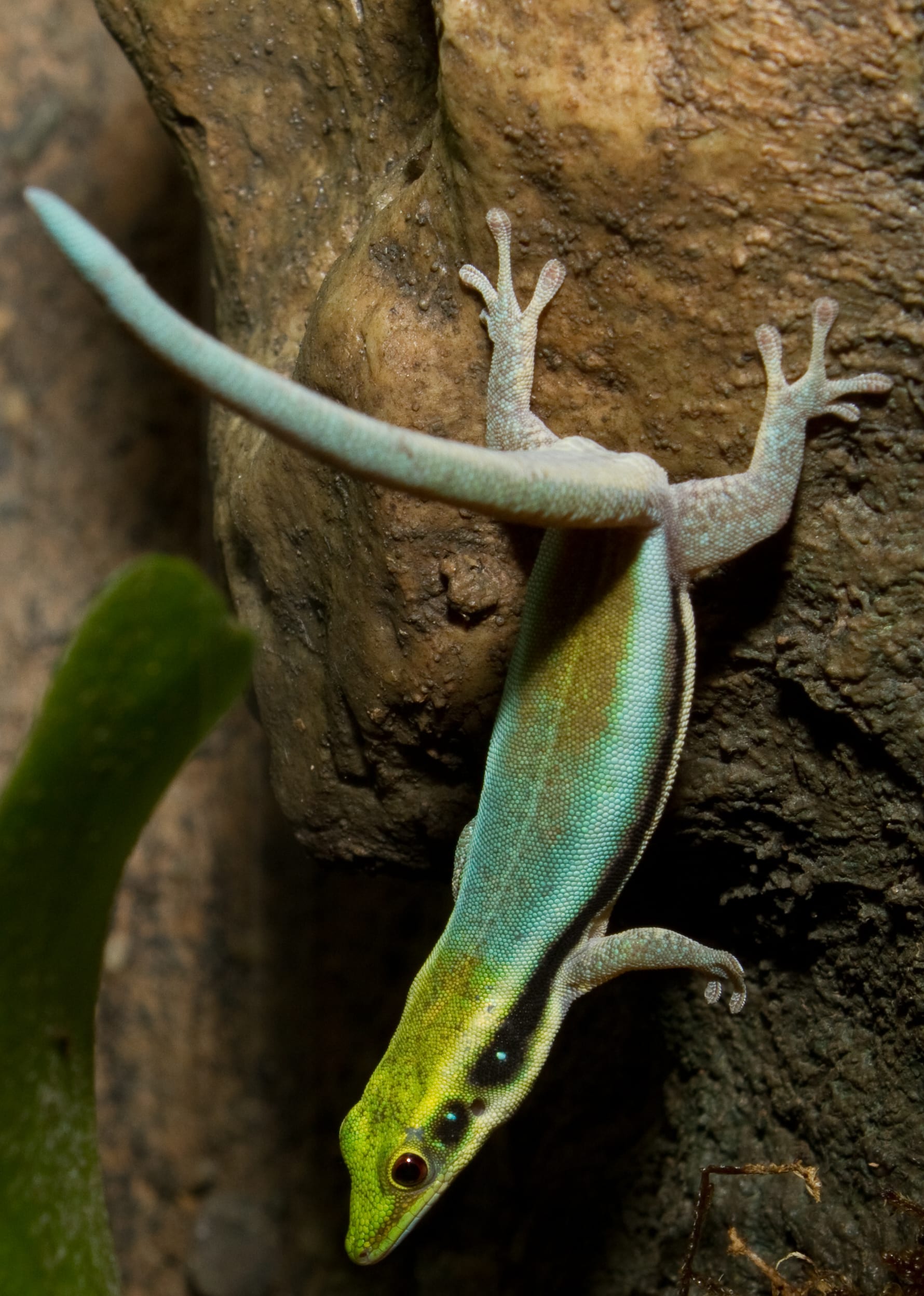
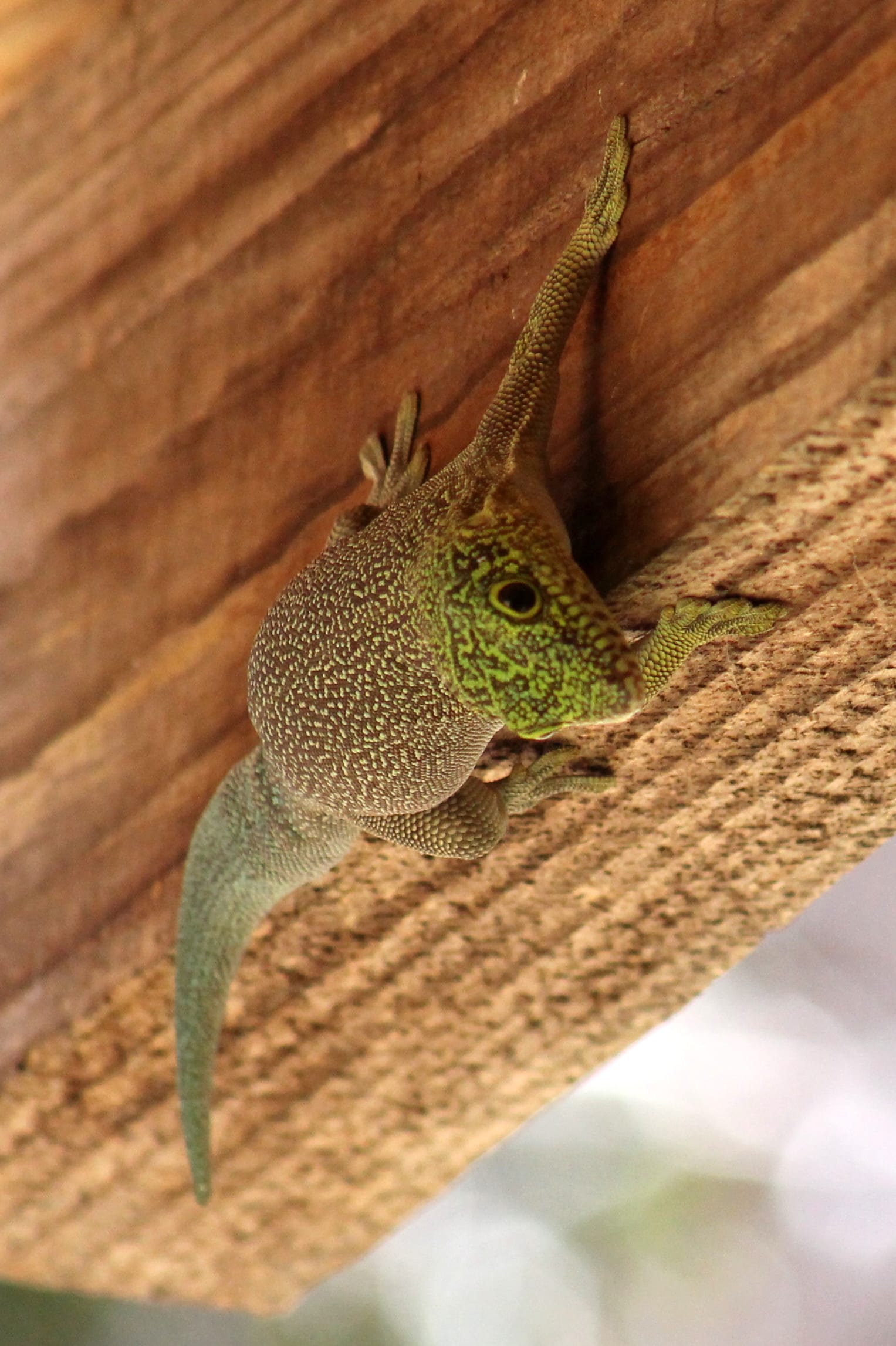
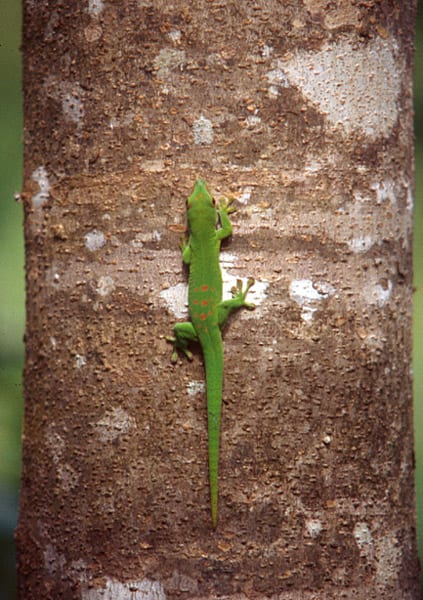
A large day gecko widely distributed in eastern Madagascar, reaching around 30 cm in total length. Green with red markings, it is a diurnal, arboreal species easily confused with its close relative the giant day gecko.
Difficulty
Intermediate
Temperature
25〜32℃
Lifespan
15-20 years
Size
Up to about 30.5cm in total length
Humidity
40〜70%
Diet
Crickets and dubia roaches, prepared fruit-based gecko diet, nectar
About
Phelsuma madagascariensis is a diurnal, arboreal gecko of the family Gekkonidae found in Madagascar. It is among the most widespread day geckos and occurs in a wide range of habitats. It reaches up to 30.5 cm in total length, making it one of the largest day geckos in Madagascar. The nominate subspecies occupies the east coast between Fenerive and Mananjary, and two further subspecies, kochi and boehmei, are recognised. The giant day gecko, formerly treated as a subspecies of this species, was separated as Phelsuma grandis in 2007, so older literature and trade names mix the two. It is oviparous and shows temperature-dependent sex determination. An introduced population exists in Florida. Most published husbandry figures refer to its close relative P. grandis rather than to this species.
Source: Wikipedia (CC BY-SA 4.0)
Lifespan of the Madagascar Day Gecko
The Madagascar Day Gecko lives 15-20 years.
Size of the Madagascar Day Gecko
The Madagascar Day Gecko grows to Up to about 30.5cm in total length.
Basic Info
Origin
Eastern Madagascar from Fenerive to Mananjary, including Perinet and Ranomafana, plus offshore islands such as Nosy Be; introduced to Florida
Lifespan
15-20 years
Size
Up to about 30.5cm in total length
Temperature
Care Specifications
Semi-aggressivePair
Sources: Wikipedia (English) / Reptile Database / Reptiles Magazine: Other Phelsuma Worth Knowing
References & Sources
Edited & verified by: BreederDirect editorial team
The taxonomic, regulatory, and husbandry data on this page are compiled and verified against the authoritative primary sources below.
Taxonomy & Authority
Accepted name: Phelsuma madagascariensis Gray, 1831
Synonyms: Gekko madagascariensis Gray, 1831, Phelsuma madagascariensis martensi Mertens, 1962, Phelsuma sarrube (Wiegmann, 1834)
Authority databases: GBIF · Reptile Database
Nomenclature follows global taxonomic authority databases.
Regulations & Conservation Status
CITES Appendix IIIUCN LC · Least Concern
Phelsuma spp. has been listed under Appendix II since February 4, 1977 (current listing effective February 1, 2017). Because it is listed under Appendix II, no registration certificate as an internationally rare wild animal or plant species is required; however, an export permit issued by the exporting country is required for importation. It is neither listed as a specified animal under the Ordinance for the Enforcement of the Act on the Welfare and Management of Animals, nor designated as a specified alien species under the Invasive Species Act.
Sources: CITES Appendices (Phelsuma spp., Appendix II) / IUCN Red List
Regulations may change. Always verify the latest information with the relevant authorities.
Madagascar Day Gecko Listings
Loading latest listingsFind listings for this species