Source: Wikimedia Commons
Tropical Girdled Lizard
IntermediateCordylus tropidosternum
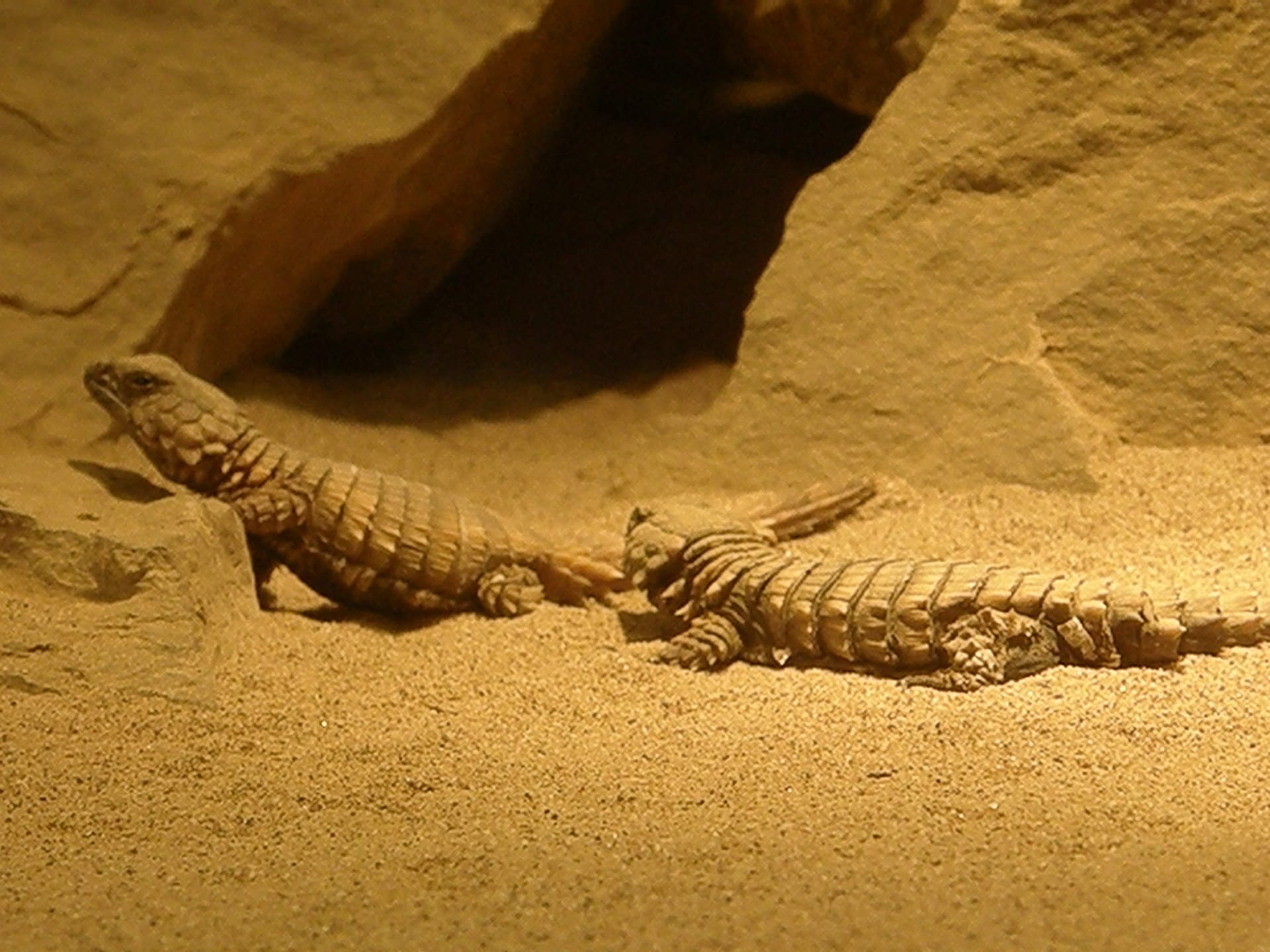
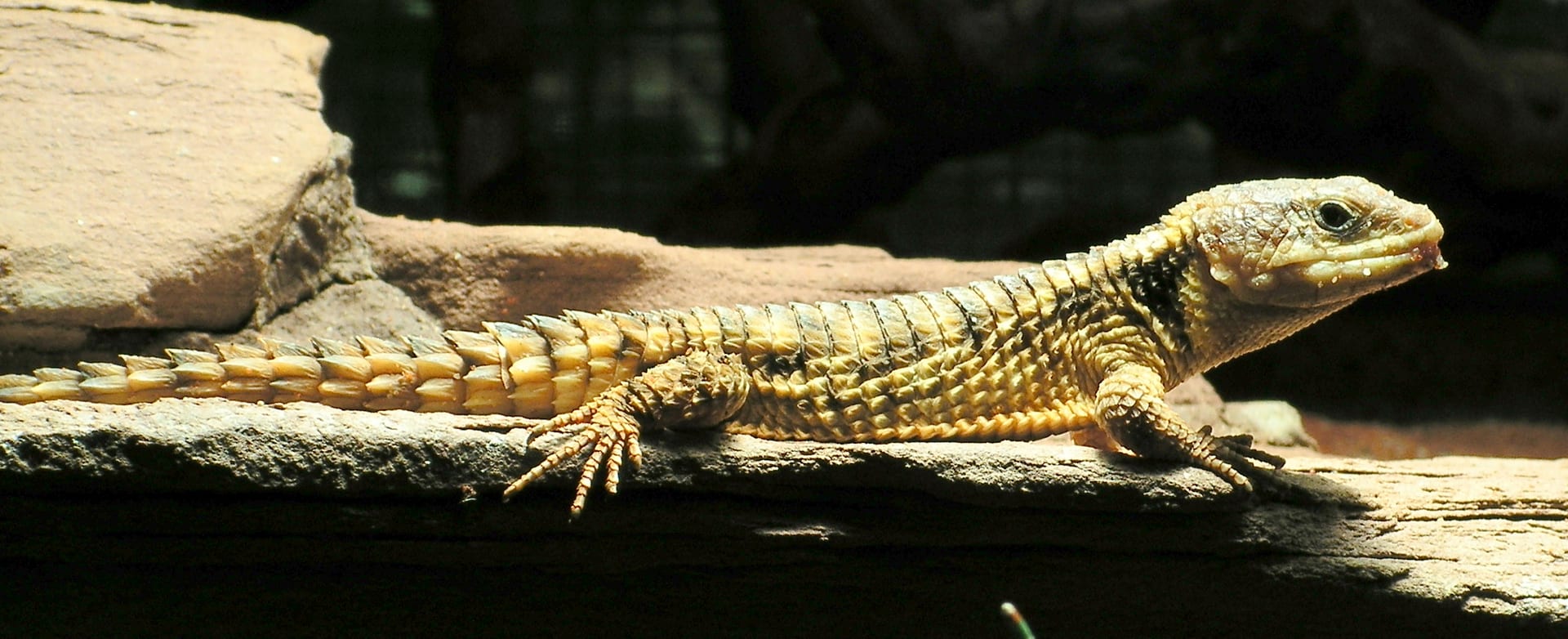
A girdled lizard with a flattened body in brown to yellowish brown, marked with dark brown and cream spots or thin dark bands, and a conspicuous black stripe running from the ear to the shoulder. The body scales are keeled and the tail carries whorls of spiny scales.
Difficulty
Intermediate
Temperature
25〜32℃
Lifespan
8-12 years
Size
15-19cm total length
Humidity
40〜70%
Diet
Carnivorous: insects, other arthropods and worms
About
The tropical girdled lizard (Cordylus tropidosternum) is a cordylid lizard ranging from East Africa into southern Africa. It reaches 15-19 cm in total length and has a flattened body. The back is brown to yellowish brown with dark brown and cream spots or thin dark bands and varies considerably between individuals, while a conspicuous black stripe runs from the ear to the shoulder and the lips, throat and belly are cream. The body scales are keeled and the tail carries whorls of spiny scales; the epithet refers to its keeled chest. It lives in dry forest, savanna and shrubland, using rock crevices, the bases of trees and fallen timber as refuges, and is a diurnal, arboreal to rock-dwelling species. It lays down fat reserves in preparation for the dry season. Males have slightly broader heads than females and are aggressive towards other males. It is viviparous, producing two to four young at a time. No established captive-breeding protocol exists, though it has been bred.
Source: Wikipedia (CC BY-SA 4.0)
Lifespan of the Tropical Girdled Lizard
The Tropical Girdled Lizard lives 8-12 years.
Size of the Tropical Girdled Lizard
The Tropical Girdled Lizard grows to 15-19cm total length.
Basic Info
Origin
From south-eastern Kenya through Tanzania, Malawi and Mozambique to northern Zambia, southern Democratic Republic of the Congo (Katanga) and north-eastern Zimbabwe, in dry forest, savanna and shrubland, in rock crevices, at the base of trees and under fallen timber
Lifespan
8-12 years
Care Specifications
Semi-aggressivePairBreeding: Hard
Sources: Reptile Database: Cordylus tropidosternum / Wikipedia (Japanese) / Wikipedia (German): Tropischer Gürtelschweif
References & Sources
Edited & verified by: BreederDirect editorial team
The taxonomic, regulatory, and husbandry data on this page are compiled and verified against the authoritative primary sources below.
Taxonomy & Authority
Accepted name: Cordylus tropidosternum (Cope, 1869)
Synonyms: Zonurus tropidosternum Cope, 1869, Zonurus frenatus Pfeffer, 1889, Zonurus parkeri Cott, 1934
Authority databases: GBIF · Reptile Database
Nomenclature follows global taxonomic authority databases.
Regulations & Conservation Status
CITES Appendix IIIUCN LC · Least Concern
Listed in CITES Appendix II as Cordylus spp. effective January 2, 2017. As an Appendix II species, no CITES registration certificate for internationally rare wild fauna and flora is required. The IUCN Red List assessment is Least Concern (LC). This species is not included in the designated animals listed in the Ordinance for the Enforcement of the Law Concerning the Protection and Management of Animals, nor is it designated as a specified alien species under the Alien Species Act Ordinance.
Sources: CITES Species+ (Cordylus spp., Appendix II, effective 2 January 2017) / IUCN Red List
Regulations may change. Always verify the latest information with the relevant authorities.
Tropical Girdled Lizard Listings
Loading latest listingsFind listings for this species