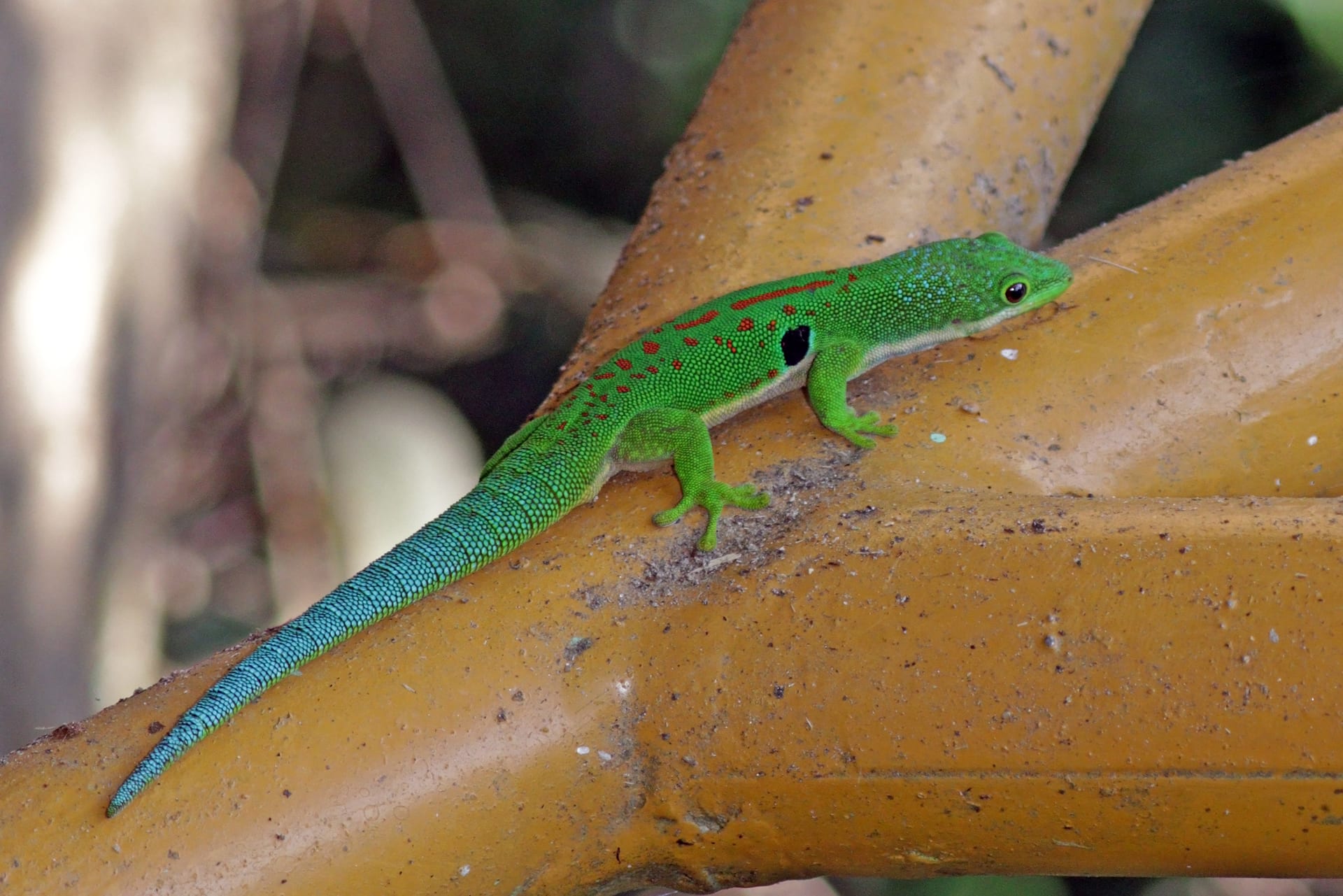
Source: Wikimedia Commons
Klemmer's Day Gecko
IntermediatePhelsuma klemmeri
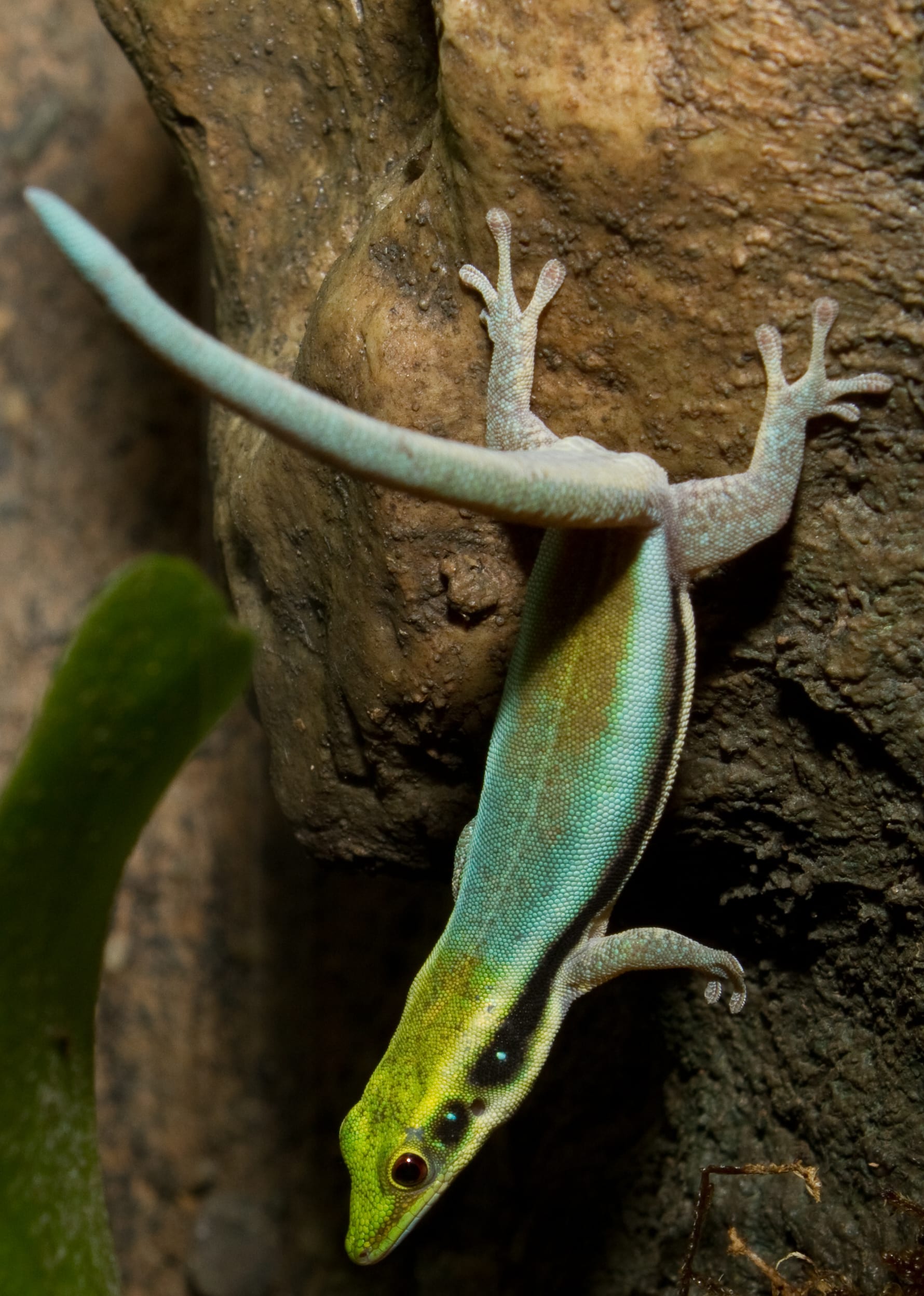
A small day gecko under 10 cm with a yellow head, turquoise back and a black lateral stripe. Endemic to bamboo forest in north-western Madagascar, it has a laterally flattened body. It is IUCN Endangered but widely captive-bred.
Difficulty
Intermediate
Lifespan
Up to about 15 years
Size
8.3-9.5cm total length
Humidity
60〜80%
Diet
Fruit flies and small crickets, prepared fruit-based gecko diet, nectar
About
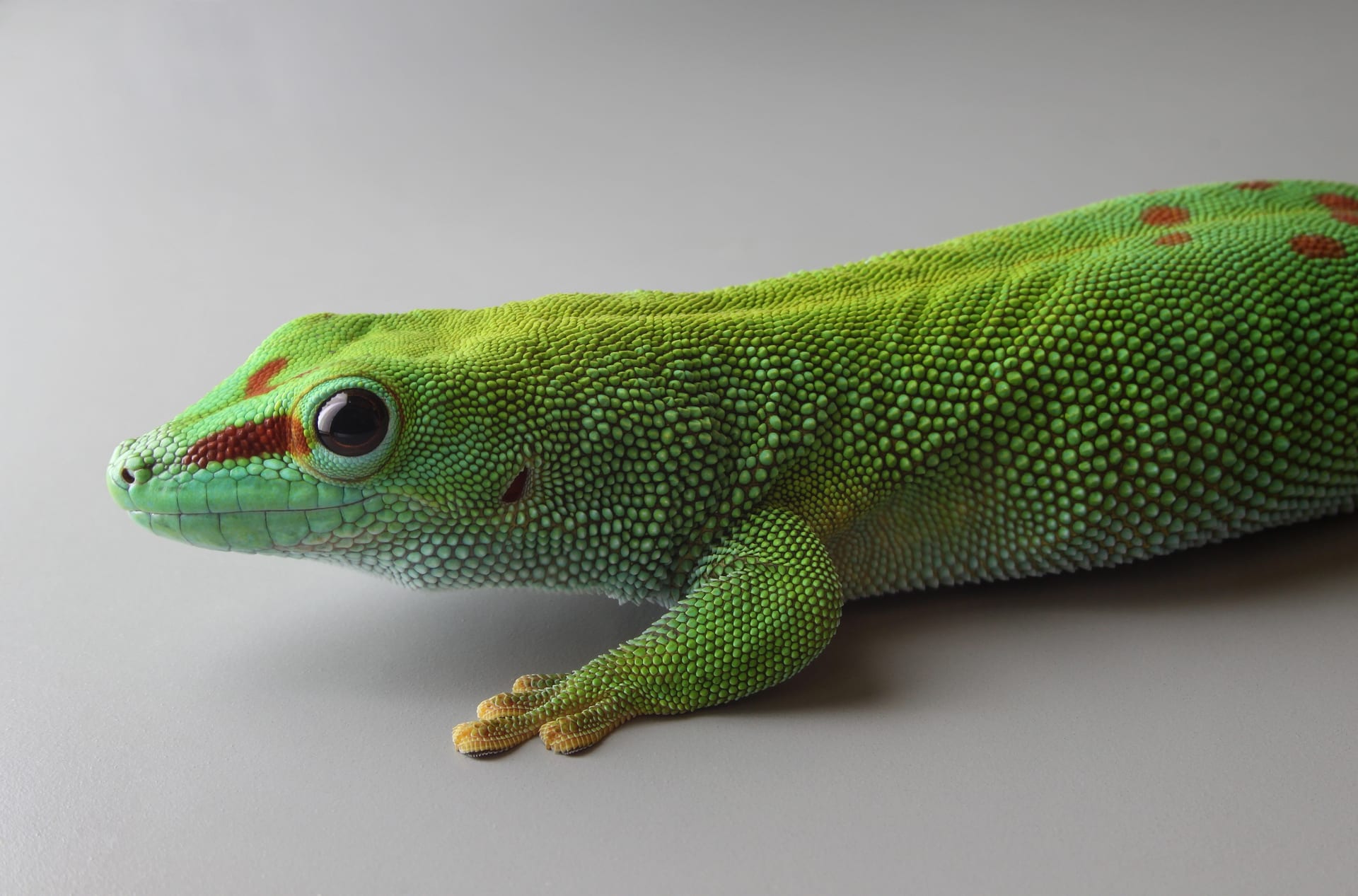
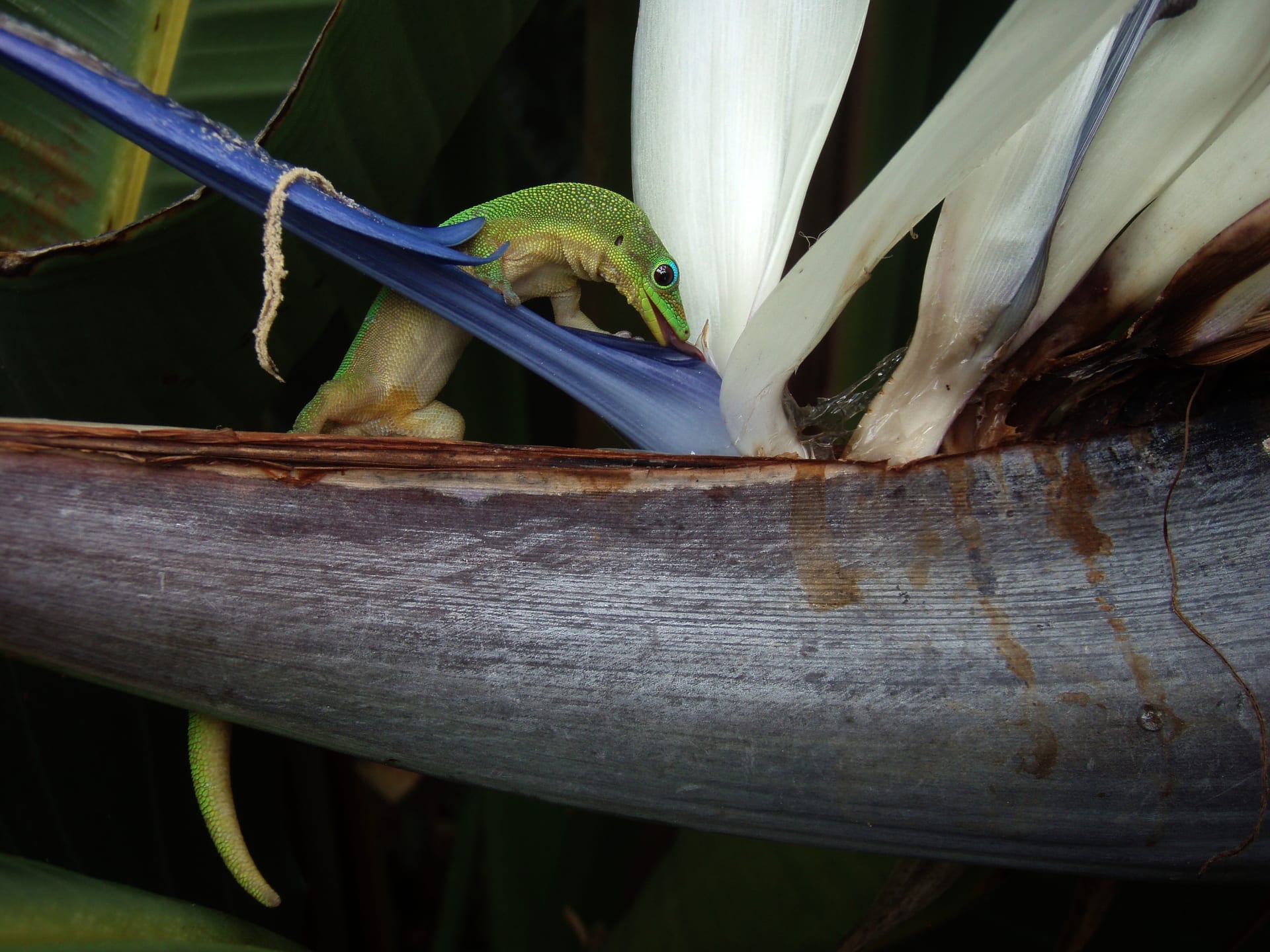
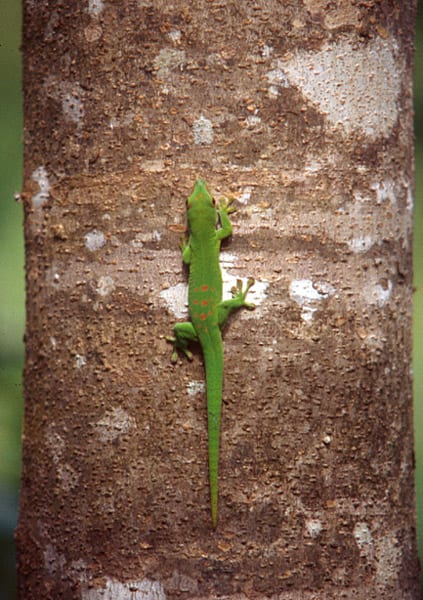
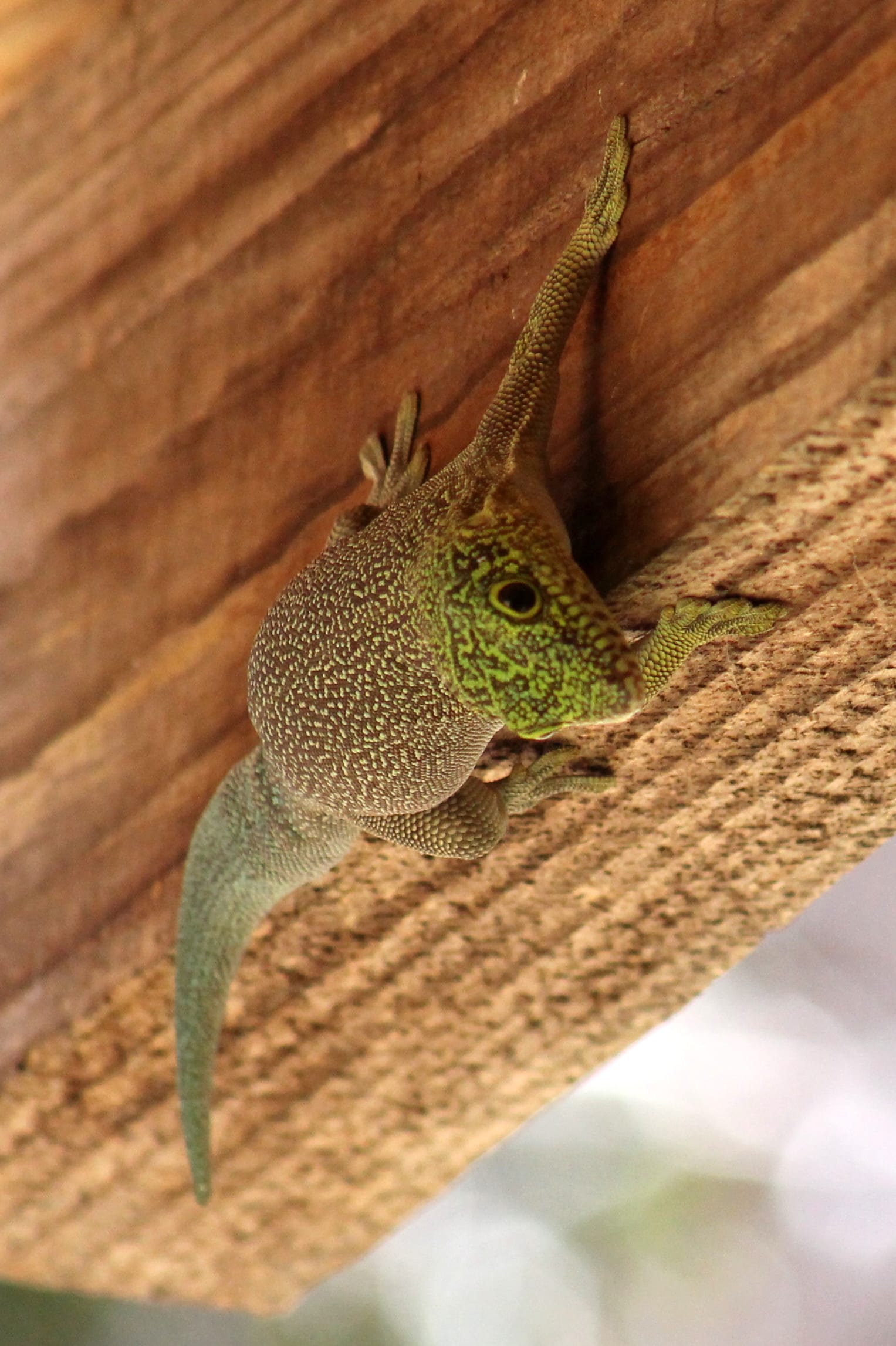
Phelsuma klemmeri is a diurnal, arboreal gecko of the family Gekkonidae endemic to coastal forest in north-western Madagascar. It is small, 8.3 to 9.5 cm in total length, slender and long-snouted, with a distinctly laterally flattened body. The upper and mid-back and most of the tail are turquoise blue, the lower back is light brown and the head is bright yellow. A black spot sits behind the eye and a black stripe runs from it to the hind limbs. Males are easily recognised by the orange colouring around the femoral pores. It lives in bamboo forest up to 400 m, most often on yellow bamboo canes, and retreats into narrow cracks in the canes when threatened. It is diurnal, likes to bask and often lives in small groups. Females lay a pair of eggs hidden in bamboo canes, which hatch in about 39 to 52 days at 27 degrees C. Habitat loss has left it assessed as Endangered by the IUCN, though it is bred extensively in captivity.
Source: Wikipedia (CC BY-SA 4.0)
Lifespan of the Klemmer's Day Gecko
The Klemmer's Day Gecko lives Up to about 15 years.
Size of the Klemmer's Day Gecko
The Klemmer's Day Gecko grows to 8.3-9.5cm total length.
Basic Info
Origin
Bamboo forest on the north-west coast of Madagascar, on the Ampasindava Peninsula and near Lake Mandrozo
Lifespan
Up to about 15 years
Size
8.3-9.5cm total length
Care Specifications
PeacefulGroupBreeding: Moderate
Sources: ReptiFiles: Neon Day Gecko Care Sheet / Reptiles Magazine: Other Phelsuma Worth Knowing / Wikipedia (English) / Reptile Database
References & Sources
Edited & verified by: BreederDirect editorial team
The taxonomic, regulatory, and husbandry data on this page are compiled and verified against the authoritative primary sources below.
Taxonomy & Authority
Accepted name: Phelsuma klemmeri Seipp, 1991
Authority databases: GBIF · Reptile Database
Nomenclature follows global taxonomic authority databases.
Regulations & Conservation Status
CITES Appendix IIIUCN EN · Endangered
Phelsuma spp. has been listed under Appendix II since February 4, 1977 (current listing effective February 1, 2017). Because it is listed under Appendix II, no registration certificate as an internationally rare wild animal or plant species is required; however, an export permit issued by the exporting country is required for importation. It is neither listed as a specified animal under the Ordinance for the Enforcement of the Act on Welfare and Management of Animals, nor designated as a specified alien species under the Invasive Species Act.
Sources: CITES Appendices (Phelsuma spp., Appendix II) / IUCN Red List
Regulations may change. Always verify the latest information with the relevant authorities.
Klemmer's Day Gecko Listings
Loading latest listingsFind listings for this species