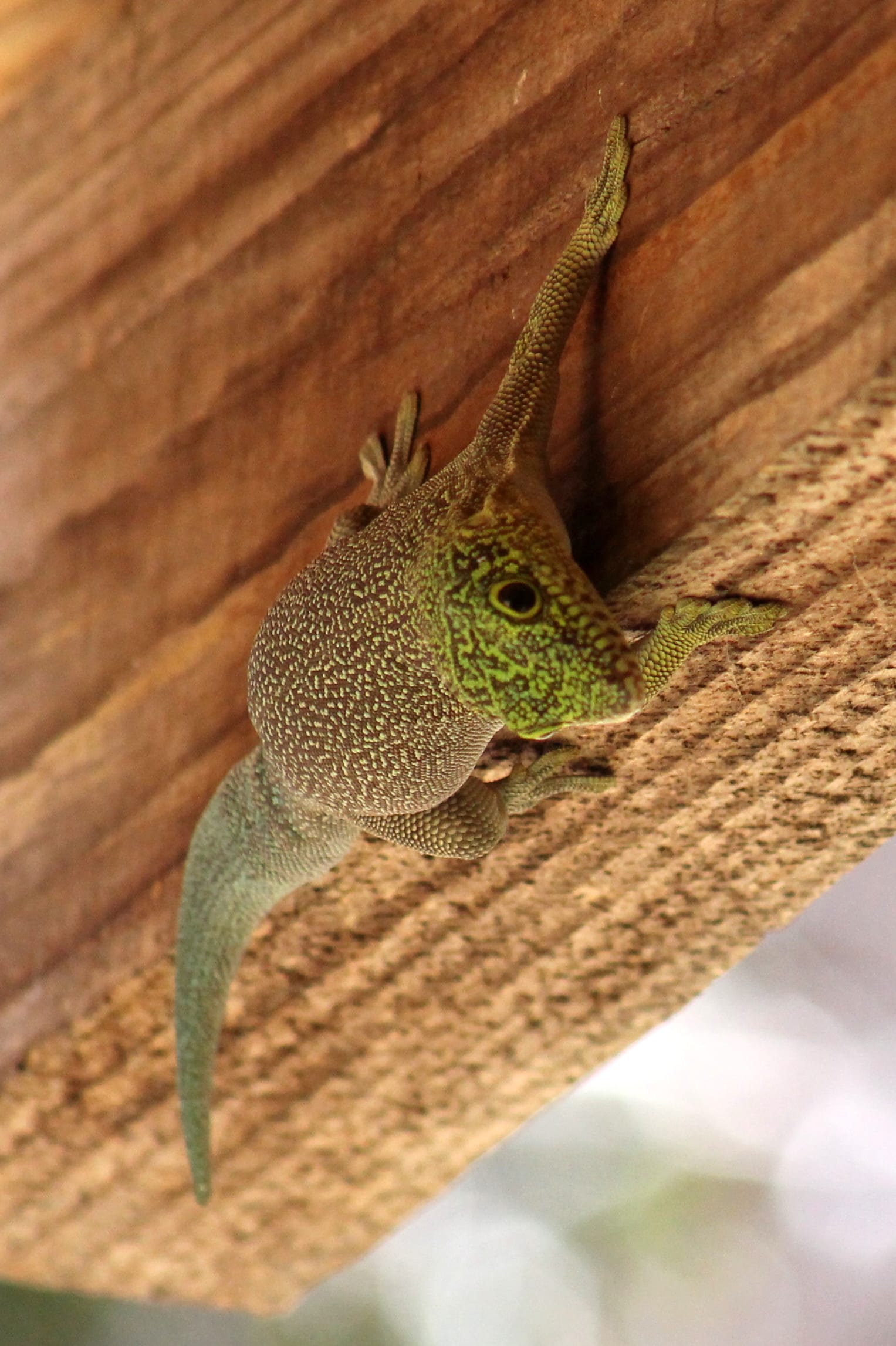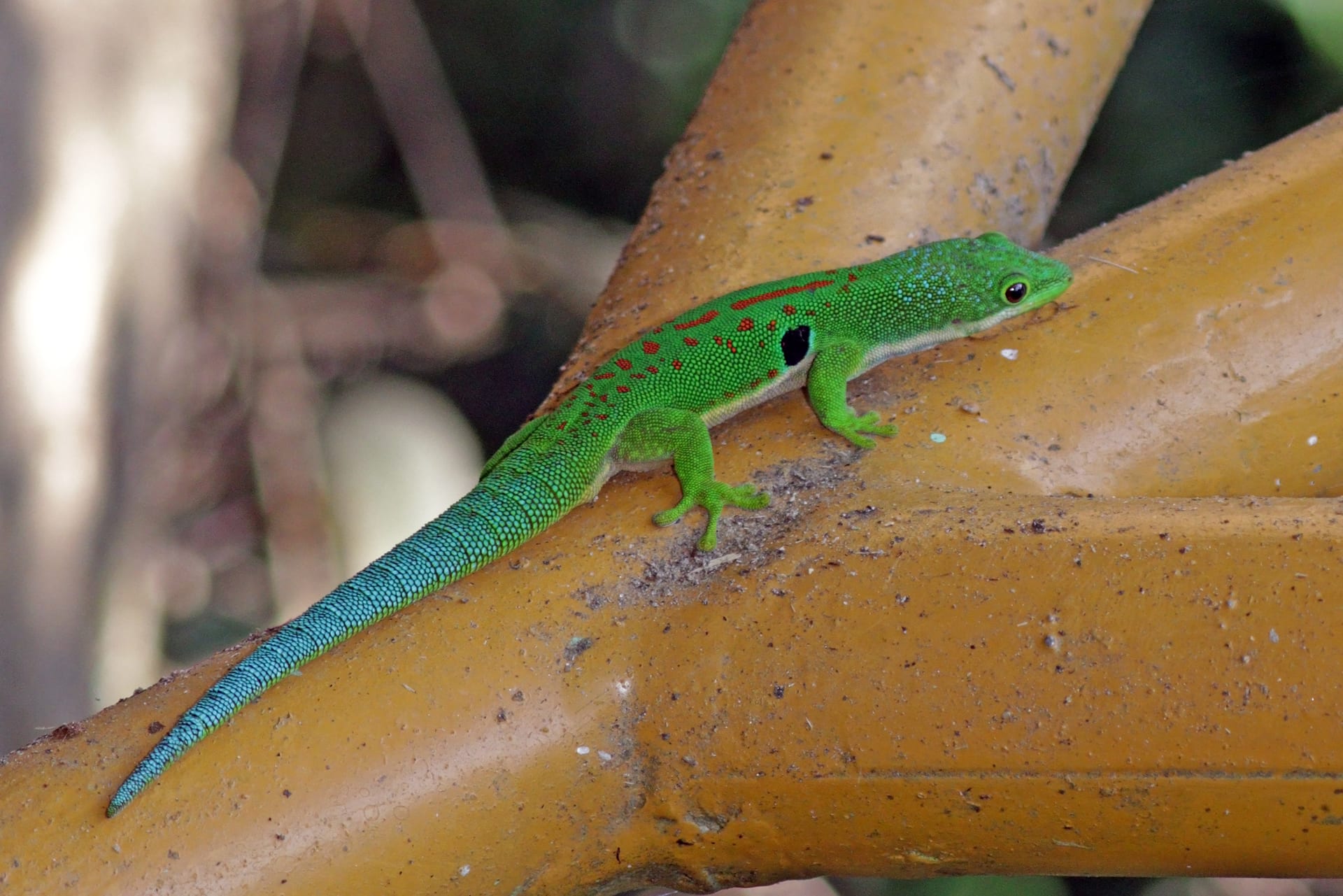
Source: Wikimedia Commons
Peacock Day Gecko
IntermediatePhelsuma quadriocellata
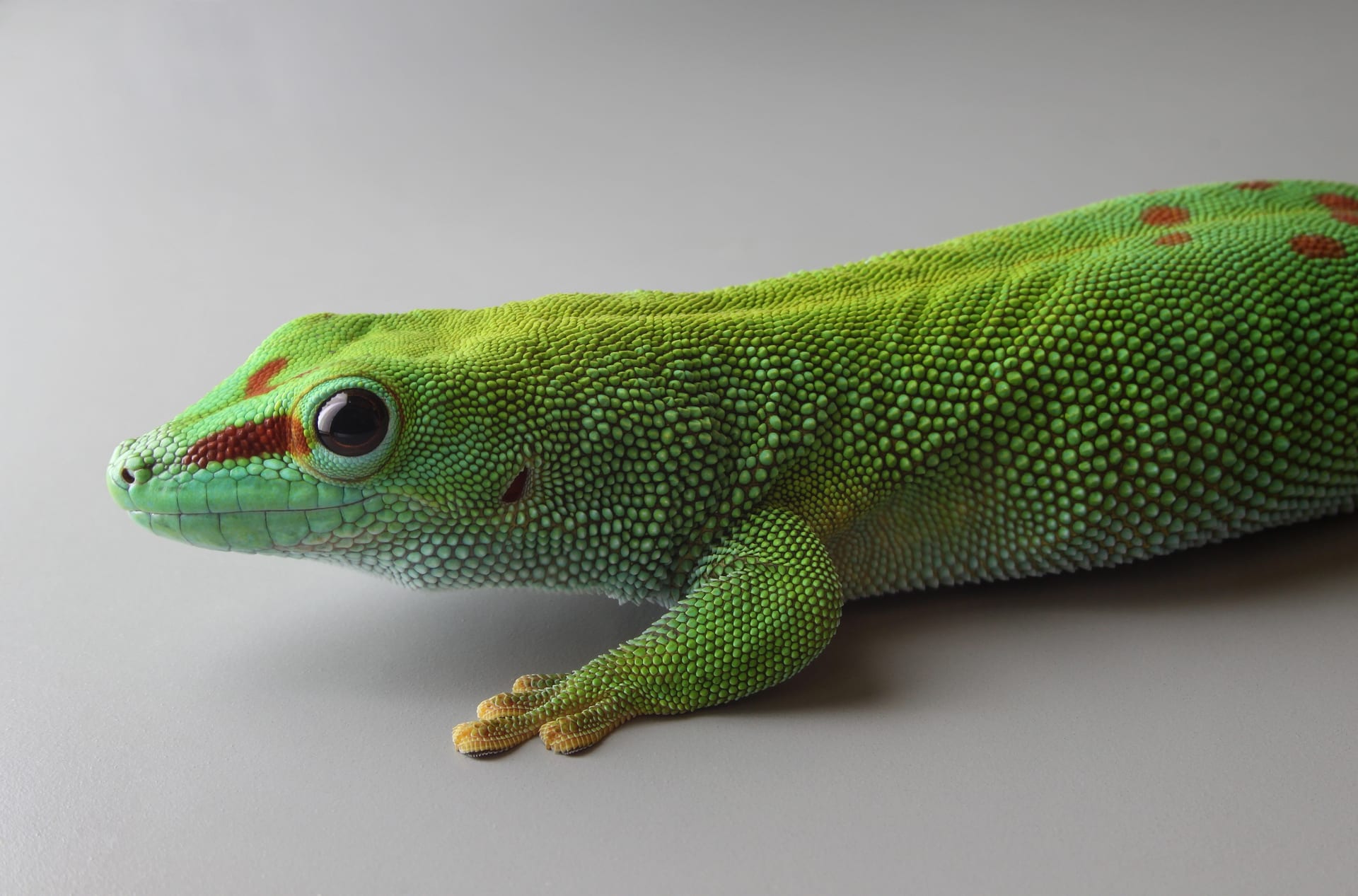
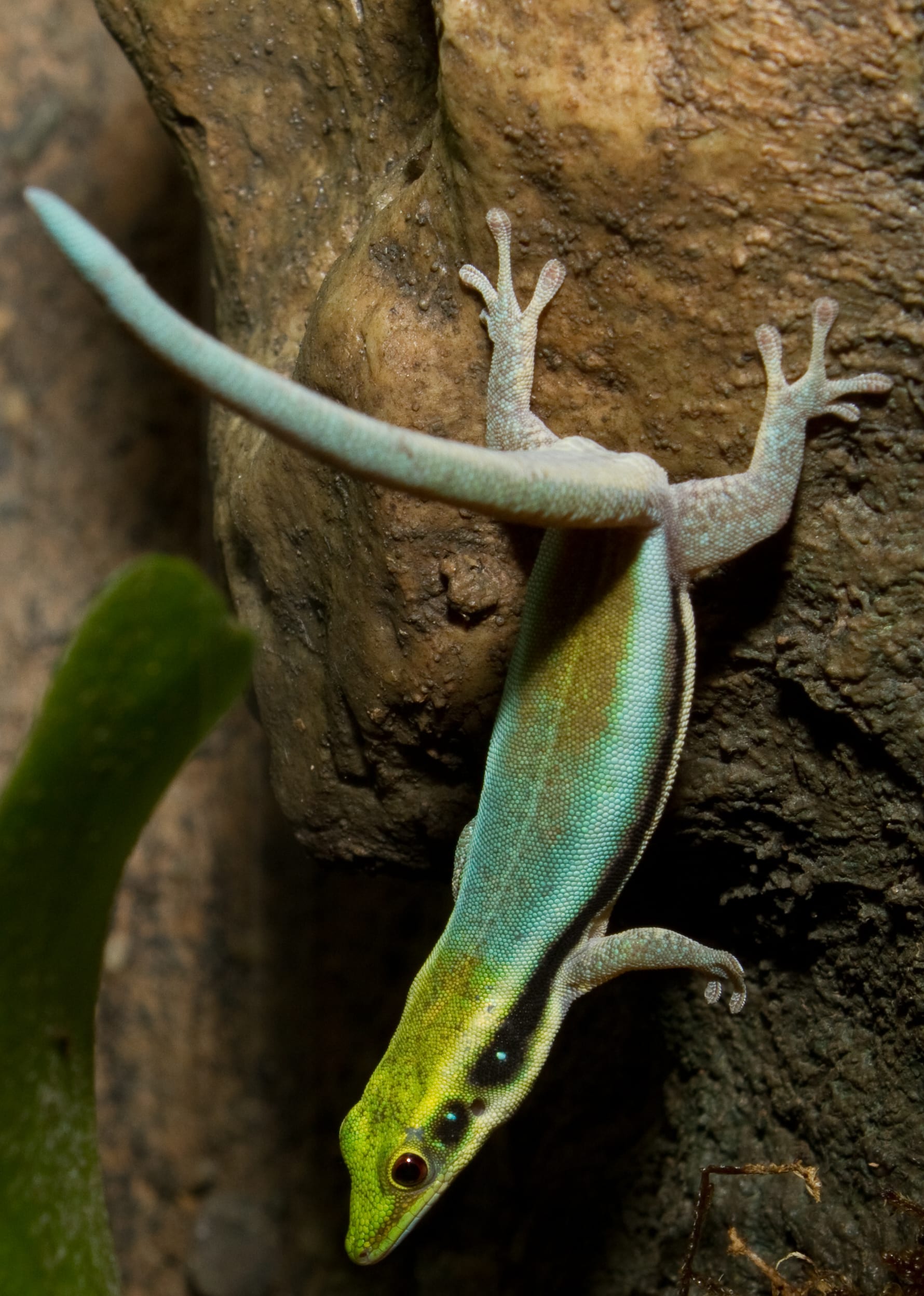
A bright green day gecko common in eastern Madagascar. Large dark spots on the flanks behind the forelimbs give it the peacock name; there are two to four depending on locality.
Difficulty
Intermediate
Temperature
25〜32℃
Size
About 12 cm total length (max 110-125 mm)
Humidity
40〜70%
Diet
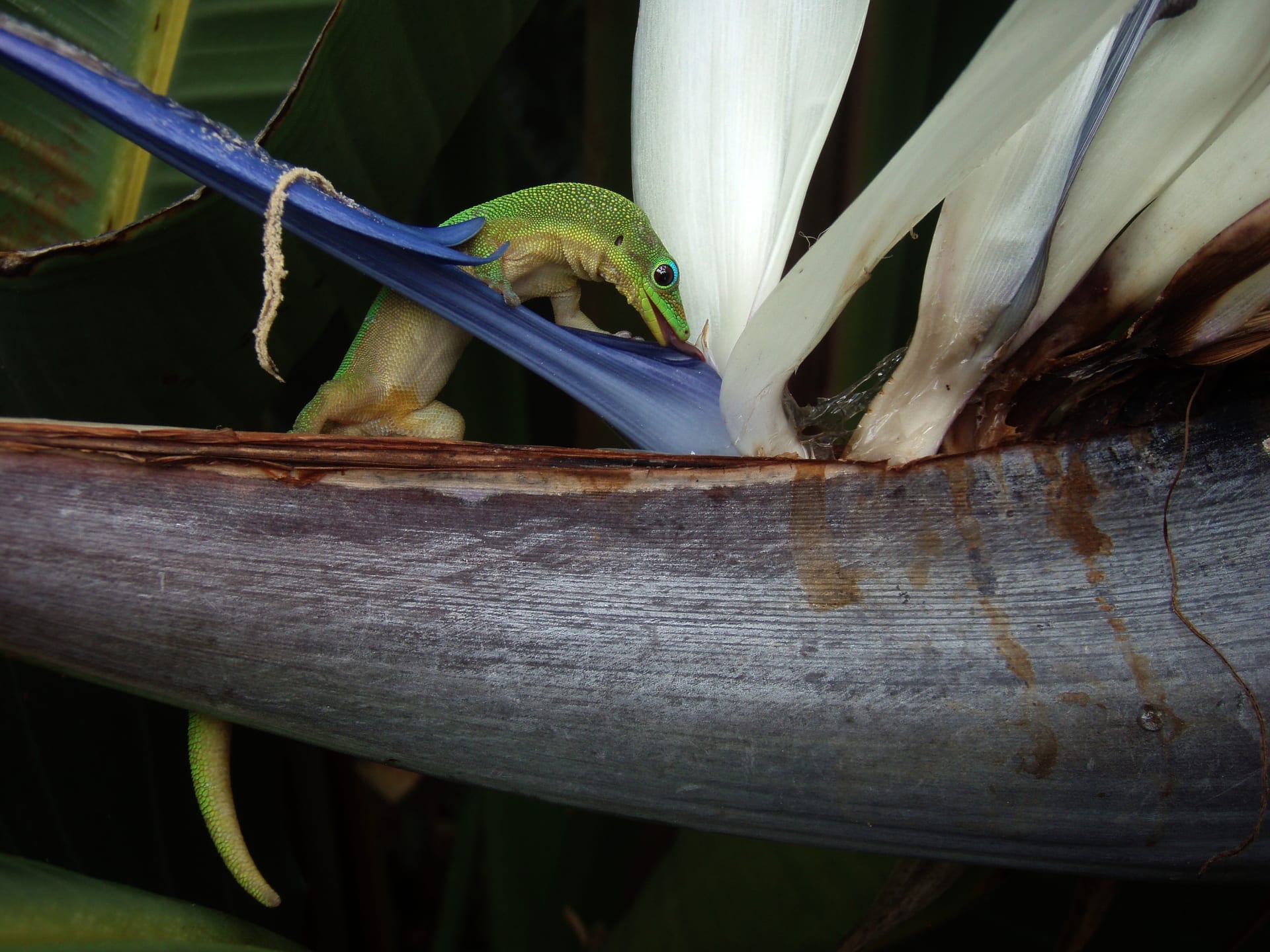
Omnivore (insects, nectar, ripe fruit)
About
The peacock day gecko is a Phelsuma day gecko widespread along the eastern coast of Madagascar, including Nosy Be and Nosy Komba. It is abundant in low- and mid-elevation forest and also in cultivated land and around houses, sometimes associated with Pandanus. It measures about 12 cm in total length; the Reptile Database gives a maximum of 110 mm for the nominate form and bimaculata and 125 mm for lepida. The body is bright green with small red markings and a pale belly, and some individuals have bluish tails. The key identification feature is the large dark spot on each flank behind the forelimb; some populations have two such spots and others four. It is now regarded as a species complex divided into three subspecies (P. q. quadriocellata, P. q. lepida and P. q. bimaculata), while the former subspecies parva is now the separate species P. parva. It has lidless eyes and adhesive toe pads that let it climb smooth surfaces. In Japan imported and captive-bred animals are sold in specialist shops.
Source: Wikipedia (CC BY-SA 4.0)
Size of the Peacock Day Gecko
The Peacock Day Gecko grows to About 12 cm total length (max 110-125 mm).
Basic Info
Origin
Eastern coastal Madagascar, Nosy Be and Nosy Komba
Size
About 12 cm total length (max 110-125 mm)
Temperature
25〜32℃
Humidity
40〜70%
Diet
References & Sources
Edited & verified by: BreederDirect editorial team
The taxonomic, regulatory, and husbandry data on this page are compiled and verified against the authoritative primary sources below.
Taxonomy & Authority
Accepted name: Phelsuma quadriocellata Peters, 1883
Synonyms: Pachydactylus quadriocellatus Peters, 1883, Phelsuma bimaculata Kaudern, 1922
Authority databases: GBIF · The Reptile Database: Phelsuma quadriocellata · GBIF: Phelsuma quadriocellata
Nomenclature follows global taxonomic authority databases.
Regulations & Conservation Status
CITES Appendix II
Listed in CITES Appendix II. International trade requires an export permit from the country of origin, but no registration is needed to keep or transfer the animal within Japan. The whole genus Phelsuma is listed.
Sources: Species+ (CITES): Phelsuma quadriocellata
Regulations may change. Always verify the latest information with the relevant authorities.
Peacock Day Gecko Listings
Loading latest listingsFind listings for this species