Source: Wikimedia Commons
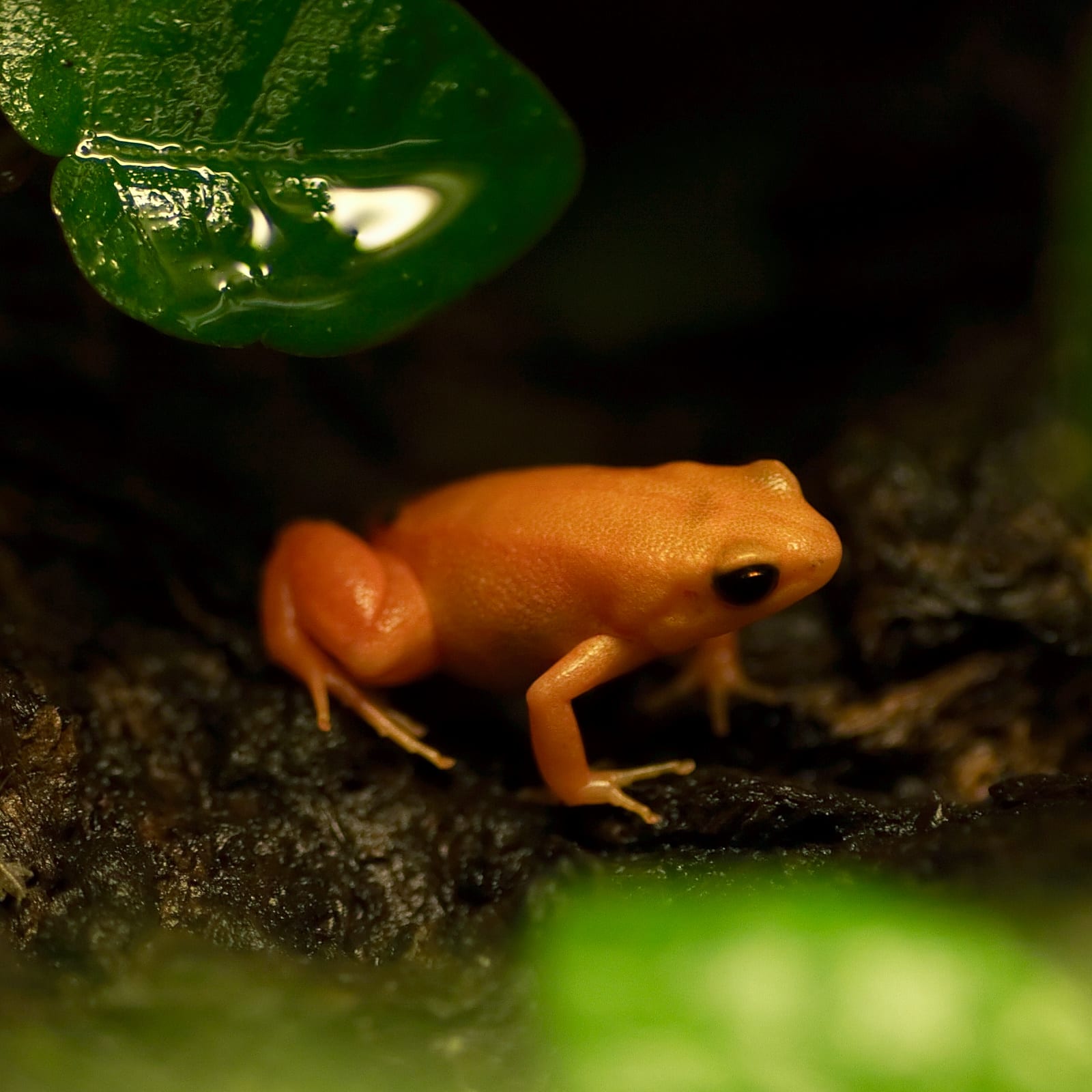
Golden Mantella
IntermediateMantella aurantiaca
A frog under 3 cm long, restricted to a very small area of east-central Madagascar. The whole body is a uniform yellow to orange-red, an aposematic signal of its toxicity. It is diurnal and lives in groups.
Difficulty
Intermediate
Temperature
20〜23℃
Size
2-2.6cm
Humidity
70〜100%
Diet
Fruit flies, springtails, aphids and small crickets
About
Mantella aurantiaca is a small mantellid restricted to three areas around Moramanga in east-central Madagascar. It measures 2-2.6 cm and is uniformly yellow, orange or red, with red flash marks on the inner legs. The vivid colour is aposematic, advertising skin toxins that the frog derives from dietary alkaloids in mites and ants; captive-bred animals therefore are not poisonous. Its behaviour is strongly seasonal, with little activity from May to October, and breeding takes place at seasonal pools when the rains come. Eggs are laid on damp leaf litter beside water and the tadpoles are washed in as the pools fill. Keep it cool, 20-23 C by day dropping to 16-18 C at night, with high humidity. Males are territorial, so give six to nine adults about 76 x 30 x 30 cm. Its range is extremely small and the IUCN lists it as Endangered.
Source: Wikipedia (CC BY-SA 4.0)
Size of the Golden Mantella
The Golden Mantella grows to 2-2.6cm.
Temperature & humidity for the Golden Mantella
The ideal temperature for the Golden Mantella is 20〜23℃. Ideal humidity is 70〜100%.
Basic Info
Origin
East-central Madagascar (three areas around Moramanga, including the Torotorofotsy Wetland)
Size
2-2.6cm
Temperature
20〜23℃
Humidity
70〜100%
Care Specifications
Semi-aggressiveGroupBreeding: Moderate
Sources: Amphibian Care: Golden Mantella / Josh's Frogs: Golden Mantella / Wikipedia (English)
References & Sources
Edited & verified by: BreederDirect editorial team
The taxonomic, regulatory, and husbandry data on this page are compiled and verified against the authoritative primary sources below.
Taxonomy & Authority
Accepted name: Mantella aurantiaca Mocquard, 1900
Synonyms: Mantella aurantiaca rubra Staniszewski, 1996
Authority databases: GBIF
Nomenclature follows global taxonomic authority databases.
Regulations & Conservation Status
CITES Appendix IIIUCN EN · Endangered
The genus Mantella (Mantella spp.) was listed on Appendix II on 19 July 2000 (Species+). As an Appendix II species, no registration certificate for internationally rare wild fauna and flora is required. The IUCN designates it as endangered (EN) due to its narrow distribution range.
Sources: CITES Appendices (マンテラ属 Mantella spp. 附属書II、2000年7月19日発効) / IUCN Red List
Regulations may change. Always verify the latest information with the relevant authorities.
Golden Mantella Listings
Loading latest listingsFind listings for this species