Source: Wikimedia Commons
Giant Day Gecko
IntermediatePhelsuma grandis
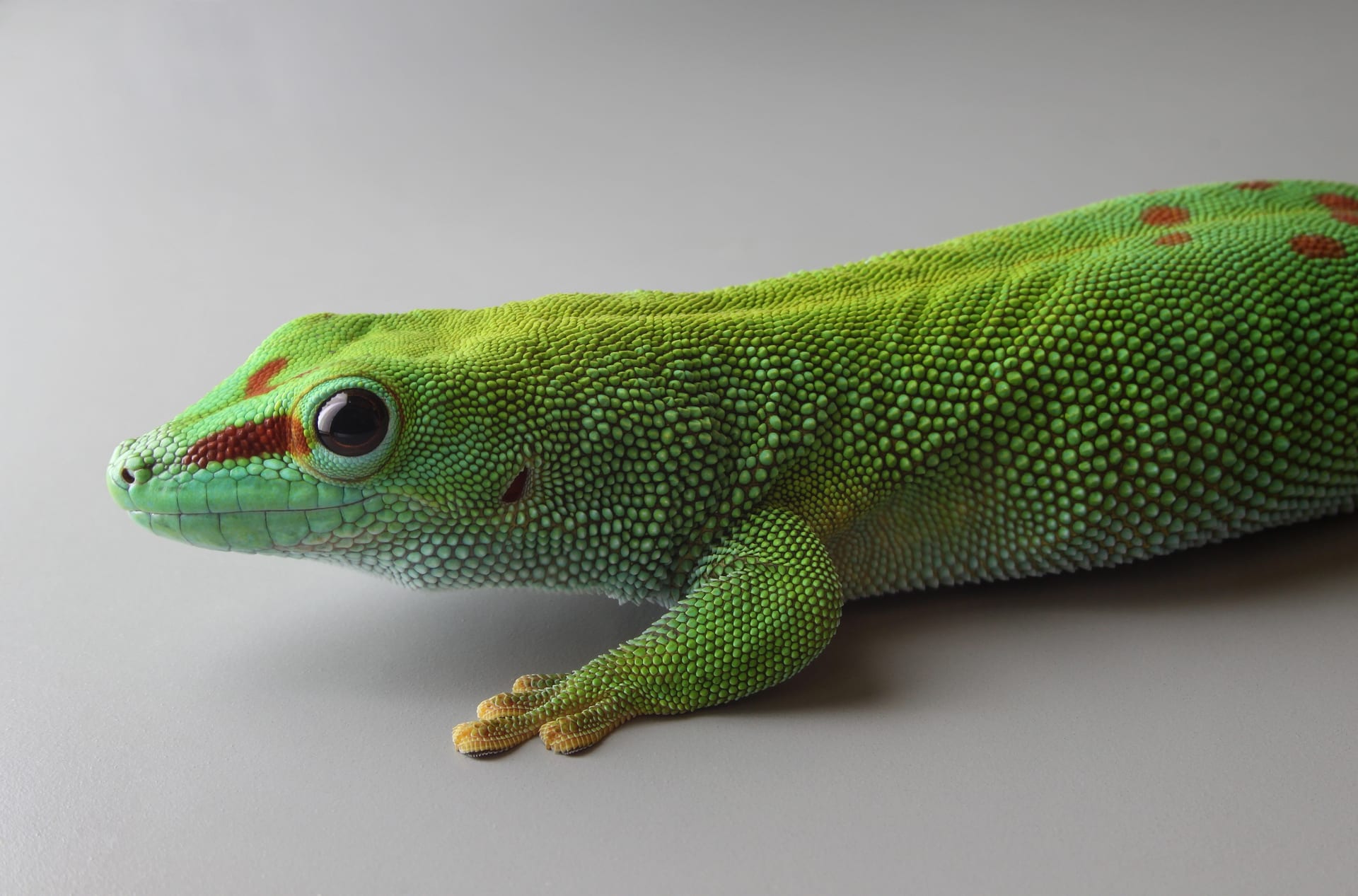
One of the largest day geckos, bright green with red markings. It reaches 23-28 cm in total length and is active throughout the day. It needs strong UVB and a warm basking spot, and males fight fiercely, so it is kept singly or in pairs.
Difficulty
Intermediate
Lifespan
15-20 years
Size
23-28cm total length, females generally smaller
Humidity
40〜75%
Diet
Crickets and dubia roaches, prepared fruit-based gecko diet, nectar
About
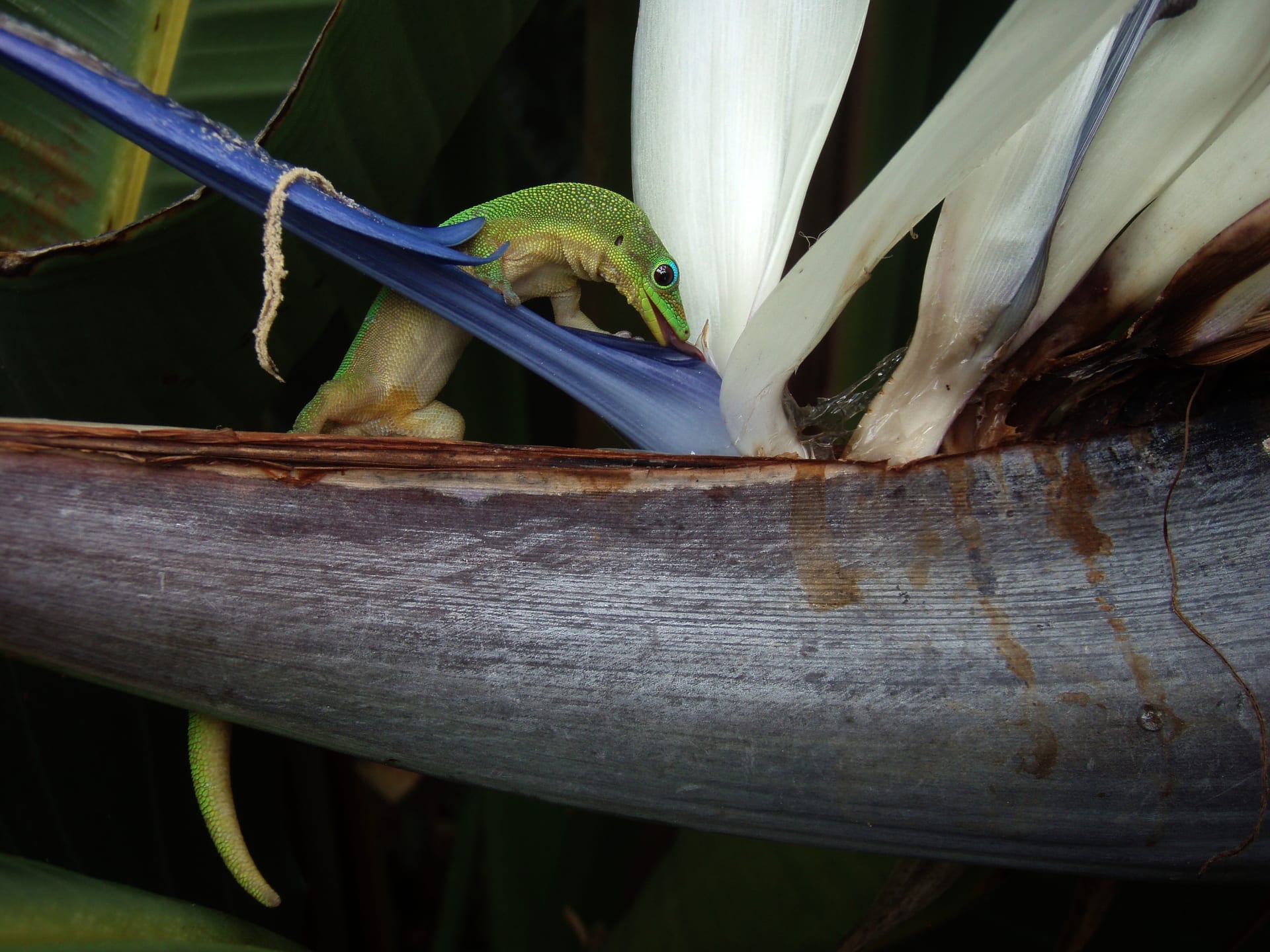
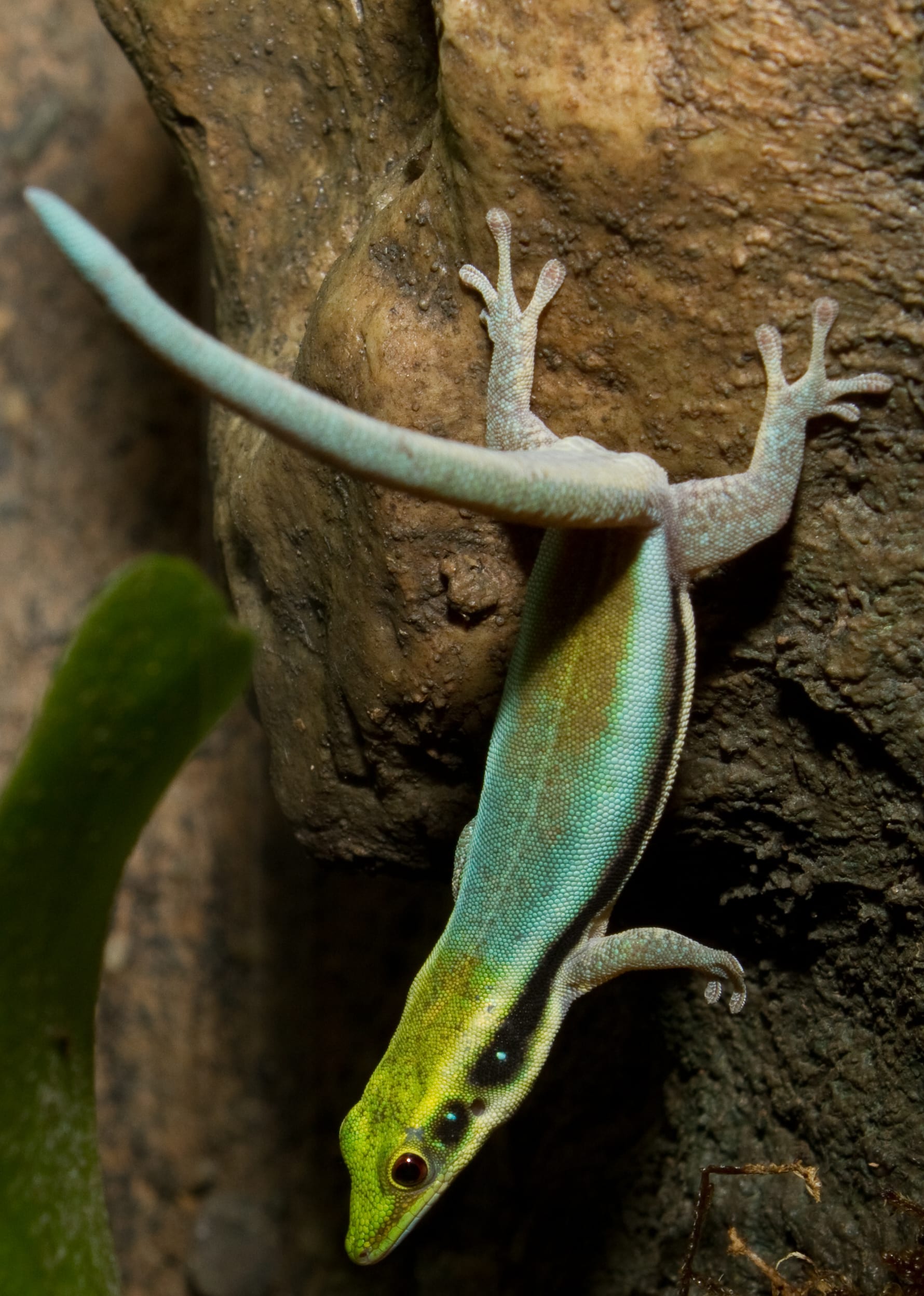
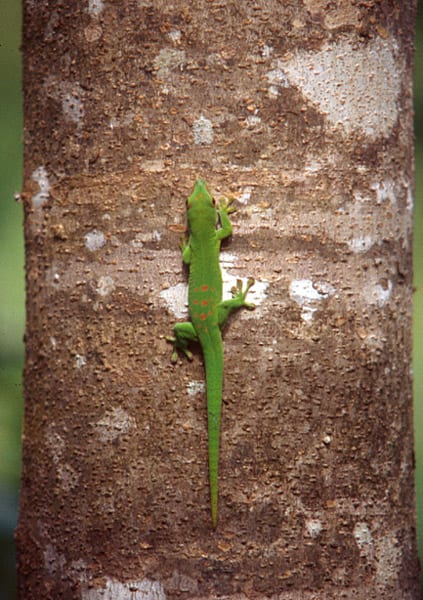
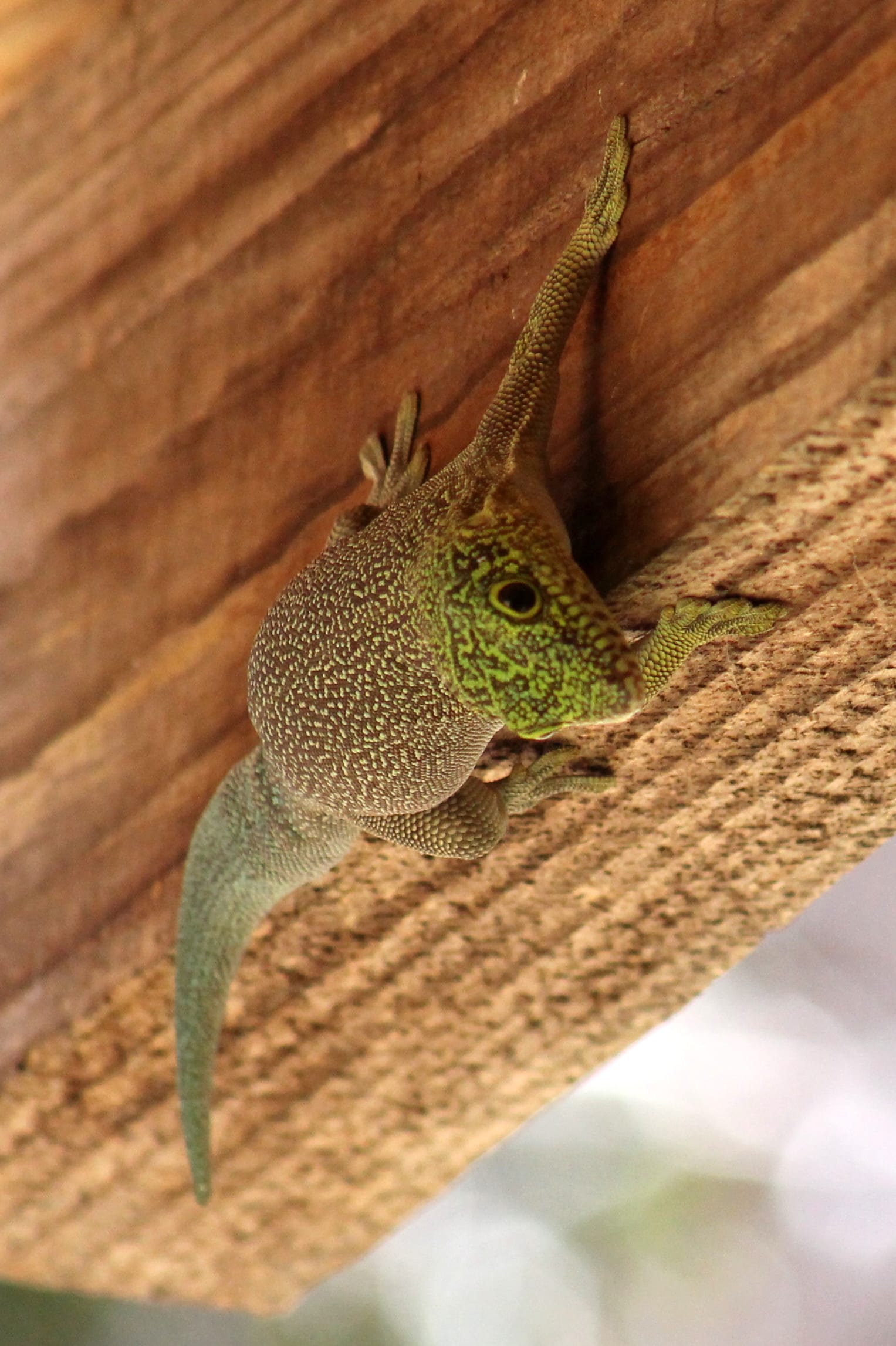
Phelsuma grandis is a diurnal, arboreal gecko of the family Gekkonidae found in tropical and subtropical forest in northern and north-western Madagascar. It reaches 23 to 28 cm in total length, making it one of the largest living day geckos. The body is bright green, rarely bluish green, with a red stripe running from the nostril to the eye and red dots or bars on the back. The red markings vary greatly and are absent in some animals, but the nostril-to-eye stripe is always present. Adults may show conspicuous white sacs on the neck that store calcium, best developed in females. Captive care calls for a tall enclosure, strong UVB and a basking spot of 29 to 32 degrees C, with humidity around 40 to 75 per cent. Males fight fiercely and the subordinate animal can be badly injured, so they must never be housed together. The skin is thin and tears easily, so handling is best avoided in favour of interaction at feeding time. The species has established introduced populations on Reunion, in Florida and in Hawaii.
Source: Wikipedia (CC BY-SA 4.0)
Lifespan of the Giant Day Gecko
The Giant Day Gecko lives 15-20 years.
Size of the Giant Day Gecko
The Giant Day Gecko grows to 23-28cm total length, females generally smaller.
Basic Info
Origin
Northern and north-western Madagascar, including Nosy Komba; introduced to Reunion, Florida and Hawaii
Lifespan
15-20 years
Size
23-28cm total length, females generally smaller
Care Specifications
Semi-aggressivePairBreeding: Moderate
Sources: ReptiFiles: Giant Day Gecko Care Sheet / Reptiles Magazine: Three Day Geckos From Madagascar / Wikipedia (English) / Reptile Database
References & Sources
Edited & verified by: BreederDirect editorial team
The taxonomic, regulatory, and husbandry data on this page are compiled and verified against the authoritative primary sources below.
Taxonomy & Authority
Accepted name: Phelsuma grandis Gray, 1870
Synonyms: Phelsuma madagascariensis grandis Gray, 1870, Phelsuma madagascariensis venusta Mertens, 1964, Phelsuma madagascariensis notissima Mertens, 1970
Authority databases: GBIF · Reptile Database
Nomenclature follows global taxonomic authority databases.
Regulations & Conservation Status
CITES Appendix IIIUCN LC · Least Concern
Phelsuma spp. has been listed under Appendix II since February 4, 1977 (current listing effective February 1, 2017). Because it is listed under Appendix II, no registration certificate as an internationally rare wild animal or plant species is required; however, an export permit issued by the exporting country is required for importation. It is neither listed as a specified animal under the Ordinance for the Enforcement of the Act on the Welfare and Management of Animals, nor designated as a specified alien species under the Invasive Species Act.
Sources: CITES Appendices (Phelsuma spp., Appendix II) / IUCN Red List
Regulations may change. Always verify the latest information with the relevant authorities.
Giant Day Gecko Listings
Loading latest listingsFind listings for this species