Source: Wikimedia Commons
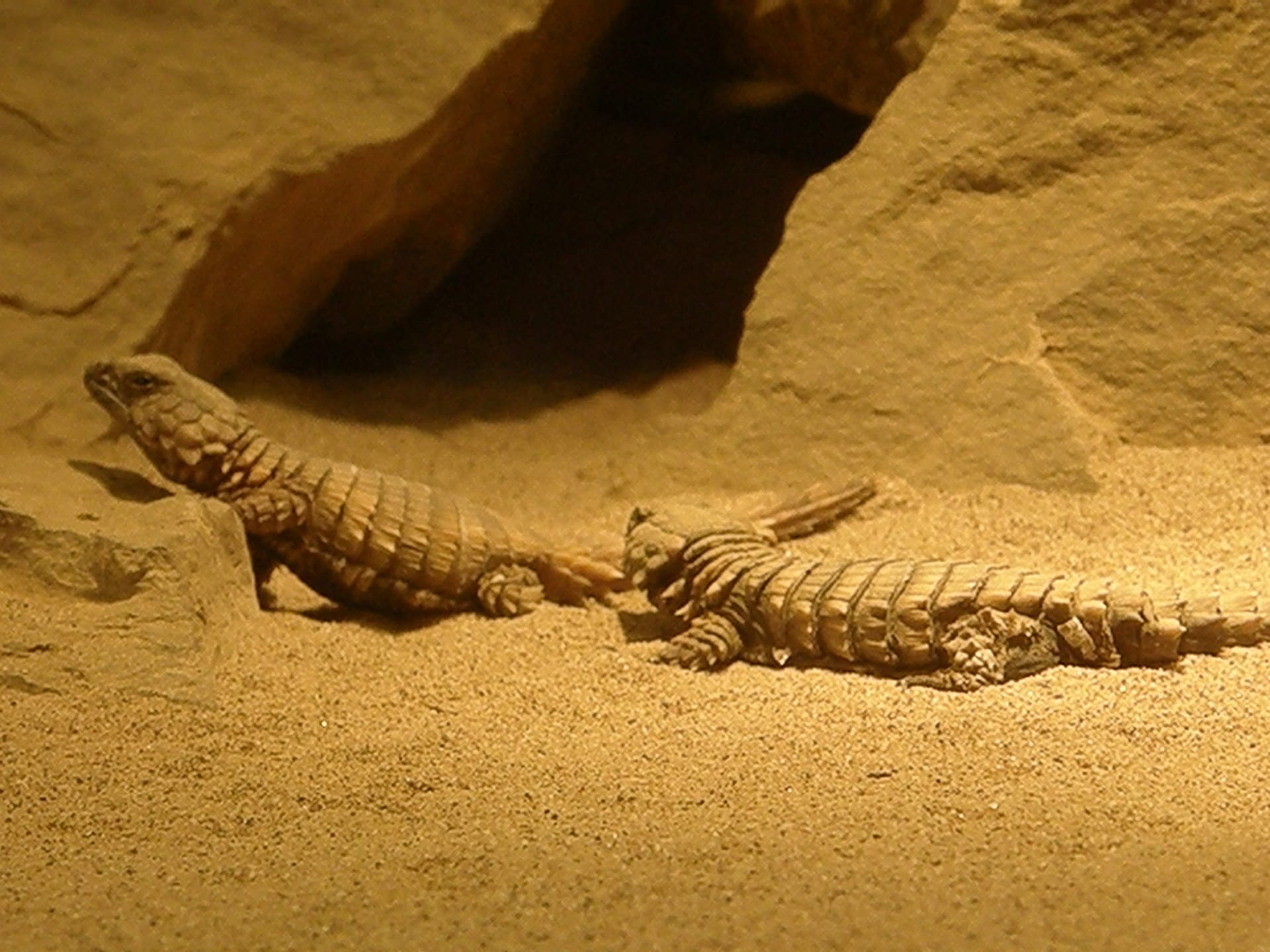
Armadillo Girdled Lizard
AdvancedOuroborus cataphractus
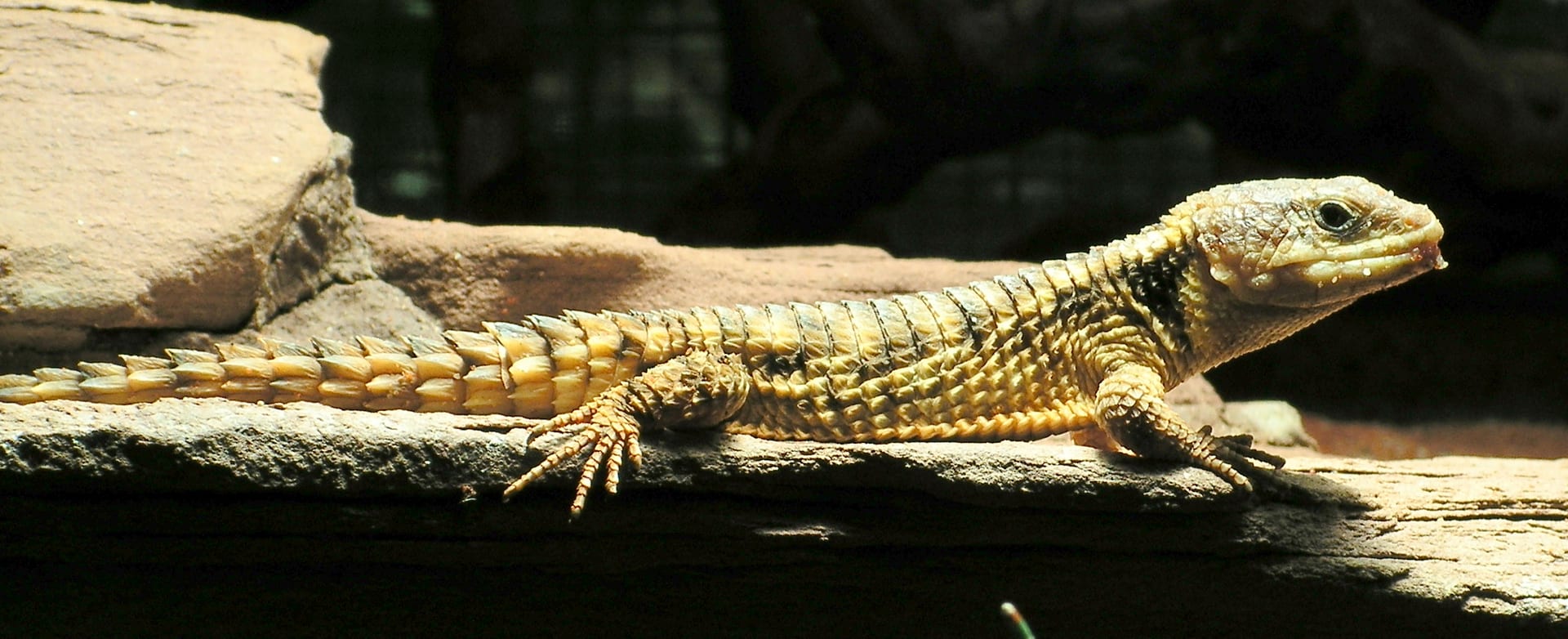
A South African endemic whose neck, body, tail and limbs are armoured with spiny osteoderm scales. Threatened, it grips its tail in its jaws and curls into a ball, presenting its plated back and spiny tail to an attacker, the behaviour that gives it its name.
Difficulty
Advanced
Temperature
25〜32℃
Lifespan
15-20 years
Size
Up to 21cm total length (SVL 7.5-10.5cm)
Humidity
40〜70%
Diet
Carnivorous: small invertebrates such as insects and spiders; it will also take some plant material
About
The armadillo girdled lizard (Ouroborus cataphractus) is a cordylid lizard endemic to western South Africa. It reaches 21 cm in total length with a snout-vent length of 7.5-10.5 cm, males being larger with more prominent femoral pores. The body is flattened, as are the head and tail, suiting it to squeezing into rock crevices. Six large scales with spiny projections run across the back of the head and fifteen to seventeen more along the back, while the tail carries whorls of large spiny scales. It is pale yellowish brown above and yellow below with irregular dark markings. Diurnal and living in rocky country, it is known to share a crevice as a family group of some eight to ten animals, an adult pair together with subadults and juveniles. Cornered, it grips its tail in its jaws and curls up; it can shed the tail but, because the tail is essential to this defence, does so only as a last resort. It is viviparous, producing one or two young. Over-collection for the pet trade has reduced wild populations.
Source: Wikipedia (CC BY-SA 4.0)
Lifespan of the Armadillo Girdled Lizard
The Armadillo Girdled Lizard lives 15-20 years.
Size of the Armadillo Girdled Lizard
The Armadillo Girdled Lizard grows to Up to 21cm total length (SVL 7.5-10.5cm).
Basic Info
Origin
Western South Africa, in the Succulent Karoo biome of the Northern and Western Cape, in crevices of rock outcrops and mountain slopes, preferably on sandstone
Lifespan
15-20 years
Size
Care Specifications
Semi-aggressiveGroupBreeding: Very hard
Sources: Reptile Database: Ouroborus cataphractus / Animal Diversity Web: Cordylus cataphractus / Wikipedia (Japanese)
References & Sources
Edited & verified by: BreederDirect editorial team
The taxonomic, regulatory, and husbandry data on this page are compiled and verified against the authoritative primary sources below.
Taxonomy & Authority
Accepted name: Ouroborus cataphractus (Boie, 1828)
Synonyms: Cordylus cataphractus Boie, 1828, Cordylus nebulosus Smith, 1838
Authority databases: GBIF · Reptile Database
Nomenclature follows global taxonomic authority databases.
Regulations & Conservation Status
CITES Appendix IIIUCN NT · Near Threatened
Listed in CITES Appendix II effective from 6 June 1981 (currently listed at the genus level as Ouroborus spp.). As it is in Appendix II, registration certificate for internationally rare wild animals and plants is not required. IUCN Red List assessment: Near Threatened (NT). This species is not included in either the specified animals listed in the appended table of the Ordinance for Enforcement of the Animal Welfare and Management Law, nor the specified invasive alien species under the Ordinance for Enforcement of the Invasive Alien Species Act.
Sources: CITES Species+ (Ouroborus spp., Appendix II, effective 6 June 1981) / IUCN Red List
Regulations may change. Always verify the latest information with the relevant authorities.
Armadillo Girdled Lizard Listings
Loading latest listingsFind listings for this species