Source: Wikimedia Commons
Angolan Python
IntermediatePython anchietae
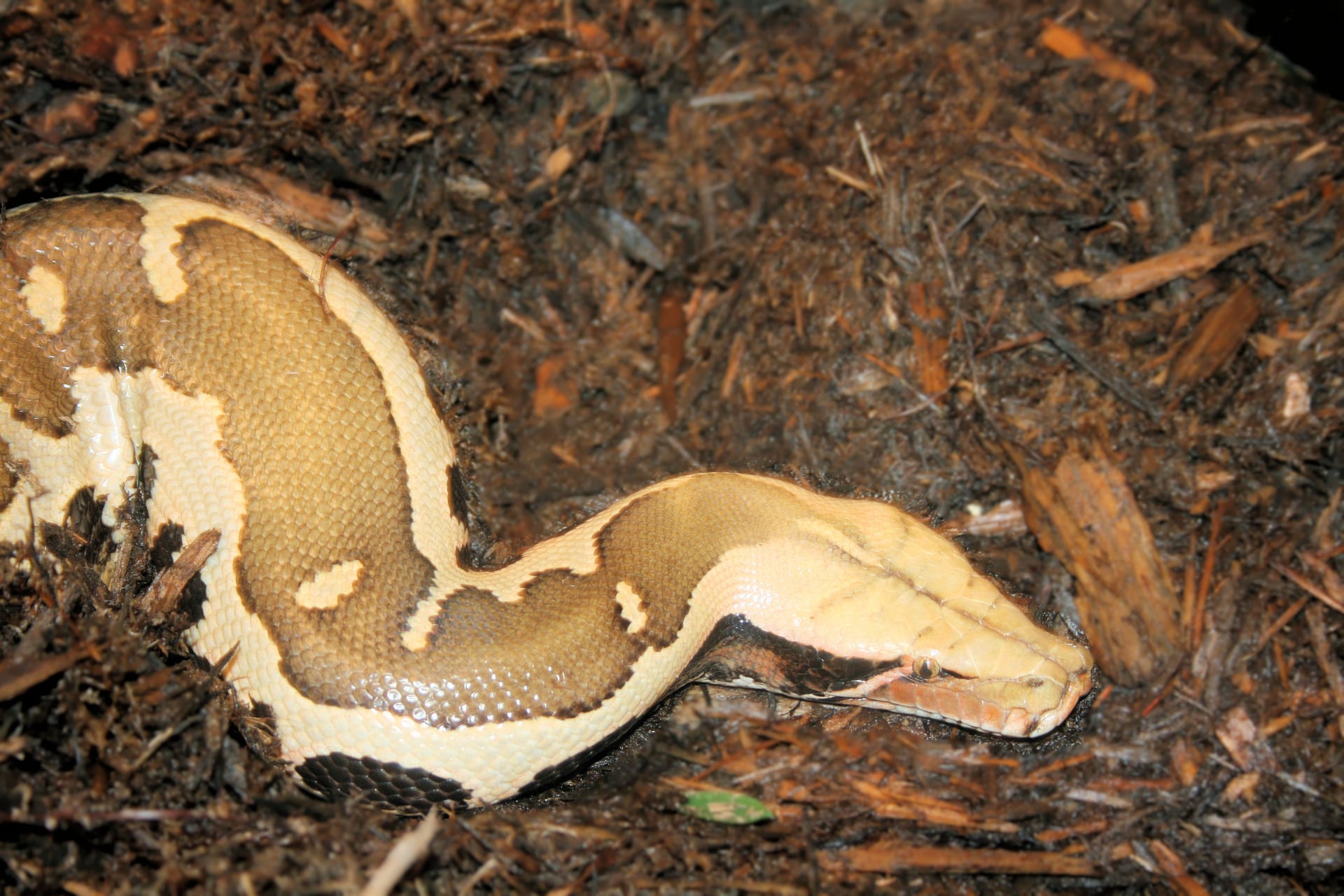
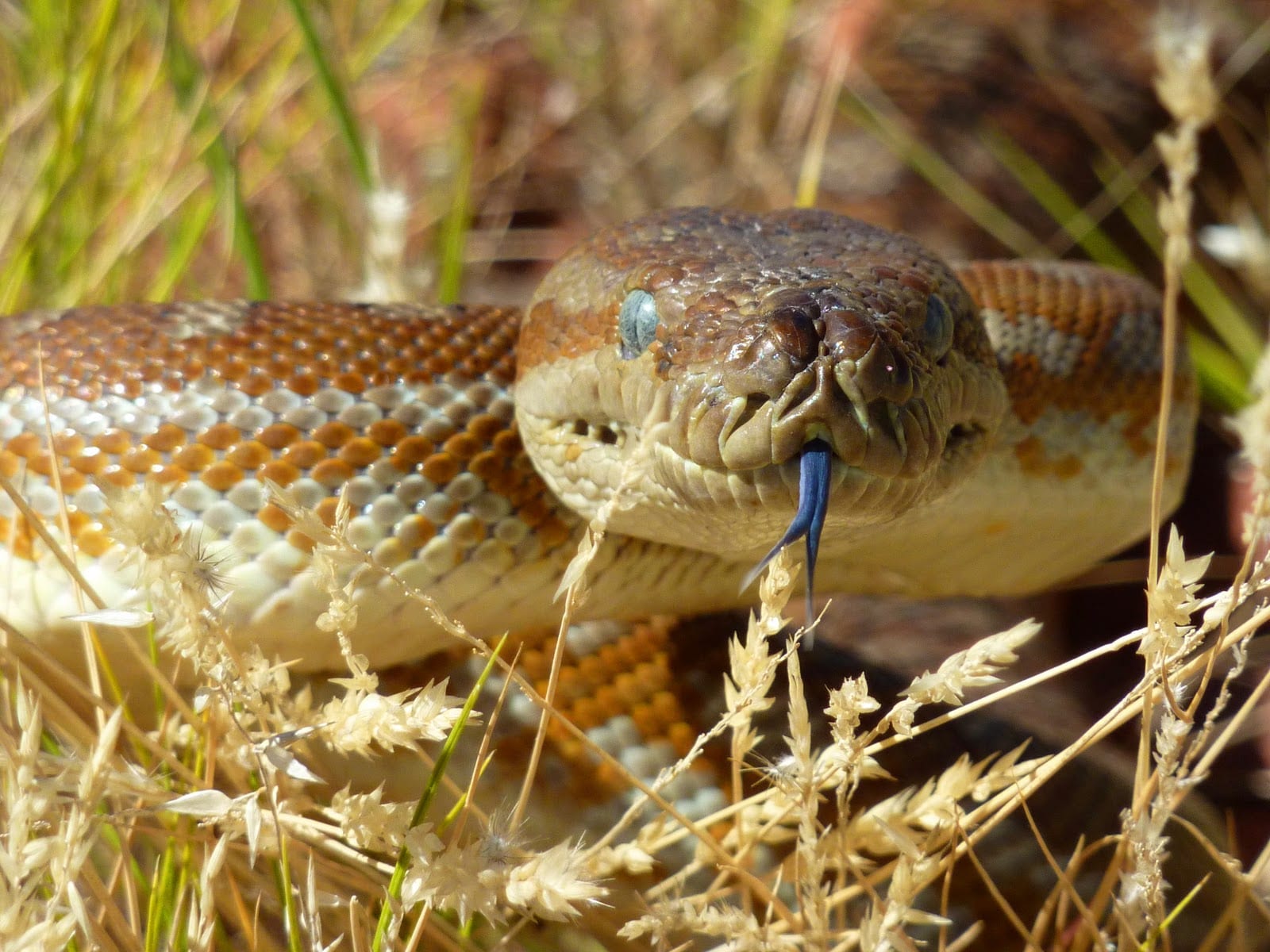
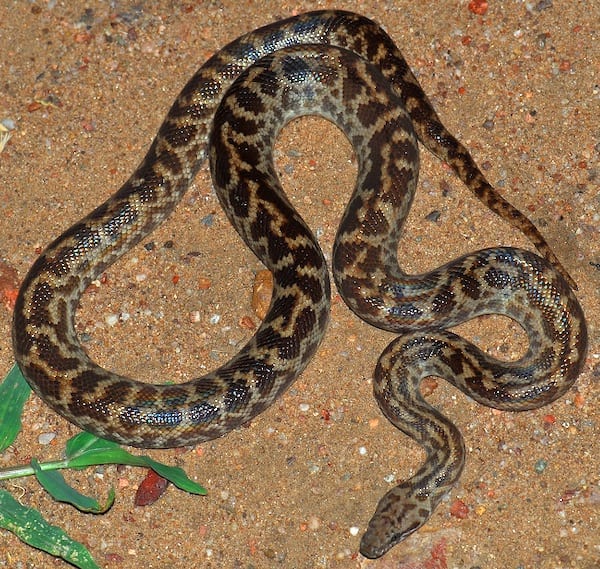
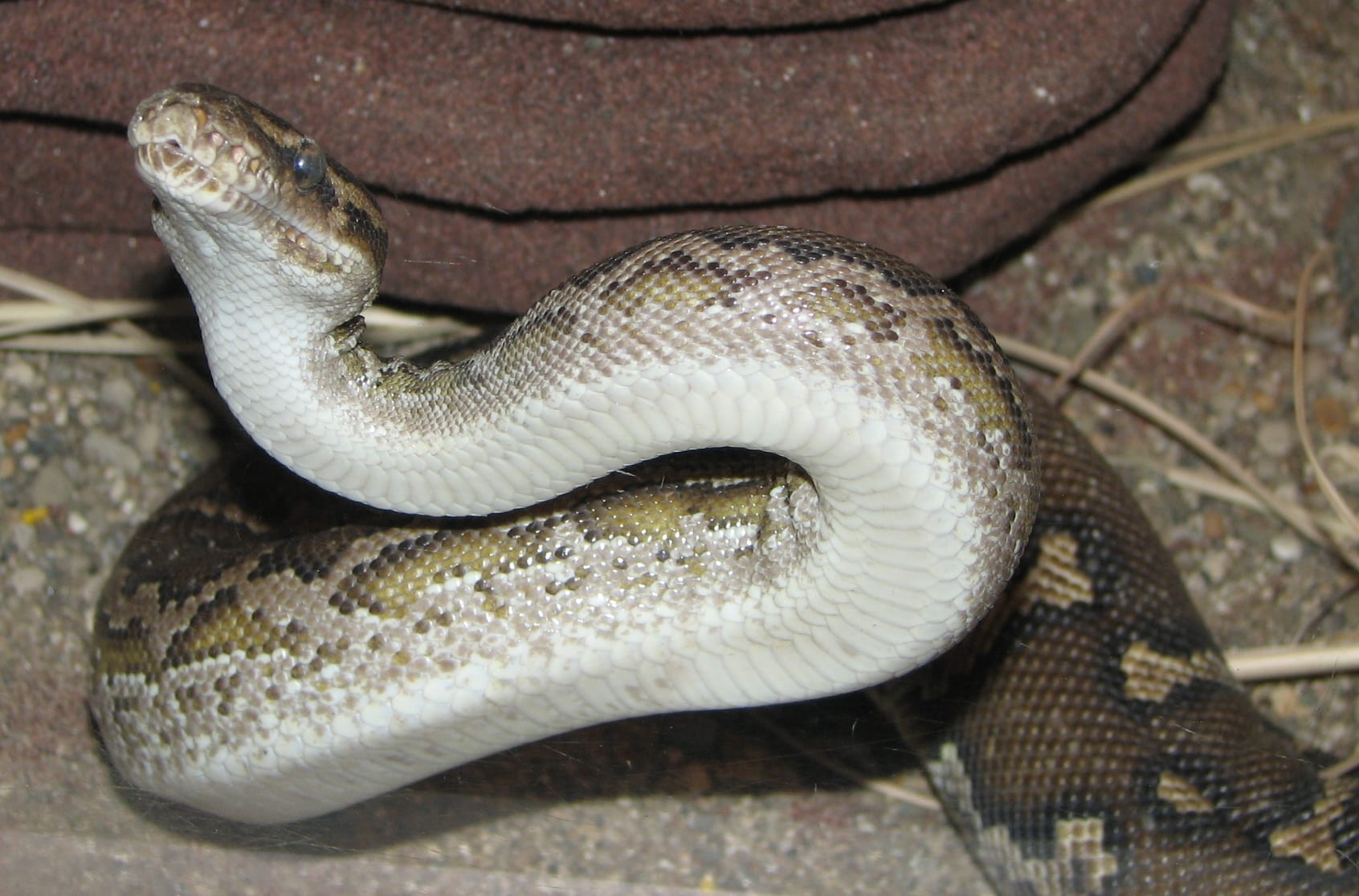
A small python of the rocky country of southern Angola and northern Namibia. Irregular white bands and spots overlay a reddish-brown to almost black ground, and it is the only python with bead-like head scales.
Difficulty
Intermediate
Temperature
26〜27℃
Size
120-180cm
Humidity
40〜70%
Diet
Mice and rats, frozen-thawed or freshly killed
About
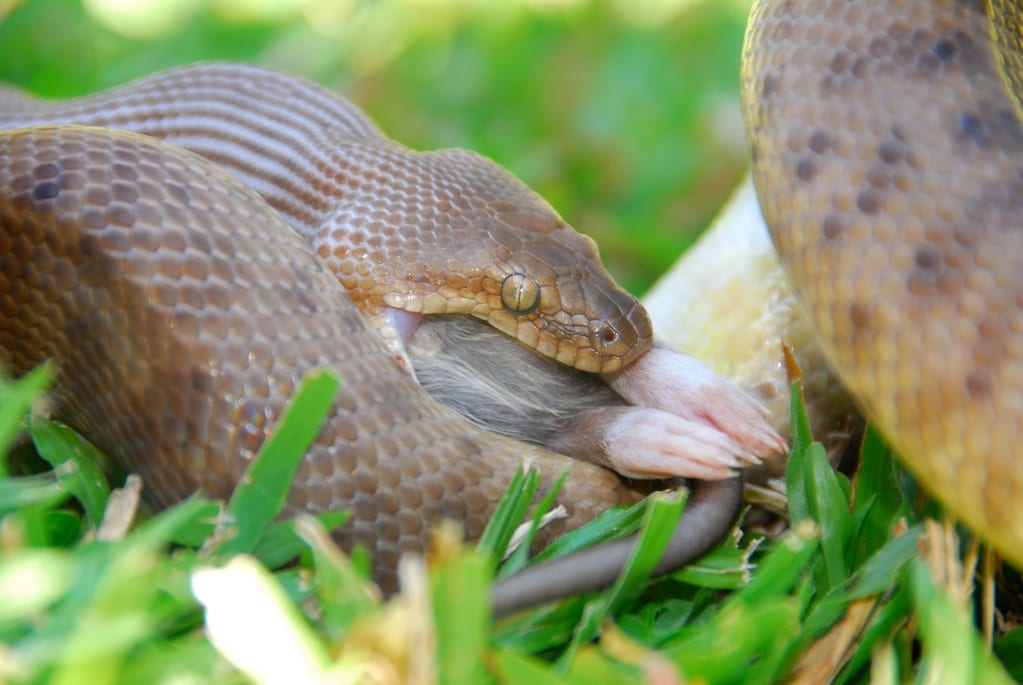
Python anchietae is a small python restricted to southern Angola and northern Namibia, reaching a maximum total length of 183 cm. Irregular white or cream bands and spots overlay a ground colour ranging from reddish brown to almost black, and the belly is yellowish. It is the only python with bead-like head scales; this scalation, shared with other arid-land reptiles, helps collect and hold the little moisture the animal encounters. Five heat-sensitive pits line each upper lip. Its habitat goes years with almost no rain, so it depends on rocky outcrops, overhangs and caves. It eats small mammals and birds, with lizards and some invertebrates taken opportunistically. In captivity use at least 10 cm of dry, absorbent bedding, an ambient temperature of 26-27 C and a hot spot at one end no warmer than 32 C, with no night-time drop. Clutches are small at four or five eggs, and hatchlings measure 43-46 cm.
Source: Wikipedia (CC BY-SA 4.0)
Size of the Angolan Python
The Angolan Python grows to 120-180cm.
Temperature & humidity for the Angolan Python
The ideal temperature for the Angolan Python is 26〜27℃.
Basic Info
Origin
Southern Angola and northern Namibia (rocky outcrops and stony brush or grassland along the eastern edge of the Namib Desert)
Size
120-180cm
Temperature
26〜27℃
Care Specifications
PeacefulSolitaryBreeding: Hard
Sources: Reptiles Magazine: Angolan Python Care Tips And Secrets / Wikipedia (English) / Reptile Database
References & Sources
Edited & verified by: BreederDirect editorial team
The taxonomic, regulatory, and husbandry data on this page are compiled and verified against the authoritative primary sources below.
Taxonomy & Authority
Accepted name: Python anchietae Bocage, 1887
Synonyms: Shireenhoserus anchietae Hoser, 2004
Authority databases: GBIF · Reptile Database
Nomenclature follows global taxonomic authority databases.
Regulations & Conservation Status
CITES Appendix IIIUCN LC · Least Concern
ニシキヘビ科 Pythonidae spp. として1977年2月4日から附属書IIに掲載されている(Species+)。附属書IIのため国際希少野生動植物種の登録票は不要。動物の愛護及び管理に関する法律施行令の別表で特定動物に指定されているにしきへび科は5種のみで、本種は該当しない。
Sources: CITES Appendices (ニシキヘビ科 Pythonidae spp. 附属書II) / IUCN Red List / Order for Enforcement of the Act on Welfare and Management of Animals, Appended Table
Regulations may change. Always verify the latest information with the relevant authorities.
Angolan Python Listings
Loading latest listingsFind listings for this species