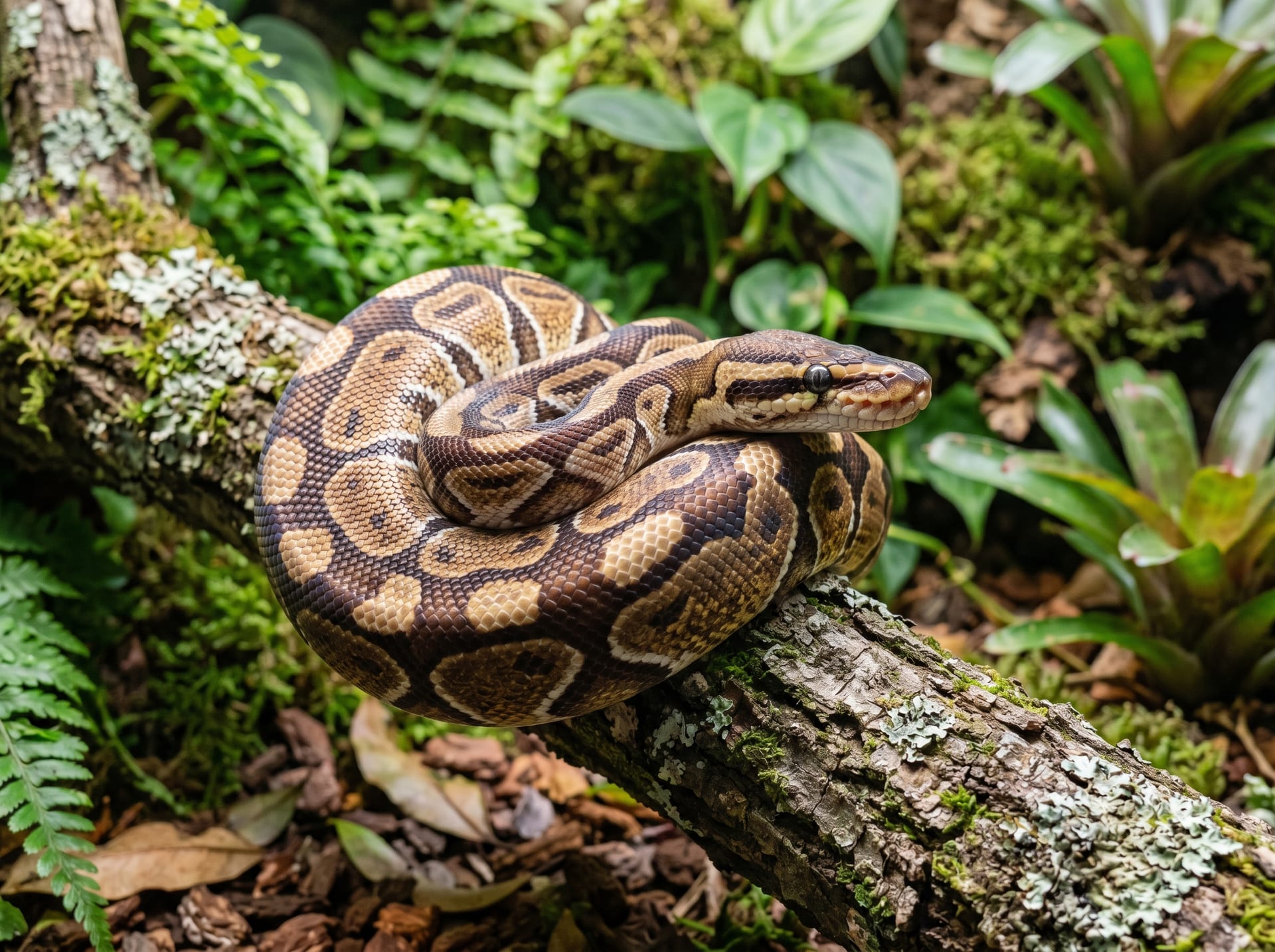
Ball Python Morph Breeding and Selective Breeding Guide: Genetic Patterns and Combination Strategies
This guide explains the basics of genetic patterns (dominant, co-dominant, and recessive) in ball python morphs, and how to plan breeding to produce the desired morphs.

Key Takeaways
This guide explains the basics of genetic patterns (dominant, co-dominant, and recessive) in ball python morphs, and how to plan breeding to produce the desired morphs.
Related Species
Ball Python Morph Culture and the Fascination of Genetics
The ball python (Python regius) is currently one of the reptile species with the most morphs (inherited color and pattern variations) in the world. With morphs such as Spider, Lemon Blast, Pied, Axanthic, and Albino confirmed, the possible combinations number in the thousands, and breeders continue to produce new phenotypes each year.
The appeal of morph breeding lies in "predicting inheritance." Calculating the probability of offspring based on parent genotypes and deliberately creating the desired morphs—this is the core of ball python breeding. The emotion of witnessing your first albino egg hatch is a special experience that only breeders who have lived through it can truly understand.
Three Categories of Genetic Patterns
Ball python morphs are divided into three types based on their genetic patterns. Accurately understanding this classification is the starting point for breeding planning.
1. Dominant Inheritance
The phenotype appears with just one copy of the gene. Representative examples include Spider, Bamboo, Willow, and Oddball. Because the trait appears in heterozygotes (one copy), you can reliably express the morph regardless of breeding partner choice. However, some morphs cause lethality or severe neurological disorders when homozygous (two copies). The "wobble" neurological condition seen in Spider morphs is particularly famous—homozygous spiders often die shortly after hatching, making breeding spider-to-spider an ethical guideline to avoid.
2. Co-dominant Inheritance
The defining feature is that heterozygotes and homozygotes express different phenotypes. Representative examples include Cinnamon and Super Blast. (Note: Pied is actually recessive inheritance, not co-dominant, as it only expresses when homozygous, and is therefore classified under recessive morphs.)
- Heterozygous Pied: Shows minimal pattern changes and appears nearly normal to the eye
- Homozygous Pied (Super Pie): A striking white base with large black and yellow block patterns
Super Cinnamon (Black Pastel Snake) is born as nearly jet-black, but vision and nervous system effects have been reported, making breeder understanding crucial.