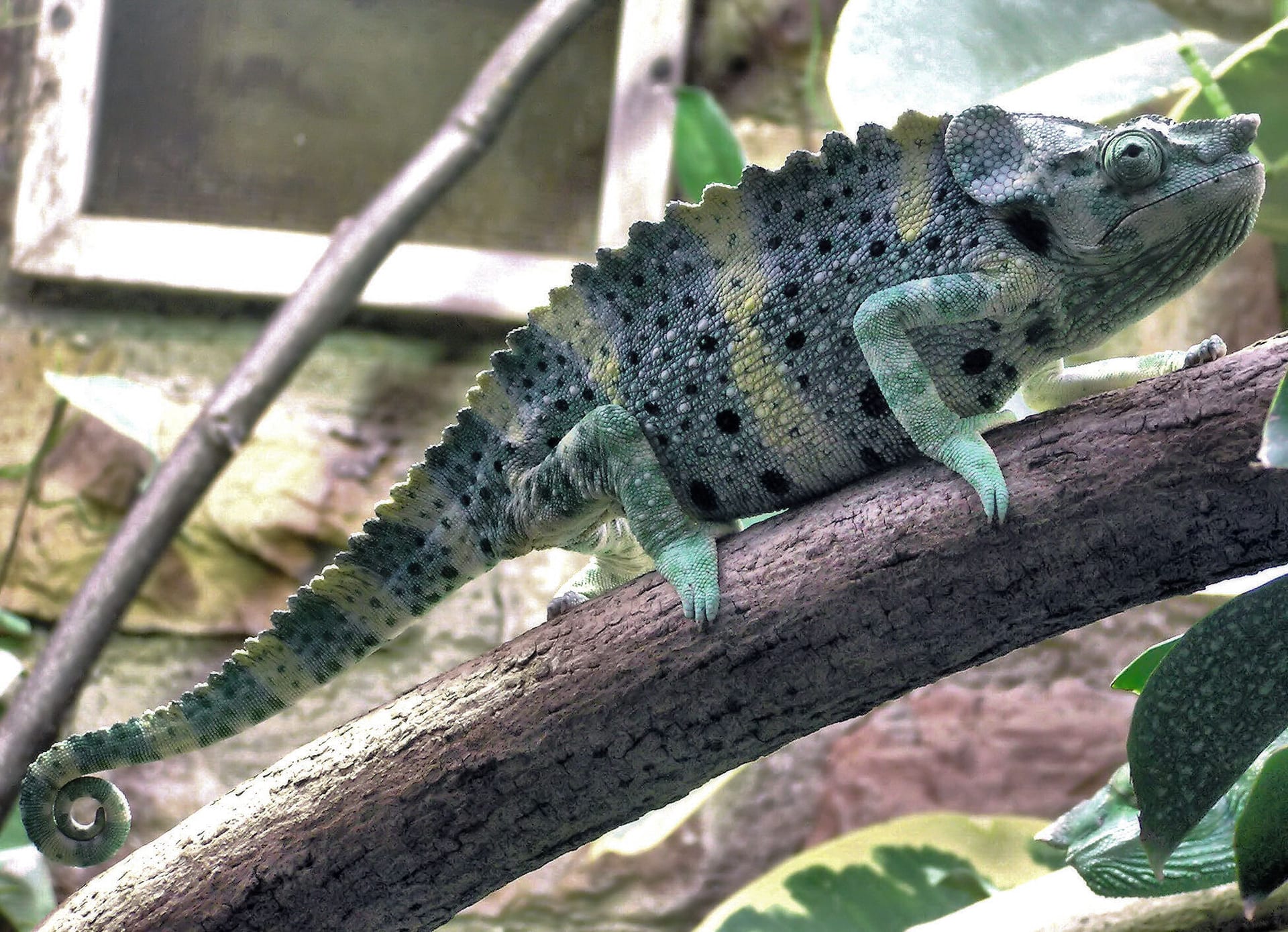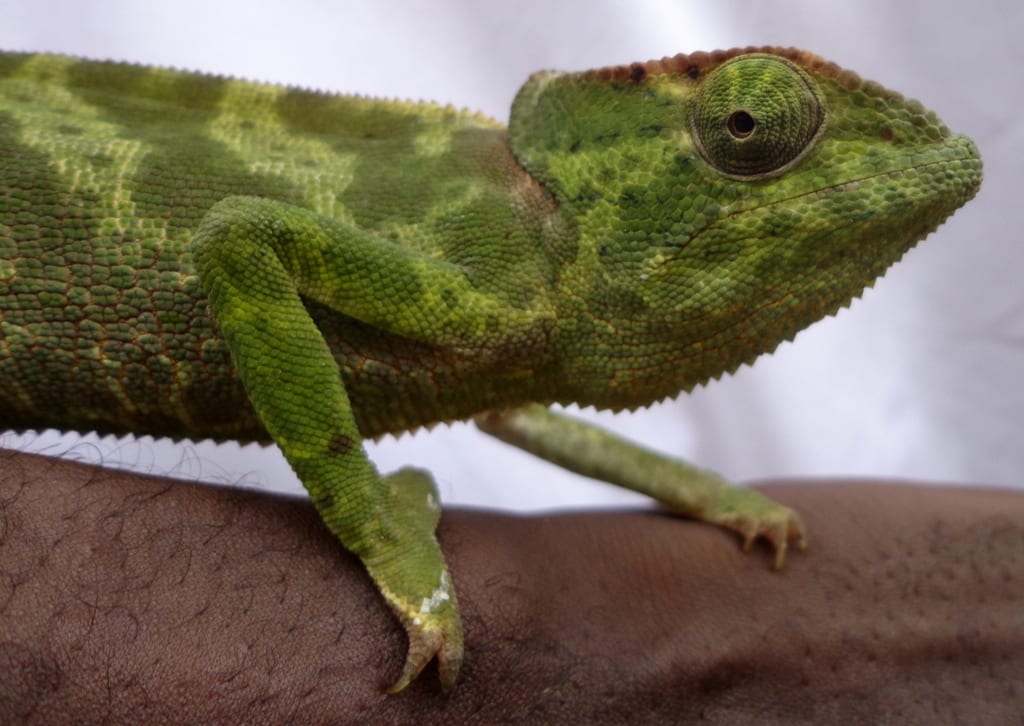
Source: Wikimedia Commons
Graceful Chameleon
IntermediateChamaeleo gracilis
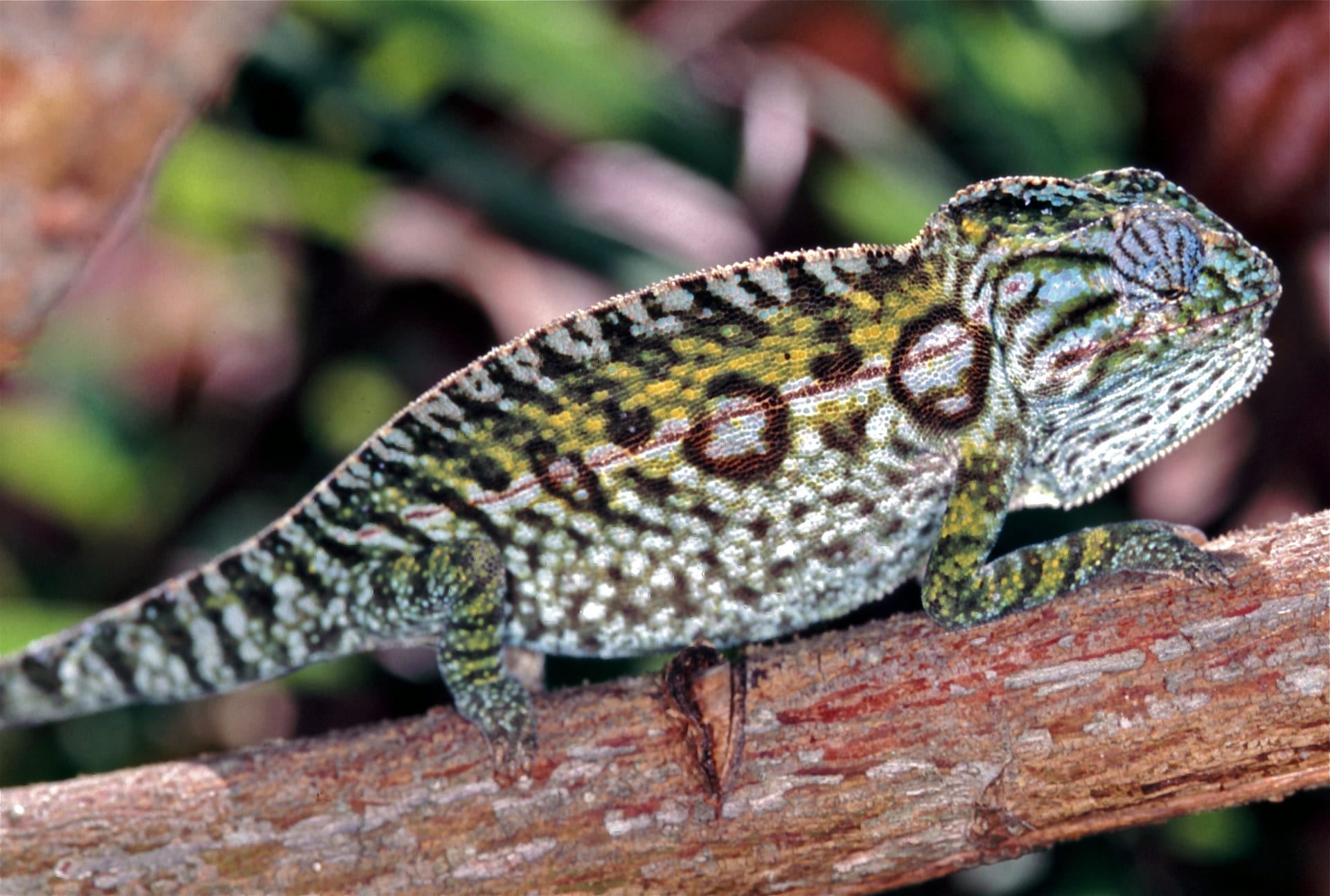
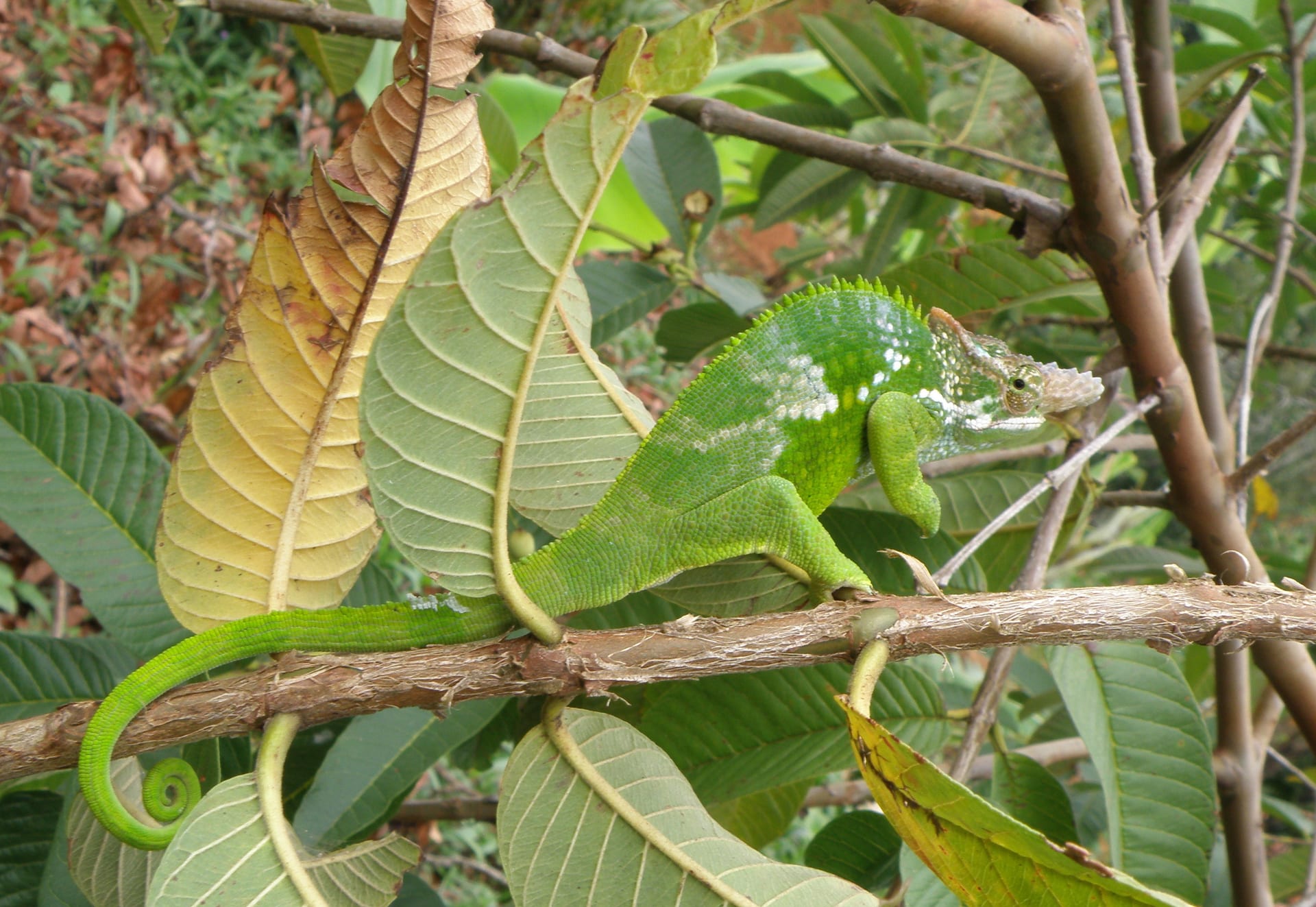
A slender chameleon widespread across sub-Saharan Africa, green, yellow or brown with a green stripe along the flank. It is diurnal, hunting morning and evening and resting in the shade through the hottest part of the day.
Difficulty
Intermediate
Temperature
25〜32℃
Lifespan
Up to 10 years in captivity
Size
About 30.5cm, up to 38cm
Humidity
40〜70%
Diet
Crickets, dubia roaches and other insects
About
Chamaeleo gracilis is a chameleon widespread across sub-Saharan Africa, from Senegal and the Gambia in the west to Angola in the south and Ethiopia and Tanzania in the east. Total length including tail is usually about 30.5 cm and can reach 38 cm. It is often green, yellow or brown with a green stripe along the flank. It lives mainly in forest but adapts to bushy country near plantations and to savanna. It is diurnal, foraging in the morning and evening and resting in the shade through the hottest hours. Males are strongly territorial and threaten one another with colourful displays. It is oviparous, breeding twice a year, once in the dry season and again at the end of the wet, and laying 20 to 50 eggs per clutch. It has lived up to 10 years in captivity. Its abundance makes it heavily collected for the pet trade.
Source: Wikipedia (CC BY-SA 4.0)
Lifespan of the Graceful Chameleon
The Graceful Chameleon lives Up to 10 years in captivity.
Size of the Graceful Chameleon
The Graceful Chameleon grows to About 30.5cm, up to 38cm.
Basic Info
Origin
Sub-Saharan Africa, from Senegal and the Gambia in the west to Angola in the south and Ethiopia, Kenya and Tanzania in the east, mainly in forest but also in bushy areas near plantations and in savanna
Lifespan
Up to 10 years in captivity
Size
About 30.5cm, up to 38cm
Care Specifications
Semi-aggressiveSolitary
Sources: Wikipedia (English) / Reptile Database
References & Sources
Edited & verified by: BreederDirect editorial team
The taxonomic, regulatory, and husbandry data on this page are compiled and verified against the authoritative primary sources below.
Taxonomy & Authority
Accepted name: Chamaeleo gracilis Hallowell, 1844
Synonyms: Chamaeleo burchelli Hallowell, 1842, Chamaeleo granulosus Hallowell, 1856, Chamaeleo simoni Boettger, 1885
Authority databases: GBIF · Reptile Database
Nomenclature follows global taxonomic authority databases.
Regulations & Conservation Status
CITES Appendix IIIUCN LC · Least Concern
Family Chamaeleonidae spp. has been listed on CITES Appendix II since February 4, 1977 (Species+). Because it is on Appendix II, registration as an international rare species is not required. This species is not included in the specific animals listed in the Schedule of the Enforcement Ordinance of the Animal Protection and Management Law.
Sources: CITES Appendices (Chamaeleonidae spp., Appendix II, effective 4 February 1977) / IUCN Red List
Regulations may change. Always verify the latest information with the relevant authorities.
Graceful Chameleon Listings
Loading latest listingsFind listings for this species