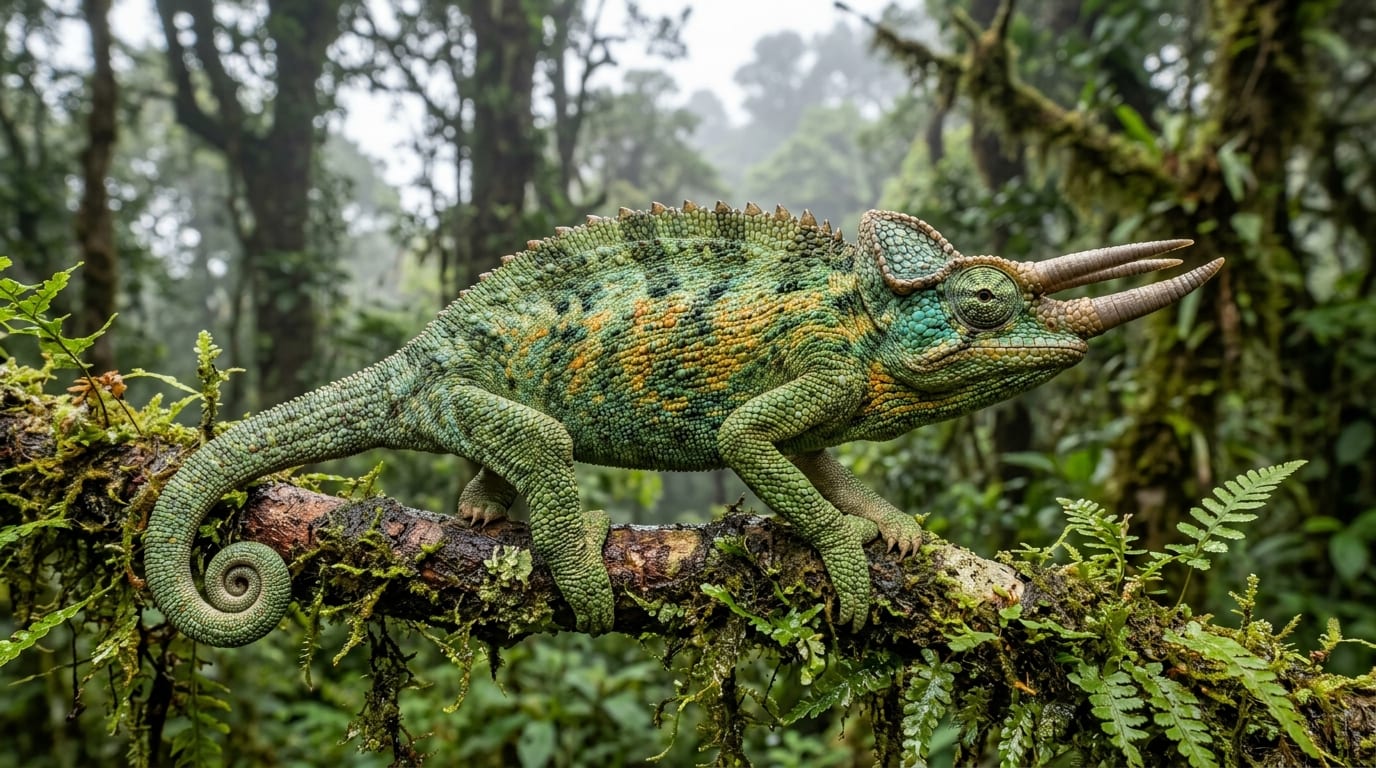
AI-generated image
Four-Horned Chameleon
AdvancedTrioceros quadricornis
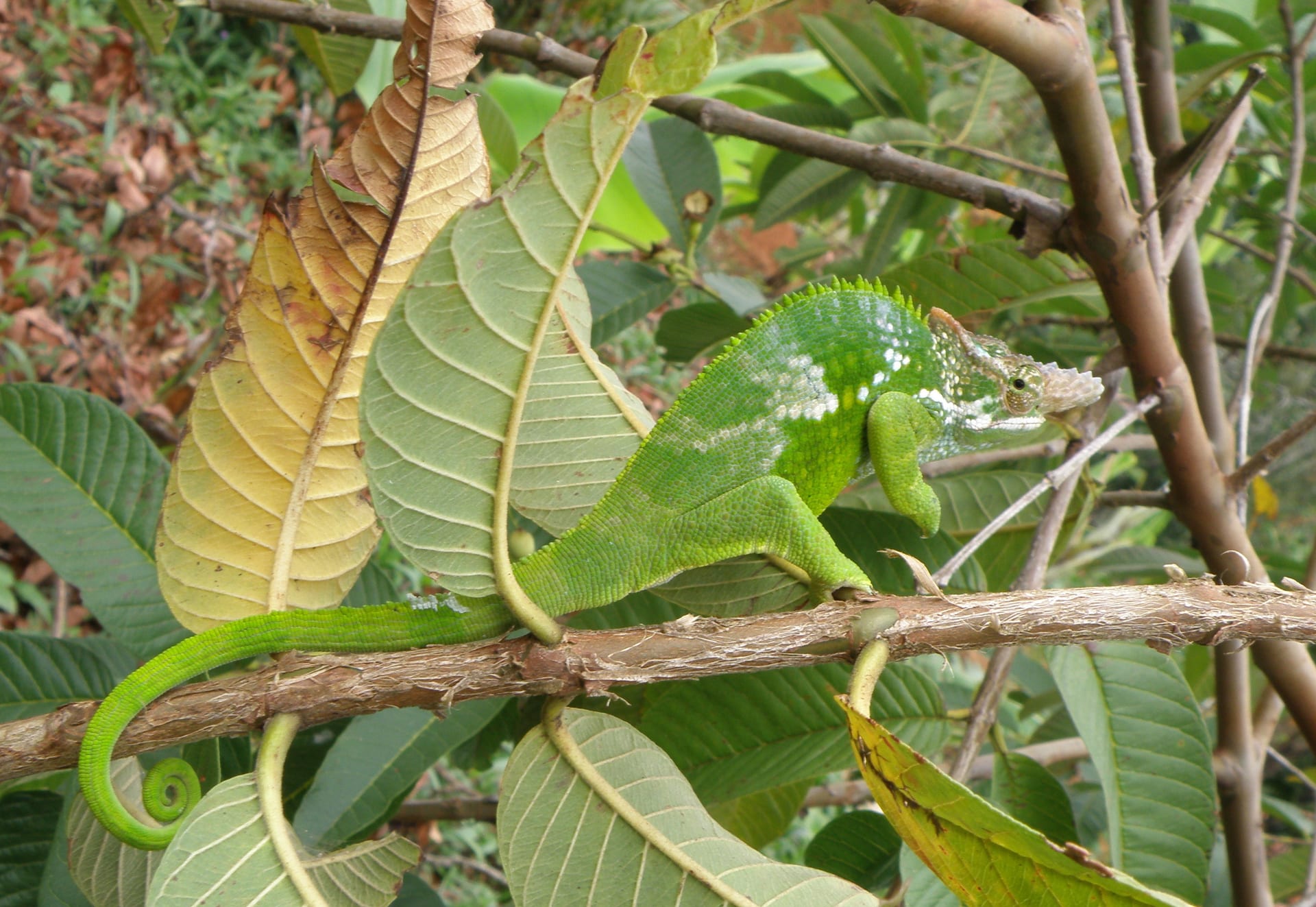
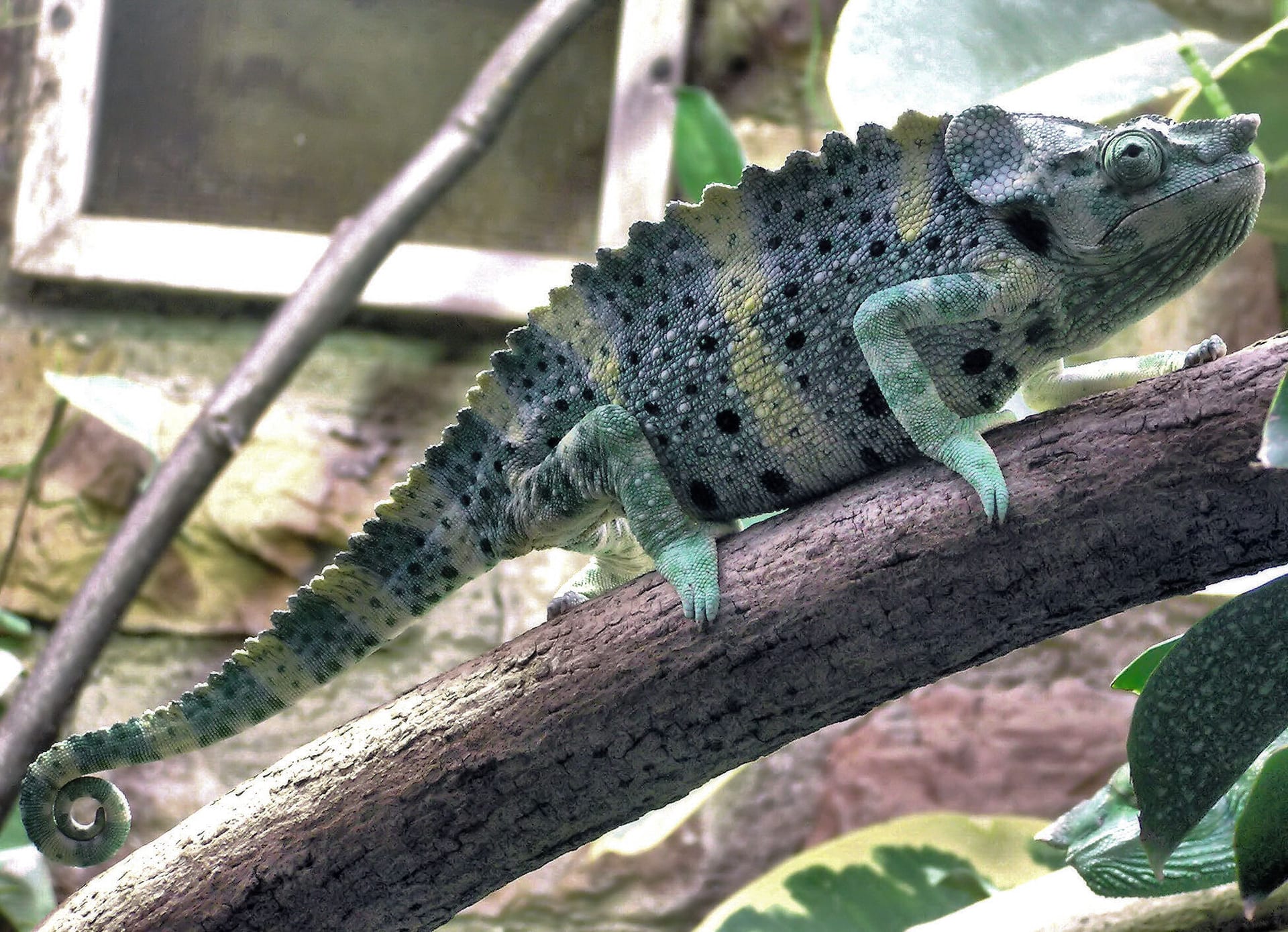
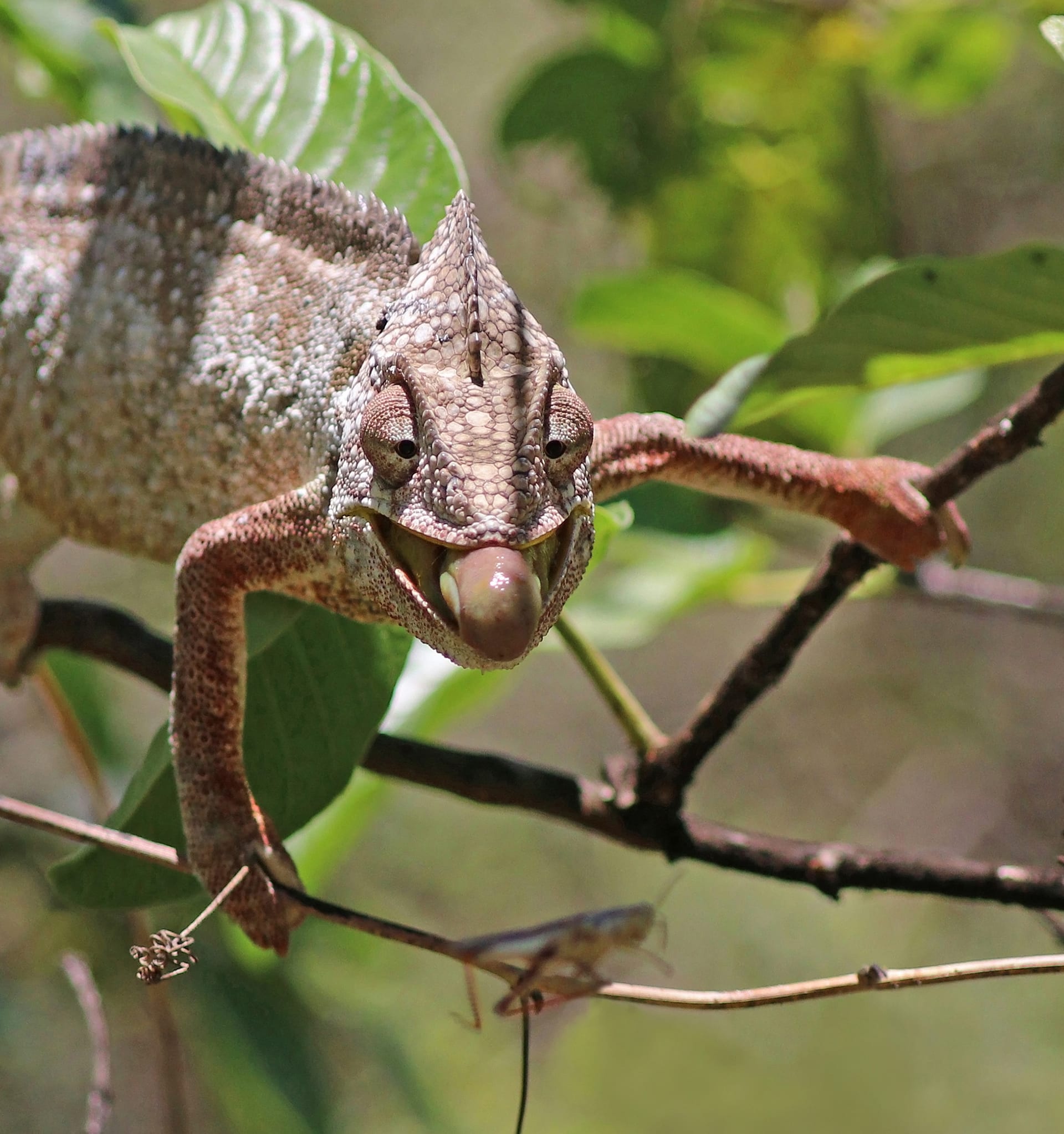
A chameleon endemic to the montane forests of western Cameroon and south-eastern Nigeria. Males usually carry four horns on the snout. It is a cool-climate species, vulnerable to heat and not easy to keep.
Difficulty
Advanced
Temperature
13〜24℃
Size
25-36cm
Humidity
50%
Diet
Crickets, dubia roaches and other arthropods
About
Trioceros quadricornis is a chameleon restricted to highland areas along the Cameroon line in western Cameroon and eastern Nigeria. It is tied to relatively intact montane forest at 1,150 to 2,400 m, and research suggests this narrow elevational band reflects competition with other chameleons rather than physiological limits. Total length including tail is 25 to 36 cm. Like most chameleons it has a prehensile tail and single claws, and it usually bears four prominent horns, though some animals have two plus up to four adjacent reduced horns. Males have a pronounced hemipenal bulge and a gular beard, and some females carry one or two horns on the snout. It feeds almost exclusively on arthropods. Its small, fragmented range and intensive collection for the pet trade, despite protected status in Cameroon, have led the IUCN to assess it as Vulnerable.
Source: Wikipedia (CC BY-SA 4.0)
Size of the Four-Horned Chameleon
The Four-Horned Chameleon grows to 25-36cm.
Temperature & humidity for the Four-Horned Chameleon
The ideal temperature for the Four-Horned Chameleon is 13〜24℃. Ideal humidity is 50%.
Basic Info
Origin
Highlands of western Cameroon and south-eastern Nigeria along the Cameroon line, including the Western High Plateau, the Bamboutos massif, Mount Manengouba, the Oku massif, the Bakossi Mountains and the Obudu Plateau in Nigeria, in montane forest at 1,150-2,400 m
Size
25-36cm
Temperature
Care Specifications
Semi-aggressiveSolitaryBreeding: Very hard
Sources: Reptiles Magazine: Four-Horned Chameleons / Chameleon Academy: T. quadricornis, The Four Horned Chameleon / Wikipedia (English)
References & Sources
Edited & verified by: BreederDirect editorial team
The taxonomic, regulatory, and husbandry data on this page are compiled and verified against the authoritative primary sources below.
Taxonomy & Authority
Accepted name: Trioceros quadricornis (Tornier, 1899)
Synonyms: Chamaeleo quadricornis Tornier, 1899, Chamaeleo eisentrauti Mertens, 1968, Chamaeleo quadricornis gracilior Böhme & Klaver, 1981
Authority databases: GBIF · Reptile Database
Nomenclature follows global taxonomic authority databases.
Regulations & Conservation Status
CITES Appendix IIIUCN VU · Vulnerable
Chamaeleonidae spp. has been listed under Appendix II since February 4, 1977 (Species+). Because it is listed under Appendix II, no registration certificate as an internationally rare wild animal or plant species is required. In Cameroon, it is designated as a Class A protected species under domestic law. This species is not included in the specified animals listed in the Ordinance for the Enforcement of the Act on the Welfare and Management of Animals.
Sources: CITES Appendices (Chamaeleonidae spp., Appendix II, effective 4 February 1977) / IUCN Red List
Regulations may change. Always verify the latest information with the relevant authorities.
Four-Horned Chameleon Listings
Loading latest listingsFind listings for this species