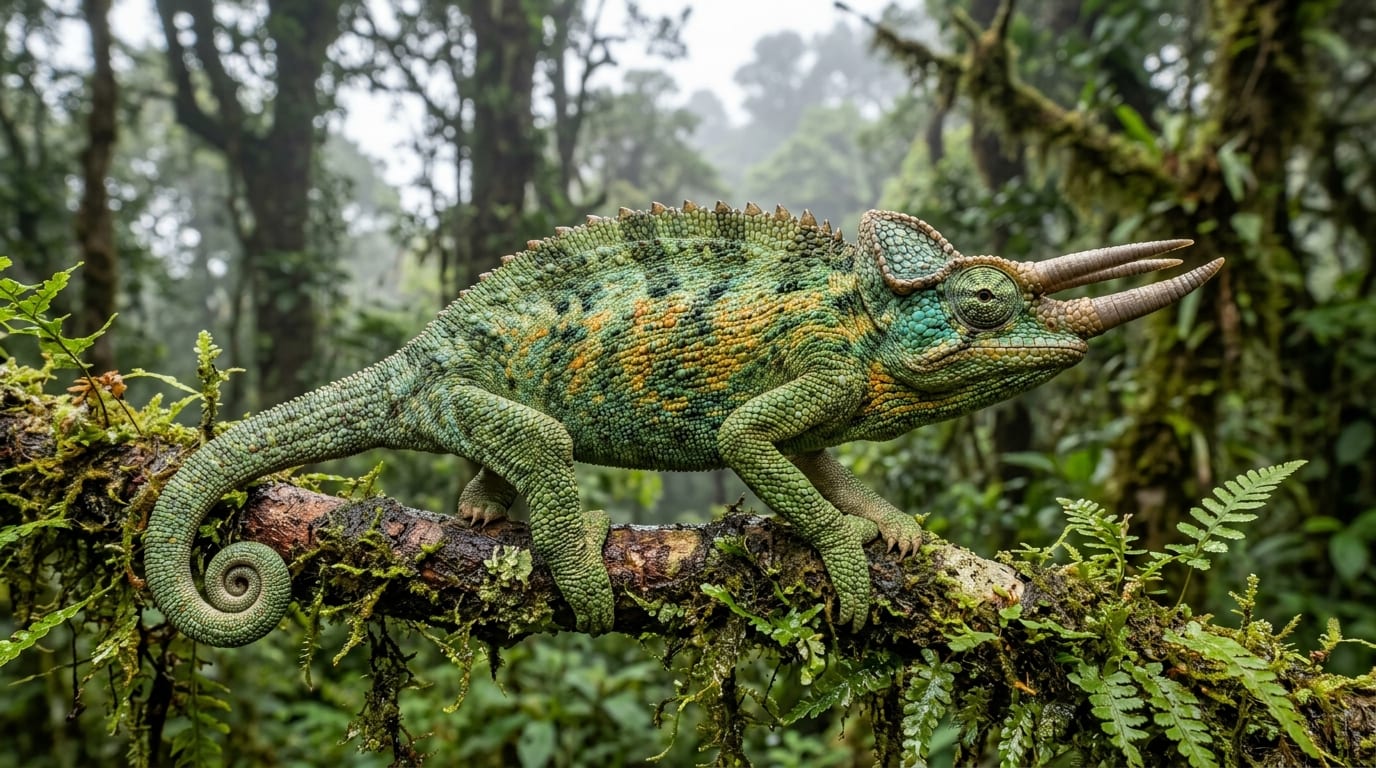
Four-Horned Chameleon
The Four-Horned Chameleon hails from the highland forests of western Cameroon and southeastern Nigeria. Males are known for the distinctive set of four horns on their snout, giving them a striking, almost dragon-like face that draws in reptile enthusiasts. Adults typically reach 25 to 36 cm, with green tones that blend seamlessly into the forest canopy. This species thrives in cool conditions, roughly 13 to 24°C, and struggles in heat, so careful temperature control is essential. Solitary and unhurried by nature, they spend much of their time perched quietly among branches, though their specific climate needs make this chameleon best suited to experienced keepers.
View Four-Horned Chameleon encyclopedia →0% commission on your first sales!Register by September 30, 2026 and your first 2 sales are commission-free!
Breeder Wanted!
List on BreederDirect and sell directly to customers nationwide!
6 Transparency Promises from Br-Choku
Every Reptiles & Amphibians from verified Breeder breeders includes complete information: morph, genetics, feeding requirements, and temperament details.
- Morph Information
- Actual Photos
- Feeding Information
- Temperament Information
- Genetics Information
- Age (Months)
Browse all 280 breeds
Difficulty Level
Feeding Type
Temperament
Verified breeders wanted for Reptiles & Amphibians
Breeders are signing up now ahead of launch. Subscribe to be notified when new listings go live.
Getting alerts is free with a member account. When new listings match your saved search, we'll notify you by email and in-app.
Browse other categories
Verified breeders (preview)
Are you raising reptiles & amphibians?
Register as a breeder and connect with buyers directly.
Apply as a breederFour-Horned Chameleon key facts
- Care level
- Advanced
- Lifespan
- 5-8 years
- Size
- 25-36cm
- Temperature
- 13〜24℃
- Humidity
- 50%
- Diet
- Crickets, dubia roaches and other arthropods
- Temperature & Humidity
- It prefers a cool 13-24 C with humidity around 50 percent, and tolerates winter temperatures from about minus 1 C up to 13 C provided humidity stays above 50 percent. It is prone to hyperthermia, so never place the enclosure by a window or anywhere the temperature can spike. Keep a thermometer and hygrometer inside the enclosure.
- Enclosure
- Indoors, mount a dome lamp for a hot spot and reptile fluorescent tubes at the top of the enclosure. Fit branches of a thickness comfortable for its feet at varying heights and use live plants for shade. As a cool-climate species, plan how you will manage room temperature in summer before acquiring one.
- Diet & Feeding
- It feeds almost exclusively on arthropods. In captivity use crickets and dubia roaches as the staple, gut-loaded and dusted with calcium. It drinks droplets, so hydration depends on misting or a dripper.
- Temperament
- Keep it singly and never house males together. Handle as little as possible and observe through the enclosure. Because it is heat-sensitive, handling itself adds thermal stress.
- Notes
- This is a cool-climate species, and treating it like an adaptable chameleon such as the veiled will cause hyperthermia. If you cannot supply stable humidity, do not keep it. Listed on CITES Appendix II as Chamaeleonidae spp. since 4 February 1977, so no registration certificate is required. The IUCN Red List assesses it as Vulnerable.
About Four-Horned Chameleon
Native to the highland forests of western Cameroon and southeastern Nigeria, males display four snout horns. Adults reach 25–36 cm and need cool temperatures (13–24°C), making this an advanced-keeper species.
7 things to know before welcoming a Four-Horned Chameleon
1Cool Temperatures Are Essential
This species prefers a cool climate of roughly 13 to 24°C and is highly sensitive to heat. Monitor cage temperatures closely, especially during warmer months, and be prepared to actively cool the enclosure if needed.
2Humidity Matters Too
Coming from highland forests, this chameleon also needs consistently humid conditions. Regular misting or a humidifier, paired with a well-ventilated enclosure, helps balance humidity without letting the air go stagnant.
3Males Grow Four Horns
Males typically grow four horns on their snout, the species' most recognizable trait, with shape and size varying between individuals. Females usually lack horns or have only faint ones, giving the two sexes a noticeably different look.
4Best Kept Alone
Like most chameleons, this species is territorial and lives alone in the wild. Housing more than one per enclosure tends to cause stress or conflict, so each chameleon should have its own space.
5An Advanced-Keeper Species
Between its need for cool temperatures and careful humidity control, this chameleon is more demanding than many other chameleon species. It's generally recommended for keepers who already have reptile-keeping experience.
6Sensitive to Stress
These chameleons can be easily stressed by unfamiliar surroundings or frequent handling. After bringing one home, it's best to let it settle in quietly rather than trying to interact right away.
7Prepare Your Setup First
Before bringing one home, set up an enclosure with reliable temperature and humidity control, proper lighting, and good airflow. It's also worth planning for cooling in advance, since keeping conditions cool enough can be the biggest challenge.
Frequently asked questions about Four-Horned Chameleon
- Q.Is this chameleon suitable for beginners?
- A.No — its need for cool temperatures and sensitivity to heat make it a demanding species. It's generally recommended for keepers with prior reptile experience.
- Q.How big do they get as adults?
- A.Adults typically reach 25 to 36 cm. Individual size can vary, so it's worth adjusting enclosure space as your chameleon grows.
- Q.How can you tell males and females apart?
- A.Males usually have four horns on their snout, while females lack horns or have only faint ones. This makes the sexes fairly easy to distinguish by sight.
- Q.Do I need to worry about summer heat?
- A.Yes — this species prefers a cool range of about 13 to 24°C, so managing temperature during warmer months is essential. A cooling fan or air conditioning can help keep the enclosure within range.
- Q.Are there any legal restrictions on keeping one?
- A.Four-Horned Chameleon is listed in CITES Appendix II. International trade requires a permit from the exporting country, but as far as CITES is concerned, no registration is needed to buy or sell individuals already legally in Japan.
Useful tools for Four-Horned Chameleon care
Learn more about Four-Horned Chameleon in the encyclopedia
View Four-Horned Chameleon encyclopedia entry →
Care difficulty, lifespan, size and diet — all basics covered.
More in this category
Can't find the one you're looking for?
Post your wishes for free and breeders with matching animals will contact you with introductions.