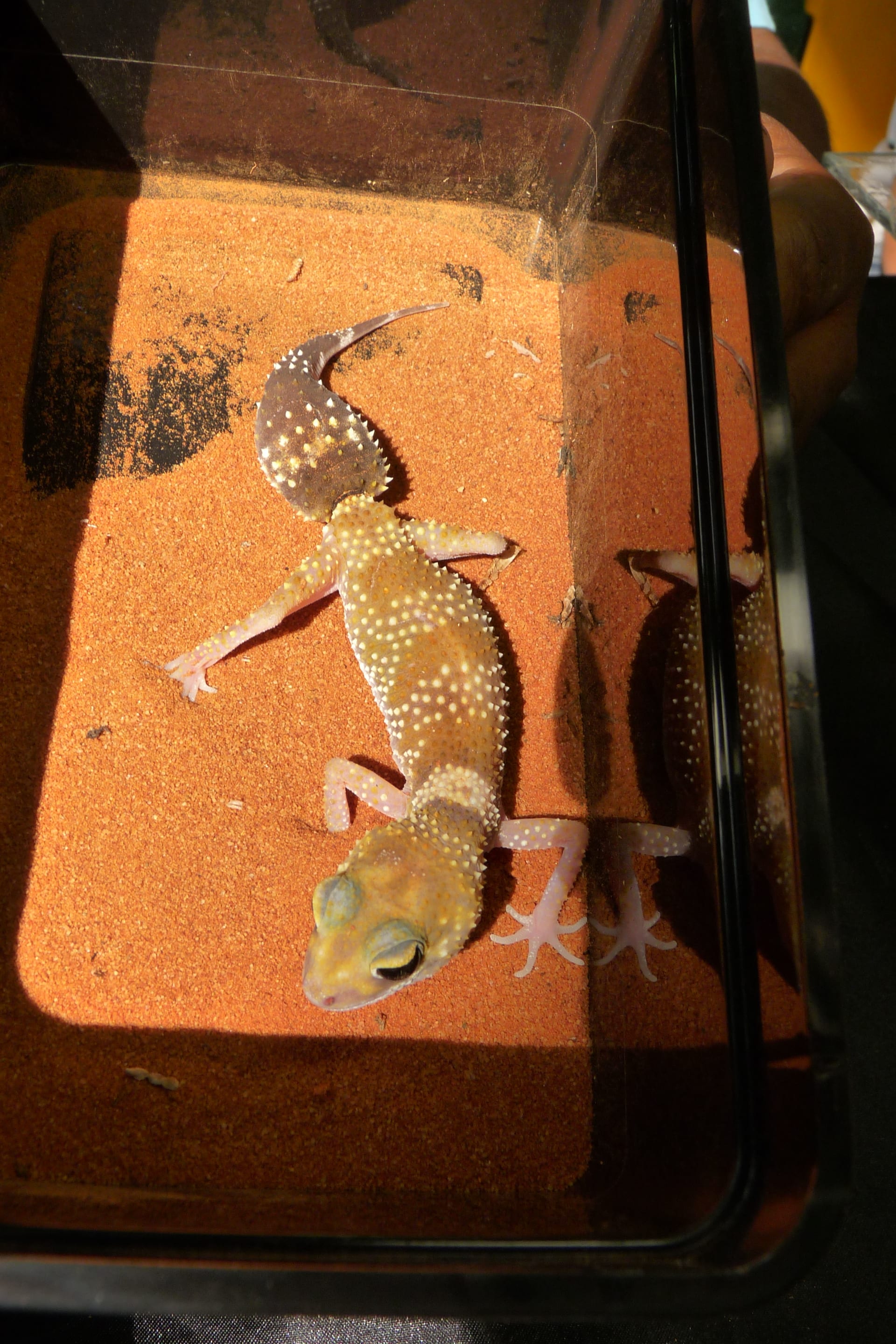
 © Goodshort / CC BY-SA 3.0
Smooth Knob-Tailed Gecko
The Smooth Knob-Tailed Gecko is a small gecko native to inland Australia, instantly recognizable by its oversized triangular head and short, leaf-shaped tail that swells into a distinctive knob at the tip. Unlike its rougher-skinned relatives, this species has notably smooth skin, with a base color ranging from pale pinkish-gray to purplish-brown, patterned with bands of white granular bumps. It's a nocturnal burrower that digs its own retreat and spends the day hidden underground, so loose, diggable substrate matters for its wellbeing. Calm and low-key in temperament, it's often a natural next step for keepers who already have some gecko-keeping experience.
View Smooth Knob-Tailed Gecko encyclopedia →0% commission on your first sales!Register by September 30, 2026 and your first 2 sales are commission-free!
Breeder Wanted!
List on BreederDirect and sell directly to customers nationwide!
BreederDirect's 6 Transparency Commitments
Every Reptiles & Amphibians from verified Breeder breeders includes complete information: morph, genetics, feeding requirements, and temperament details.
- Morph Information
- Actual Photos
- Feeding Information
- Temperament Information
- Genetics Information
- Age (Months)
Browse all 319 breeds
Difficulty Level
Feeding Type
Temperament
Verified breeders wanted for Reptiles & Amphibians
Breeders are signing up now ahead of launch. Subscribe to be notified when new listings go live.
Getting alerts is free with a member account. When new listings match your saved search, we'll notify you by email and in-app.
Browse other categories
Verified breeders (preview)
Are you raising reptiles & amphibians?
Register as a breeder and connect with buyers directly.
Apply as a breederSmooth Knob-Tailed Gecko key facts
- Care level
- Intermediate
- Lifespan
- 10-15 years in captivity
- Size
- About 12cm total length (SVL 8-10cm)
- Temperature
- Basking 31-32°C, cool side 21-27°C, 18°C or above at night
- Diet
- Carnivorous: insects, spiders, centipedes, scorpions and other arthropods, plus small vertebrates such as other geckos
- Temperature & Humidity
- Keep the basking spot at 31-32 C, the cool side at 21-27 C and nights above 18 C, with a clear day-night difference. Among knob-tails the smooth-skinned species such as this one prefer somewhat more moisture, so mist the sand directly under the hide to keep its interior damp. Letting the setup dry out completely causes shedding problems and dehydration.
- Enclosure
- Terrestrial and an active burrower, it needs at least 8-10 cm of sand. Seat rocks and hides on the floor of the enclosure before adding substrate, never simply on top of the sand, so that a collapsing burrow cannot bury the animal. Use an enclosure of about 60 x 45 x 45 cm as a minimum, and around 90 x 45 x 45 cm for larger individuals.
- Diet & Feeding
- Carnivorous, taking insects, spiders, centipedes, scorpions and other arthropods as well as small vertebrates such as other geckos. In captivity use crickets and dubia roaches as the staple, dusted with calcium and vitamin supplements. Feed hatchlings daily and adults every few days.
- Temperament
- Nervous and easily startled. In threat display it stretches its limbs, arches its back, raises and waves its tail, opens its mouth and produces a barking sound. Knob-tails are solitary by nature and will fight if housed together, so keep them singly. Avoid grabbing or handling them often.
- Notes
- Listed on CITES Appendix III as Nephrurus spp. at Australia's request, effective 22 June 2022. Appendix III requires an export permit from the listing state and a certificate of origin from other states; no Japanese registration certificate is needed. Because Australia bans the export of its native wildlife, every legitimately traded animal is captive-bred. The IUCN assesses it as Least Concern.
About Smooth Knob-Tailed Gecko
A gecko native to inland Australia with an oversized triangular head and a tail that swells into a knob at the tip. Smooth-skinned with white banded tubercles, nocturnal, and a burrowing species suited to intermediate keepers.
7 things to know before welcoming a Smooth Knob-Tailed Gecko
1Provide Diggable Substrate
In the wild this gecko digs its own burrow to shelter through the day, so the enclosure needs several centimetres of loose, diggable substrate such as a dry sand-based mix or coir. Without a place to dig in, it can struggle to settle and become stressed.
2Nocturnal, Inactive by Day
This species spends most daylight hours resting quietly in its burrow and becomes active mainly after dark. If you want to observe it, check after lights-out rather than digging it up during the day, which can cause unnecessary stress.
3The Tail Stores Fat Reserves
The knob-shaped tail tip stores fat reserves and serves as a useful visual cue for body condition. Like many geckos, this species can drop its tail if handled roughly, so avoid grabbing or lifting it by the tail.
4Mostly Dry, With a Humid Hide
Coming from Australia's dry interior, the enclosure can stay mostly arid, but it helps to offer one humid hide with damp substrate to support smooth shedding. There's no need to raise humidity across the whole enclosure.
5Create a Temperature Gradient
Set up both a warm zone and a cooler zone within the enclosure so the gecko can choose its preferred spot. Since it comes from a region where nighttime temperatures drop, a clear day-night temperature swing suits it well.
6Insectivore Needing Supplements
This gecko is insectivorous, feeding mainly on crickets and similar prey that should be dusted with calcium and vitamin supplements before each feeding. Match prey size to the gecko and remove any uneaten insects from the enclosure.
7House Individually
This species can be territorial, and housing multiple individuals together often leads to fighting or stress, so keeping one gecko per enclosure is standard practice. Cohabitation isn't recommended outside of deliberate breeding pairings.
Frequently asked questions about Smooth Knob-Tailed Gecko
- Q.Is this a good gecko for first-time keepers?
- A.This species is generally considered suited to intermediate keepers, with several points to manage such as temperature, humidity, and burrowing substrate. It tends to work better as a next gecko for someone with some prior keeping experience rather than as a first reptile.
- Q.How big does it grow?
- A.Adults reach a total length of around 12 cm, with a snout-vent length of roughly 8 to 10 cm, making it a small gecko. Its compact size means the enclosure itself can be relatively modest as well.
- Q.How long does it live?
- A.In captivity, this gecko is expected to live around 10 to 15 years. Since that's a long-term commitment, it's worth confirming beforehand that you can maintain its enclosure and daily care over that span.
- Q.Are there any legal restrictions on keeping this species?
- A.Smooth Knob-Tailed Gecko is listed in CITES Appendix III (listed by Australia for its own populations). International trade needs documents such as a certificate of origin, but as far as CITES is concerned, no registration is needed to buy or sell in Japan.
- Q.What's its temperament like — can it be handled?
- A.It tends to be calm and fairly mellow, but startling it can trigger tail loss, so it isn't well suited to frequent handling. The best approach is mostly hands-off observation, picking it up gently only when truly necessary.
Useful tools for Smooth Knob-Tailed Gecko care
Learn more about Smooth Knob-Tailed Gecko in the encyclopedia
View Smooth Knob-Tailed Gecko encyclopedia entry →
Care difficulty, lifespan, size and diet — all basics covered.
More in this category
Can't find the one you're looking for?
Post your wishes for free and breeders with matching animals will contact you with introductions.