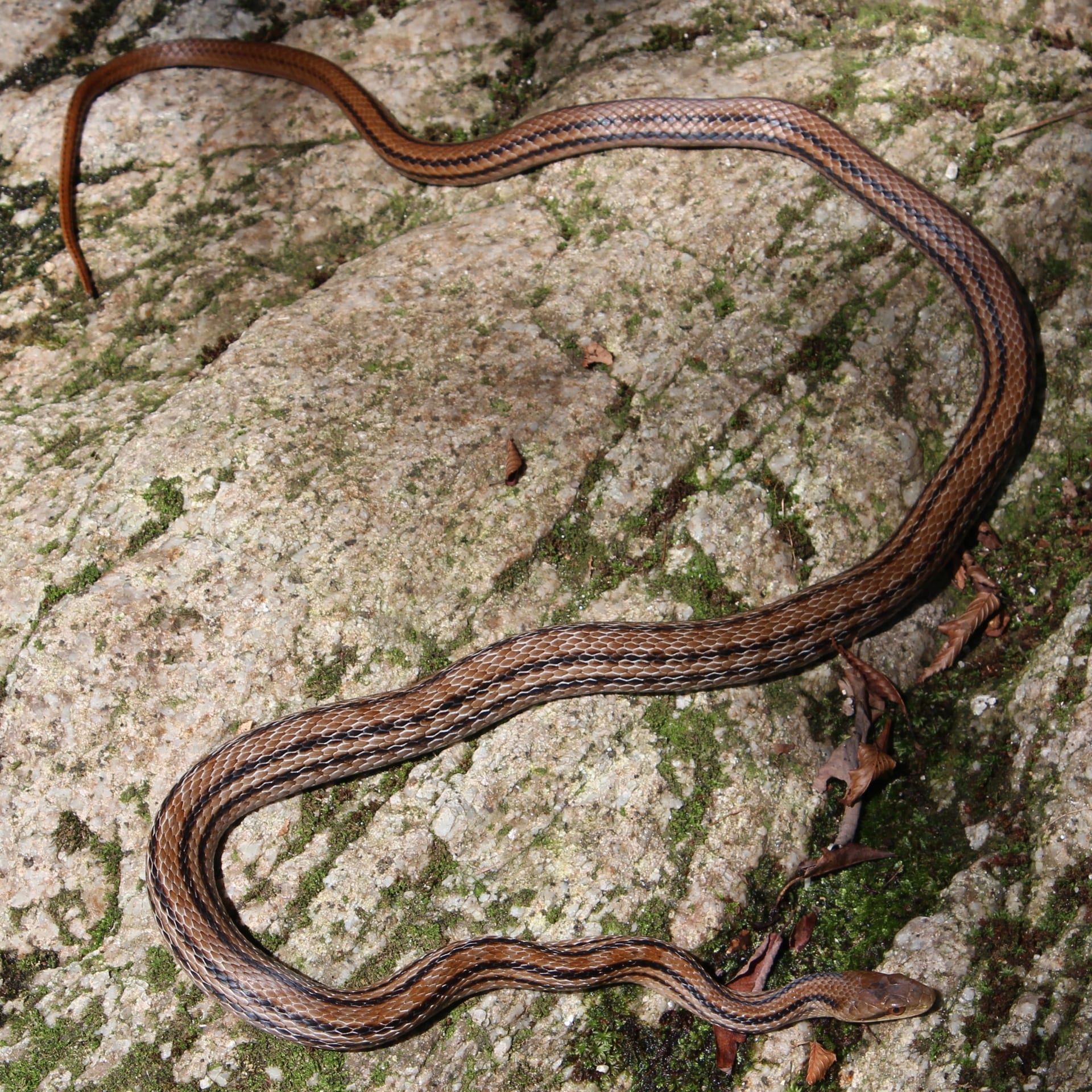
 © Alpsdake / CC BY-SA 3.0
Japanese Striped Snake
The Japanese Striped Snake is one of Japan's best-known non-venomous snakes, recognized by its pale yellow body marked with four black stripes running its length. Its red irises and vertically elongated pupils set it apart from the similar Japanese Rat Snake. Some individuals lack stripes entirely, while others are melanistic, entirely black, giving keepers a range of striking patterns to choose from. Quick and alert by nature, this snake offers a lively, naturalistic presence that appeals to keepers who already have some reptile-keeping experience.
View Japanese Striped Snake encyclopedia →Breeder Wanted!
List on BreederDirect and sell directly to customers nationwide!
BreederDirect's 6 Transparency Commitments
Every Reptiles & Amphibians from verified Breeder breeders includes complete information: morph, genetics, feeding requirements, and temperament details.
- Morph Information
- Actual Photos
- Feeding Information
- Temperament Information
- Genetics Information
- Age (Months)
Browse all 319 breeds
Difficulty Level
Feeding Type
Temperament
Verified breeders wanted for Reptiles & Amphibians
Breeders are signing up now ahead of launch. Subscribe to be notified when new listings go live.
Getting alerts is free with a member account. When new listings match your saved search, we'll notify you by email and in-app.
Browse other categories
Verified breeders (preview)
Are you raising reptiles & amphibians?
Register as a breeder and connect with buyers directly.
Apply as a breederJapanese Striped Snake key facts
- Care level
- Intermediate
- Lifespan
- 15-20 years
- Size
- 80-200cm total length; animals from Hokkaido stay under 80cm while those on Tadanae-jima in the Izu Islands reach 2m
- Diet
- Carnivorous: frogs, lizards, fish, insects, rodents, birds and their eggs, and other snakes
- Temperature & Humidity
- A native temperate snake ranging from Hokkaido to Kyushu, it brumates in winter. As an animal adapted to the Japanese climate it needs no excessive heating and does well with some seasonal variation. Provide a brumation period if you intend to breed.
- Enclosure
- Largely terrestrial and at home from open ground to forest, it needs an enclosure with enough floor area to lie coiled with room to spare, and hides on both the warm and cool sides. Keep a water container available at all times and secure the lid firmly against escapes.
- Diet & Feeding
- It takes a wide range of prey centred on frogs and lizards but including fish, insects, rodents, birds and their eggs. In captivity offer frozen-thawed mice, but avoid oversized items: its scales are large relative to its slender body and its skin is not very elastic.
- Temperament
- Non-venomous, but when threatened it vibrates its tail hard against the ground and may bite. It is comparatively strongly ophiophagous for a Japanese snake, cannibalism included, so never house it with another snake of any species and keep it singly.
- Notes
- Not listed on any CITES appendix. The IUCN assesses it as Least Concern. It appears neither on the schedule of designated dangerous animals under the Order for Enforcement of the Act on Welfare and Management of Animals nor on Japan's list of invasive alien species. As a native Japanese species, collection from the wild may be restricted by local ordinances or by rules covering protected areas. Over 90 percent of wild-caught animals carry parasites such as the tapeworm Spirometra and the trematode Pharyngostomum, so screening and treatment on arrival are essential.
About Japanese Striped Snake
Japanese Striped Snake: a non-venomous native snake with four black stripes and red irises. Intermediate difficulty, growing 80-200cm in length.
7 things to know before welcoming a Japanese Striped Snake
1Best suited to keepers with some experience
The Japanese Striped Snake is generally considered an intermediate-level species to keep. Many individuals retain a strong wild temperament, and handling or cage management can require some know-how, so it's best suited to keepers who already have basic reptile-keeping experience.
2Adults reach 80-200cm in length
Adult length varies considerably, typically 80-200cm, largely depending on the population's origin. Snakes from Hokkaido tend to stay under 80cm, while those from Sugashima Island in the Izu Islands can reach 2m, so checking a snake's origin helps you anticipate its adult size.
3Secure enclosure is essential
As an active, energetic species, choose an enclosure with a lid and locks that close without gaps. These snakes will attempt to escape through even narrow openings, so it's worth physically testing the setup after assembly to make sure it holds.
4Wide variety of pattern types
Beyond the typical four-stripe pattern, some individuals have no stripes at all, and others are melanistic with entirely black bodies, offering real visual variety between snakes. Confirming the pattern type before bringing one home helps avoid surprises.
5How to distinguish it from the Japanese Rat Snake
The Japanese Rat Snake has a similar body color and can be confused with the Japanese Striped Snake, but the Striped Snake's red irises and vertically elongated pupils are a reliable way to tell them apart. Since the two are easy to mix up, it's worth double-checking the name and features before acquiring one.
6Basic substrate and temperature care
Choose a substrate that doesn't trap excess humidity, and set up a temperature gradient within the enclosure so the snake can choose a comfortable spot on its own. Get in the habit of checking a thermometer and hygrometer regularly so you can adjust for seasonal and room temperature changes.
7Check feeding readiness before bringing one home
Before bringing a snake home, it helps to ask the seller about its feeding history and response to food. Appetite can be unsettled right after a change of environment, so it's important to stay patient and let the snake settle in at its own pace.
Frequently asked questions about Japanese Striped Snake
- Q.Is the Japanese Striped Snake venomous?
- A.The Japanese Striped Snake is one of Japan's well-known non-venomous snakes. It's recognized as a species you can keep without concern about venom-related risk.
- Q.How is it different from the Japanese Rat Snake?
- A.The two species have a similar body color and stripe pattern, but the Japanese Striped Snake can be identified by its red irises and vertically elongated pupils. Since the names are easily confused, check these features carefully before acquiring one.
- Q.How large does it grow?
- A.Adults typically reach 80-200cm in length, with considerable variation depending on the population. Hokkaido individuals tend to stay under 80cm, while those from Sugashima Island in the Izu Islands can reach 2m.
- Q.Can beginners keep this species?
- A.The Japanese Striped Snake is generally rated as an intermediate-level species. Having some basic reptile-keeping experience beforehand will make caring for it much smoother.
- Q.Are there any legal regulations to be aware of?
- A.The Japanese Striped Snake is not subject to CITES. There are no particular CITES-related regulations to be aware of for this species.
Useful tools for Japanese Striped Snake care
Learn more about Japanese Striped Snake in the encyclopedia
View Japanese Striped Snake encyclopedia entry →
Care difficulty, lifespan, size and diet — all basics covered.
More in this category
Can't find the one you're looking for?
Post your wishes for free and breeders with matching animals will contact you with introductions.