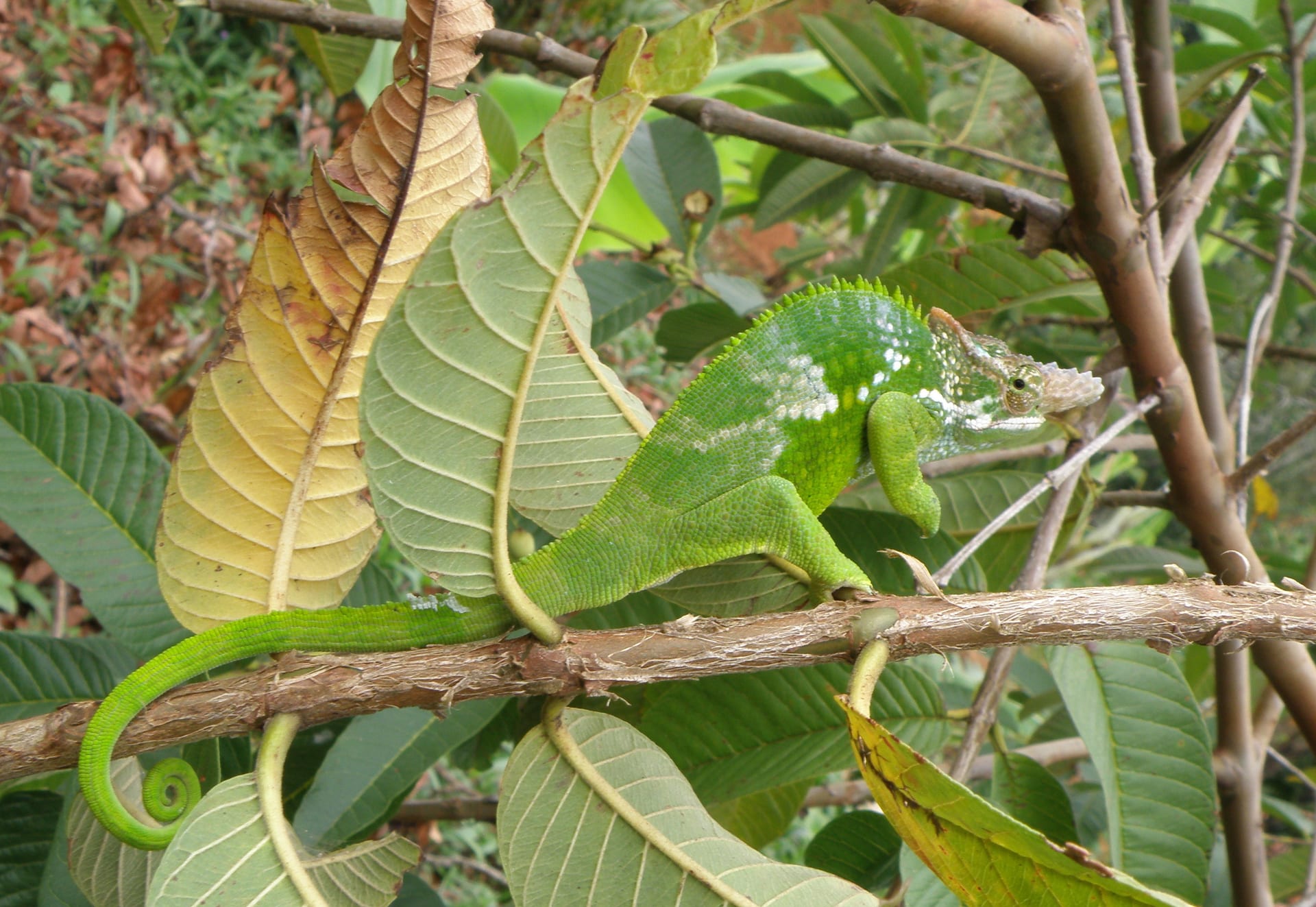
 © Jjgodox / CC BY-SA 4.0
Fischer's Chameleon
Fischer's Chameleon is an arboreal species found only in the West Usambara Mountains of Tanzania. It's one of the larger members of the Kinyongia genus, reaching up to 34 cm in total length, with a long tail that makes up more than half its body. Adult males sport a pair of blade-like horns on the snout, giving them a striking, rugged look. Solitary and quiet by nature, they spend most of their time perched high in the foliage. Because they need carefully managed temperature and humidity, this species is generally recommended for experienced keepers — though many find the extra care deeply rewarding.
View Fischer's Chameleon encyclopedia →0% commission on your first sales!Register by September 30, 2026 and your first 2 sales are commission-free!
Breeder Wanted!
List on BreederDirect and sell directly to customers nationwide!
6 Transparency Promises from Br-Choku
Every Reptiles & Amphibians from verified Breeder breeders includes complete information: morph, genetics, feeding requirements, and temperament details.
- Morph Information
- Actual Photos
- Feeding Information
- Temperament Information
- Genetics Information
- Age (Months)
Browse all 280 breeds
Difficulty Level
Feeding Type
Temperament
Verified breeders wanted for Reptiles & Amphibians
Breeders are signing up now ahead of launch. Subscribe to be notified when new listings go live.
Getting alerts is free with a member account. When new listings match your saved search, we'll notify you by email and in-app.
Browse other categories
Verified breeders (preview)
Are you raising reptiles & amphibians?
Register as a breeder and connect with buyers directly.
Apply as a breederFischer's Chameleon key facts
- Care level
- Advanced
- Lifespan
- 5-8 years
- Size
- Up to 34cm, more than half of it tail
- Diet
- Crickets, silkworms, dubia roaches and other insects
- Temperature & Humidity
- Its habitat is Afrotemperate forest at 1,200-2,500 m, and related Kinyongia are generally kept under montane conditions. Reproduce a cool, humid regime that dries somewhat through the day, and work from measured readings.
- Enclosure
- It needs structurally complex habitat in the wild and a densely planted enclosure in captivity. Kinyongia are fast and range widely, so a generously sized enclosure is preferable. Being shy, it needs leafy cover at several heights where it can hide.
- Diet & Feeding
- Insectivorous and willing to take anything that fits in its mouth. Use crickets, silkworms and dubia roaches, gut-loaded and dusted with calcium. Hydration matters in this genus, so ensure ample water through misting or a dripper.
- Temperament
- Shy, and unsettled when cover is sparse. Keep it singly and never house males together. Handle as little as possible and observe through the planting.
- Notes
- Never identify this animal from the trade name alone: most chameleons sold as Fischer's are this species, not the true Kinyongia fischeri. Listed on CITES Appendix II as Chamaeleonidae spp. since 4 February 1977, so no registration certificate is required, but Tanzania has halted exports of this species since 2017. The IUCN Red List assesses it as Endangered, and imported animals frequently need parasite treatment.
About Fischer's Chameleon
Fischer's Chameleon is a large arboreal chameleon endemic to Tanzania, with males bearing horn-like snout projections. Learn about its traits, temperament, and care needs for this species suited to experienced keepers.
7 things to know before welcoming a Fischer's Chameleon
1An Arboreal Lifestyle
Fischer's Chameleons live in trees, so a tall enclosure with plenty of branches and foliage is essential. Provide multiple perches at different heights so they can move around in three dimensions.
2Best Kept Alone
This species is strongly territorial, and housing multiple chameleons together often leads to stress or fighting. Keep one per enclosure, ideally positioned so they can't see each other.
3Careful Climate Control
Coming from cool, humid mountain forests, this species is sensitive to heat and dryness. Monitor temperature and humidity closely and adjust misting and ventilation as conditions change.
4Horns Only on Males
Adult males grow a pair of blade-like horns on the snout, a feature that also signals sexual maturity. Females lack these horns, making the sexes easy to tell apart at a glance.
5The Tail Makes Up Half the Length
Total length can reach up to 34 cm, with the tail accounting for more than half of that. Since the tail is prehensile, arrange branches so it has something secure to grip.
6Watch for Visual Cues
Chameleons can be hard to read, but color, appetite, and activity level are things you can observe daily. If something seems off, consult a vet experienced with reptiles promptly.
7Prepare Before You Bring One Home
As this is considered a species for experienced keepers, set up the enclosure, lighting, and temperature/humidity equipment beforehand. If possible, talk to an experienced keeper about your setup.
Frequently asked questions about Fischer's Chameleon
- Q.Is Fischer's Chameleon suitable for beginners?
- A.This species is generally considered one for experienced keepers, requiring careful temperature and humidity management. It's best suited to those with prior reptile-keeping experience.
- Q.How large do they grow?
- A.They reach up to about 34 cm in total length, making them one of the larger Kinyongia species. More than half of that length is tail.
- Q.Can multiple chameleons be kept together?
- A.Because they are strongly territorial, they should generally be housed one per enclosure. Keeping multiple together in the same cage often leads to stress or fighting.
- Q.How can you tell males and females apart?
- A.Adult males have a pair of blade-like horns on the snout, while females do not. This makes the sexes easy to distinguish visually.
- Q.Are there any legal restrictions?
- A.Fischer's Chameleon is listed in CITES Appendix II. International trade requires a permit from the exporting country, but as far as CITES is concerned, no registration is needed to buy or sell individuals already legally in Japan.
Useful tools for Fischer's Chameleon care
Learn more about Fischer's Chameleon in the encyclopedia
View Fischer's Chameleon encyclopedia entry →
Care difficulty, lifespan, size and diet — all basics covered.
More in this category
Can't find the one you're looking for?
Post your wishes for free and breeders with matching animals will contact you with introductions.