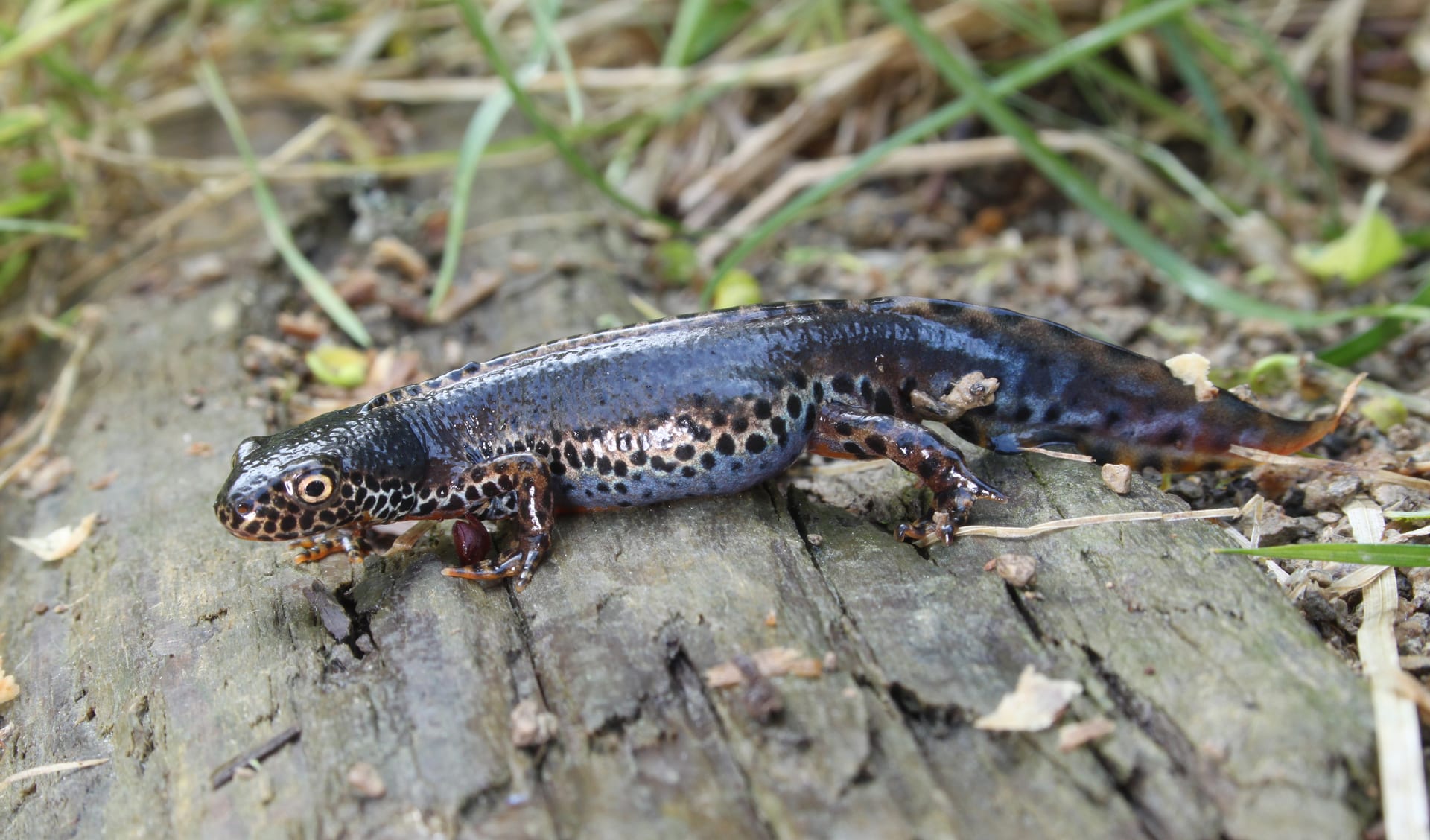
 © Holger Krisp / CC BY 3.0
Alpine Newt
The Alpine Newt is a small, striking amphibian found across much of continental Europe, typically reaching 7 to 12 cm in length. Its back and flanks range from dark grey to a subtle blue tint, while the throat and belly are a plain, unmarked orange. During the breeding season, males develop a low, smooth crest along the back marked with black-and-yellow stripes, along with more vivid blue along their sides. Calm and easy to observe, this newt suits keepers who enjoy watching subtle seasonal changes unfold.
View Alpine Newt encyclopedia →0% commission on your first sales!Register by September 30, 2026 and your first 2 sales are commission-free!
Breeder Wanted!
List on BreederDirect and sell directly to customers nationwide!
6 Transparency Promises from Br-Choku
Every Reptiles & Amphibians from verified Breeder breeders includes complete information: morph, genetics, feeding requirements, and temperament details.
- Morph Information
- Actual Photos
- Feeding Information
- Temperament Information
- Genetics Information
- Age (Months)
Browse all 280 breeds
Difficulty Level
Feeding Type
Temperament
Verified breeders wanted for Reptiles & Amphibians
Breeders are signing up now ahead of launch. Subscribe to be notified when new listings go live.
Getting alerts is free with a member account. When new listings match your saved search, we'll notify you by email and in-app.
Browse other categories
Verified breeders (preview)
Are you raising reptiles & amphibians?
Register as a breeder and connect with buyers directly.
Apply as a breederAbout Alpine Newt
Alpine Newt: a small European newt reaching 7-12 cm, with dark grey-blue flanks, a plain orange belly, and striking breeding colors in males. Care level: intermediate.
7 things to know before welcoming a Alpine Newt
1Needs Both Water and Land
Alpine Newts move between water and land depending on the season, spending more time submerged during the breeding period. Providing both an aquatic area and a land area in the enclosure helps them settle comfortably.
2Keep an Eye on Temperature
As a species from the cooler regions of Europe, Alpine Newts tend not to do well in prolonged heat. Pay attention to where the enclosure is placed and to seasonal temperature swings, and avoid letting it get too hot.
3Delicate, Permeable Skin
Like all amphibians, Alpine Newts absorb moisture and substances readily through their skin, making them sensitive to irritants. If you do handle one, wash your hands thoroughly first and avoid dry hands or any trace of lotion or chemicals.
4Be Cautious About Tankmates
Because of the risk of predation or accidental ingestion, housing Alpine Newts with other fish or animals needs careful thought. Keeping them alone, or only with others of the same species, is generally the safer approach.
5A Carnivore That Needs Varied Food
Alpine Newts are carnivorous, favoring small insects, crustaceans, and worms. Since they hunt both in water and on land, it helps to vary the type and presentation of food depending on where the individual is spending its time.
6Best Suited to Intermediate Keepers
Alpine Newts are generally considered suitable for intermediate keepers rather than complete beginners. Water quality, temperature, and maintaining both aquatic and land areas all require attention, so it's worth researching their care before bringing one home.
7Breeding Season Brings a Color Change
During the breeding season, males develop a low crest along the back marked with black-and-yellow stripes, along with stronger blue coloring on their sides. Females stay comparatively muted in color, so there's an enjoyable contrast to watch for between the sexes and across the seasons.
Frequently asked questions about Alpine Newt
- Q.Can beginners keep an Alpine Newt?
- A.Alpine Newts are generally considered a species for intermediate keepers rather than complete beginners. Since there are several points to manage, such as water quality, temperature, and providing both water and land areas, it's a good idea to learn about their care beforehand.
- Q.Do I need both a water area and a land area?
- A.Yes — Alpine Newts move between water and land depending on the season and their condition, so providing both is the basic setup. They tend to spend more time in water during the breeding season.
- Q.Is it okay to handle one with bare hands?
- A.Amphibian skin readily absorbs substances, so hands should be clean and free of lotion or chemicals before any contact. It's best to keep handling to a minimum rather than doing it often.
- Q.Can it be kept together with other animals?
- A.Because of the risk of predation or accidental ingestion, combining Alpine Newts with other fish or animals needs careful consideration. Keeping them alone or with others of the same species is the safer choice.
- Q.What should I feed it?
- A.Alpine Newts are carnivorous and favor small insects, crustaceans, and worms. Since they hunt both in water and on land, it helps to adjust the food and feeding style to match the individual's habits.
Useful tools for Alpine Newt care
Learn more about Alpine Newt in the encyclopedia
View Alpine Newt encyclopedia entry →
Care difficulty, lifespan, size and diet — all basics covered.
More in this category
Can't find the one you're looking for?
Post your wishes for free and breeders with matching animals will contact you with introductions.