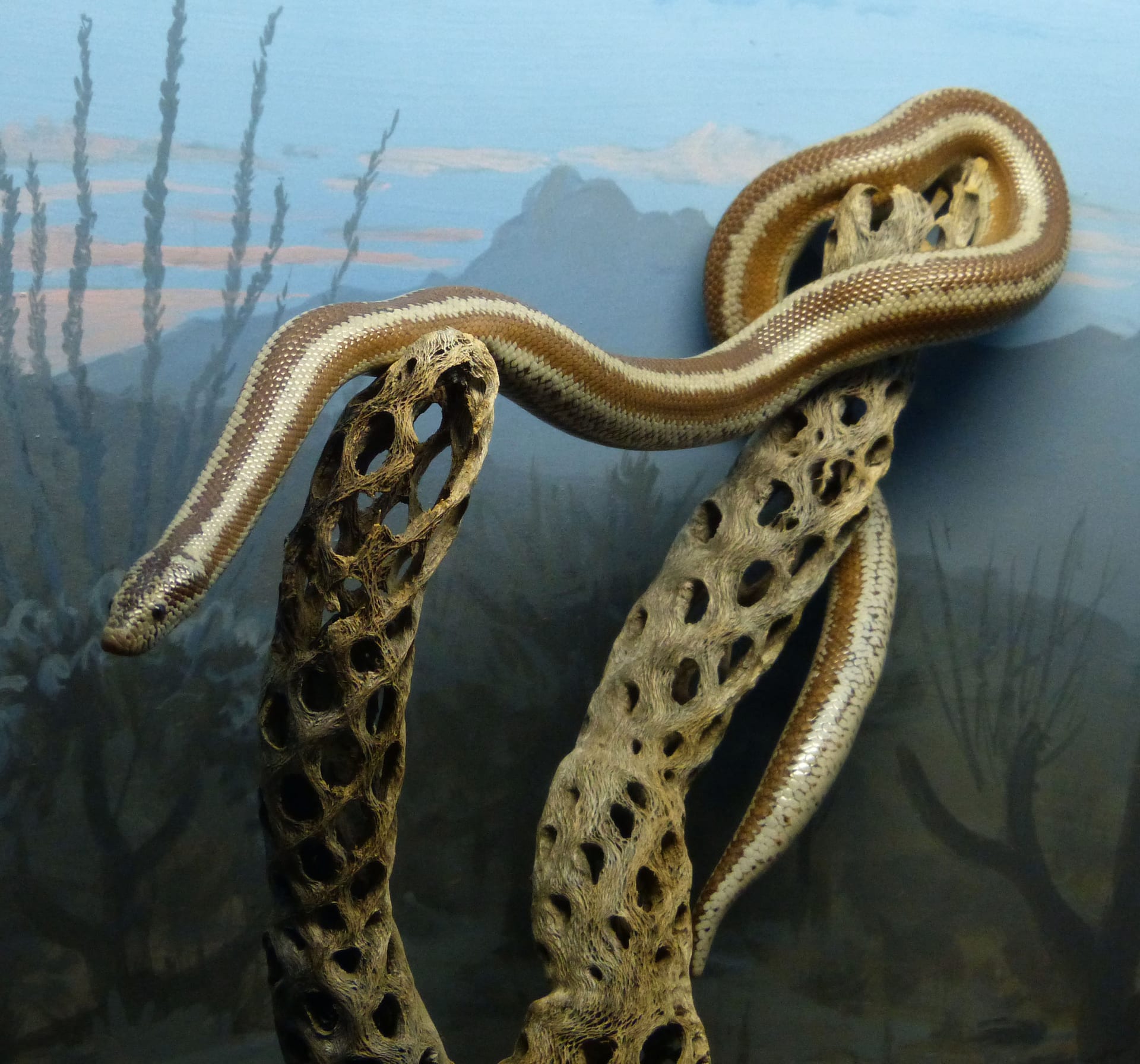
 © gailhampshire from Cradley, Malvern, U.K / CC BY 2.0
Rosy Boa
The Rosy Boa is a small boa native to the rocky deserts of the southwestern United States and northwestern Mexico. Named for the three stripes running down its body, it's known as one of the slowest-moving snakes in the world. Calm and easy to handle, it's widely considered a great starter snake for reptile keepers. Adults stay compact at roughly 43 to 112 cm, so they don't require a large enclosure. Quiet by nature and nocturnal during hot weather, they're also a rewarding species to simply observe.
View Rosy Boa encyclopedia →Breeder Wanted!
List on BreederDirect and sell directly to customers nationwide!
BreederDirect's 6 Transparency Commitments
Every Reptiles & Amphibians from verified Breeder breeders includes complete information: morph, genetics, feeding requirements, and temperament details.
- Morph Information
- Actual Photos
- Feeding Information
- Temperament Information
- Genetics Information
- Age (Months)
Browse all 319 breeds
Difficulty Level
Feeding Type
Temperament
Verified breeders wanted for Reptiles & Amphibians
Breeders are signing up now ahead of launch. Subscribe to be notified when new listings go live.
Getting alerts is free with a member account. When new listings match your saved search, we'll notify you by email and in-app.
Browse other categories
Verified breeders (preview)

Are you raising reptiles & amphibians?
Register as a breeder and connect with buyers directly.
Apply as a breederRosy Boa key facts
- Care level
- Beginner-friendly
- Lifespan
- 20-30 years
- Size
- 43-112cm
- Temperature
- 24〜32℃
- Humidity
- 60% or below
- Diet
- Thawed frozen mice
- Temperature & Humidity
- Target a basking surface of 29-32 C and a cool zone of 24-27 C. Turn the heat off at night; temperatures can safely fall to 16 C. Keep humidity below 60 percent, measured with a digital probe hygrometer in the middle of the enclosure, as sustained high humidity makes them unwell.
- Enclosure
- Size the enclosure as snake length x half length x half length: 60 x 30 x 30 cm for a 61 cm animal, 120 x 60 x 60 cm for one that reaches 112 cm. Front-opening enclosures are easiest to service. Provide 7.5-10 cm of sand or sandy soil so it can burrow, plus several rocks and hides.
- Diet & Feeding
- In the wild it takes mainly rodents, along with lizards, amphibians, other snakes and birds. In captivity offer thawed frozen mice sized to the snake, warmed to about 38 C, using soft-tipped feeding tongs.
- Temperament
- Extremely docile and rarely inclined to bite. When disturbed it balls up with the head in the centre and releases foul-smelling musk from the tail base. Its slow movement and small size make it an easy first snake. Keep it singly.
- Notes
- As a desert species it should never be kept on permanently damp substrate. Its taxonomy is unsettled and coastal populations are treated by some authorities as a separate species, Lichanura orcutti, so confirm locality claims with the seller. Listed on CITES Appendix II as Boidae spp. since 4 February 1977, so no registration certificate is required. The IUCN Red List assesses it as Least Concern.
About Rosy Boa
The Rosy Boa is a small, docile boa from the southwestern US and northwestern Mexico, prized as an easy, beginner-friendly reptile. Adults reach about 43-112 cm.
7 things to know before welcoming a Rosy Boa
1Famously Slow-Moving
The Rosy Boa is known as one of the slowest-moving snakes in the world. It rarely bolts or thrashes, making it calm and easy to hold. Since sudden movements can still startle it, always handle it gently.
2Calm, Easygoing Temperament
Rosy Boas have a docile temperament and rarely bite. Once settled in, they tend to tolerate handling well, making them a good choice for first-time snake keepers. That said, individuals vary, so give a newly acquired snake time to adjust before handling it much.
3A Compact Snake
Adults typically reach only about 43 to 112 cm, so they don't need as much space as larger boa species. A front-opening enclosure makes care easy, and enclosure layout and cleaning are relatively simple.
4Prefers a Dry Habitat
Native to rocky desert habitat, Rosy Boas prefer dry conditions and dislike excess humidity. Manage substrate, temperature, and humidity carefully to avoid a damp enclosure, and provide a shelter so the snake can retreat and feel secure.
5Nocturnal in Hot Weather, and Quiet
In hot weather Rosy Boas are mostly active at night and tend to stay hidden and still during the day. They go dormant in winter and are most active in the spring breeding season. They're silent animals, which makes them a manageable pet even in an apartment.
6Feed on a Regular Schedule
They're typically fed small rodents at a frequency appropriate to their age and size. Keep an eye on feeding response and droppings day to day to monitor their health.
7Prepare Before You Bring One Home
Before bringing one home, set up an appropriately sized enclosure with heating equipment, a hide, and suitable substrate. After arrival, give the snake a quiet settling-in period before handling it much.
Frequently asked questions about Rosy Boa
- Q.Is the Rosy Boa a good choice for beginners?
- A.Yes, its calm temperament and slow movements make it a popular choice as a beginner reptile. That said, it still needs proper care, such as a dry enclosure, so learn the basics before bringing one home.
- Q.How big do Rosy Boas get?
- A.Adults typically reach about 43 to 112 cm in length. Size varies considerably by subspecies and locality, and between individuals.
- Q.Do Rosy Boas bite?
- A.They're known for a docile temperament and rarely bite, but that doesn't mean they never will. Handle them carefully, especially right after bringing one home or if it's startled.
- Q.What kind of habitat does it need?
- A.Set up a dry enclosure that mimics its native rocky desert habitat. Provide a hide for security and maintain appropriate temperatures.
- Q.It's nocturnal — what does it do during the day?
- A.In hot weather it usually stays still inside its hide or burrowed in substrate during the day, becoming active mainly at night. Since it spends much of its time resting quietly, avoid disturbing it unnecessarily.
Useful tools for Rosy Boa care
Learn more about Rosy Boa in the encyclopedia
View Rosy Boa encyclopedia entry →
Care difficulty, lifespan, size and diet — all basics covered.
More in this category
Can't find the one you're looking for?
Post your wishes for free and breeders with matching animals will contact you with introductions.