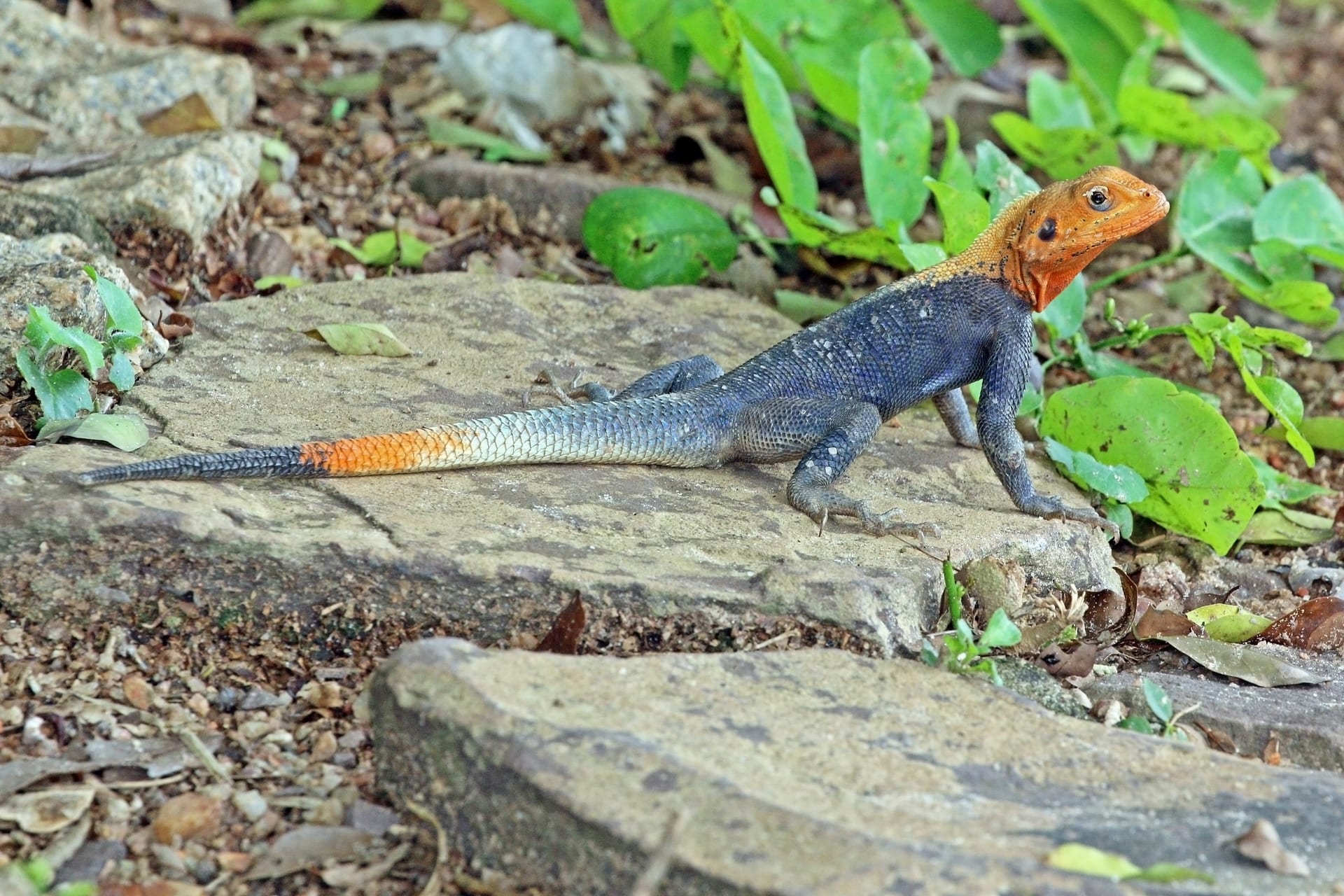
 © Charles J. Sharp / CC BY-SA 4.0
Rainbow Agama
The Rainbow Agama, also known as the red-headed agama, is a lizard native to sub-Saharan Africa. Its biggest draw is a dramatic shift in coloration: dominant males flaunt a striking blue body with a yellow-to-orange head and tail, while females, juveniles, and subordinate males wear a much plainer olive tone. Watching how color signals status within a group is part of the fun of keeping this species. They're active by day, often basking on rocks or walls in the sun, and are generally considered a good fit for keepers with some prior reptile experience in UV lighting, heating, and basking setups.
View Rainbow Agama encyclopedia →0% commission on your first sales!Register by September 30, 2026 and your first 2 sales are commission-free!
Breeder Wanted!
List on BreederDirect and sell directly to customers nationwide!
6 Transparency Promises from Br-Choku
Every Reptiles & Amphibians from verified Breeder breeders includes complete information: morph, genetics, feeding requirements, and temperament details.
- Morph Information
- Actual Photos
- Feeding Information
- Temperament Information
- Genetics Information
- Age (Months)
Browse all 280 breeds
Difficulty Level
Feeding Type
Temperament
Verified breeders wanted for Reptiles & Amphibians
Breeders are signing up now ahead of launch. Subscribe to be notified when new listings go live.
Getting alerts is free with a member account. When new listings match your saved search, we'll notify you by email and in-app.
Browse other categories
Verified breeders (preview)
Are you raising reptiles & amphibians?
Register as a breeder and connect with buyers directly.
Apply as a breederRainbow Agama key facts
- Care level
- Intermediate
- Lifespan
- 6-10 years
- Size
- 13-30cm total length (males 7.5-12cm longer than females)
- Diet
- Omnivorous, mainly invertebrates such as insects and spiders, plus small mammals and reptiles and some plant material
- Temperature & Humidity
- Well adapted to arid conditions and active through the day, this is a heat-loving species. It basks from an elevated perch, propped on its forelegs with the body angled upward. Provide a strong basking spot together with genuinely cool shade in the same enclosure.
- Enclosure
- Semi-arboreal, climbing rocks, walls and tree trunks, it does best with vertical structure. Build lookout perches from stacked rock, cork and stout branches, and provide several crevices it can retreat into. For laying, give at least 5 cm of damp sandy substrate in a sunlit spot.
- Diet & Feeding
- Omnivorous and willing to eat almost anything it can catch and swallow, taking invertebrates such as insects and spiders as well as small mammals, reptiles and plant matter. In captivity use crickets and dubia roaches as the staple with small amounts of greens and flowers, dusted with calcium and vitamin supplements. If kept as a group, set out several feeding stations.
- Temperament
- Generally placid apart from the dominant male defending his territory. Fighting males bob their heads hard, raise the body and spread the gular fold in threat, then strike at one another with the tail; the loser is driven out. Keep one male with several females and never house males together.
- Notes
- Not listed on any CITES appendix. The IUCN assesses it as Least Concern. It appears neither on the schedule of designated dangerous animals under the Order for Enforcement of the Act on Welfare and Management of Animals nor on Japan's list of invasive alien species. Agama agama continues to be revised taxonomically and many former subspecies are now full species. Animals of unknown provenance may belong to a related species, so check locality data if you intend to breed.
About Rainbow Agama
The Rainbow Agama is a sub-Saharan African lizard known for its dramatic color-changing males—blue bodies with vivid orange-yellow heads. A diurnal, sun-loving species suited to intermediate keepers.
7 things to know before welcoming a Rainbow Agama
1Color Signals Rank
Dominant males show off a vivid blue body with a yellow-to-orange head and tail, while females, juveniles, and subordinate males stay a duller olive shade. Since the same species can look dramatically different, watching coloring shift with age and social standing is part of the appeal.
2Sun-Loving Day Lizard
These agamas are active during the day and are often spotted basking on rocks or walls in direct sunlight. Provide a dedicated basking spot along with UV lighting so they can replicate this natural behavior.
3Native to Sub-Saharan Africa
In the wild, they inhabit sub-Saharan Africa, favoring sunny, open spots like rock outcrops and walls. Adding rocks or raised basking platforms to the enclosure helps them feel at home.
4Adult Size Varies
Adults reach a total length of roughly 13 to 30 cm, with males typically growing 7.5 to 12 cm larger than females. Plan enclosure space with the eventual adult size in mind, not just the size at purchase.
5Best for Experienced Keepers
Managing temperature, humidity, and UV exposure calls for some prior reptile-keeping know-how, which is why this species is considered better suited to intermediate keepers. First-time reptile owners may want to build up some basic experience before taking one on.
6Social Behavior to Watch
In the wild, Rainbow Agamas live in groups where male hierarchy and territory show up as shifts in coloration. Even kept alone, their daily behavior offers plenty to observe and read.
7Prep the Enclosure First
Have basking lights, UV lighting, and a properly graded temperature gradient ready before bringing one home for a smooth transition. Add climbing branches and rocks so they can move both horizontally and vertically.
Frequently asked questions about Rainbow Agama
- Q.Do all Rainbow Agamas turn blue?
- A.Only dominant males within a group develop the striking blue body with a yellow-to-orange head and tail. Females, juveniles, and subordinate males tend to stay a duller olive color, so not every individual shows this vivid coloring.
- Q.How big do adults get?
- A.Adults reach a total length of about 13 to 30 cm, with males usually growing 7.5 to 12 cm larger than females. Because individual size varies quite a bit, it's worth planning enclosure space around the larger end of that range.
- Q.Is this species suitable for beginners?
- A.This species is generally considered better suited to intermediate keepers, since it calls for solid know-how in temperature, UV lighting, and humidity management. If you're completely new to reptiles, building experience with an easier species first is a good idea.
- Q.Can multiple Rainbow Agamas be kept together?
- A.Males establish hierarchy and territory, so housing multiple males in one enclosure often leads to conflict. A single lizard, or a pairing/trio with one male and multiple females, is the more common setup.
- Q.Do they need a basking setup?
- A.Yes — Rainbow Agamas are diurnal and naturally bask on rocks and walls during the day, so a dedicated basking spot with UV lighting is essential. Providing this kind of environment supports their overall health.
Useful tools for Rainbow Agama care
Learn more about Rainbow Agama in the encyclopedia
View Rainbow Agama encyclopedia entry →
Care difficulty, lifespan, size and diet — all basics covered.
More in this category
Can't find the one you're looking for?
Post your wishes for free and breeders with matching animals will contact you with introductions.