Source: Wikimedia Commons
Rainbow Agama
IntermediateAgama agama
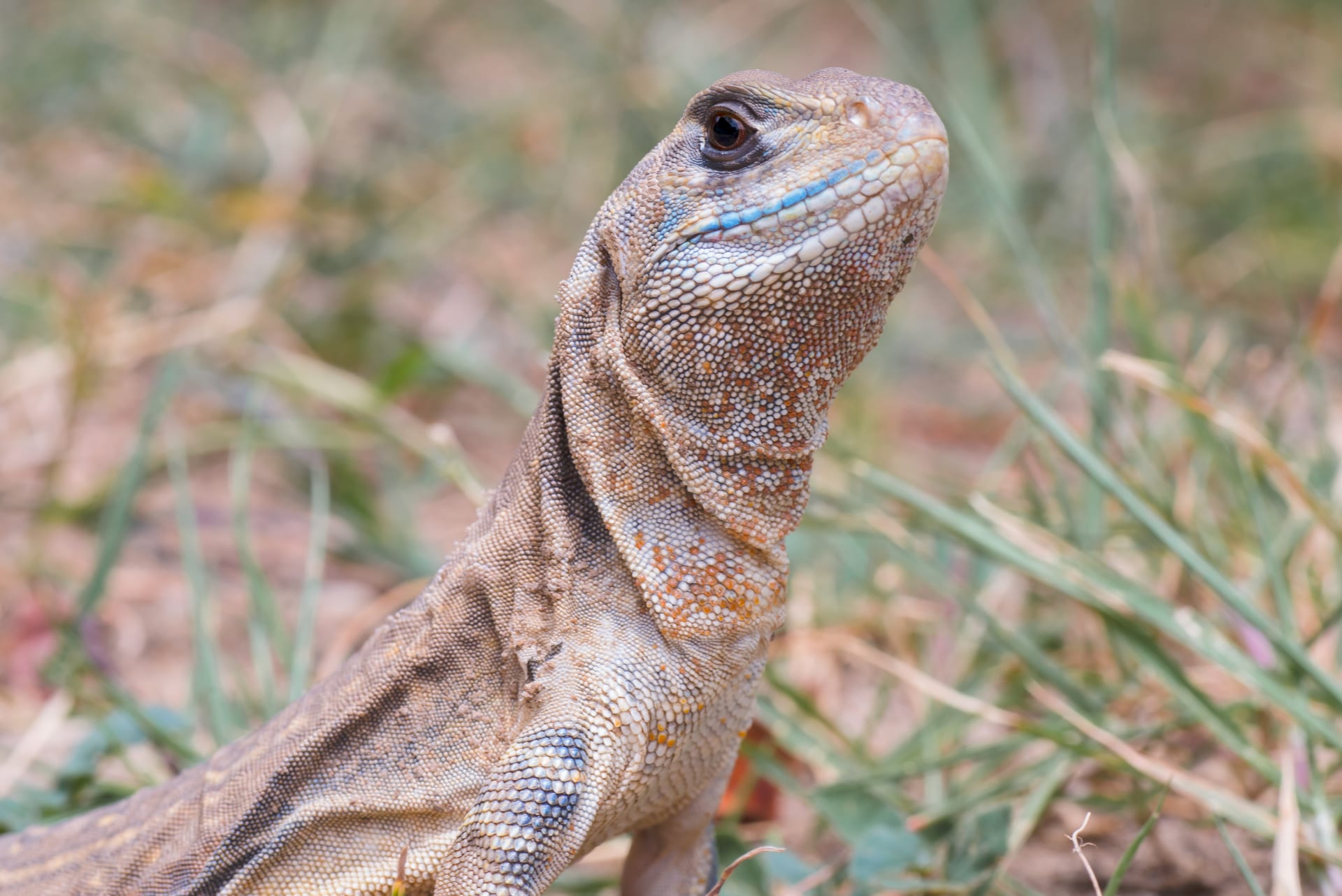
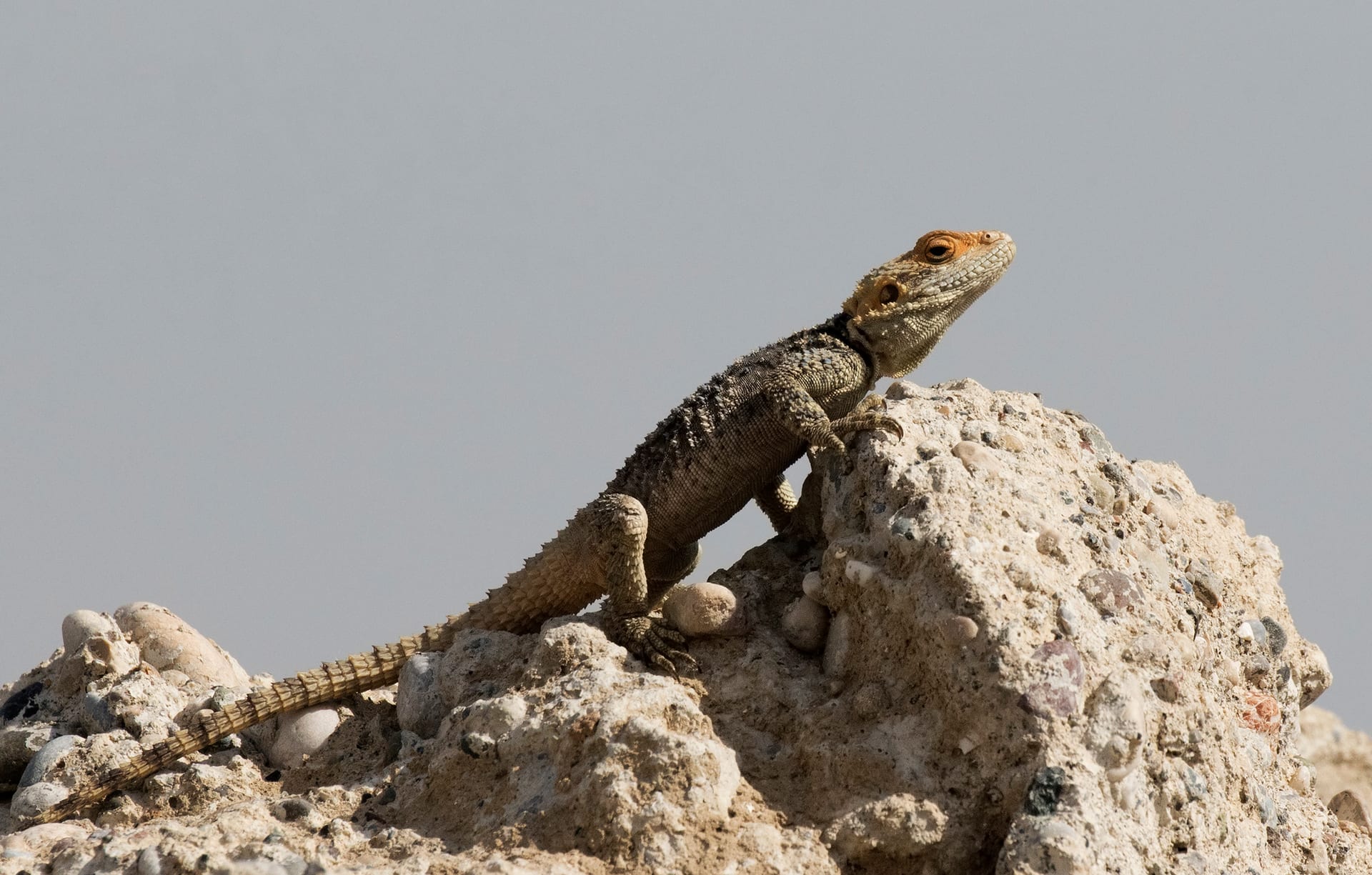
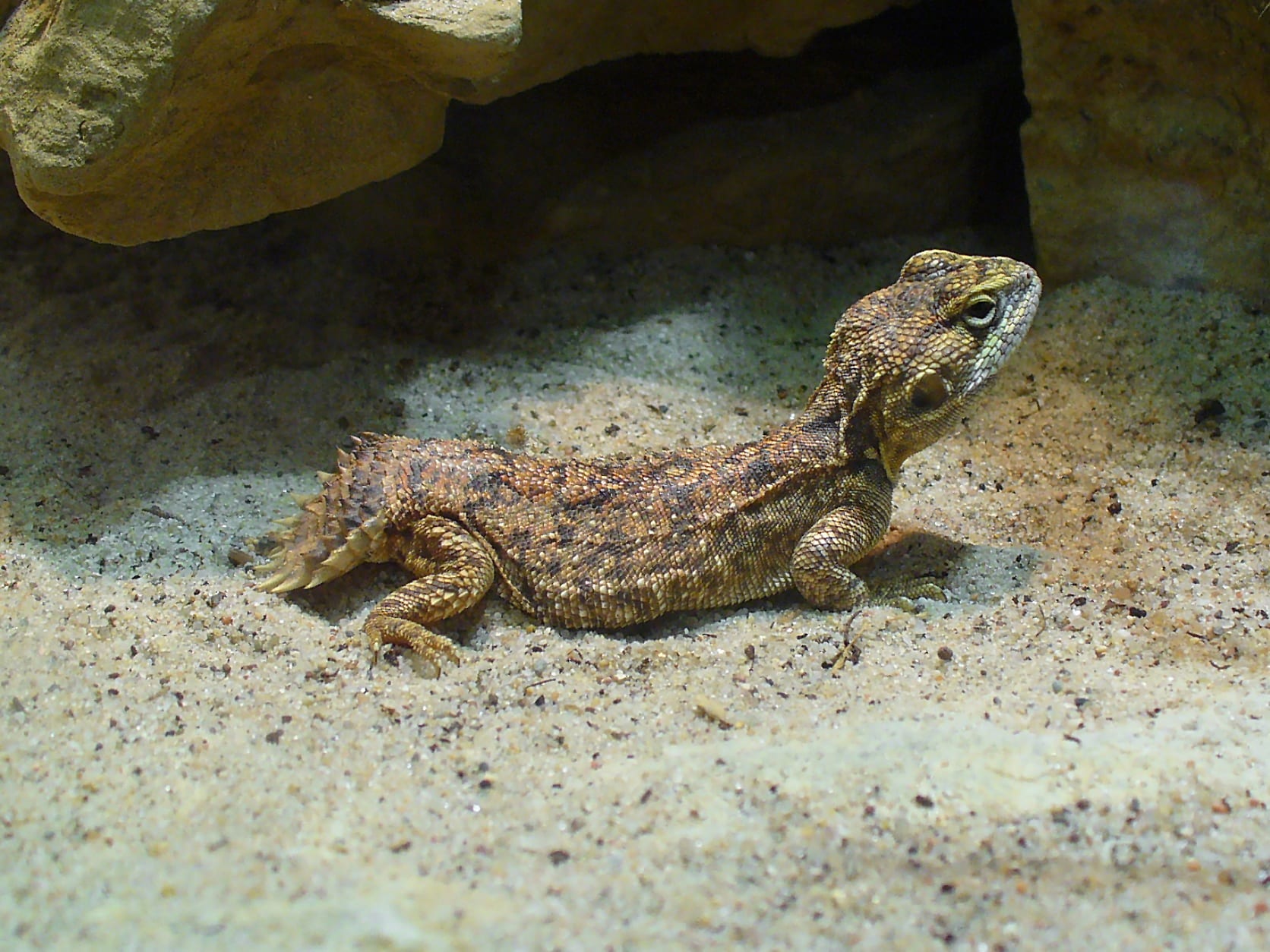
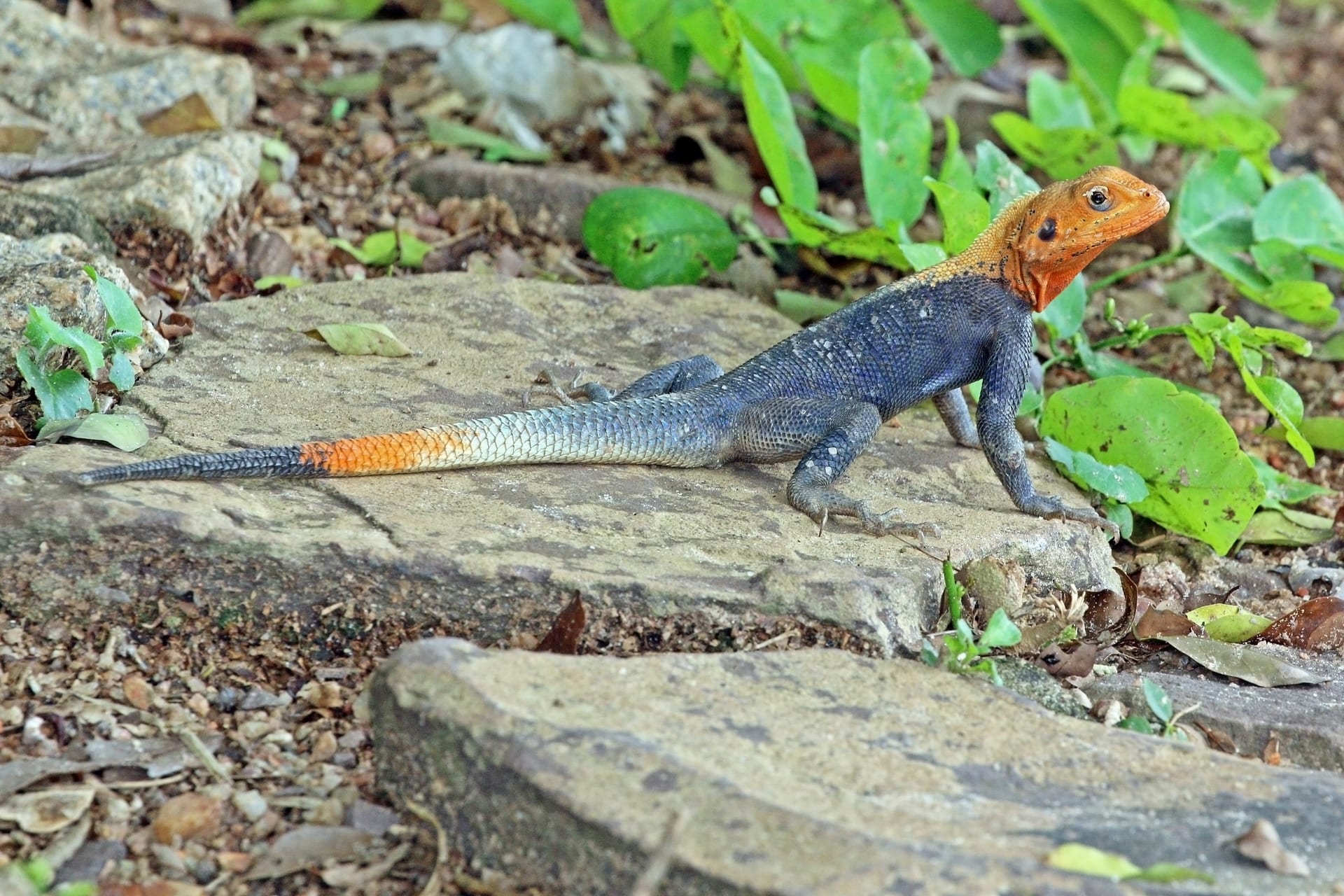
An agama of sub-Saharan Africa in which the dominant male has a blue body with a yellow to orange head and tail, while females, juveniles and subordinate males have a plain olive-green head. It is often seen basking on rocks and walls by day.
Difficulty
Intermediate
Temperature
25〜32℃
Size
13-30cm total length (males 7.5-12cm longer than females)
Humidity
40〜70%
Diet
Omnivorous, mainly invertebrates such as insects and spiders, plus small mammals and reptiles and some plant material
About
The rainbow agama (Agama agama) is an agamid lizard of sub-Saharan Africa. It measures 13-30 cm, males being 7.5-12 cm longer than females. Colour changes with mood and social rank: once a dominant male has warmed up during the day it turns a striking steel blue with a yellow to orange head and tail, though at night it is uniformly grey. Females, juveniles and subordinate males are an inconspicuous olive to brown. The species lives in colonies of up to 25 animals centred on one dominant male, which holds a territory. Activity begins at sunrise, and the dominant male displays its colours from an elevated perch. When a young male takes on adult colour, the dominant male drives it out to find a territory of its own. This was the first lizard in which temperature-dependent sex determination was discovered, over fifty years ago: cooler temperatures produce females and around 30 C produces males. Through the pet trade it has become established in southern Florida.
Source: Wikipedia (CC BY-SA 4.0)
Size of the Rainbow Agama
The Rainbow Agama grows to 13-30cm total length (males 7.5-12cm longer than females).
Basic Info
Origin
Sub-Saharan Africa; the Reptile Database lists Cameroon, Nigeria, Chad, the Central African Republic, South Sudan and Sudan, on trees, shrubs, rocky ground and the walls of buildings in steppe and savanna
Size
13-30cm total length (males 7.5-12cm longer than females)
Temperature
25〜32℃
Humidity
40〜70%
Care Specifications
Semi-aggressiveGroupBreeding: Moderate
Sources: Reptile Database: Agama agama / Animal Diversity Web: Agama agama / Wikipedia (German): Siedleragame
References & Sources
Edited & verified by: BreederDirect editorial team
The taxonomic, regulatory, and husbandry data on this page are compiled and verified against the authoritative primary sources below.
Taxonomy & Authority
Accepted name: Agama agama (Linnaeus, 1758)
Synonyms: Lacerta agama Linnaeus, 1758, Agama colonorum Daudin, 1802, Agama occipitalis Gray, 1827
Authority databases: GBIF · Reptile Database
Nomenclature follows global taxonomic authority databases.
Regulations & Conservation Status
Not CITES-listedIUCN LC · Least Concern
CITES附属書には掲載されていない(Species+に掲載記録なし)。IUCNレッドリストの評価は低懸念(LC)。動物の愛護及び管理に関する法律施行令の別表に掲げる特定動物にも、外来生物法施行令の特定外来生物にも本種は含まれない。米国フロリダ州南部では移入種として定着している。
Sources: CITES Species+ (species not listed) / IUCN Red List
Regulations may change. Always verify the latest information with the relevant authorities.
Rainbow Agama Listings
Loading latest listingsFind listings for this species