Rainbow Lorikeet Care Guide | Diet, Vocalizations, and the Secret of Their Special Tongue
A practical guide to Rainbow Lorikeet care, covering diet management for these nectar-feeding birds with specialized tongues, maintaining their vibrant plumage, addressing loud vocalizations, and managing sticky droppings.
Key Takeaways
A practical guide to Rainbow Lorikeet care, covering diet management for these nectar-feeding birds with specialized tongues, maintaining their vibrant plumage, addressing loud vocalizations, and managing sticky droppings.
Related Species
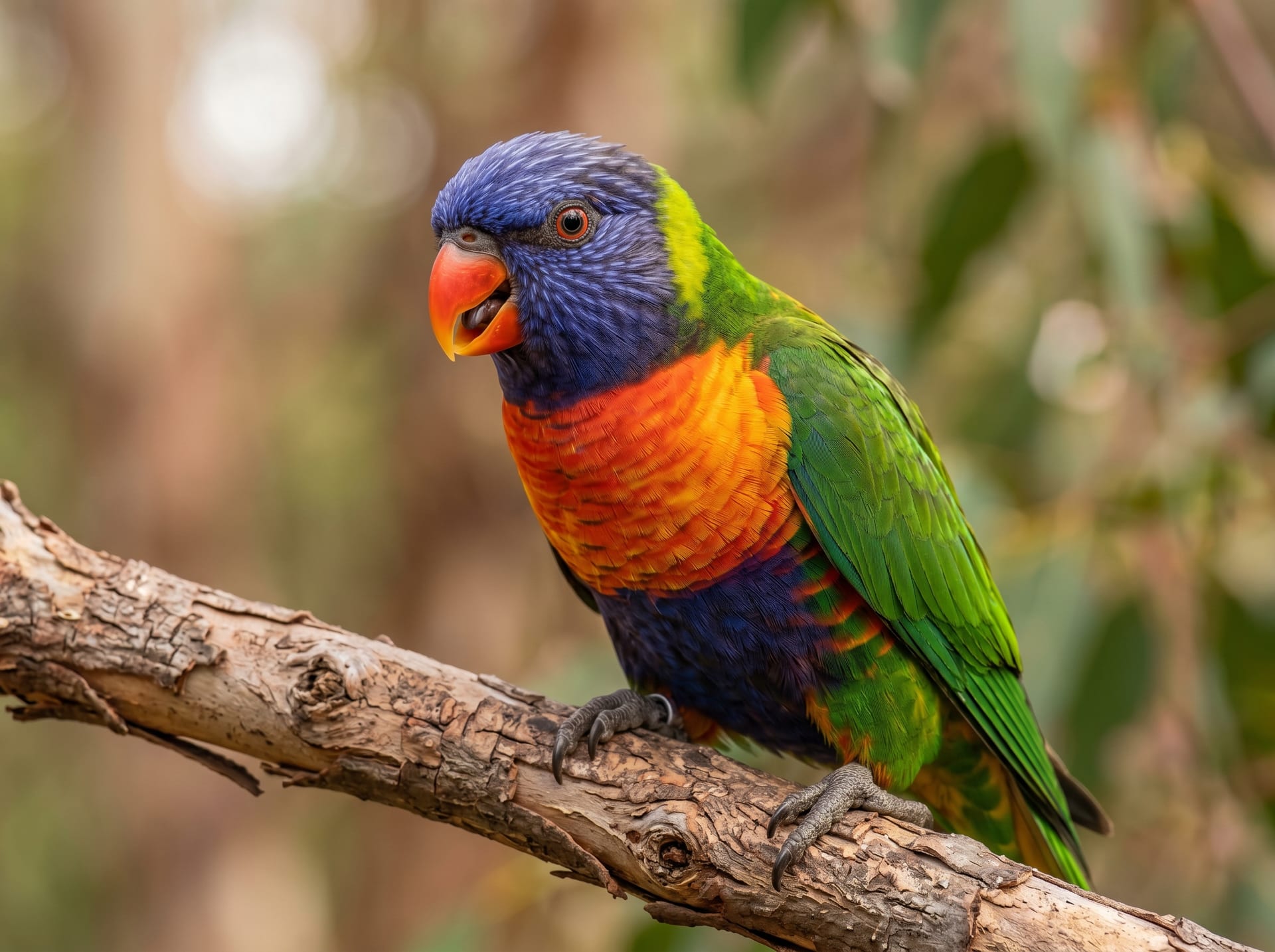
The Rainbow Lorikeet (Trichoglossus moluccanus) is one of the most popular species among lories and lorikeets native to Australia. With its blue head, red-to-orange breast, and green and yellow underparts, its stunning rainbow-like plumage is its defining feature. It is highly popular among experienced bird enthusiasts due to its unique diet of nectar as its primary food and its affectionate temperament toward humans.
Basic Characteristics of Rainbow Lorikeets
They measure approximately 25–30 cm in length and weigh about 100–130 g. Their tail is slender and elongated, and their overall body is lean. While plumage can vary among individuals, it typically displays a vibrant gradient as follows:
- Head (blue-violet)
- Back (green)
- Breast (orange–red)
- Underparts (deep blue–black)
Their most distinctive feature is their "brush-like tongue" (brush-tipped tongue). The tip of their tongue is composed of fine, hair-like structures that allow them to efficiently gather flower nectar and pollen. Due to this specialized tongue structure, their dietary management differs entirely from other parrots that primarily consume seeds.
Their personality is extremely active and mischievous with abundant curiosity. They become closely bonded to their owners and often become hand-tame, but they have high energy levels and are the type that need to be constantly chewing or playing—they cannot remain inactive. As a loud-voiced species, keeping them in apartments or shared housing requires consideration for neighbors.
Special Dietary Management: The Challenge of Nectar Feeding
The most important and distinctly different aspect of Rainbow Lorikeet care from other birds is dietary management. In the wild, they feed on nectar, pollen, fruit, and soft seeds, and their digestive system is specialized for nectar consumption.
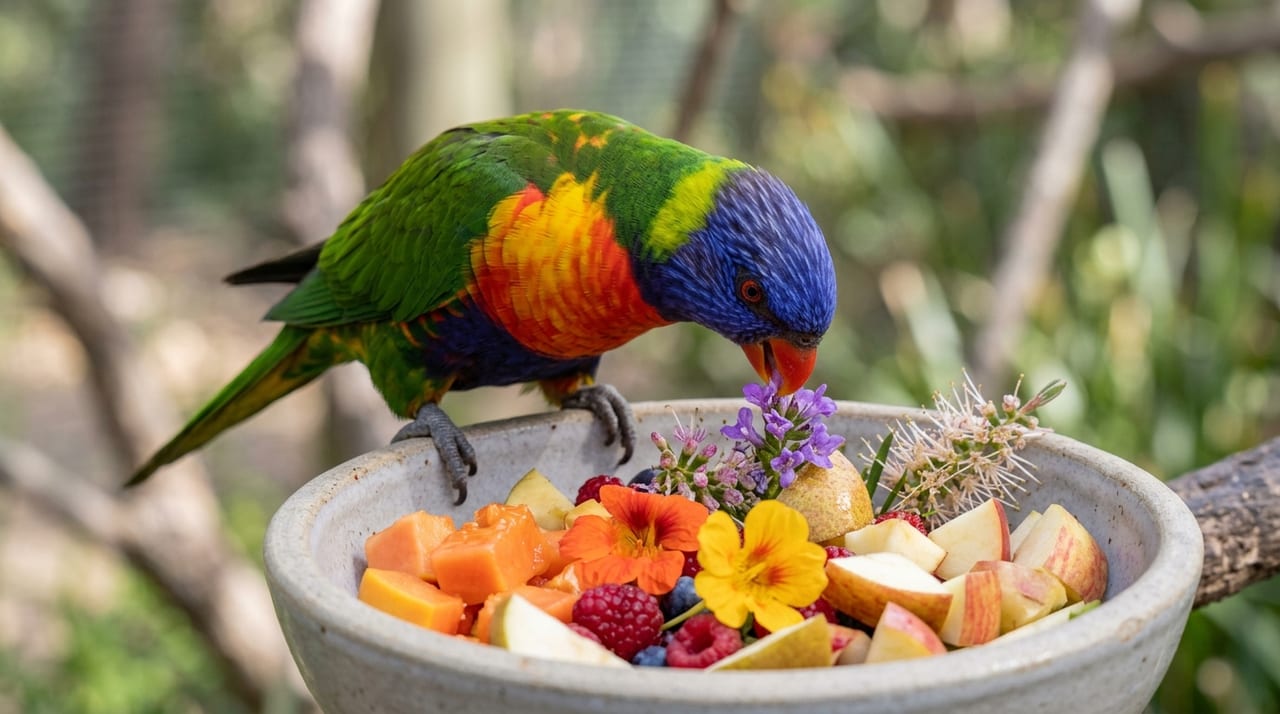
The staple diet is commercially available lorikeet-specific powdered formula or lorikeet-specific wet food. The powdered type is mixed with water into a paste before serving. This food is formulated with the sugars, protein, vitamins, and minerals found in nectar, and it alone provides all necessary nutrients.
As supplementary foods, small amounts of the following can be offered:
- Fresh fruit (apples, pears, berries, papaya, etc.)
- Flowers (edible flowers or herb blossoms)
Pollen is an excellent natural source of supplementation.
Foods that must not be given are as follows:
- Avocado: Absolutely prohibited as it is toxic to them just as it is to cats and dogs
- Seeds: While small amounts are not problematic, making them a staple diet causes digestive issues and poor health
- Dried hard seeds: Difficult to digest
- Pellets with excessive sugar and fat content (formulated for other parrots): Not suitable as a primary diet
Dishes must be washed daily. Wet food in particular begins to spoil within 2–4 hours during summer, so during warm weather change it 2–3 times daily.
Droppings Management and Hygiene
One surprising aspect of Rainbow Lorikeet care is the quantity and sticky nature of their droppings. Their nectar-based diet metabolizes quickly, producing liquid, sticky droppings extremely frequently—as often as every 30–60 minutes.
Because cage soiling is severe, use absorbent bedding paper or corn cob litter at the cage bottom and replace it at least daily. The cage itself requires wiping down 1–2 times per week.
During out-of-cage time, use a dedicated "bird play stand" or soiling prevention sheets to keep droppings off walls and furniture. They often defecate after leaving the cage, so learning this timing makes management easier.
Vocalization and Noise Management
Rainbow Lorikeets are among the loudest of parrots. They vocalize most loudly during early morning and evening hours corresponding to their natural foraging activity. Their volume approaches that of macaws, making them particularly challenging for apartments and shared housing.
Noise management starts with choosing the right location. Consider housing them in rooms far from windows or in soundproofed rooms. Soundproofing covers placed over the cage provide some benefit.
Excessive vocalization can have several causes:
- Boredom
- Hunger
- Fear
- Sexual behavior
Providing ample playtime, toys, regular feeding schedules, and creating a secure environment can sometimes improve excessive vocalization.
As a consideration for neighbors, placing cage covers especially before 6 am or after 8 pm to reduce stimulation is also effective.
Health Management and Disease Prevention
Common health issues in Rainbow Lorikeets include the following:
- Hemochromatosis (Iron Overload Disorder): A hereditary condition common in lorikeets where iron is excessively absorbed and accumulated. Prevention involves avoiding high-iron diets (iron-fortified foods, spinach, red meat) and using lorikeet-specific formulas.
- Aspergillosis: A fungal respiratory infection caused by mold that occurs particularly when immunity is compromised. Prevention focuses on managing humidity and maintaining cleanliness in the enclosure.
- Psittacine Beak and Feather Disease (PBFD): A viral infection caused by avian herpesvirus that causes feather deformity, feather loss, and beak abnormalities. As vaccines are not widely available in Japan, avoiding contact with infected birds is the primary prevention strategy.
Schedule regular health checkups with an avian veterinarian approximately 1–2 times per year. Monitor weight at home regularly; sudden weight loss of 5% or more in one week can be an early sign of illness.
Benefits of Acquiring from a Breeder
Acquiring a Rainbow Lorikeet directly from a breeder allows you to verify health status and breeding history (parental health, hemochromatosis occurrence, etc.) in advance. Additionally, young birds accustomed to hand-taming from youth show high affinity for humans and are easier to care for.
A major advantage is being able to learn specialized care techniques directly from the breeder, such as how to feed lorikeet-specific formula and manage droppings. For those acquiring a lorikeet for the first time, support from an experienced breeder is invaluable.
Rainbow Lorikeets with their vibrant plumage and unique dietary needs require considerable care effort, but they possess special charm and individuality that far exceeds this investment. Bring one into your home only after acquiring sufficient knowledge and making proper preparations.