Source: Wikimedia Commons
Eastern Collared Lizard
IntermediateCrotaphytus collaris
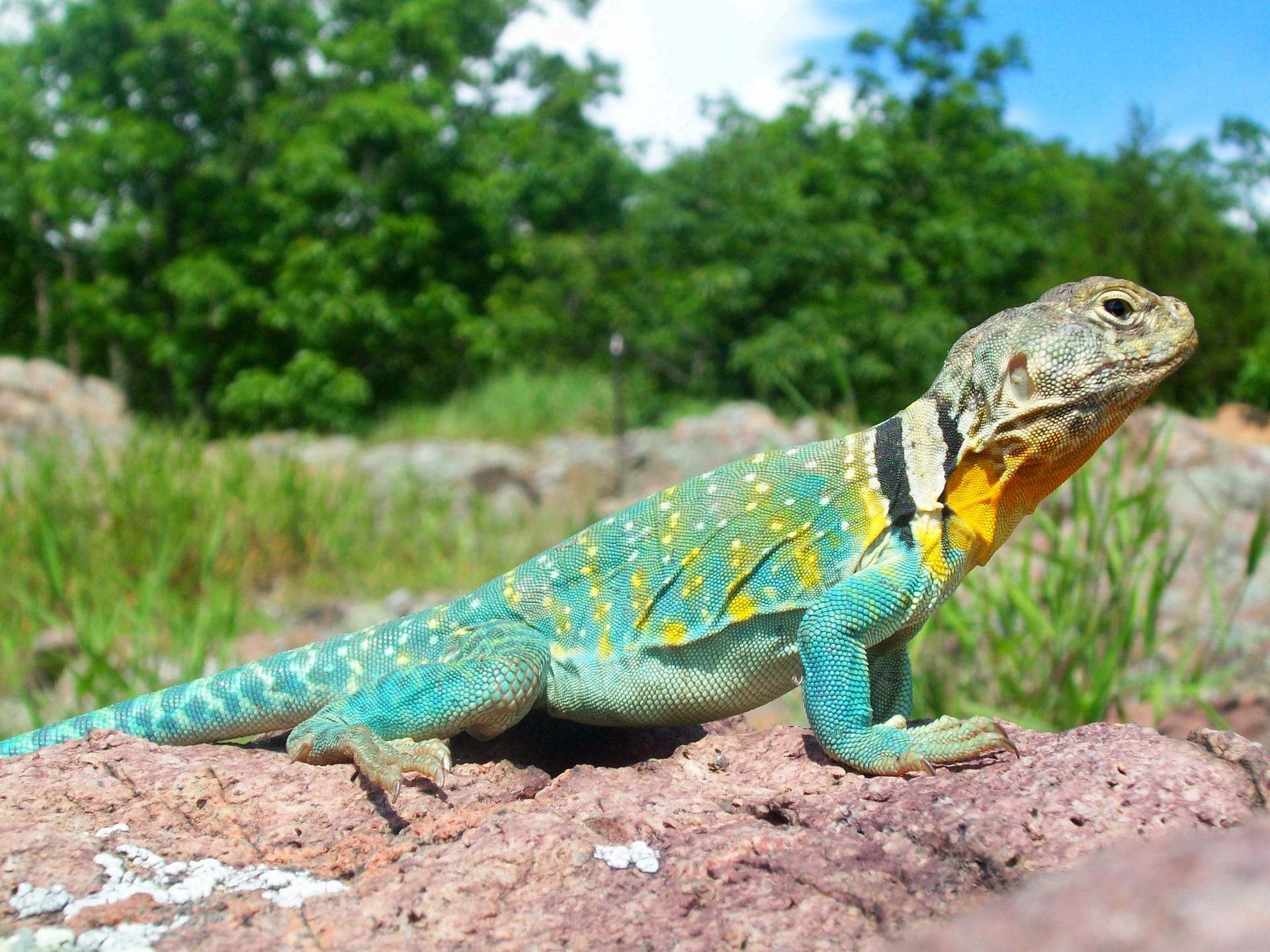
A North American lizard with a double black band across the neck resembling a collar, a large head and powerful jaws. Males are blue-green with yellow striping and a yellow-orange throat; females are brown and develop red or orange markings on the neck when gravid.
Difficulty
Intermediate
Lifespan
Over 10 years with proper care, with records of 15 years
Size
20-38cm total length (45-120g)
Humidity
50〜70%
Diet
Carnivorous: insects, other arthropods and small reptiles; it will also take flowers, leaves and fruit
About
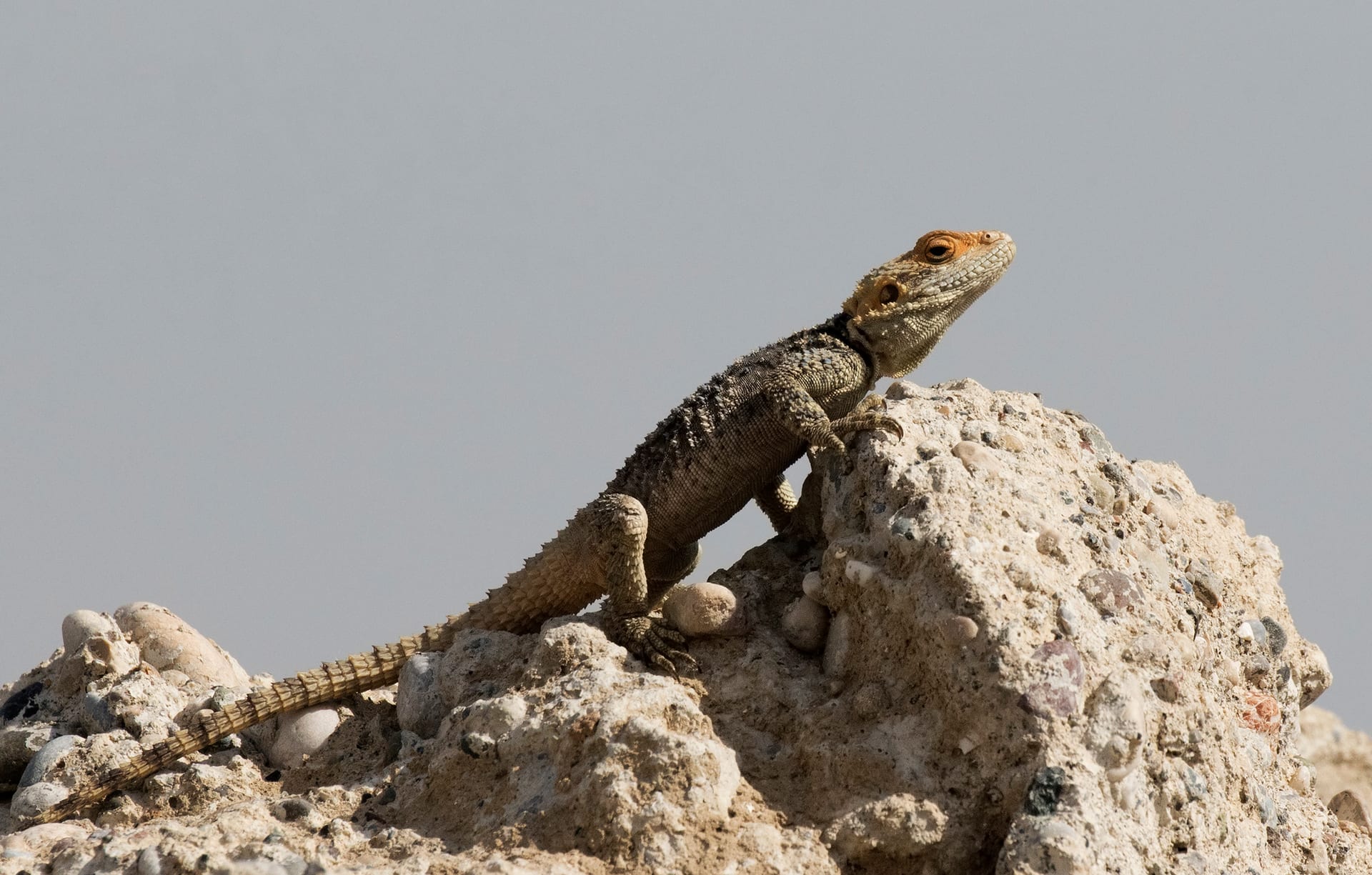
The eastern collared lizard (Crotaphytus collaris) is a crotaphytid lizard of rocky arid country in North America. A double black band across the neck resembles a collar and gives the species both its Japanese and English names. The head is large with a rounded snout, the jaws are powerful and the limbs long. Males are blue-green with yellow striping and a yellow-orange throat, while females are brown and develop red or orange markings on the neck when gravid. Five subspecies are recognised and colour and pattern vary geographically. It inhabits rocky semi-desert, is extremely agile, can run at 25 km/h and leaps between rocks and trees, sometimes rearing onto its hind legs to sprint. Laying takes place in June and July, with clutches of one to eleven eggs hatching in about 55-65 days. Captive breeding has advanced in Europe and North America in recent years, with enthusiasts maintaining bloodlines.
Source: Wikipedia (CC BY-SA 4.0)
Lifespan of the Eastern Collared Lizard
The Eastern Collared Lizard lives Over 10 years with proper care, with records of 15 years.
Size of the Eastern Collared Lizard
The Eastern Collared Lizard grows to 20-38cm total length (45-120g).
It measures 20-38 cm and weighs 45-120 g, males being slightly larger.
Basic Info
Origin
The south-central and south-western United States (Texas, Oklahoma, Kansas, Missouri, Arkansas, New Mexico, Arizona and others) and northern Mexico, in rocky arid and semi-arid country at 150-2,400 m
Lifespan
Over 10 years with proper care, with records of 15 years
Care Specifications
AggressiveSolitaryBreeding: Moderate
Sources: ReptiFiles: Collared Lizard Care Sheet / Reptiles Magazine: Breeding The Collared Lizard / Animal Diversity Web: Crotaphytus collaris
References & Sources
Edited & verified by: BreederDirect editorial team
The taxonomic, regulatory, and husbandry data on this page are compiled and verified against the authoritative primary sources below.
Taxonomy & Authority
Accepted name: Crotaphytus collaris (Say, 1822)
Synonyms: Agama collaris Say in James, 1822, Crotaphytus baileyi Stejneger, 1890
Authority databases: GBIF · Reptile Database
Nomenclature follows global taxonomic authority databases.
Regulations & Conservation Status
Not CITES-listedIUCN LC · Least Concern
Not listed in any CITES appendix (not recorded in Species+). IUCN Red List assessment: Least Concern (LC). This species is not included in either the specified animals listed in the appended table of the Ordinance for Enforcement of the Animal Welfare and Management Law, nor the specified invasive alien species under the Ordinance for Enforcement of the Invasive Alien Species Act.
Sources: CITES Species+ (species not listed) / IUCN Red List
Regulations may change. Always verify the latest information with the relevant authorities.
Eastern Collared Lizard Listings
Loading latest listingsFind listings for this species