Complete Guide to Frilled-Neck Lizard Care | Frill Display, Enclosure Setup, Feeding, and Handling
Comprehensive guide to raising frilled-neck lizards (Chlamydosaurus kingii). Covers vertical enclosure setup, creating high-temperature basking zones, choosing UVB lamps, feeding with crickets and dubia roaches, acclimating to handling, the meaning of frill displays, and preventing common diseases.
Key Takeaways
Comprehensive guide to raising frilled-neck lizards (Chlamydosaurus kingii). Covers vertical enclosure setup, creating high-temperature basking zones, choosing UVB lamps, feeding with crickets and dubia roaches, acclimating to handling, the meaning of frill displays, and preventing common diseases.
✍️
BreederDirect Editorial
The BreederDirect editorial team specializes in care information for animals, covering veterinary care and breeding to deliver beginner-friendly guides.
Find Reptiles on BreederDirect
Buy directly from verified breeders
Browse Related Listings
Find Reptiles listings related to this article on BreederDirect. Buy directly from verified breeders.
The frilled-neck lizard (Chlamydosaurus kingii) is a large agamid lizard native to Australia and New Guinea, characterized by the vibrant frill around its neck. The sight of it flaring its impressive frill when startled or threatened is spectacular, and you can enjoy this dramatic display even in captivity. This article provides a detailed guide from basic care requirements to handling techniques for frilled-neck lizards.
Basic Information and Body Shape
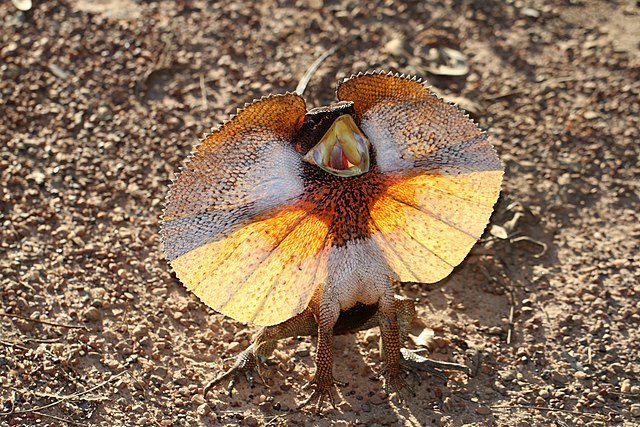
Adult males reach a maximum length of 90–100 cm (including tail), while females typically measure 70–80 cm. Their slim body shape, with the tail comprising about two-thirds of the total length, features long fingers and claws adapted for life in trees. The distinctive frill encircling the neck (frill) is a flat, ridged fold of skin that extends when startled, threatened, or during courtship displays—in large males, it can expand to over 30 cm in diameter.
With proper care, frilled-neck lizards live 10–15 years in captivity. Before acquiring one, it's essential to understand adult size and required space.
Enclosure Selection and Layout
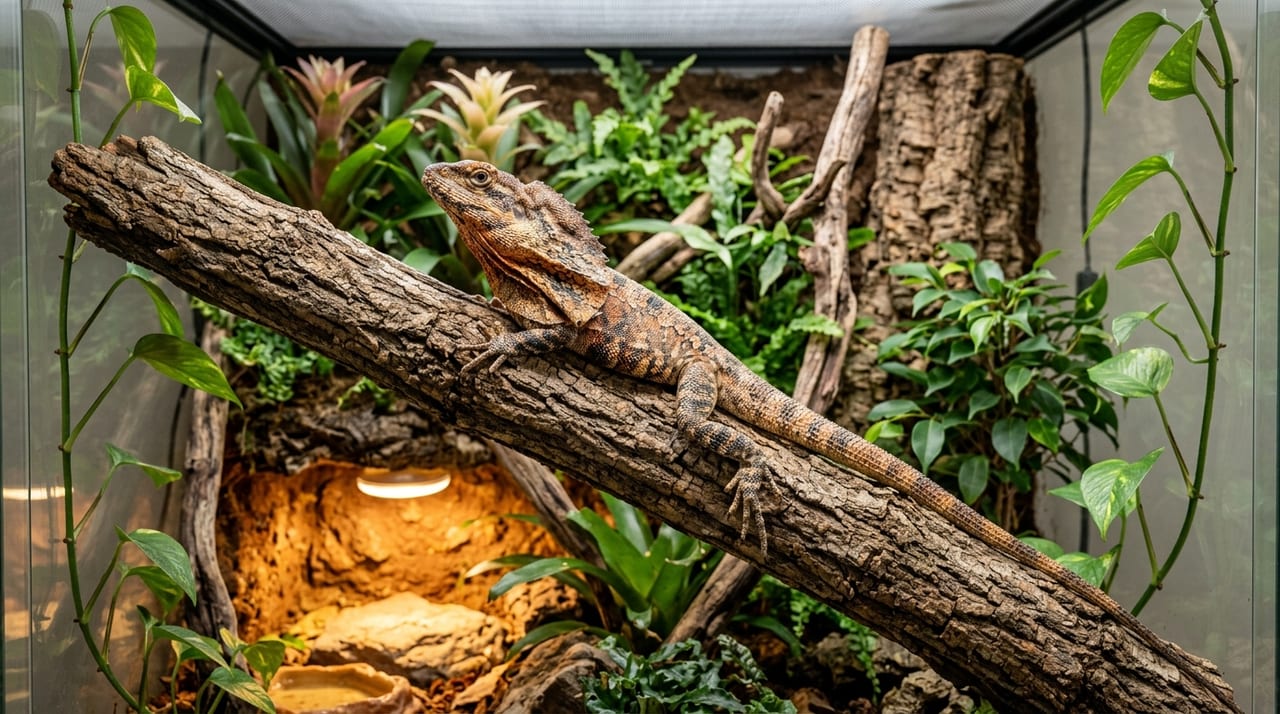
Frilled-neck lizards are highly arboreal and require enclosures with ample vertical space. Adults need a minimum of 90 cm wide × 60 cm deep × 120 cm tall or larger. Commercial vertical reptile enclosures or custom wooden enclosures work well.
Basic layout guidelines:
Basking spot: Place thick branches or boards at the top with a high-output basking lamp directly below. Target surface temperature of 45–55°C
Temperature gradient: Create maximum heat directly under the basking spot, with a cool zone at the enclosure's lower section maintaining 25–28°C. Allow the animal to thermoregulate across the temperature range
Multi-level perches: Install 5–8 cm diameter branches at multiple levels with adequate spacing so the frill doesn't catch when displayed
Substrate: Use 5 cm of moisture-retaining, easy-to-clean substrate such as coconut husk, fired clay pellets, or vermiculite mix
Temperature and Humidity Management
Since frilled-neck lizards inhabit the boundary between arid and tropical rainforest regions, managing the day-night temperature difference is essential.
Zone
Target Temperature
Basking spot (surface)
45–55°C
Enclosure daytime overall
28–35°C
Cool zone (lower enclosure)
25–28°C
Nighttime overall
22–26°C
Maintain humidity at 50–70%. Excessive dryness increases the risk of shedding problems, so mist walls and plants morning and evening, or use an automatic misting system. However, ensure the substrate doesn't remain constantly wet—proper drainage is important.
UVB Lighting and Photoperiod
Frilled-neck lizards synthesize vitamin D3 by basking under UVB (ultraviolet B) light, which is essential for proper calcium metabolism. Target a UVI value of 6.0–9.0 (equivalent to IUCG guideline category 3), using appropriate lamp output and distance.
Representative products:
Arcadia T5 HO 12% (reptile-specific, 30–40 cm from basking spot)
Reptisun T5 HO 10.0 (widely available standard option)
Set a 12–14 hour light-dark cycle. Replace lamps every 6–12 months (UVB output degrades over time despite appearing bright).
Feeding Basics
Frilled-neck lizards are primarily insectivorous omnivores, eating insects, earthworms, and small mice, along with fruits and vegetables in small amounts.
Primary Feeder Insects
Crickets (European house crickets, banded crickets): Main staple. Size should not exceed the width of the head
Dubia roaches: High nutritional value and easier to maintain than crickets
Mealworms: High palatability but fatty, so use supplementarily
Madagascar hissing roaches: Large feeders suitable for larger adults
Feeding Frequency and Supplements
Age
Feeding Frequency
Juveniles (up to 6 months)
Daily (growth priority)
Young adults (6 months–2 years)
Every other day
Adults (2+ years)
2–3 times per week
Dust feeder insects with calcium powder (containing D3) at every feeding. Add vitamin supplements 1–2 times weekly. Provide water through daily misting of surfaces the lizard can lick, plus a shallow water dish for added security.
Handling and Acclimation
Gentle acclimation from a young age allows frilled-neck lizards to become handleable. However, they are naturally alert and wary; forceful handling causes stress.
Gradual acclimation steps:
First 2 weeks: Observe and talk to the lizard from outside the enclosure only. Allow adjustment to the environment
Weeks 3–4: Place your hand inside the enclosure and attempt to hand-feed from your fingertips repeatedly
After 1 month: Offer food on your palm, and once it voluntarily climbs on, begin short handling sessions
As it becomes comfortable, gradually extend duration (aim for maximum 15–20 minutes per session)
Avoid forcing interaction when the lizard flares its frill with an open mouth in threat display. Learn to distinguish between warning frill displays and relaxed, natural frill extension during basking.
Common Diseases and Prevention
Common health issues in frilled-neck lizards and prevention strategies:
Metabolic bone disease (MBD)
Caused by calcium and vitamin D3 deficiency. Proper UVB exposure and regular dusting of food prevents this.
Shedding problems
More common in low humidity or during periods of poor health. Installing a wet shelter and maintaining proper misting helps improve this.
Respiratory infections
Occur more frequently in low-temperature conditions or overly humid environments. Proper basking temperature and ventilation prevent issues.
Parasites (mites and gastrointestinal parasites)
Recommend fecal examination and deworming for wild-caught individuals.
Consult a reptile veterinarian if you notice any abnormalities. Early detection and treatment are key to a long, healthy life.
Summary
Frilled-neck lizards are impressive, large reptiles, and their dramatic frill display is captivating. By ensuring four essential conditions—a spacious vertical enclosure, high-temperature basking zone, proper UVB lighting, and diverse feeder insects—you can maintain excellent health over many years. With patient acclimation to handling from a young age, you'll enjoy the unique bond with a tame frilled-neck lizard.