Complete Crested Gecko Care Guide | Temperature, Humidity, Feeding, Handling, and Health Management
Complete guide to caring for Crested Geckos (Correlophus ciliatus). Covers essential enclosure sizing, temperature and humidity control, when to use commercial powder food versus crickets, how to acclimate them to handling, and practical solutions for health issues like tail loss and shedding problems.
Key Takeaways
Complete guide to caring for Crested Geckos (Correlophus ciliatus). Covers essential enclosure sizing, temperature and humidity control, when to use commercial powder food versus crickets, how to acclimate them to handling, and practical solutions for health issues like tail loss and shedding problems.
Related Species
What Are Crested Geckos?
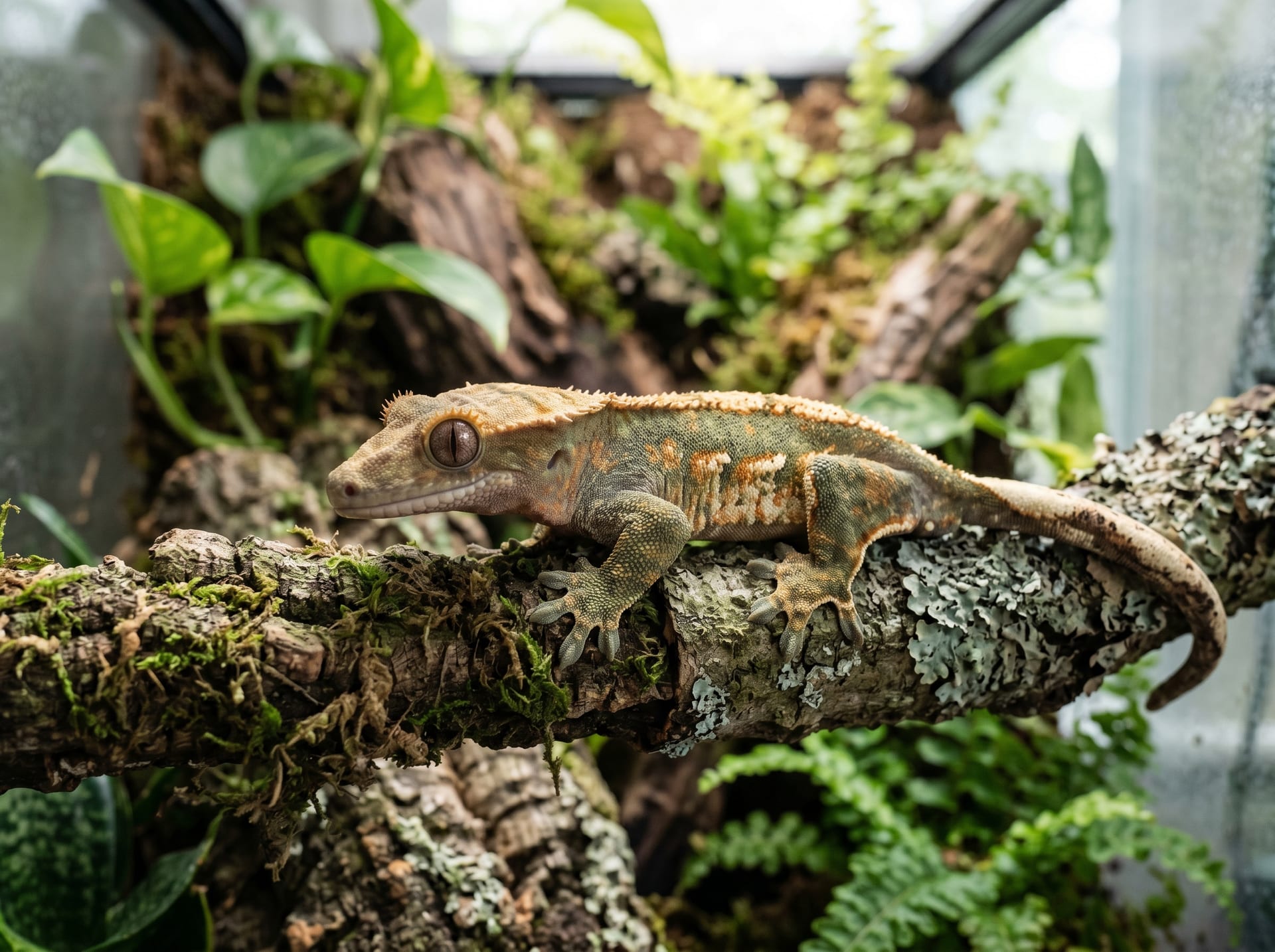
Crested Geckos (Correlophus ciliatus, commonly called Cresties) are geckos endemic to New Caledonia in the South Pacific. Once thought to be extinct in the wild until 1994, they were rediscovered and are now one of the most popular pet lizards worldwide.
Appeal:
- Hardy and beginner-friendly
- Can be kept on commercial powdered food (suitable for those uncomfortable with live prey)
- Various morphs (color variations)
- Nocturnal, requiring minimal daytime care
Enclosure Selection and Setup
Recommended Enclosure Size
Since Crested Geckos are arboreal, a tall enclosure is essential.
| Individual Size | Recommended Enclosure |
|---|---|
| Hatchlings to Juveniles (under 5g) | 30×30×45cm (vertical) |
| Subadults to Adults (15g+) | 45×45×60cm or larger |
Plastic clear containers can also be used for keeping, but ensure adequate ventilation by drilling multiple holes in the lid or selecting a mesh-type container.
Layout Tips
Branches and Cork Bark: Since Crested Geckos are arboreal and prefer heights, install multiple pieces of driftwood approximately 3–5cm in diameter.
Live Plants: Natural plants like Pothos or Dracaena help maintain humidity and provide hiding spots. Artificial plants can substitute functionally if needed.
Substrate: Coconut husk (husk chips) or bioactive soil mixes are common. Avoid coarse particles due to ingestion risk.
Temperature Control
Ideal Temperature Range
Crested Geckos are extremely sensitive to high temperatures. This is the most critical management point.
| Condition | Temperature |
|---|---|
| Daytime (active) | 22–26°C |
| Nighttime (minimum) | 18–22°C |
| Dangerous temperature | 30°C or above |
Sustained temperatures of 28°C or above increase the risk of heat stress and organ damage; 30°C or above is lethal. Room air conditioning is essential in summer; relying solely on typical aquarium or reptile heaters is dangerous.
Summer Care Measures
- Maintain room temperature at 26°C or below with air conditioning
- Place ice packs outside the enclosure (do not allow direct contact)
- Position the enclosure in a cool location (near floor level)
Winter: If temperatures drop below 20°C, use a panel heater placed against one side of the enclosure to create a temperature gradient. Heat lamps are not necessary.
Humidity Management
Appropriate Humidity Levels
| Timing | Humidity |
|---|---|
| Normal | 50–70% |
| After misting | 80–90% |
Misting 1–2 times daily is the primary hydration method for Crested Geckos. Though they often don't drink from water bowls, placing a small shallow water dish is still advisable.
Risk of Shedding Problems from Dryness
Chronically low humidity can cause shedding problems (especially on toes and tail tip), risking necrosis. During shedding, increase humidity to ~80% and provide a wet shelter to assist.
Feeding
Crested Gecko Diet (CGD) Powdered Food
Revolutionary for Crested Gecko keeping is CGD (Crested Gecko Diet) commercial powdered food. Representative brands include Repashy and PanGea. Mix the powder with water to create a gel-like consistency before feeding.
CGD alone provides balanced nutrition, making it ideal for keepers uncomfortable with live prey.
Feeding Method:
- Mix powder to water at a 1:2 weight ratio to create a gel-like consistency
- Place in a small dish or feeding cup and set in the enclosure
- Remove after 24–36 hours to prevent spoilage
- Feed 3–4 times per week (daily is acceptable)
Crickets and Dubia Roaches
Supplementing with crickets or dubia roaches 1–2 times per week stimulates appetite and provides protein. Juveniles require small-sized crickets. Don't forget to dust with calcium.
Fruit
Fruits like banana, mango, and papaya can be offered in small amounts, but limit to once weekly due to sugar content. Never feed citrus or avocado, as they are toxic.
Acclimating to Handling
While Crested Geckos can be wary, they can be acclimated through gradual approaches.
Step 1: Acclimation Period (1–2 weeks)
Avoid handling immediately after bringing your gecko home. Loss of appetite during acclimation is normal.
Step 2: Familiarizing with Your Presence
Move around the enclosure and show your hand during feeding to establish that you're not a threat.
Step 3: Begin Short Handling Sessions
Start with 5-minute sessions. Ideal handling is "passive" — waiting for your Crestie to climb onto your hand naturally rather than forcing it.
Warning About Tail Drop (Autotomy)
Crested Geckos will drop their tails when overstressed or frightened. Unlike many lizards, their tails do not regenerate. Once dropped, they remain tail-less permanently. Tail-less individuals are called "Frosties" and suffer no lasting health effects.
Health Management and Common Issues
Shedding Problems
Symptoms: Old skin remains on toes and around eyes. If untreated, it can lead to necrosis.
Treatment: Gently warm the area with a moist, warm towel and carefully wipe away shed skin with cotton. Do not pull forcefully, as this causes injury.
Appetite Loss
Temporary appetite loss is normal during environmental acclimation, before shedding, and during breeding season. Complete refusal to eat for over a week warrants attention. Increase misting and try different CGD flavors.
Cryptosporidium Infection
If your Crestie appears thin or gaunt yet maintains strong appetite, cryptosporidium infection is possible. Confirm via fecal exam and follow veterinary guidance. Infected individuals must be isolated.
Summary: Crested Gecko Care Checklist
- Set up a vertical enclosure (45×45×60cm or larger)
- Maintain room temperature at 26°C or below (air conditioning essential in summer)
- Maintain 50–70% humidity with 1–2 daily mistings
- Use CGD powdered food as primary diet (3–4 times weekly)
- Acclimate gradually to handling
- Increase humidity during shedding
- Always remain aware of tail-drop risk
With proper environmental conditions, Crested Geckos live 15–20 years or longer. They are among the best reptiles for beginners to experts, making them ideal for reptile enthusiasts of all levels.