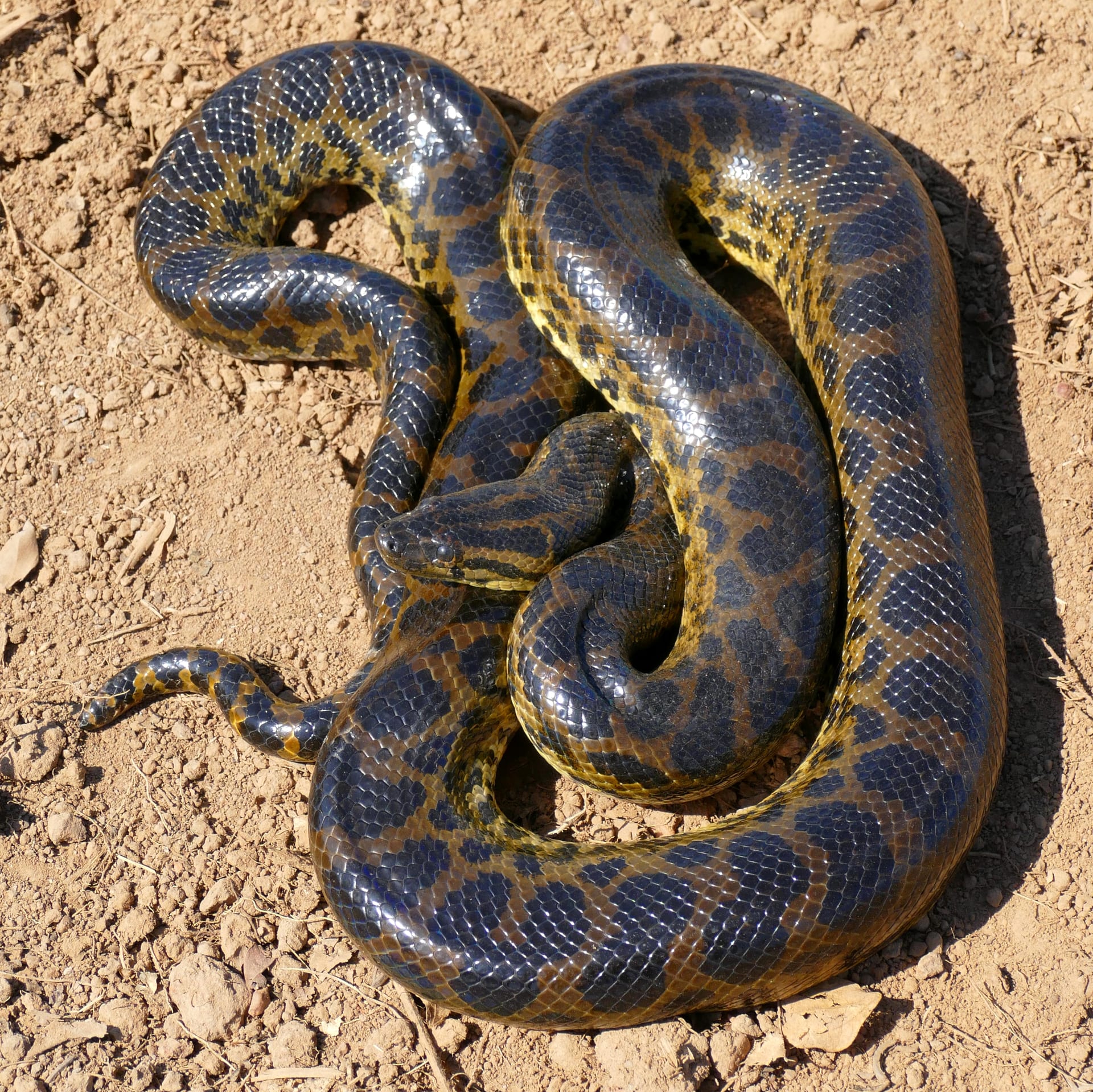
 © Bernard DUPONT from FRANCE / CC BY-SA 2.0
Yellow Anaconda
The Yellow Anaconda is a large, semi-aquatic boa native to the Paraguay River basin in South America. Its yellow to olive-brown body is marked with a row of striking black saddle-shaped blotches. Adults average around 3.7 meters in length, with females sometimes growing even larger. Though smaller than the Green Anaconda, it still ranks among the world's largest snakes. It favors wetland habitats, often lying submerged in water to ambush prey. Individual temperament varies, but handling a snake of this size and strength requires real experience, making the Yellow Anaconda a species best suited to advanced keepers.
View Yellow Anaconda encyclopedia →0% commission on your first sales!Register by September 30, 2026 and your first 2 sales are commission-free!
Breeder Wanted!
List on BreederDirect and sell directly to customers nationwide!
6 Transparency Promises from Br-Choku
Every Reptiles & Amphibians from verified Breeder breeders includes complete information: morph, genetics, feeding requirements, and temperament details.
- Morph Information
- Actual Photos
- Feeding Information
- Temperament Information
- Genetics Information
- Age (Months)
Browse all 280 breeds
Difficulty Level
Feeding Type
Temperament
Verified breeders wanted for Reptiles & Amphibians
Breeders are signing up now ahead of launch. Subscribe to be notified when new listings go live.
Getting alerts is free with a member account. When new listings match your saved search, we'll notify you by email and in-app.
Browse other categories
Verified breeders (preview)
Are you raising reptiles & amphibians?
Register as a breeder and connect with buyers directly.
Apply as a breederYellow Anaconda key facts
- Care level
- Advanced
- Lifespan
- 15-20 years
- Size
- Average 3.7m, females up to 4.6m
- Temperature
- 26〜33℃
- Humidity
- 60〜70%
- Diet
- Thawed frozen rats and rabbits
- Temperature & Humidity
- Keep the daytime basking spot at 32-33 C and let it fall to 30-31 C at night, with an ambient of 26-27 C. Hold humidity at 60-70 percent. Incorrect humidity brings respiratory disease and shedding problems, so PVC enclosures that balance ventilation and moisture retention suit this species better than screen-topped tanks.
- Enclosure
- Use an enclosure at least 180 cm long with both land and water areas, the land taking up two thirds and built for easy cleaning. Cypress mulch works well as substrate. The water must be deep enough for the snake to submerge, but it will defecate there, so plan for daily water changes and gravel-vacuuming from the outset.
- Diet & Feeding
- In the wild it constricts birds, mammals, fish and reptiles around water. In captivity offer thawed frozen rats or rabbits sized to the snake. It is large and strong, so always feed with long tongs and never let it associate your hand with food.
- Temperament
- Wary and capable of defensive behaviour. Keep it singly. Adults can weigh tens of kilograms, and it is considered safest to have more than one person present when handling.
- Notes
- The only Eunectes listed as a specified animal in the Appended Table of Japan's Act on Welfare and Management of Animals is the green anaconda, Eunectes murinus; this species is not covered. It nonetheless grows very large, so secure housing and support for its whole life before acquiring one. Listed on CITES Appendix II as Boidae spp. since 7 March 1978, so no registration certificate is required.
About Yellow Anaconda
The Yellow Anaconda is a large semi-aquatic boa from South America's Paraguay River basin, averaging 3.7m as an adult, a species suited to advanced keepers.
7 things to know before welcoming a Yellow Anaconda
1Requires a Large Enclosure
Yellow Anacondas reach around 3.7 meters as adults, with females sometimes growing larger, so a spacious, sturdy enclosure is essential. Choose a setup with secure, lockable lids to prevent escapes.
2A Large Water Area Is Essential
As a semi-aquatic species, the Yellow Anaconda favors a water area large enough to fully submerge in. Keep the water clean and at an appropriate temperature, checking it regularly.
3Extremely Powerful Body
As one of the world's largest snakes, the Yellow Anaconda has tremendous physical strength, and handling an adult alone becomes difficult. Safe handling typically requires multiple people and the knowledge that comes with advanced keeping experience.
4Temperature and Humidity Control
Mimicking its humid native habitat, the enclosure should offer a temperature gradient along with relatively high humidity. Provide both a basking spot and a cooler area, and adjust settings seasonally.
5Requires Large Prey Items
As the snake grows, prey size increases accordingly, and adults will need larger rodents or similar food items. Avoid handling or disturbing the snake for a while after feeding to let digestion proceed undisturbed.
6Temperament Varies by Individual
Some individuals are calm, while others are more defensive or high-strung. It's best to avoid forcing interaction early on and instead build trust gradually at the snake's own pace.
7Shedding and Health Checks
Regular shedding, appetite, and activity levels are good indicators of overall health. Check the skin and mouth area routinely, and consult a reptile-experienced veterinarian promptly if anything seems off.
Frequently asked questions about Yellow Anaconda
- Q.Can beginners keep a Yellow Anaconda?
- A.The Yellow Anaconda is generally considered a species for advanced keepers. Adults grow to around 3.7 meters and are extremely powerful, so prior experience with large snakes is recommended.
- Q.Is the Yellow Anaconda a docile snake?
- A.Temperament varies by individual, some are calm, while others are more defensive. It's best not to force handling early on and instead build trust gradually at the snake's own pace.
- Q.What kind of setup does a Yellow Anaconda need?
- A.It needs an enclosure with enough floor space for its adult size, plus a large water area big enough to fully submerge in. A temperature gradient and relatively high humidity are also essential.
- Q.Is the Yellow Anaconda covered by CITES?
- A.Yellow Anaconda is listed in CITES Appendix II. International trade requires a permit from the exporting country, but as far as CITES is concerned, no registration is needed to buy or sell individuals already legally in Japan.
- Q.How big does a Yellow Anaconda get?
- A.Adults average around 3.7 meters in length, and females can grow even larger, with some individuals reaching up to 4.6 meters. It is smaller than the Green Anaconda but still ranks among the world's largest snakes.
Useful tools for Yellow Anaconda care
Learn more about Yellow Anaconda in the encyclopedia
View Yellow Anaconda encyclopedia entry →
Care difficulty, lifespan, size and diet — all basics covered.
More in this category
Can't find the one you're looking for?
Post your wishes for free and breeders with matching animals will contact you with introductions.