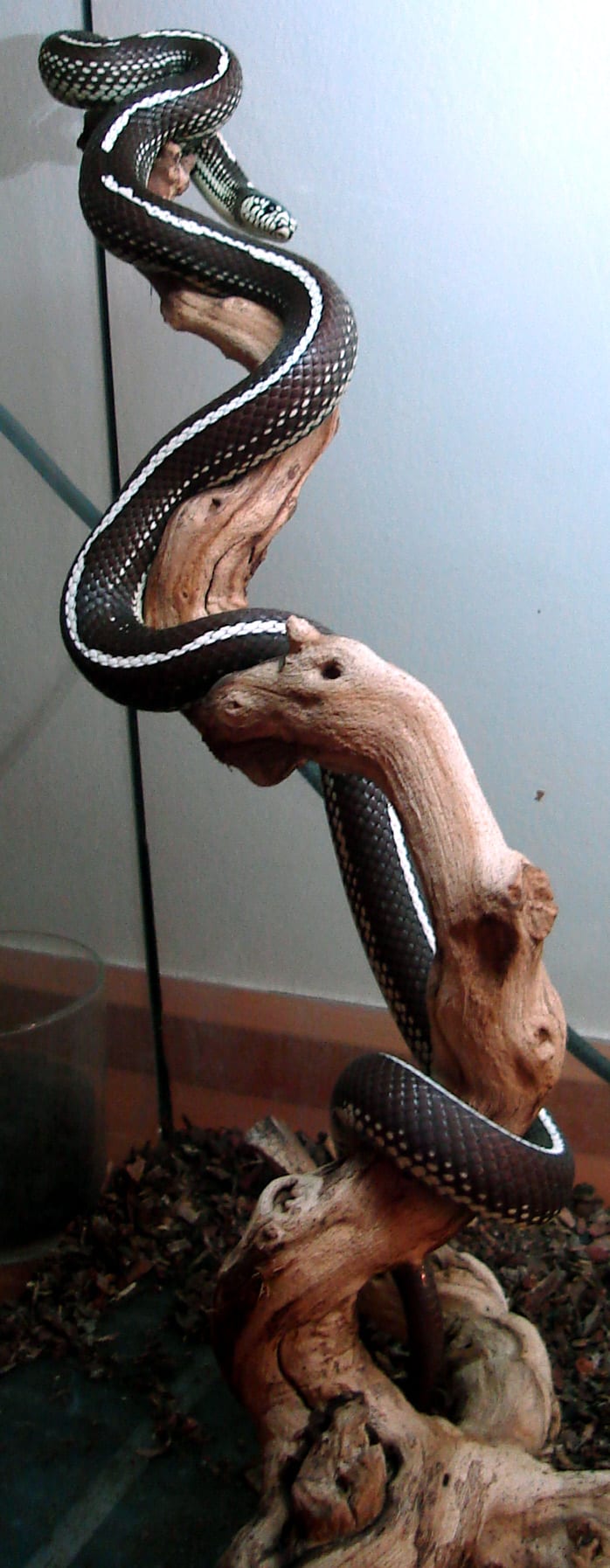
 © Guillem / CC BY-SA 2.5
California Kingsnake
The California Kingsnake is a non-venomous colubrid native to the western United States and northern Mexico. While the classic look is bold black-and-white banding, individuals with striped patterns or other color variations are common, giving keepers plenty of choice in appearance. Calm and easy to handle, this snake is hardy and adaptable, which is why it's one of the most popular choices for first-time reptile keepers. Adults typically reach 76 to 107 cm in length, and with a lifespan of 10 to 15 years (sometimes 20+ in captivity), a California Kingsnake can be a companion for many years.
View California Kingsnake encyclopedia →0% commission on your first sales!Register by September 30, 2026 and your first 2 sales are commission-free!
Breeder Wanted!
List on BreederDirect and sell directly to customers nationwide!
6 Transparency Promises from Br-Choku
Every Reptiles & Amphibians from verified Breeder breeders includes complete information: morph, genetics, feeding requirements, and temperament details.
- Morph Information
- Actual Photos
- Feeding Information
- Temperament Information
- Genetics Information
- Age (Months)
Browse all 280 breeds
Difficulty Level
Feeding Type
Temperament
Verified breeders wanted for Reptiles & Amphibians
Breeders are signing up now ahead of launch. Subscribe to be notified when new listings go live.
Getting alerts is free with a member account. When new listings match your saved search, we'll notify you by email and in-app.
Browse other categories
Verified breeders (preview)
Are you raising reptiles & amphibians?
Register as a breeder and connect with buyers directly.
Apply as a breederCalifornia Kingsnake key facts
- Care level
- Beginner-friendly
- Lifespan
- 10-15 years; over 20 years in captivity
- Size
- 76-107cm, exceptionally up to about 2m
- Temperature
- Humidity
- 40〜60%
- Diet
- Frozen-thawed mice; in the wild rodents, lizards, nestling birds and other snakes
- Temperature & Humidity
- Create a gradient with a basking surface of 29-32C and a cool side of 21-26C. Aim for average humidity of 40-60 per cent, naturally a little higher on the cool side and at night. Raising humidity before a shed helps prevent retained skin.
- Enclosure
- A minimum enclosure of about 120 x 60 x 60 cm per adult is recommended, and larger is better. It is active and explores a great deal, so provide branches to climb and several hides. It is strong and an accomplished escaper, so use a front-opening enclosure that locks securely.
- Diet & Feeding
- It is carnivorous and in captivity is fed appropriately sized frozen-thawed mice. In the wild it takes rodents, lizards and nestling birds as well as other snakes. Always feed it alone in the enclosure.
- Temperament
- Kingsnakes are ophiophagous, eating other snakes and even each other, so they must be kept alone. They are generally docile and easy to handle, but wash your hands after feeding so they do not mistake them for prey.
- Notes
- The species is not listed in the CITES appendices, and it is neither a specified animal nor an invasive alien species under Japanese law. It is non-venomous and harmless to people, but escaped snakes are hard to recover, so keep the enclosure securely locked. It has become an established and problematic introduced species in the Canary Islands, so animals must never be released. Until the 2000s this snake was treated as a subspecies of the common kingsnake (Lampropeltis getula) and is still sometimes offered under that older name. Some authorities also treat the all-black Mexican black kingsnake (L. nigrita) as a synonym of this species, so the scope of the name varies between sources.
About California Kingsnake
A guide to the California Kingsnake, a hardy, non-venomous colubrid from the western US and Mexico prized for its striking black-and-white banding and wide color variation. Beginner-friendly and easy to care for.
7 things to know before welcoming a California Kingsnake
1Keep Them Solo
California Kingsnakes should be housed individually, as they may attempt to eat other snakes if kept together. Provide a cage sized appropriately for an adult snake, along with a hide box and a water dish.
2Provide a Thermal Gradient
Set up both a warm side and a cooler side within the enclosure so the snake can move between them to regulate its own body temperature. An under-tank heater and a reliable thermometer are essential for keeping temperatures stable.
3Escape-Proof the Enclosure
These snakes are surprisingly strong and can squeeze through small gaps in a lid or enclosure seams. Use a cage with a secure, lockable lid and make checking the latch part of your daily routine.
4A Generally Calm Temperament
Individual personalities vary, but California Kingsnakes tend to be calm and tolerate regular handling well. Young snakes can be more defensive or nippy, but consistent, gentle handling usually helps them settle down over time.
5Feeding on Frozen-Thawed Mice
Their diet is based on frozen-thawed mice, with prey size adjusted as the snake grows. Feeding frequency changes with age and size, so it's worth confirming a schedule with the breeder when you bring one home.
6Support Healthy Shedding
Before shedding, the eyes may turn cloudy and the skin can look dull — this is a normal part of the process. Slightly raising humidity and offering a moist hide during this period can help prevent incomplete sheds.
7Set Up Before You Bring One Home
Before your snake arrives, have the full setup ready — enclosure, heating, a thermometer, a hide, and a water dish. When choosing a breeder, ask about the individual's health history and whether it's already feeding reliably.
Frequently asked questions about California Kingsnake
- Q.Is the California Kingsnake suitable for beginners?
- A.Yes, it's widely considered an excellent beginner reptile thanks to its hardiness, adaptability, and generally calm temperament. With a proper enclosure and stable temperatures, it's manageable even for first-time snake keepers.
- Q.How big does a California Kingsnake get?
- A.Adults typically reach 76 to 107 cm in length, though some individuals can grow to around 2 meters. It's best to plan your enclosure size around this adult length from the start.
- Q.How long do California Kingsnakes live?
- A.They typically live around 10 to 15 years, but in captivity it's not unusual for them to live 20 years or more. It's worth committing to care for the long term before bringing one home.
- Q.Can I house it with other snakes?
- A.No — California Kingsnakes may prey on other snakes, so they should always be housed alone rather than sharing an enclosure.
- Q.Is the California Kingsnake listed under CITES?
- A.No, the California Kingsnake is not listed under CITES.
Useful tools for California Kingsnake care
Learn more about California Kingsnake in the encyclopedia
View California Kingsnake encyclopedia entry →
Care difficulty, lifespan, size and diet — all basics covered.
More in this category
Can't find the one you're looking for?
Post your wishes for free and breeders with matching animals will contact you with introductions.