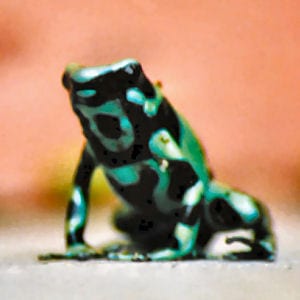
 © Lea Maimone / CC BY-SA 2.0
Green and Black Poison Frog
The green and black poison frog is a small, ground-dwelling amphibian native to southern Central America, prized for its bold black or brown skin patterned with vivid green, blue, or gold markings. Coloration varies widely by locality, and hobbyists often encounter frogs sold under locality names like Costa Rican or Panamanian morphs. Despite the "poison" in its name, captive-bred frogs lack the toxins their wild counterparts develop from a specific diet, making them safe to keep. Active by day and unafraid to stay in view, they're easy to observe, though their care is generally considered suited to intermediate keepers. At just 2.5 to 4 cm as adults, they make striking, space-efficient additions to a planted terrarium.
View Green and Black Poison Frog encyclopedia →Breeder Wanted!
List on BreederDirect and sell directly to customers nationwide!
BreederDirect's 6 Transparency Commitments
Every Reptiles & Amphibians from verified Breeder breeders includes complete information: morph, genetics, feeding requirements, and temperament details.
- Morph Information
- Actual Photos
- Feeding Information
- Temperament Information
- Genetics Information
- Age (Months)
Browse all 319 breeds
Difficulty Level
Feeding Type
Temperament
Verified breeders wanted for Reptiles & Amphibians
Breeders are signing up now ahead of launch. Subscribe to be notified when new listings go live.
Getting alerts is free with a member account. When new listings match your saved search, we'll notify you by email and in-app.
Browse other categories
Verified breeders (preview)

Are you raising reptiles & amphibians?
Register as a breeder and connect with buyers directly.
Apply as a breederGreen and Black Poison Frog key facts
- Care level
- Intermediate
- Lifespan
- 10-15 years
- Size
- 2.5-4cm
- Temperature
- 23〜28℃
- Humidity
- 70〜100%
- Diet
- Fruit flies, pinhead crickets, springtails
- Temperature & Humidity
- 23-28 C by day, 18-21 C at night, 70-100% humidity. It tolerates neither extreme heat nor cold; in summer move the enclosure somewhere airy or cool it.
- Enclosure
- A 61 x 30 x 40 cm terrarium suits two to six adults. Use coco fibre or leaf mould and fit a mesh top or side panel to avoid stagnant air; add wood and plants for climbing and hiding.
- Diet & Feeding
- Fruit flies as the staple with first-instar crickets and springtails. Feed adults 15-40 items every other day and juveniles daily, dusted with supplement.
- Temperament
- Diurnal and shy, often staying in cover. Groups work in a large enclosure, but mature frogs squabble over territory, so provide ample floor space.
- Notes
- Captive-bred frogs are considered non-toxic, but handle them without bare hands. Do not house different locality morphs together.
About Green and Black Poison Frog
A small, vividly patterned poison frog from Central America. Active by day, easy to observe, and non-toxic when captive-bred, with adults reaching just 2.5-4 cm.
7 things to know before welcoming a Green and Black Poison Frog
1Non-Toxic When Captive-Bred
Wild frogs accumulate toxic alkaloids from specific prey in their diet, but captive-bred frogs never eat that prey and are therefore non-toxic. They can be handled safely as part of routine care.
2High Humidity Is Essential
Recreating a tropical rainforest environment means keeping humidity consistently high. Most keepers build a planted vivarium with live plants, driftwood, and sphagnum moss, maintained with misting or an automated system.
3Group Housing Needs Care
At just 2.5 to 4 cm long, a single frog does fine in a small enclosure, but males can become territorial when housed together. Provide multiple hiding spots and watch how the group interacts before committing to it long-term.
4Diet of Tiny Insects
Their small mouths limit them to tiny prey like fruit flies and pinhead crickets. Dusting feeder insects with calcium and vitamin supplements is standard practice to round out their nutrition.
5Active and Visible by Day
Unlike many frog species that hide at night, this one is typically active during the day and doesn't stay hidden for long. In a calm setup, it tends to grow comfortable with a keeper's presence and stays out in view.
6Thin, Sensitive Skin
Even without toxins, the skin is thin and sensitive to dryness and chemical residue. Wash and wet your hands before handling, and keep lotions or insect repellent away from contact.
7Sensitive to Heat
Despite its rainforest origin, this frog doesn't tolerate direct sun or high temperatures well, and overheating or poor ventilation can affect its health. Choose a placement with good airflow and a stable, moderate temperature range.
Frequently asked questions about Green and Black Poison Frog
- Q.Are they poisonous? Is it safe to handle them?
- A.Captive-bred frogs are non-toxic. Wild frogs build up toxins from specific prey in their diet, but that prey isn't part of a captive diet, so farm-raised frogs never develop it. Their skin is still thin and sensitive, though, so wet your hands before handling.
- Q.Is this frog suitable for beginners?
- A.It's generally considered a species for intermediate keepers, since it needs consistent humidity and temperature control. It suits keepers who already have some vivarium or amphibian-keeping experience.
- Q.Do colors and patterns vary by locality?
- A.Yes, coloration and markings differ noticeably depending on where the frog originates. They're often sold under locality-based morph names such as Costa Rican or Panamanian, and many keepers enjoy collecting different color variants.
- Q.Can multiple frogs be kept together?
- A.Their small size makes group housing possible, but males can compete over territory. Set up several hiding spots and monitor behavior closely, keeping a backup enclosure ready in case any individuals need to be separated.
- Q.What kind of setup do they need?
- A.A humid, planted vivarium that mimics a tropical rainforest floor is the basic setup, typically built with live plants, driftwood, and moss. Since adults reach only about 2.5 to 4 cm, a relatively compact enclosure can still provide a suitable environment.
Useful tools for Green and Black Poison Frog care
Learn more about Green and Black Poison Frog in the encyclopedia
View Green and Black Poison Frog encyclopedia entry →
Care difficulty, lifespan, size and diet — all basics covered.
More in this category
Can't find the one you're looking for?
Post your wishes for free and breeders with matching animals will contact you with introductions.