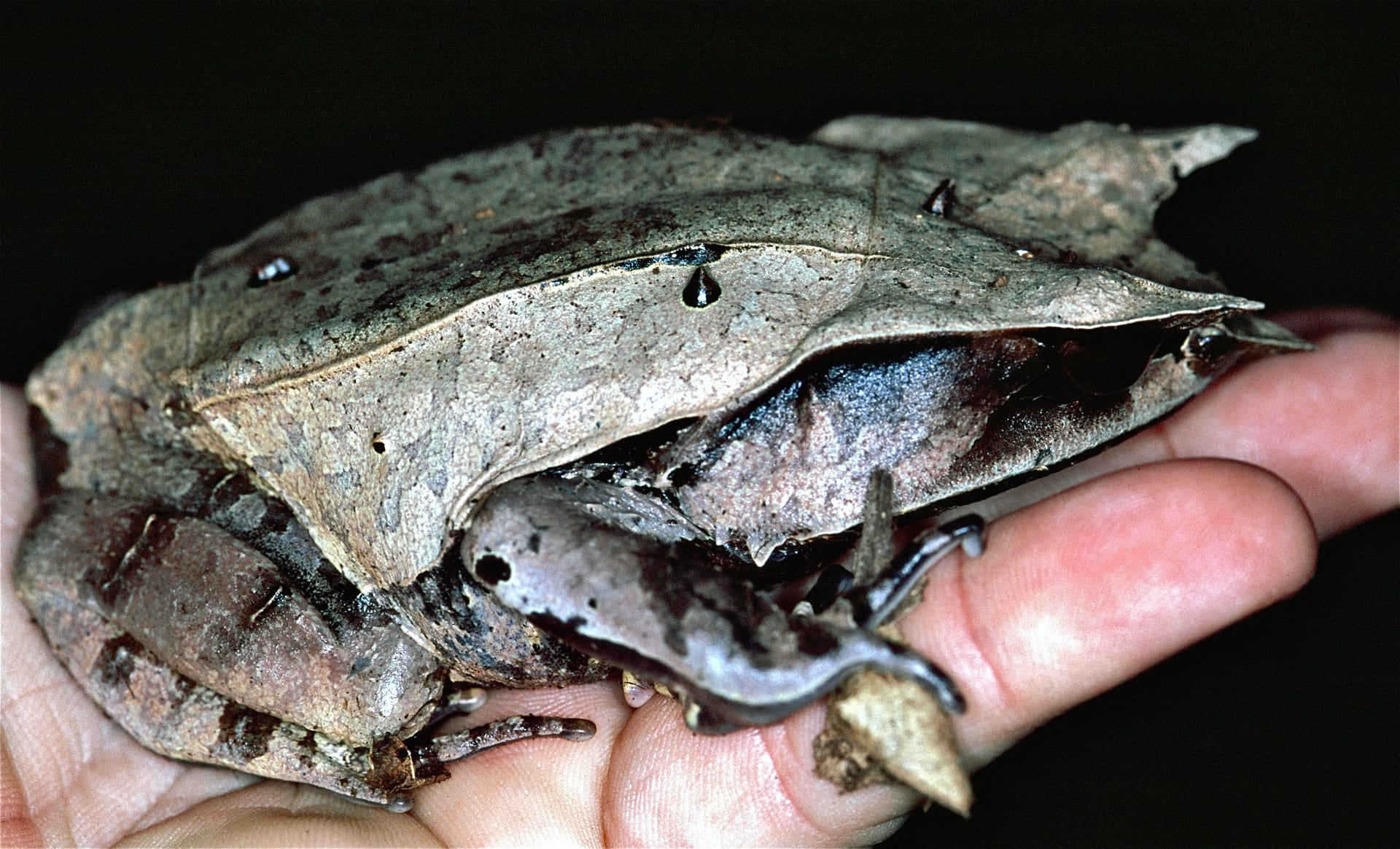
 © Bernard DUPONT from FRANCE / CC BY-SA 2.0
Long-nosed Horned Frog
The Long-nosed Horned Frog is a large horned frog native to the rainforests of Southeast Asia. Its most striking feature is the pointed, triangular projections on its snout and eyelids, giving it a horn-like face unlike any other frog. Its brown body blends seamlessly with fallen leaves on the forest floor, where it lies motionless in wait for unsuspecting prey to wander close before lunging and swallowing it whole in one dramatic gulp. Calm and sedentary for much of the time, this frog's striking appearance and ambush-hunting behavior have earned it a devoted following among amphibian enthusiasts.
View Long-nosed Horned Frog encyclopedia →0% commission on your first sales!Register by September 30, 2026 and your first 2 sales are commission-free!
Breeder Wanted!
List on BreederDirect and sell directly to customers nationwide!
6 Transparency Promises from Br-Choku
Every Reptiles & Amphibians from verified Breeder breeders includes complete information: morph, genetics, feeding requirements, and temperament details.
- Morph Information
- Actual Photos
- Feeding Information
- Temperament Information
- Genetics Information
- Age (Months)
Browse all 319 breeds
Difficulty Level
Feeding Type
Temperament
Verified breeders wanted for Reptiles & Amphibians
Breeders are signing up now ahead of launch. Subscribe to be notified when new listings go live.
Getting alerts is free with a member account. When new listings match your saved search, we'll notify you by email and in-app.
Browse other categories
Verified breeders (preview)
Are you raising reptiles & amphibians?
Register as a breeder and connect with buyers directly.
Apply as a breederLong-nosed Horned Frog key facts
- Care level
- Intermediate
- Lifespan
- Few data on lifespan in captivity
- Size
- About 10-12 cm snout-vent length (females larger)
- Temperature
- 18〜26℃
- Humidity
- 60〜80%
- Diet
- Carnivore (insects, earthworms, other frogs)
- Temperature & Humidity
- Keep at about 18-26°C and protect it from summer heat. Aim for 60-80% humidity.
- Housing
- Use a planted terrarium with plenty of leaf-litter cover and a shallow water area about 5-8 cm deep. Choose a substrate that is hard to swallow by accident.
- Diet & Feeding
- It responds to moving live food such as crickets, earthworms, slugs and roaches. Dust insects with calcium and vitamins every few feedings.
- Temperament
- A sit-and-wait predator that moves little. It suits observation rather than frequent handling.
- Health & Cautions
- Newly imported frogs may show reddened skin or other problems, and chytrid infection is possible. Amphibians can carry infectious diseases such as chytridiomycosis, so never release captive animals or pour tank water into the wild.
About Long-nosed Horned Frog
A large horned frog with horn-like pointed snout and eyelids, camouflaged as a fallen leaf to ambush prey. Native to Southeast Asia, it grows to about 10-12cm and suits intermediate keepers.
7 things to know before welcoming a Long-nosed Horned Frog
1Damp, Leaf-Litter Setup
As a dweller of the constantly damp, cool rainforest floor, this frog does best with humidity kept around 60-80% and a moisture-retentive substrate. Provide several hiding spots with leaf litter and plants plus a shallow water dish, and choose a substrate that is hard to swallow by accident.
2Adult Size & Male/Female Difference
Adults reach about 10-12cm in body length, making this one of the larger horned frog species. Females tend to grow larger than males, so the sex of the frog you bring home affects how much enclosure space you'll eventually need.
3Swallows Live Prey Whole
It uses its wide mouth to swallow live prey such as crickets whole in one gulp. Appetite and preferences vary between individuals, so you'll need to adjust the type and size of feeders while watching how it responds.
4Keep Housed Alone
In the wild it eats spiders, small rodents, lizards and even other frogs, so avoid keeping several in the same enclosure and house each frog on its own.
5Watch for Overheating
Despite its rainforest origin, this species doesn't tolerate direct sun or excessively hot, humid conditions well. Avoid sustained high temperatures and maintain good airflow alongside careful temperature control.
6Sensitive Skin, Handle with Care
Like other amphibians, its skin readily absorbs moisture and substances, making it sensitive to irritants. Wash your hands thoroughly before handling to remove any residue, and favor a mostly hands-off, observation-focused approach.
7Little Data on Captive Lifespan
While its wild ecology is reasonably well documented, there's limited data on how long this species lives in captivity, so no definitive figure is available. Plan for long-term care and keep monitoring its health over time.
Frequently asked questions about Long-nosed Horned Frog
- Q.Is the Long-nosed Horned Frog calm and docile?
- A.It's generally quiet and tends to stay still in hiding. That said, it can react quickly when startled or during feeding, so handle it calmly and deliberately.
- Q.Can it be housed with other frogs?
- A.No. This species preys on other frogs, so it should be kept alone in its own enclosure.
- Q.What should I feed it?
- A.Live insect prey such as crickets is the standard diet. Adjust the size of the feeders to match the size of your frog.
- Q.Is this frog suitable for beginners?
- A.It's generally considered suitable for intermediate keepers, since it requires some experience managing humidity, temperature, and live feeders. It suits those who already have some amphibian-keeping experience.
- Q.Is this species subject to CITES regulation?
- A.This species is not subject to CITES. Not listed under CITES (no entry in Species+). Under the Invasive Alien Species Act, imported frog larvae (tadpoles) must be accompanied by a species identification certificate; keeping or transferring adults within Japan is not restricted. Amphibians can carry infectious diseases such as chytridiomycosis, so never release captive animals or pour tank water into the wild.
Useful tools for Long-nosed Horned Frog care
Learn more about Long-nosed Horned Frog in the encyclopedia
View Long-nosed Horned Frog encyclopedia entry →
Care difficulty, lifespan, size and diet — all basics covered.
More in this category
Can't find the one you're looking for?
Post your wishes for free and breeders with matching animals will contact you with introductions.