Source: Wikimedia Commons
Long-nosed Horned Frog
IntermediateMegophrys nasuta
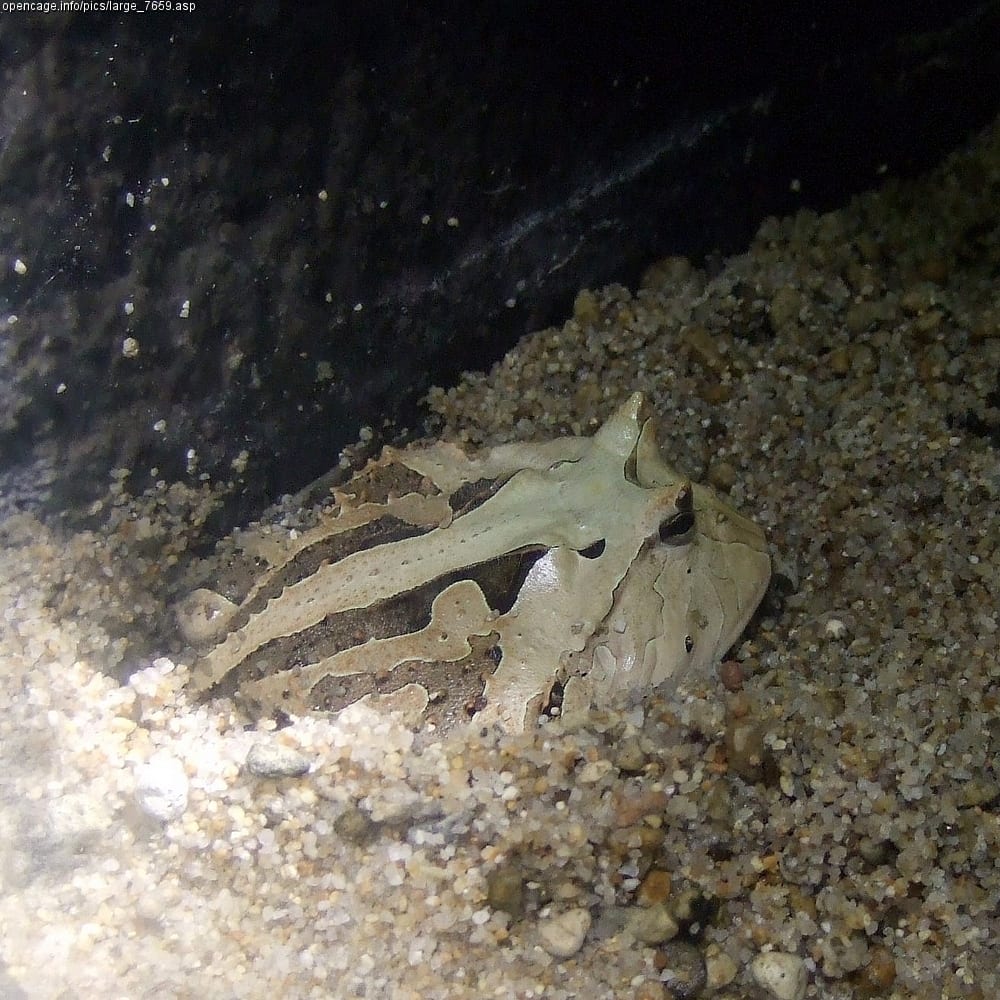
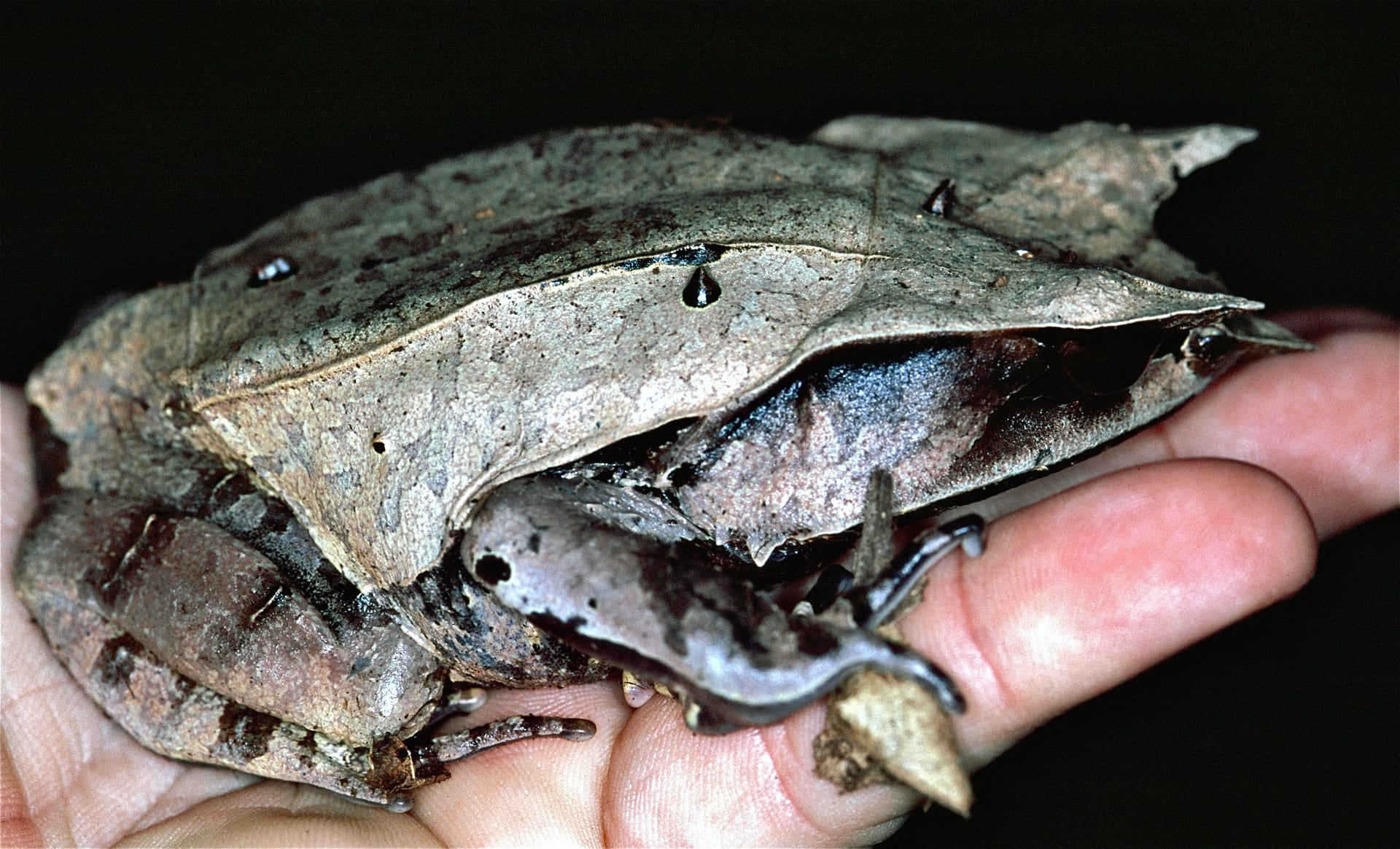
A large Asian horned frog whose pointed snout and eyelids look like horns. Its brown, leaf-like body hides on the forest floor, where it ambushes and swallows passing prey.
Difficulty
Intermediate
Temperature
18〜26℃
Lifespan
Few data on lifespan in captivity
Size
About 10-12 cm snout-vent length (females larger)
Humidity
60〜80%
Diet
Carnivore (insects, earthworms, other frogs)
About
The long-nosed horned frog is a member of the family Megophryidae found in lowland and submontane rainforest from southern Thailand through the Malay Peninsula and Singapore to Sumatra and Borneo. A 2021 revision moved it to Pelobatrachus, so some references call it Pelobatrachus nasutus, while GBIF still uses Megophrys nasuta. Adults are roughly 10 to 12 cm long, and females are larger than males. The snout and upper eyelids are drawn out into long triangular points, and two pairs of skin folds run down the back. The brown, variably patterned back makes the frog almost invisible among leaf litter. It waits motionless on permanently damp, cool forest floors and engulfs spiders, small rodents, lizards and other frogs. Breeding takes place in streams, where eggs are attached to the undersides of submerged rocks or logs. In captivity it needs a humid, leaf-litter terrarium kept away from heat. In Japan it is imported fairly regularly and appears in both general pet stores and specialist shops.
Source: Wikipedia (CC BY-SA 4.0)
Size of the Long-nosed Horned Frog
The Long-nosed Horned Frog grows to About 10-12 cm snout-vent length (females larger).
Temperature & humidity for the Long-nosed Horned Frog
The ideal temperature for the Long-nosed Horned Frog is 18〜26℃. Ideal humidity is 60〜80%.
Basic Info
Origin
Southern Thailand, the Malay Peninsula, Singapore, Sumatra and Borneo
Lifespan
Few data on lifespan in captivity
Size
References & Sources
Edited & verified by: BreederDirect editorial team
The taxonomic, regulatory, and husbandry data on this page are compiled and verified against the authoritative primary sources below.
Taxonomy & Authority
Accepted name: Megophrys nasuta (Schlegel, 1858)
Synonyms: Pelobatrachus nasutus (Schlegel, 1858), Ceratophryne nasuta Schlegel, 1858, Megalophrys nasuta (Schlegel, 1858), Megophrys monticola nasuta (Schlegel, 1858)
Authority databases: GBIF · GBIF: Megophrys nasuta · Wikipedia: Long-nosed horned frog
Nomenclature follows global taxonomic authority databases.
Regulations & Conservation Status
Not CITES-listed
Not listed under CITES (no entry in Species+). Under the Invasive Alien Species Act, imported frog larvae (tadpoles) must be accompanied by a species identification certificate; keeping or transferring adults within Japan is not restricted. Amphibians can carry infectious diseases such as chytridiomycosis, so never release captive animals or pour tank water into the wild.
Sources: Species+ search (Megophrys nasuta: no match)
Regulations may change. Always verify the latest information with the relevant authorities.
Long-nosed Horned Frog Listings
Loading latest listingsFind listings for this species