Source: Wikimedia Commons
Cranwell's Horned Frog
BeginnerCeratophrys cranwelli
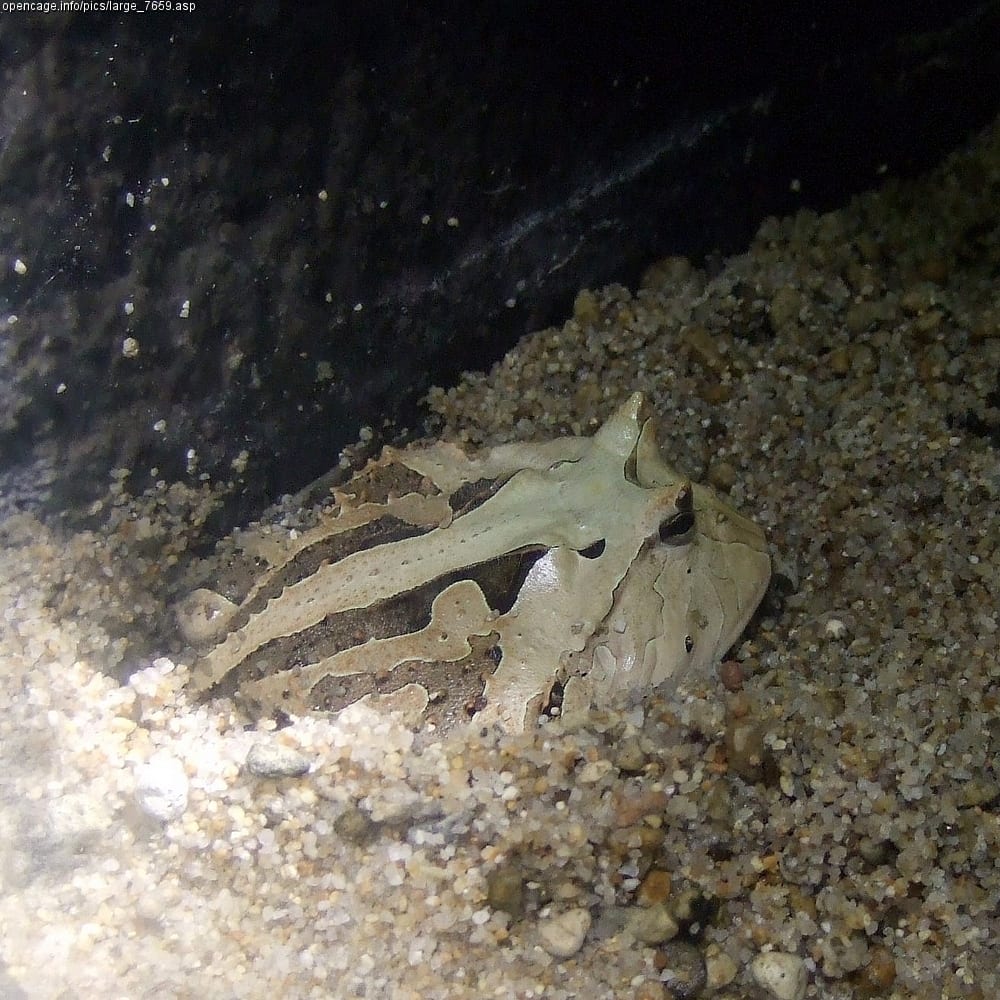
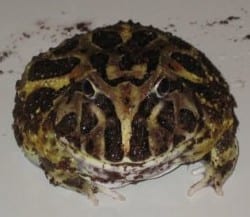
An ambush-hunting frog of the dry Gran Chaco of South America. It is 7.5-13 cm long with a very wide mouth and long horn-like projections above the eyes, burrowing into the substrate to wait for prey and reacting strongly to movement.
Difficulty
Beginner
Lifespan
10-15 years
Size
7.5-13cm, weighing up to 0.5kg
Humidity
60〜80%
Diet
Crickets, roaches, mealworms, earthworms and feeder fish
About
Ceratophrys cranwelli is a terrestrial frog of the family Ceratophryidae endemic to the dry Gran Chaco of South America. The back is dark green to brown, camouflaging the animal as it burrows and waits for prey, while orange and yellow albino forms are common in the pet trade. Its horn-like projections above the eyes are longer than those of the ornate horned frog and its snout is more protruding. It is normally inactive but an extremely aggressive feeder, leaping several body lengths to seize prey. A row of teeth on the upper jaw means it cannot release prey once seized, and animals occasionally choke on prey that is too large. At temperature extremes it forms a cocoon of thickened skin and aestivates, protecting itself from water loss. In captivity it must be kept alone, as the species is cannibalistic. Captive-bred animals are traded in Japan, but hybrids with the ornate horned frog are common.
Source: Wikipedia (CC BY-SA 4.0)
Lifespan of the Cranwell's Horned Frog
The Cranwell's Horned Frog lives 10-15 years.
Size of the Cranwell's Horned Frog
The Cranwell's Horned Frog grows to 7.5-13cm, weighing up to 0.5kg.
It measures 7.5 to 13 cm and can weigh up to 0.5 kg.
Basic Info
Origin
The Gran Chaco of Argentina, Bolivia, Paraguay and Brazil, below 700 m
Lifespan
10-15 years
Size
7.5-13cm, weighing up to 0.5kg
Care Specifications
AggressiveSolitaryBreeding: Moderate
Sources: Reptiles Magazine: Chacoan Horned Frog / The Bio Dude: Care and Bioactive Maintenance of the Pacman Frog / Reptiles Magazine: Horned Frog Care Sheet / Wikipedia (English) / Wikipedia (Japanese)
References & Sources
Edited & verified by: BreederDirect editorial team
The taxonomic, regulatory, and husbandry data on this page are compiled and verified against the authoritative primary sources below.
Taxonomy & Authority
Regulations & Conservation Status
Not CITES-listedIUCN LC · Least Concern
It is not listed in the CITES appendices. It does not fall under either the designated animals specified in the Animal Protection and Management Law Enforcement Decree or the designated invasive species under the Invasive Species Law.
Sources: CITES Appendices (species not listed) / IUCN Red List
Regulations may change. Always verify the latest information with the relevant authorities.
Cranwell's Horned Frog Listings
Loading latest listingsFind listings for this species