Source: Wikimedia Commons
Rio Cauca Caecilian
IntermediateTyphlonectes natans
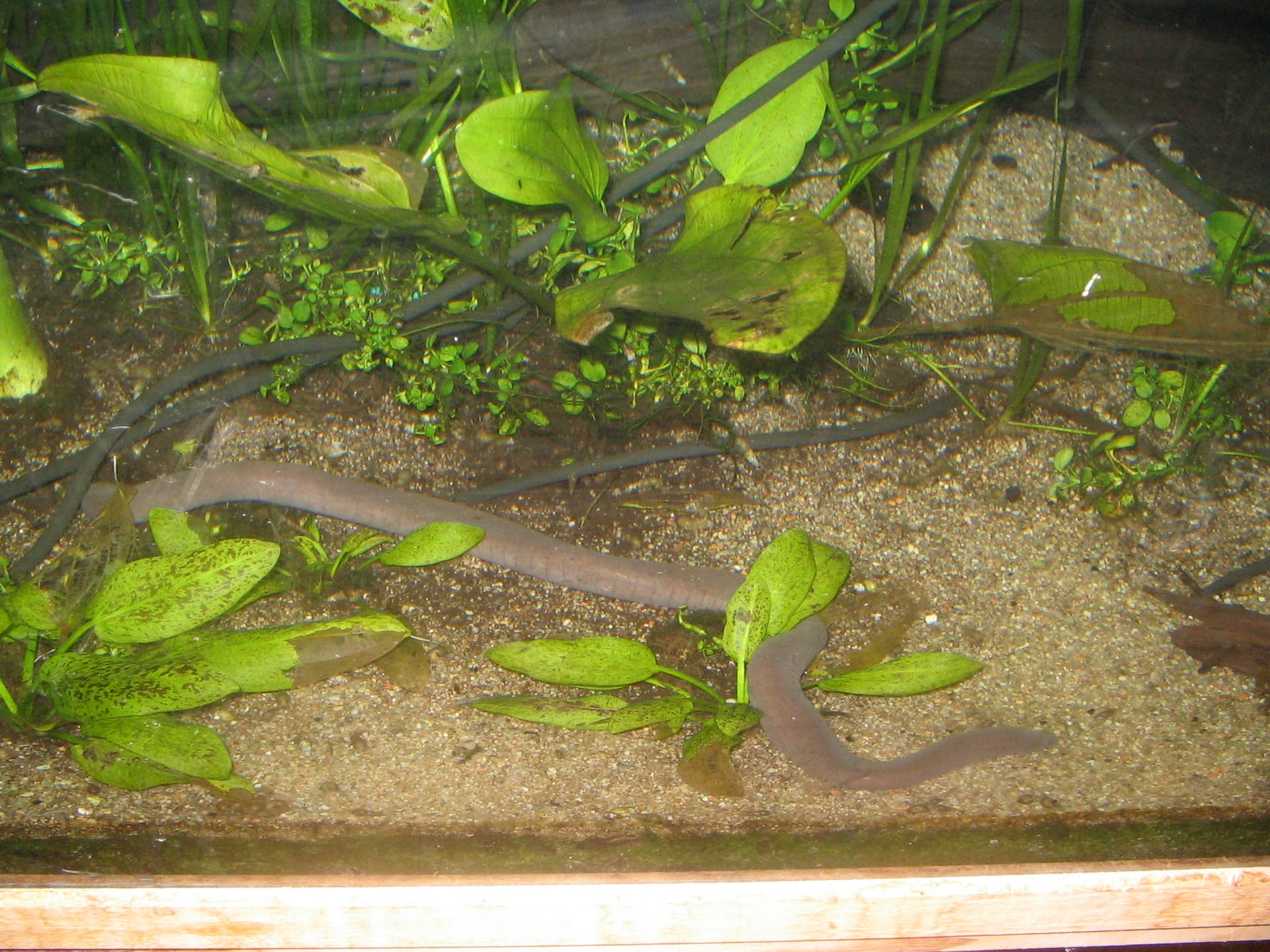
A fully aquatic caecilian from the rivers of Colombia and Venezuela. Limbless and dark grey to black, it reaches 55 cm and carries out most of its respiration through the skin. It is ovoviviparous and gives birth in water.
Difficulty
Intermediate
Temperature
25〜32℃
Lifespan
5-10 years
Size
45-55cm
Humidity
40〜70%
Diet
Earthworms, shrimp, small fish and other small animals
About
Typhlonectes natans is a fully aquatic typhlonectid caecilian from Colombia and Venezuela. It reaches 45-55 cm and is dark grey to black, with a limbless worm-like body marked by ring-shaped grooves and extremely small eyes. It does occasionally breathe air at the surface, but most of its respiration is cutaneous. It occupies a wide range of waters, from dry savanna and tropical shrubland to seasonally flooded lowland grassland and rivers. It is ovoviviparous: after a gestation of about 220 days, three to seven fully developed young are born in the water, reaching about 25 cm, close to half adult size, within a year. Aquarium shops sometimes sell it as a fish under the name rubber eel, but it is an amphibian of the order Gymnophiona. In October 2019 a specimen was collected in Miami-Dade County, Florida, the first caecilian recorded in North America, and further animals with evidence of breeding suggest it may be establishing there.
Source: Wikipedia (CC BY-SA 4.0)
Lifespan of the Rio Cauca Caecilian
The Rio Cauca Caecilian lives 5-10 years.
Size of the Rio Cauca Caecilian
The Rio Cauca Caecilian grows to 45-55cm.
Basic Info
Origin
Colombia and Venezuela, possibly also Trinidad and Tobago
Lifespan
5-10 years
Size
45-55cm
Temperature
Care Specifications
PeacefulGroupBreeding: Hard
Sources: Wikipedia (English) / Wikipedia (English): Caecilian / Wikipedia (English): Typhlonectidae
References & Sources
Edited & verified by: BreederDirect editorial team
The taxonomic, regulatory, and husbandry data on this page are compiled and verified against the authoritative primary sources below.
Taxonomy & Authority
Accepted name: Typhlonectes natans (Fischer, 1880)
Synonyms: Caecilia natans Fischer, 1880, Pseudotyphlonectes natans (Fischer, 1880), Nectocaecilia haydee (Roze, 1963)
Authority databases: GBIF · Amphibian Species of the World
Nomenclature follows global taxonomic authority databases.
Regulations & Conservation Status
Not CITES-listedIUCN LC · Least Concern
Sources: CITES Appendices (species not listed) / IUCN Red List
Regulations may change. Always verify the latest information with the relevant authorities.
Rio Cauca Caecilian Listings
Loading latest listingsFind listings for this species