Source: Wikimedia Commons
Budgett's Frog
IntermediateLepidobatrachus laevis
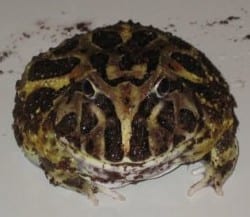
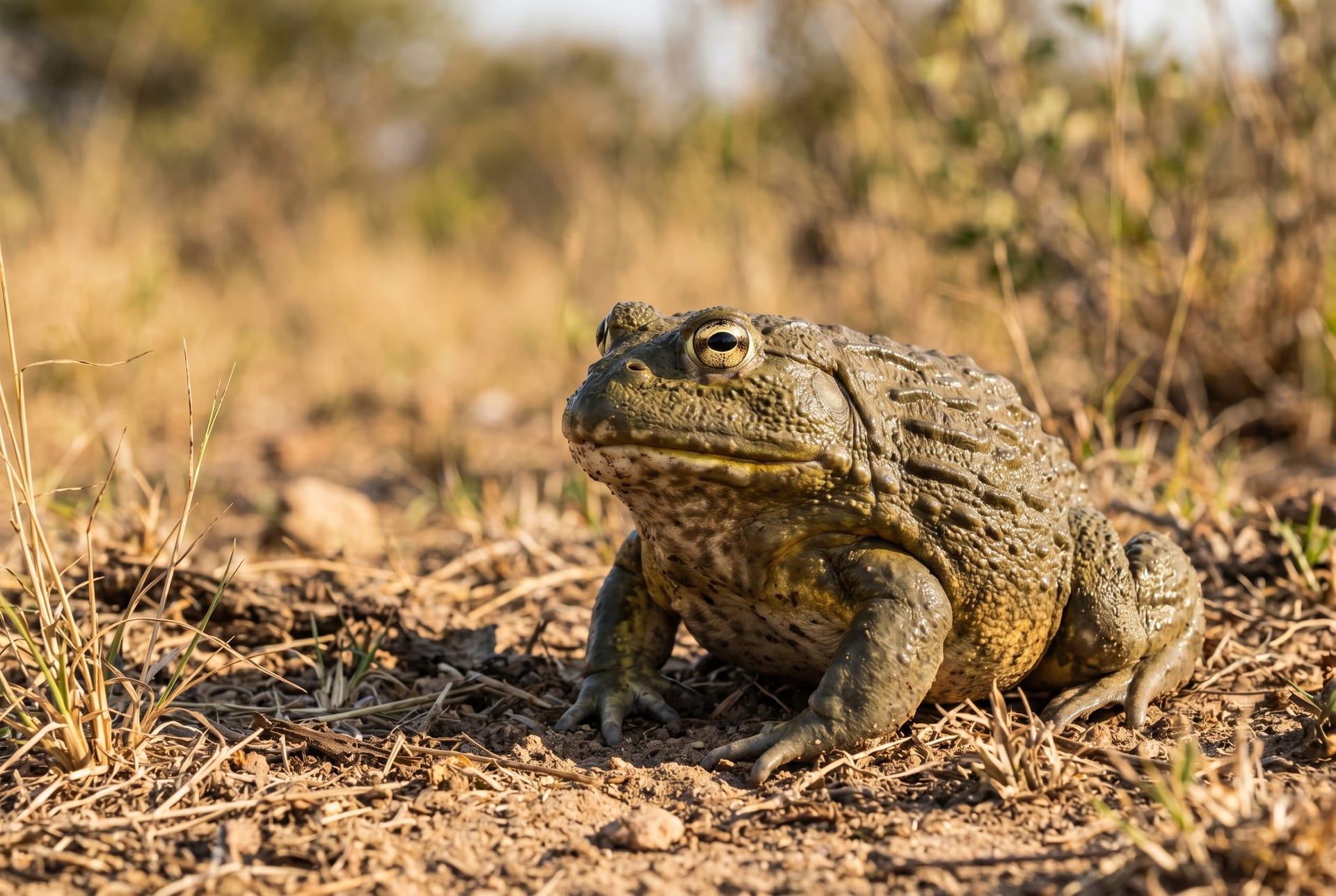
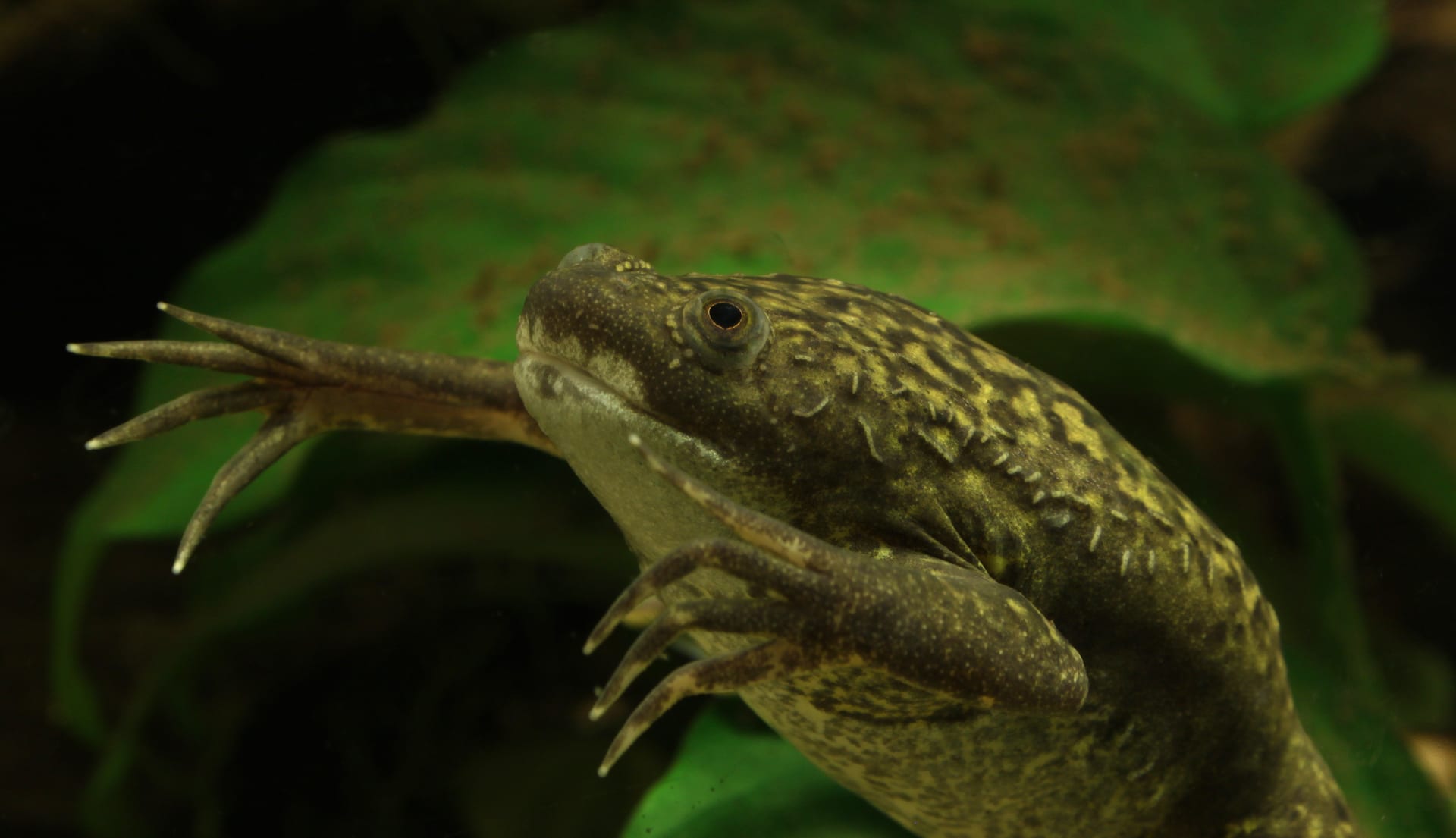
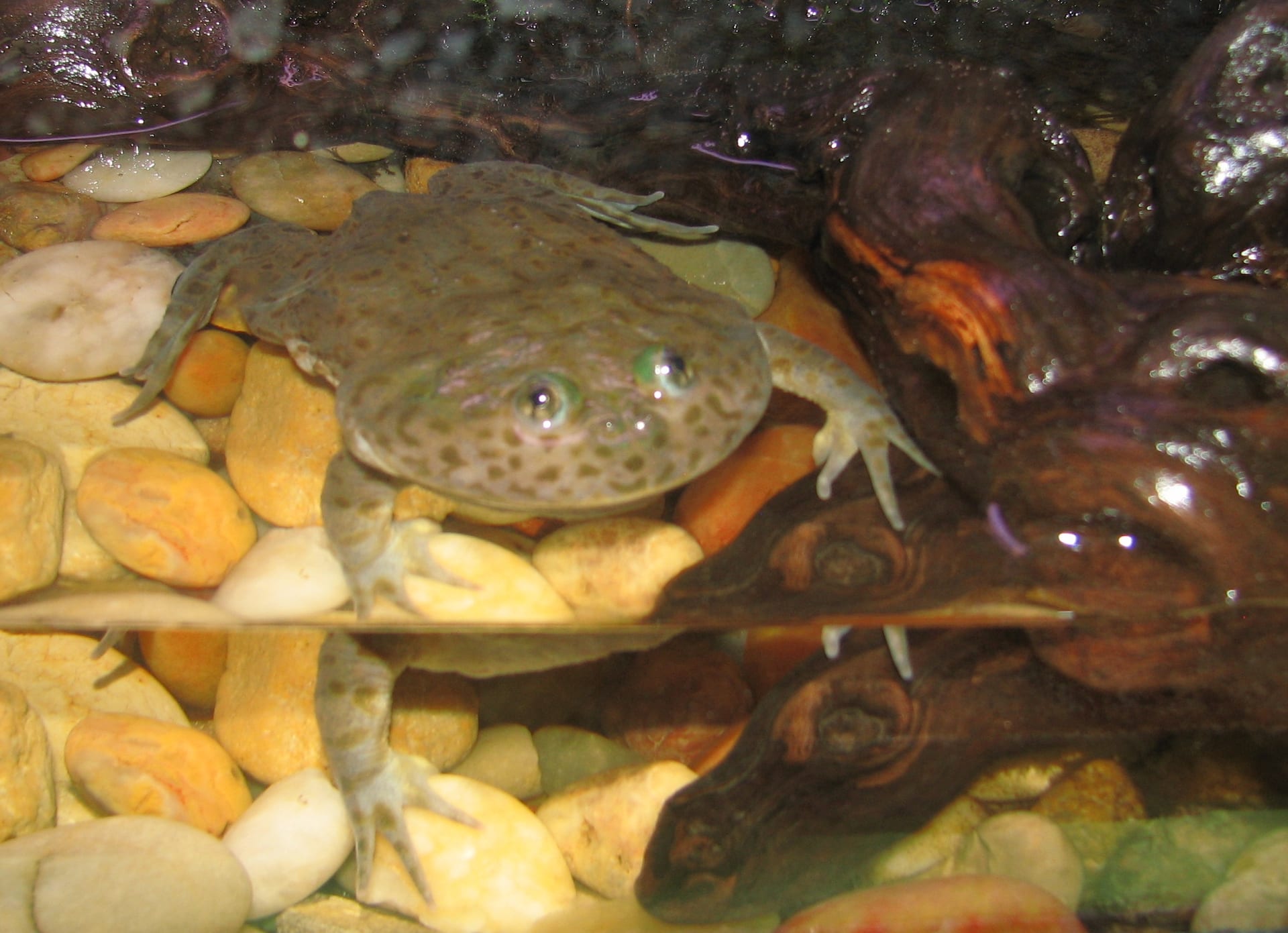
A flattened frog whose head makes up a third of its body length. It is a fully aquatic species that waits for prey with only its eyes and nostrils above the surface, and an aggressive one: when threatened it inflates itself, shrieks and bites.
Difficulty
Intermediate
Lifespan
15-20 years
Size
11-12cm; males about half the size of females
Humidity
40〜70%
Diet
Earthworms, crickets, roaches and waxworms, plus fish
About
Lepidobatrachus laevis is a frog of the family Ceratophryidae from the Chaco of South America and the largest species in its genus. It measures 11 to 12 cm, with males only about half the size of females. The colour is greenish grey, sometimes with orange or green blotches. The head accounts for about a third of the body length and the mouth is strikingly wide, with a row of teeth on the upper jaw and two fang-like projections near the middle of the lower jaw. The limbs are short and the forelimbs unwebbed, and adult males have a dark blue throat. It is a fully aquatic inhabitant of swamps and lagoons, lying in water or mud with only its eyes exposed to ambush prey. In the dry season it aestivates in the mud inside a cocoon of shed skin. When threatened it inflates its body, gives a shrill shriek and bites. Breeding takes place in the rainy season, with around 2,000 eggs laid at a time; the tadpoles are carnivorous and cannibalistic from hatching and grow rapidly, reaching 4 to 5 cm within about a month. Animals reaching Japan are mostly captive-bred.
Source: Wikipedia (CC BY-SA 4.0)
Lifespan of the Budgett's Frog
The Budgett's Frog lives 15-20 years.
Size of the Budgett's Frog
The Budgett's Frog grows to 11-12cm; males about half the size of females.
Basic Info
Origin
Swamps and lagoons of the Chaco in Argentina, Paraguay and Bolivia, below 200 m
Lifespan
15-20 years
Size
11-12cm; males about half the size of females
Care Specifications
AggressiveSolitaryBreeding: Hard
Sources: Reptiles Magazine: Budgett's Frogs / Wikipedia (English) / Wikipedia (Japanese)
References & Sources
Edited & verified by: BreederDirect editorial team
The taxonomic, regulatory, and husbandry data on this page are compiled and verified against the authoritative primary sources below.
Taxonomy & Authority
Regulations & Conservation Status
Not CITES-listedIUCN LC · Least Concern
It is not listed in the CITES appendices. It does not fall under either the designated animals specified in the Animal Protection and Management Law Enforcement Decree or the designated invasive species under the Invasive Species Law.
Sources: CITES Appendices (species not listed) / IUCN Red List
Regulations may change. Always verify the latest information with the relevant authorities.
Budgett's Frog Listings
Loading latest listingsFind listings for this species