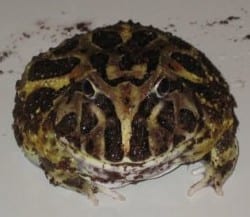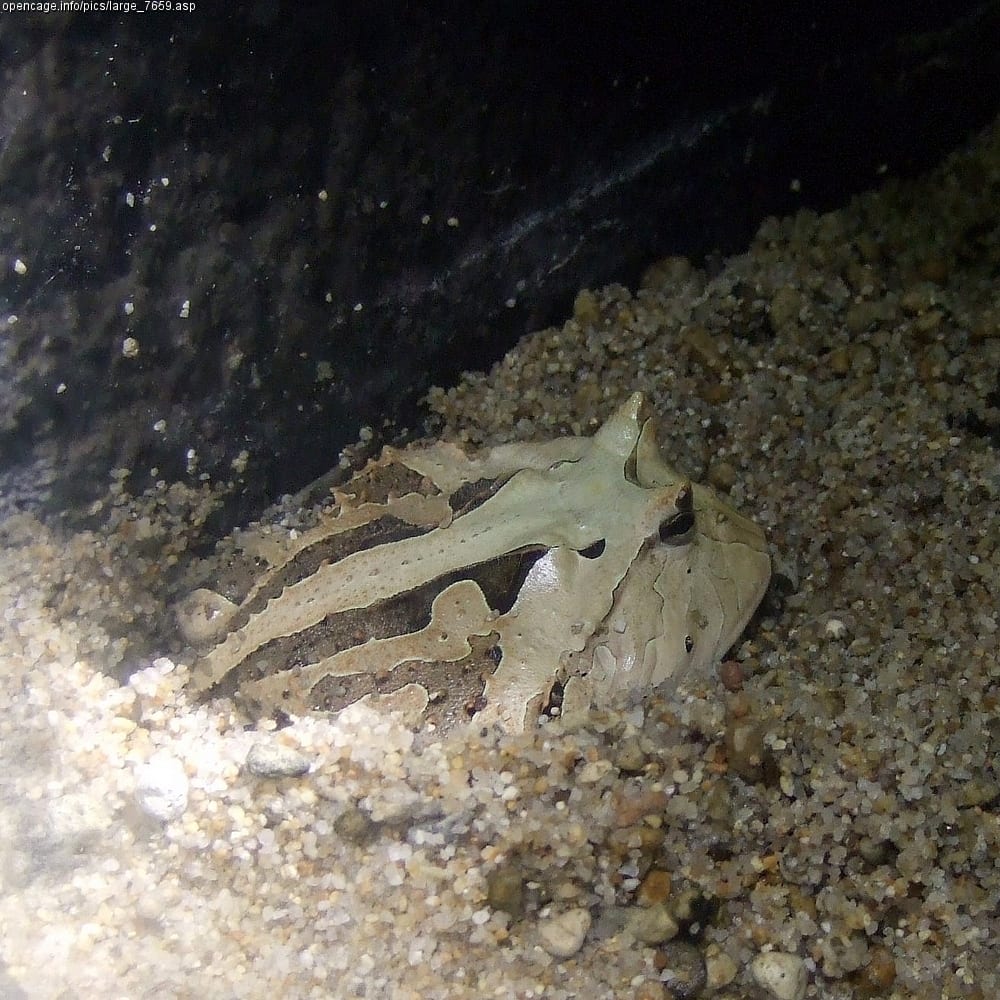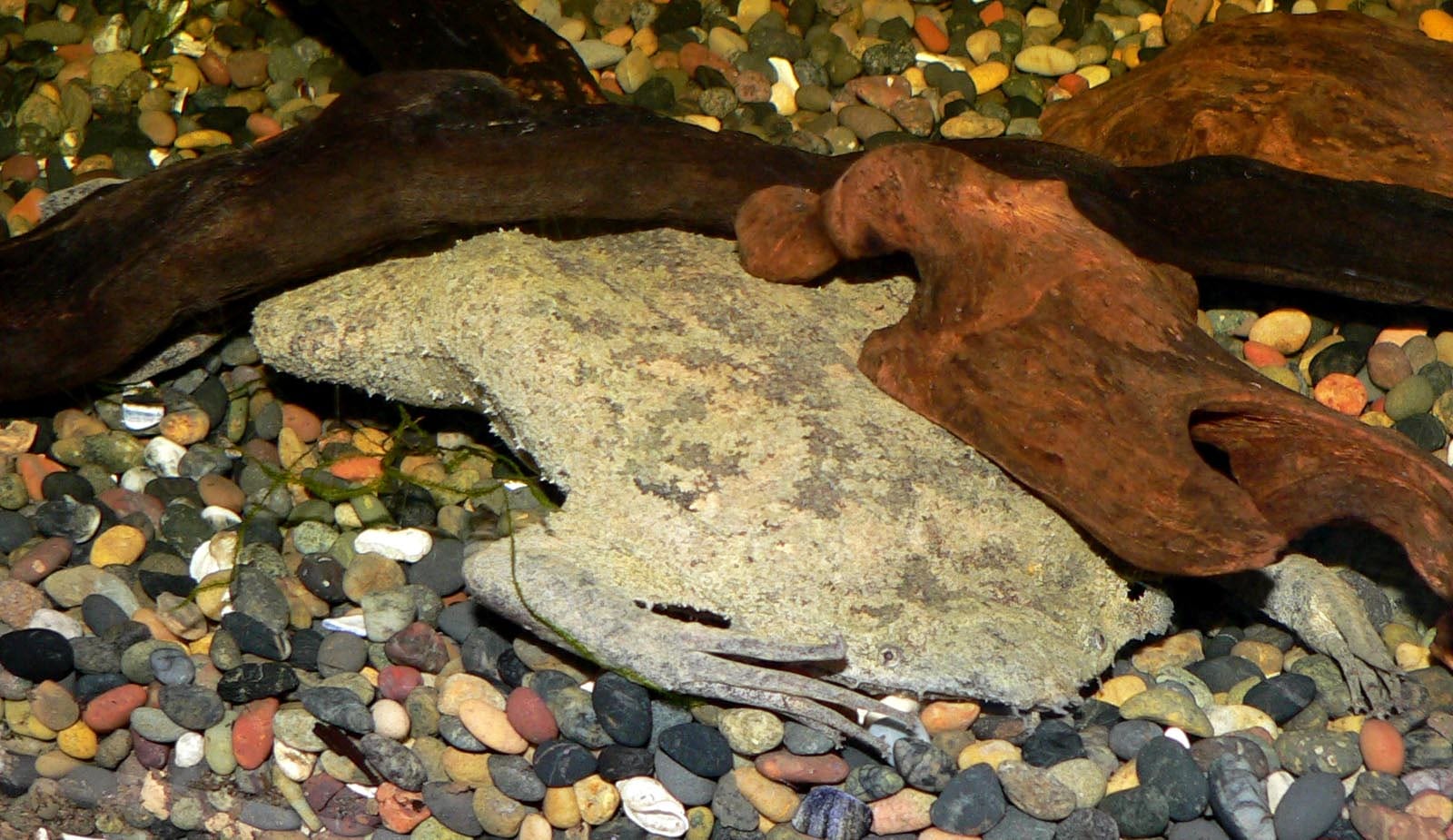
Source: Wikimedia Commons
Surinam Toad
IntermediatePipa pipa
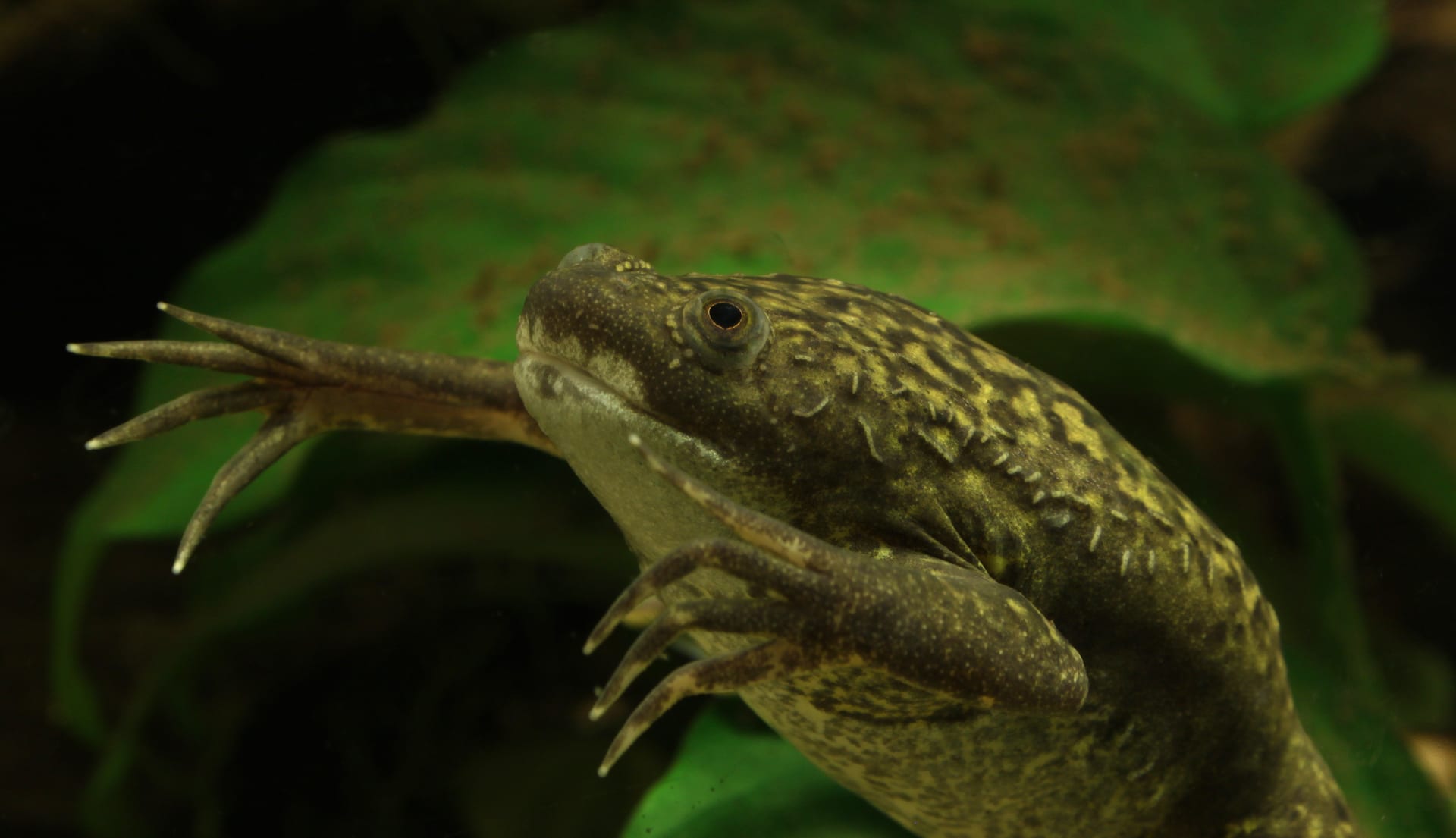
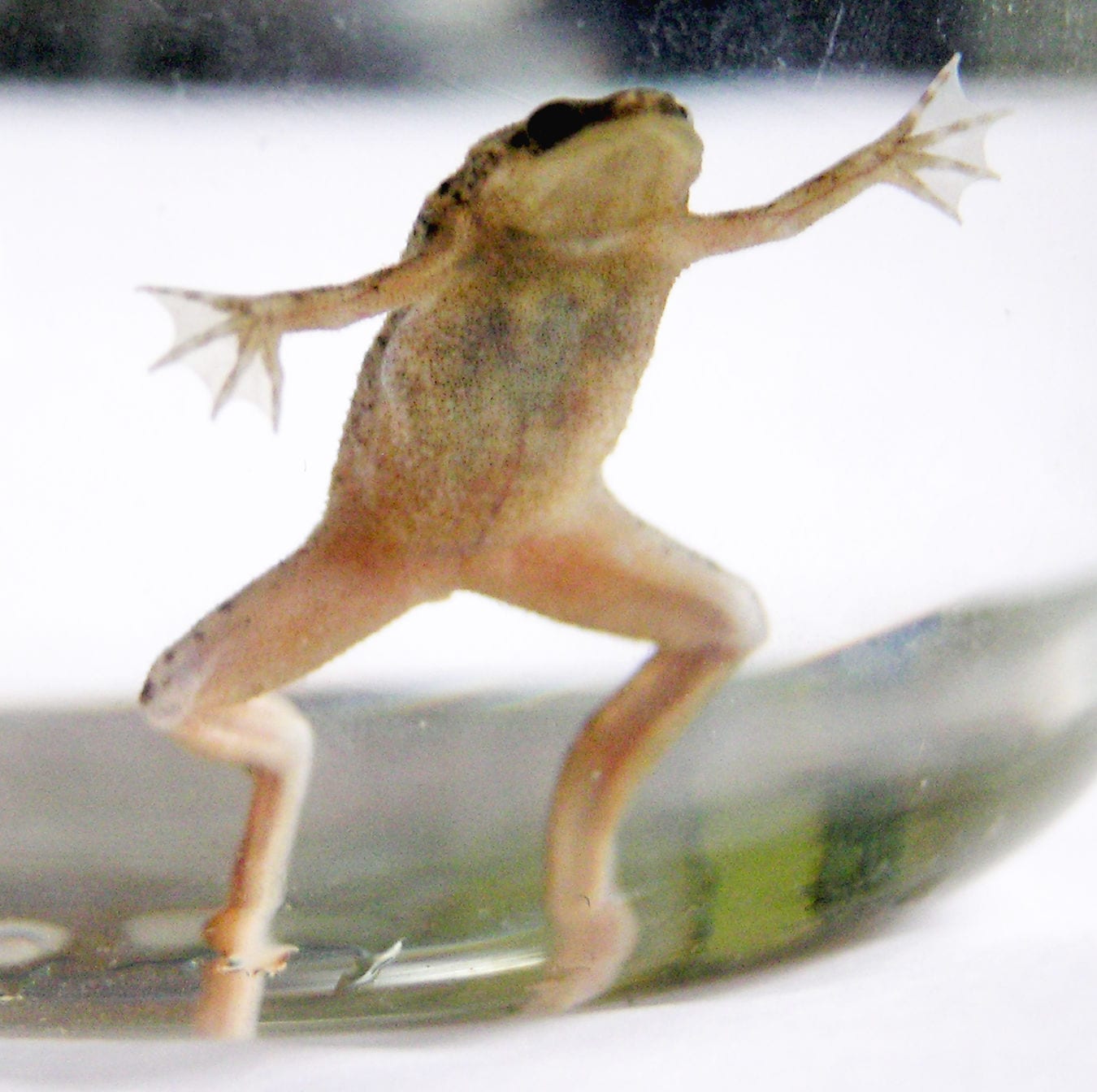
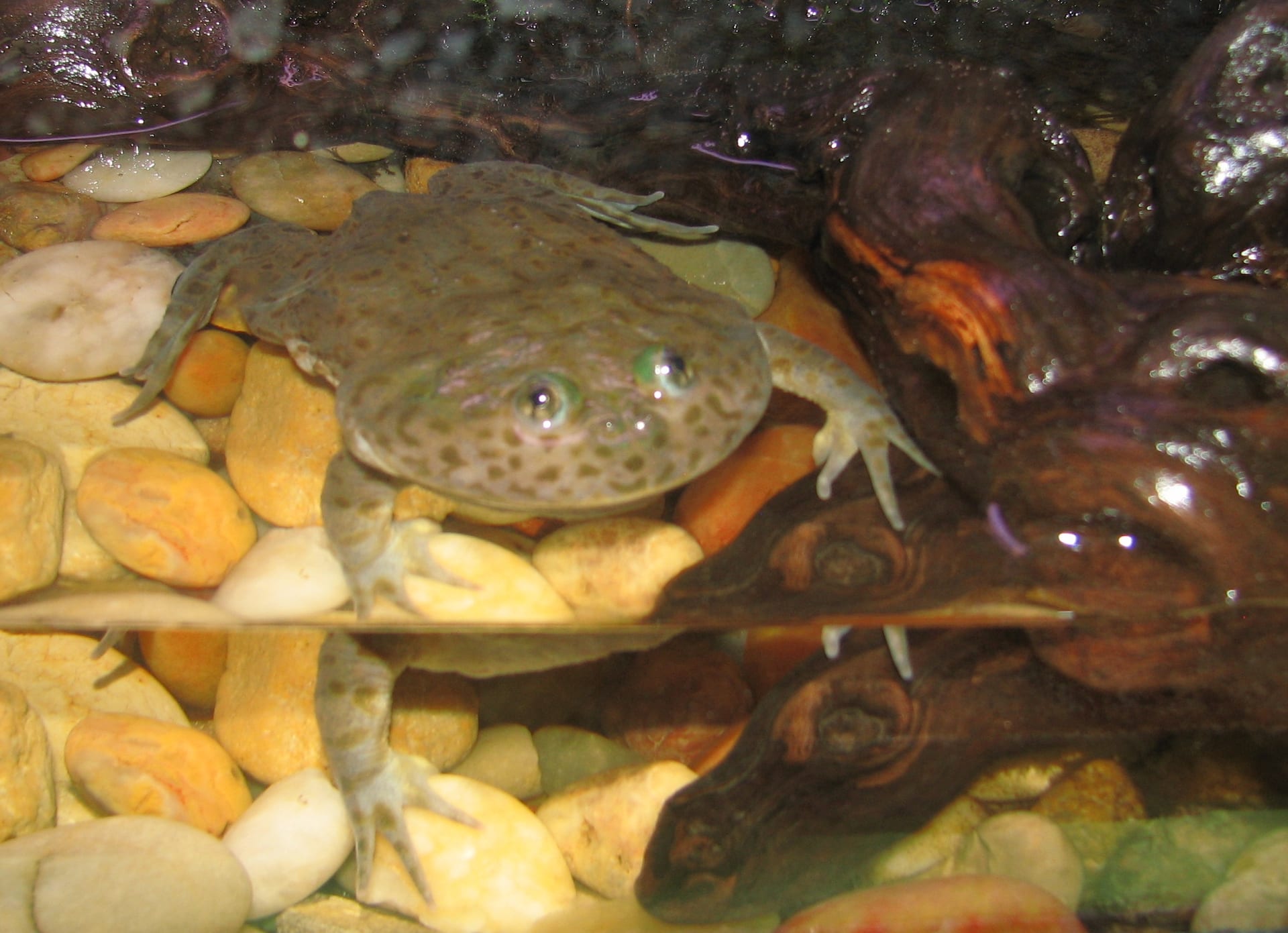
A fully aquatic frog of the murky still waters of northern South America. Its flattened body and triangular head mimic a dead leaf, and lacking a tongue it inhales prey with suction. Females are famous for embedding their eggs in the skin of the back and releasing fully formed froglets.
Difficulty
Intermediate
Temperature
23〜25℃
Lifespan
About 7 years on average in captivity
Size
15-17cm
Humidity
40〜70%
Diet
Earthworms and feeder fish (live food)
About
Pipa pipa is the largest fully aquatic member of the family Pipidae, ranging across northern South America, mainly the Amazon basin, and onto Trinidad. Males reach 15.4 cm and females 17.1 cm. The body is extremely depressed with a broad triangular head, and the species has neither tongue nor tympanum. Each front fingertip is divided into four small lobes that sense prey by touch. It is an ambush predator that inhales prey together with a rush of water, and its flat brown body mimics a dead leaf or piece of rotting wood in turbid water. The female embeds fertilised eggs in the thickened skin of her back and releases fully metamorphosed froglets after four to five months. It is kept in an aquarium at about 23-25 C. Wild habitat is soft acidic water, but captives do well at near-neutral pH. Feed earthworms and small fish, and keep filtration steady, as stable water quality is the key to long-term success.
Source: Wikipedia (CC BY-SA 4.0)
Lifespan of the Surinam Toad
The Surinam Toad lives About 7 years on average in captivity.
Size of the Surinam Toad
The Surinam Toad grows to 15-17cm.
Temperature & humidity for the Surinam Toad
The ideal temperature for the Surinam Toad is 23〜25℃.
Basic Info
Origin
Northern South America (Brazil, Bolivia, Colombia, Ecuador, French Guiana, Guyana, Suriname, Venezuela) and Trinidad
Lifespan
Care Specifications
PeacefulGroupBreeding: Hard
Sources: Reptiles Magazine: Caring For The Surinam Underwater Toad / Animal Diversity Web: Pipa pipa / Wikipedia (English)
References & Sources
Edited & verified by: BreederDirect editorial team
The taxonomic, regulatory, and husbandry data on this page are compiled and verified against the authoritative primary sources below.
Taxonomy & Authority
Accepted name: Pipa pipa (Linnaeus, 1758)
Synonyms: Pipa americana Laurenti, 1768, Pipa surinamensis Cuvier, 1849, Bufo pipa (Linnaeus, 1758)
Authority databases: GBIF
Nomenclature follows global taxonomic authority databases.
Regulations & Conservation Status
Not CITES-listedIUCN LC · Least Concern
Sources: CITES Appendices (species not listed) / IUCN Red List
Regulations may change. Always verify the latest information with the relevant authorities.
Surinam Toad Listings
Loading latest listingsFind listings for this species