Coral Light Adaptation Guide | Optimal PAR/PUR by LED Kelvin and Spectrum Explained
A scientific guide to lighting in coral aquaculture. This article explains the differences between PAR, PUR, and Kelvin color temperature, recommends optimal light intensity and spectrum settings for SPS, LPS, and soft corals, outlines a light acclimation protocol for introducing new corals, and provides solutions for light bleaching (photo-bleaching).
Key Takeaways
A scientific guide to lighting in coral aquaculture. This article explains the differences between PAR, PUR, and Kelvin color temperature, recommends optimal light intensity and spectrum settings for SPS, LPS, and soft corals, outlines a light acclimation protocol for introducing new corals, and provides solutions for light bleaching (photo-bleaching).
What is Coral Light Adaptation?
In coral aquaculture, understanding not just the "brightness (light intensity)" of lighting but also the "light quality (spectrum and color temperature)" is key to long-term health maintenance and vibrant coloration. Light adaptation (photoadaptation) refers to the physiological and morphological process by which corals adapt to changes in their lighting environment.
✍️
BreederDirect Editorial
The BreederDirect editorial team specializes in care information for animals, covering veterinary care and breeding to deliver beginner-friendly guides.
Find Coral on BreederDirect
Buy directly from verified breeders
Browse Related Listings
Find Coral listings related to this article on BreederDirect. Buy directly from verified breeders.
Wild corals receive vastly different light intensities and spectra depending on their water depth. In shallow waters (1–5 m), they experience intense light close to daylight with a broad spectrum; in deep waters (20–30 m), the light environment is dominated by blue wavelengths and is much dimmer. When introducing corals from different lighting environments into an aquarium or changing LED settings, understanding the mechanisms of light adaptation is essential.
Fundamental Light Terms: PAR, PUR, and Kelvin
PAR (Photosynthetically Active Radiation)
PAR (Photosynthetically Active Radiation) is the photosynthetic photon flux density in the 400–700 nm wavelength range, expressed in μmol/m²/s (micromoles per square meter per second) or PPFD (Photosynthetic Photon Flux Density).
PUR (Photosynthetically Usable Radiation) is a more precise indicator that measures only the wavelengths that zooxanthellae (the symbiotic algae in corals) can actually use for photosynthesis—primarily blue (420–480 nm) and red (640–680 nm) wavelengths.
Important Note: Light with high PAR but low PUR may not provide useful photosynthesis-driving light to the coral. Reef LEDs rich in blue wavelengths typically have high PUR and are highly efficient.
Kelvin (Color Temperature)
Lighting color temperature is expressed in Kelvin (K).
Kelvin Value
Light Color
Primary Use
5,000–6,500K
Daylight white
Freshwater fish and plants
8,000–10,000K
Slightly blue-tinted white
General reef use
14,000–20,000K
Blue-white
SPS and Acropora-heavy displays
400–450nm (blue only)
Deep blue to violet
Fluorescent protein expression, deep-water corals
Light Adaptation Characteristics by Coral Type
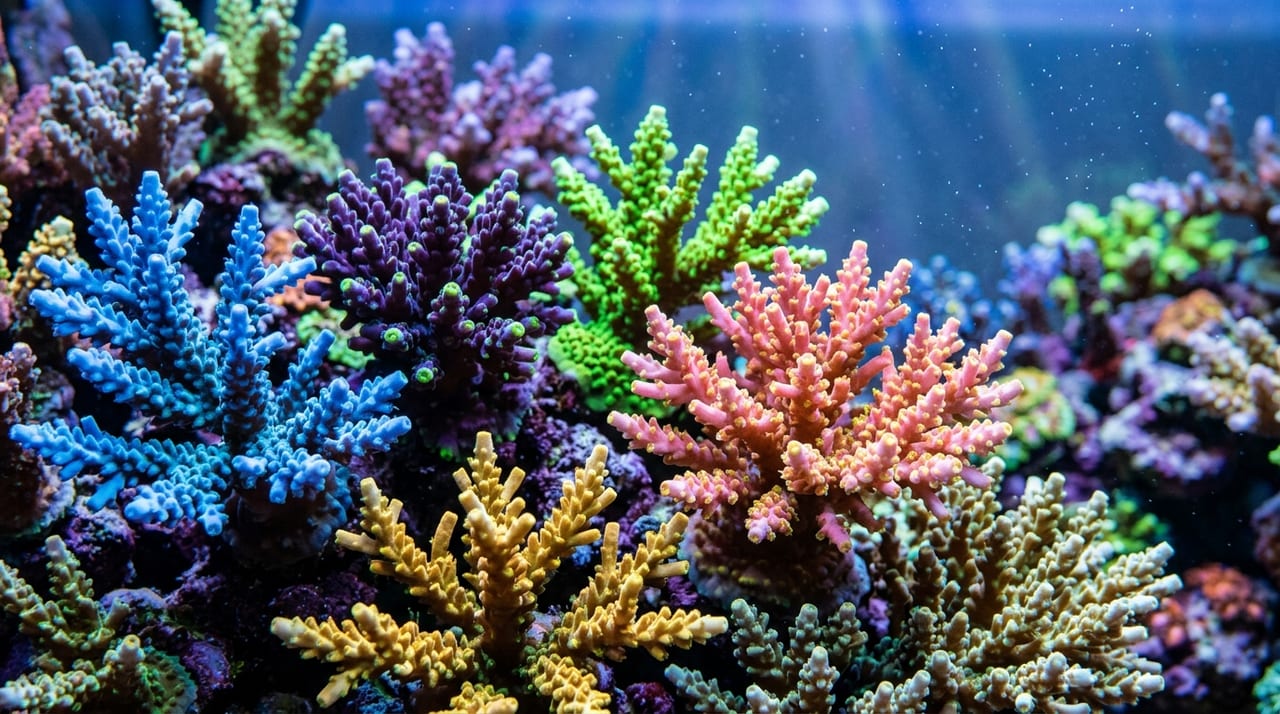
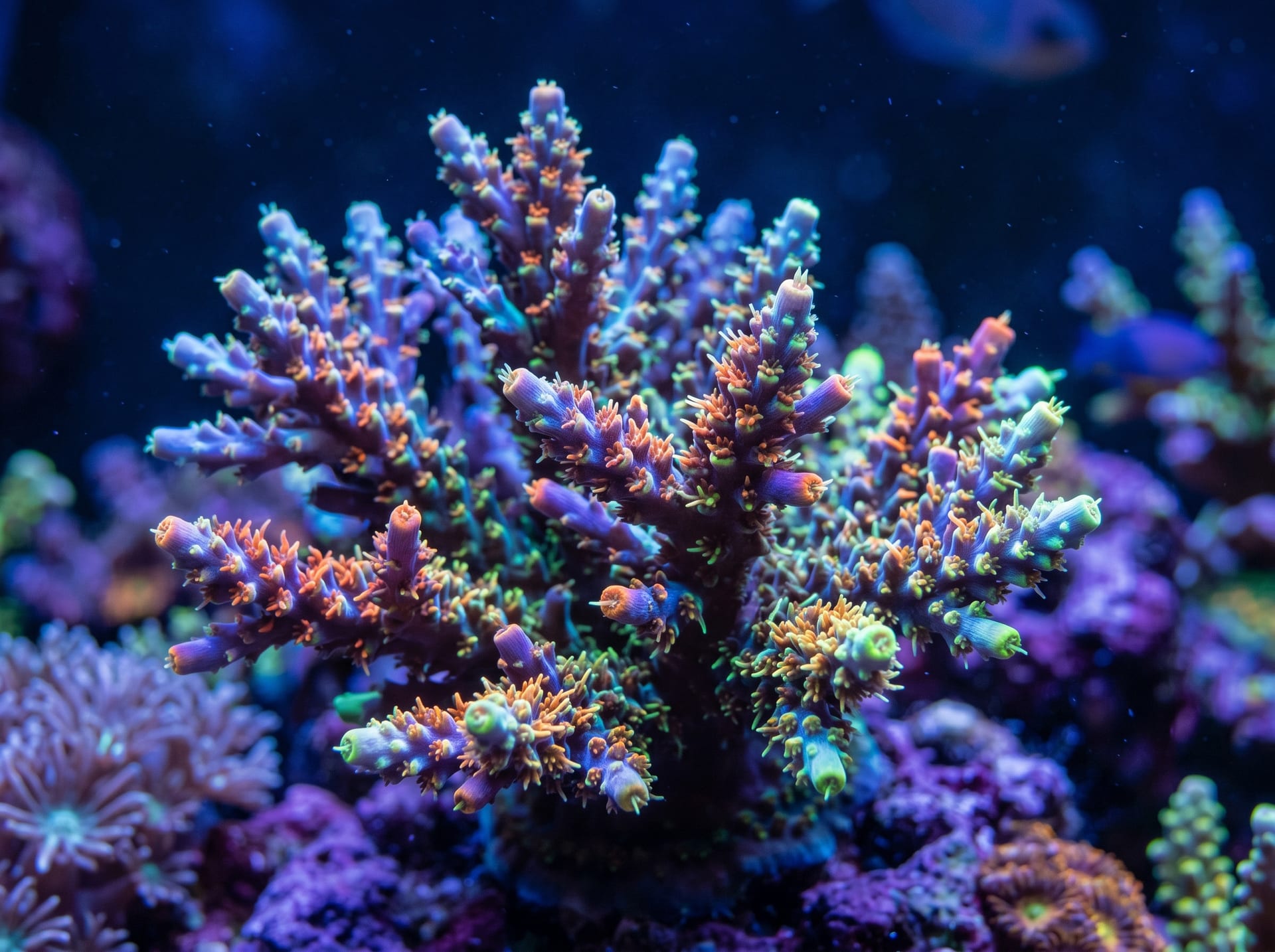
Acropora Species and SPS (Small Polyp Stony Corals) in General
Most SPS species inhabit shallow waters and require high PAR with a broad spectrum. However, sudden changes in light intensity can trigger bleaching (photo-bleaching), so gradual acclimation is critical.
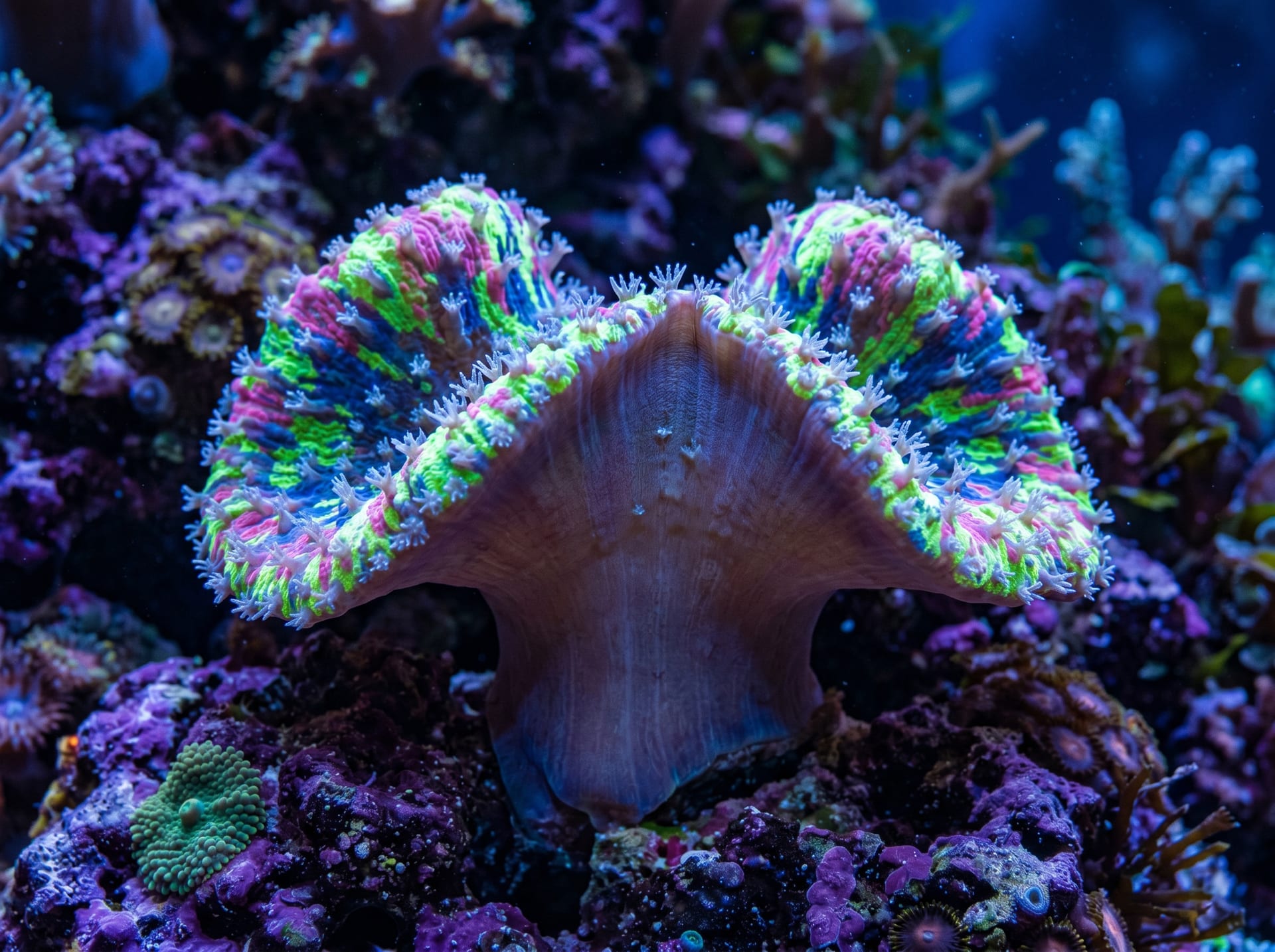
These corals possess moderate PAR tolerance with relatively wide adaptation ranges. Many LPS species fade under excessively intense light, so positioning them in the mid-to-lower sections of the aquarium is often effective.
Recommended PAR Range: 50–200 µmol/m²/s
Recommended Kelvin: 10,000–16,000K
Coloration is influenced not only by light but also by water flow; adjust both parameters together
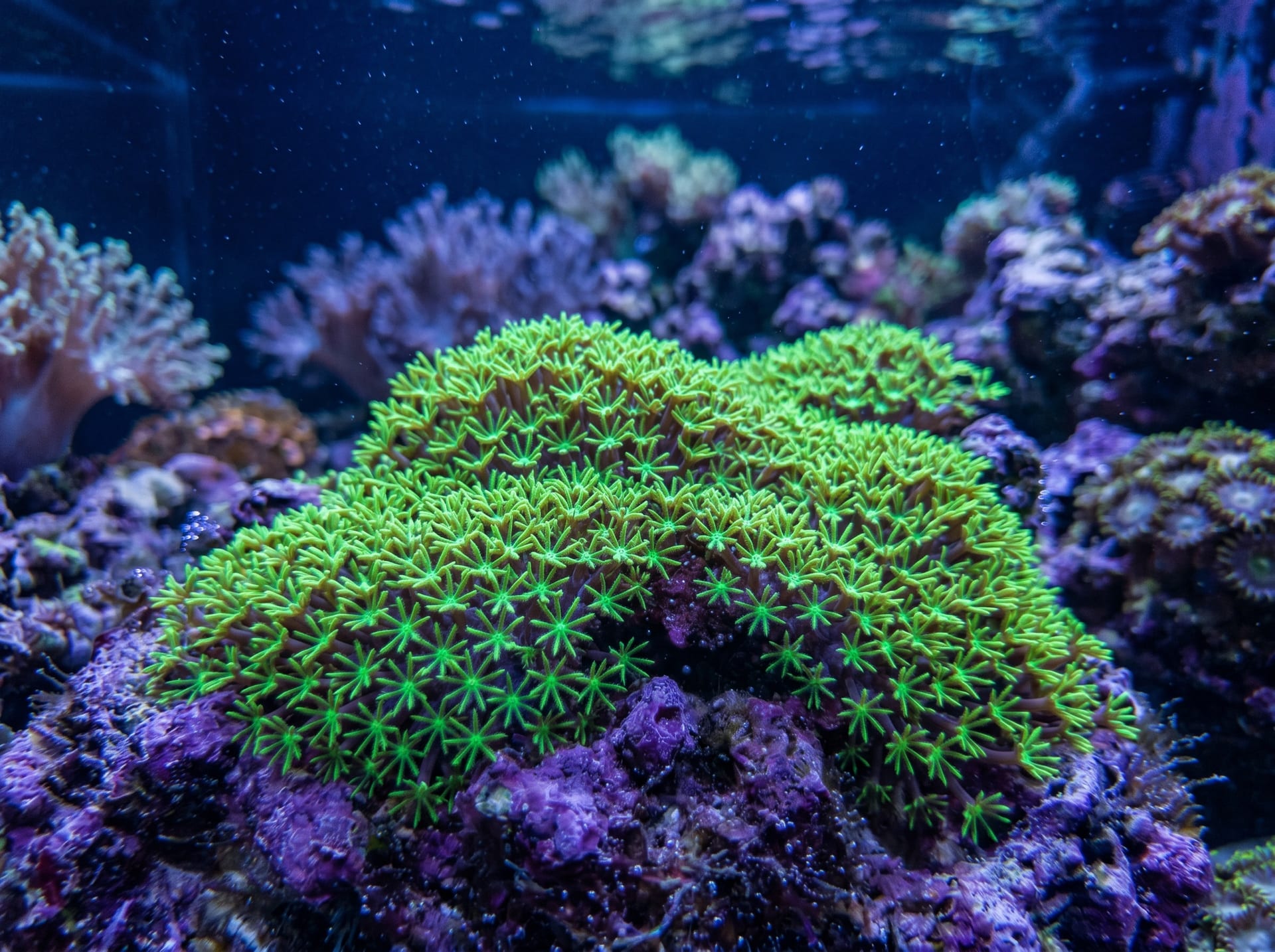
Soft Corals (Leather Corals, Mushroom Corals, Star Polyps, etc.)
These corals are adapted to low-to-moderate PAR. Strong light causes fading and tissue recession. They are relatively easy to maintain and can thrive even under reduced LED output.
Recommended PAR Range: 20–100 µmol/m²/s
Recommended Kelvin: 10,000–14,000K
Water flow and light angle are important; verify that polyps remain open
Practical Reef LED Spectrum Settings
Typical Channel Configuration in Modern Reef LEDs
High-performance reef LEDs (AI Hydra, Radion, Kessil, etc.) can independently control multiple wavelength channels.
Channel
Wavelength
Function
UV
380–420 nm
Activates fluorescent proteins, provides some bactericidal action
Supports photosynthesis, provides natural blue appearance
White/Daylight
500–650 nm (mixed)
Overall brightness and visibility
Red/Green
620–680 nm
Photosynthesis support
Light Acclimation Protocol for Newly Introduced Corals
Sudden changes in light intensity can cause severe damage to corals. When acquiring corals from breeders or specialty shops where lighting conditions differ, follow this acclimation protocol:
Days 1–7: Start at 30–40% of your target light intensity
Weeks 2–3: Increase to 50–60%; observe coral condition (polyp extension and coloration)
After 1 Month: Gradually increase to target intensity (approximately 10% per week)
Monitoring Points: Polyps remain extended, no bleaching is visible, and natural coloration is maintained
Managing Photo-Bleaching (Bleaching)
If bleaching begins after a sudden increase in light intensity or spectrum change:
Reduce light intensity immediately (return to the previous setting)
Check and adjust water chemistry (alkalinity, calcium, magnesium)
If bleaching does not progress, pigmentation may gradually return over time
Severe bleaching is difficult to reverse; continued water quality management is essential
Photoperiod and Lighting Patterns
Ramp-Up and Ramp-Down (Simulating Sunrise and Sunset)
Rather than abrupt on/off switching, gradual intensity changes that mimic the natural progression of sunrise and sunset reduce stress on corals.
Morning: Begin with blue channels, gradually reaching full intensity over 1–2 hours
Evening: Reverse the sequence—white to blue to UV, fading out gradually
Night: Complete darkness or minimal moonlight simulation lighting
Recommended Daily Photoperiod
8–10 hours per day is a general guideline that avoids excessive light stress on corals. Photoperiods that are too long promote unwanted algae growth and increase light stress.
By managing light adaptation correctly, you can bring out the natural fluorescent colors of your corals and achieve long-term health. A scientific approach combining LED settings with actual PAR measurements is the pathway to advanced reefkeeping.