Source: Wikimedia Commons
African Clawed Frog
BeginnerXenopus laevis
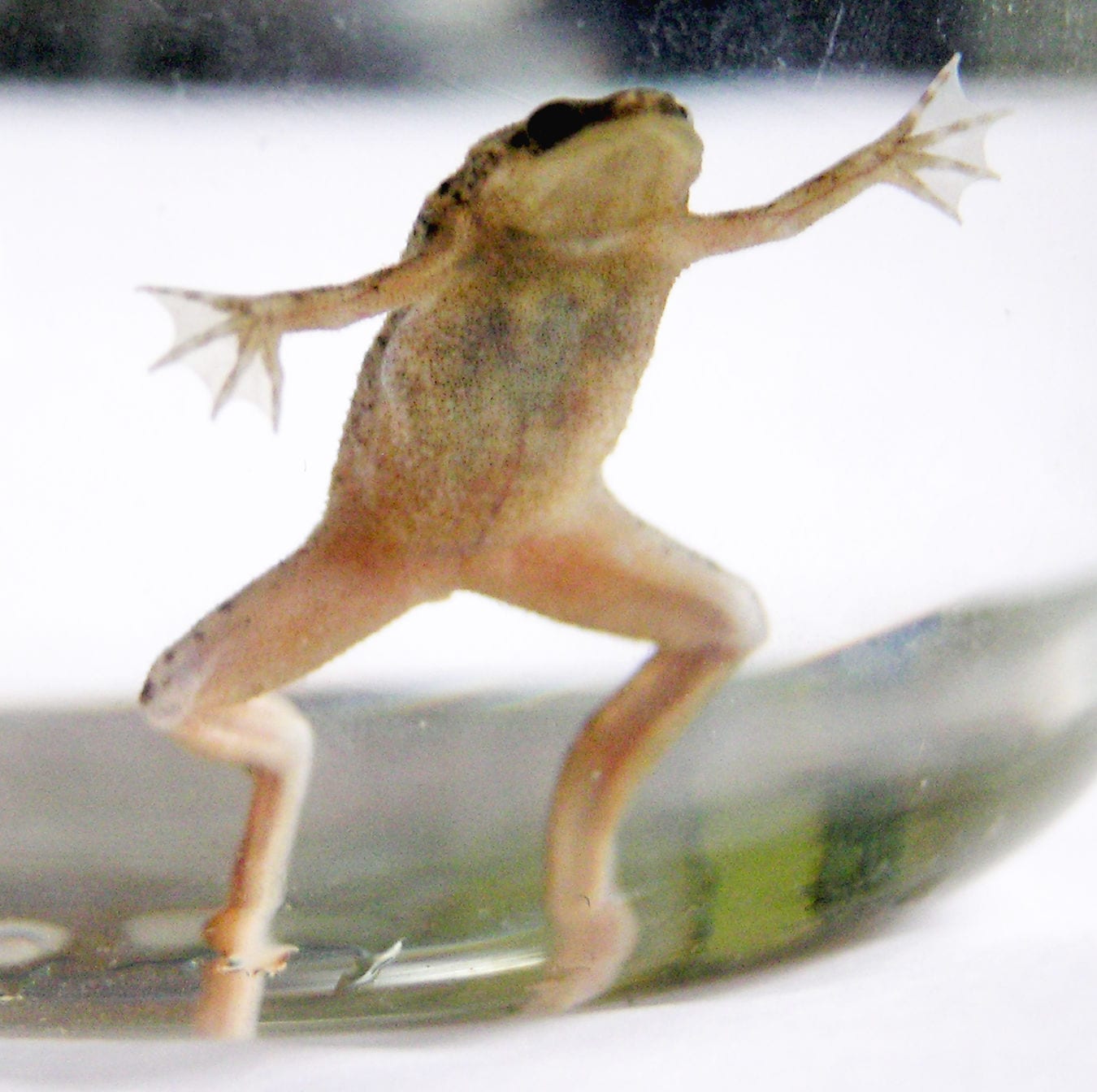
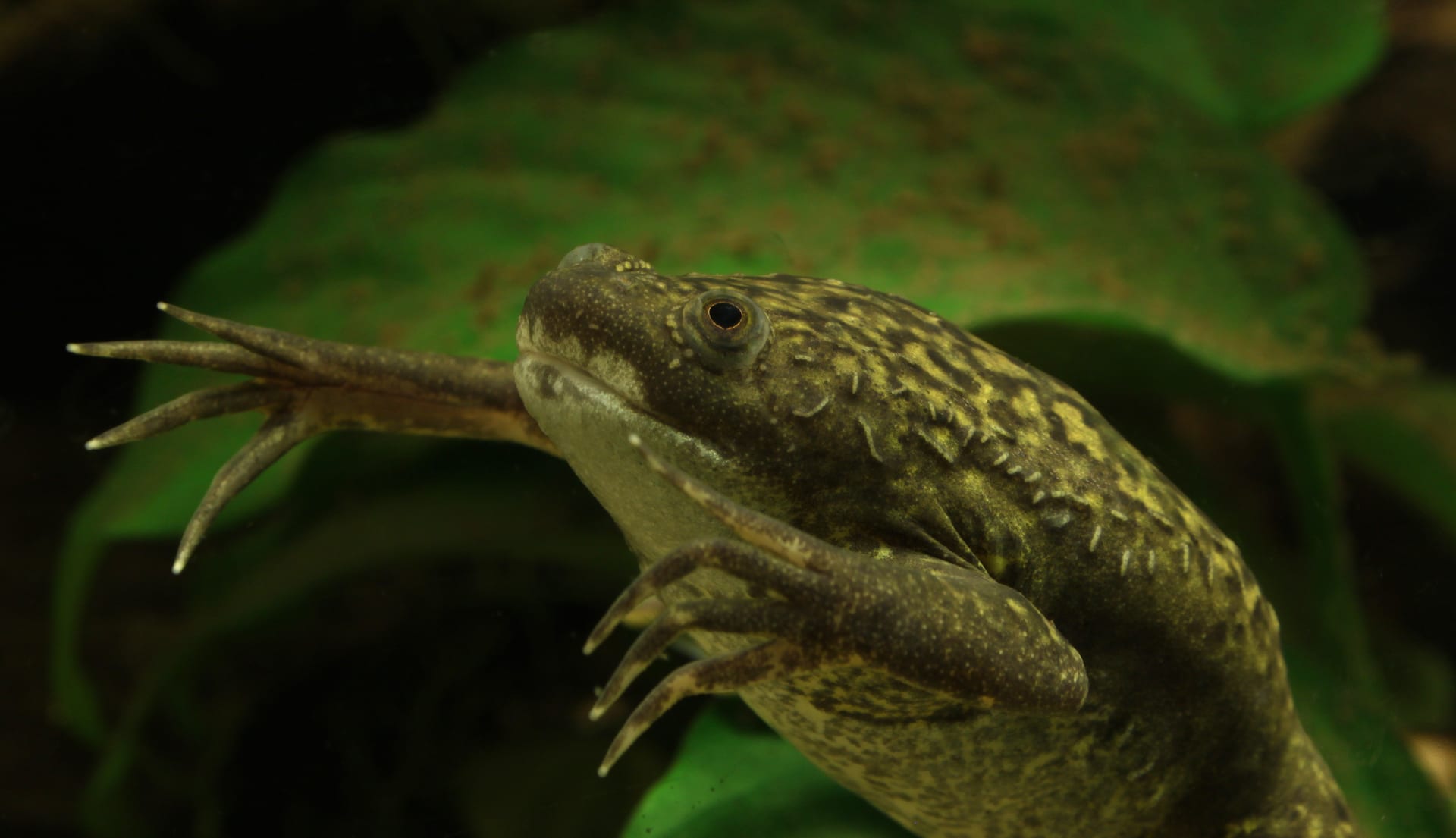
A fully aquatic pipid frog from southern Africa, with neither tongue nor teeth, named for the black claws on three toes of each hind foot. One of the most widely used laboratory frogs, it is hardy and keeps well in an aquarium.
Difficulty
Beginner
Temperature
22〜27℃
Lifespan
15-20 years
Size
5-13cm
Humidity
40〜70%
Diet
Prepared pellets, bloodworms, small fish
About
Xenopus laevis is a fully aquatic pipid frog found across much of sub-Saharan Africa. Adults are 5-13 cm, with a small head, flattened body and limbs set laterally for swimming. The black keratinous claws on the inner three toes of each hind foot give the species its name. Like all pipids it lacks a tongue and teeth, pushing food into its mouth with its hands and drawing it in by buccal suction, and it has no external eardrum, using a subcutaneous cartilaginous disc instead. It is an opportunistic scavenger that eats almost anything living or dead, and it leaves the water only to breathe. It is a mainstay laboratory animal worldwide, and its full genome was published in Nature in 2016. Keep it at 22-27 C in water of pH 7.0-7.8; adults need at least 75 litres. Japan's Ministry of the Environment lists it as a species warranting control under its invasive alien species list.
Source: Wikipedia (CC BY-SA 4.0)
Lifespan of the African Clawed Frog
The African Clawed Frog lives 15-20 years.
Size of the African Clawed Frog
The African Clawed Frog grows to 5-13cm.
Temperature & humidity for the African Clawed Frog
The ideal temperature for the African Clawed Frog is 22〜27℃.
Basic Info
Origin
Sub-Saharan Africa (Nigeria and Sudan south to South Africa)
Lifespan
15-20 years
Care Specifications
PeacefulGroupBreeding: Easy
Sources: REPTILES Magazine: African Clawed Frog Husbandry / Wikipedia (English) / Wikipedia (Japanese)
References & Sources
Edited & verified by: BreederDirect editorial team
The taxonomic, regulatory, and husbandry data on this page are compiled and verified against the authoritative primary sources below.
Taxonomy & Authority
Accepted name: Xenopus laevis (Daudin, 1802)
Synonyms: Bufo laevis Daudin, 1802, Dactylethra capensis Cuvier, 1830, Xenopus laevis laevis (Daudin, 1802)
Authority databases: GBIF
Nomenclature follows global taxonomic authority databases.
Regulations & Conservation Status
Not CITES-listedIUCN LC · Least Concern
Domestic law: Although not designated as a specific invasive alien species, it is listed as a species requiring control measures in the Ministry of the Environment's "Ecosystem Damage Prevention Invasive Species List (2nd edition)", and establishment has been confirmed in Chiba, Shizuoka, Wakayama, and Hyogo. It is noted as a potential vector for chytrid fungus disease and ranavirus disease pathogens, and release into the wild is strictly prohibited.
Sources: CITES Appendices (species not listed) / IUCN Red List / Ministry of the Environment: Invasive alien species list (Japan)
Regulations may change. Always verify the latest information with the relevant authorities.
African Clawed Frog Listings
Loading latest listingsFind listings for this species