Source: Wikimedia Commons
Surinam Horned Frog
IntermediateCeratophrys cornuta
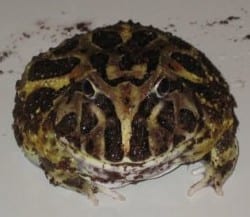
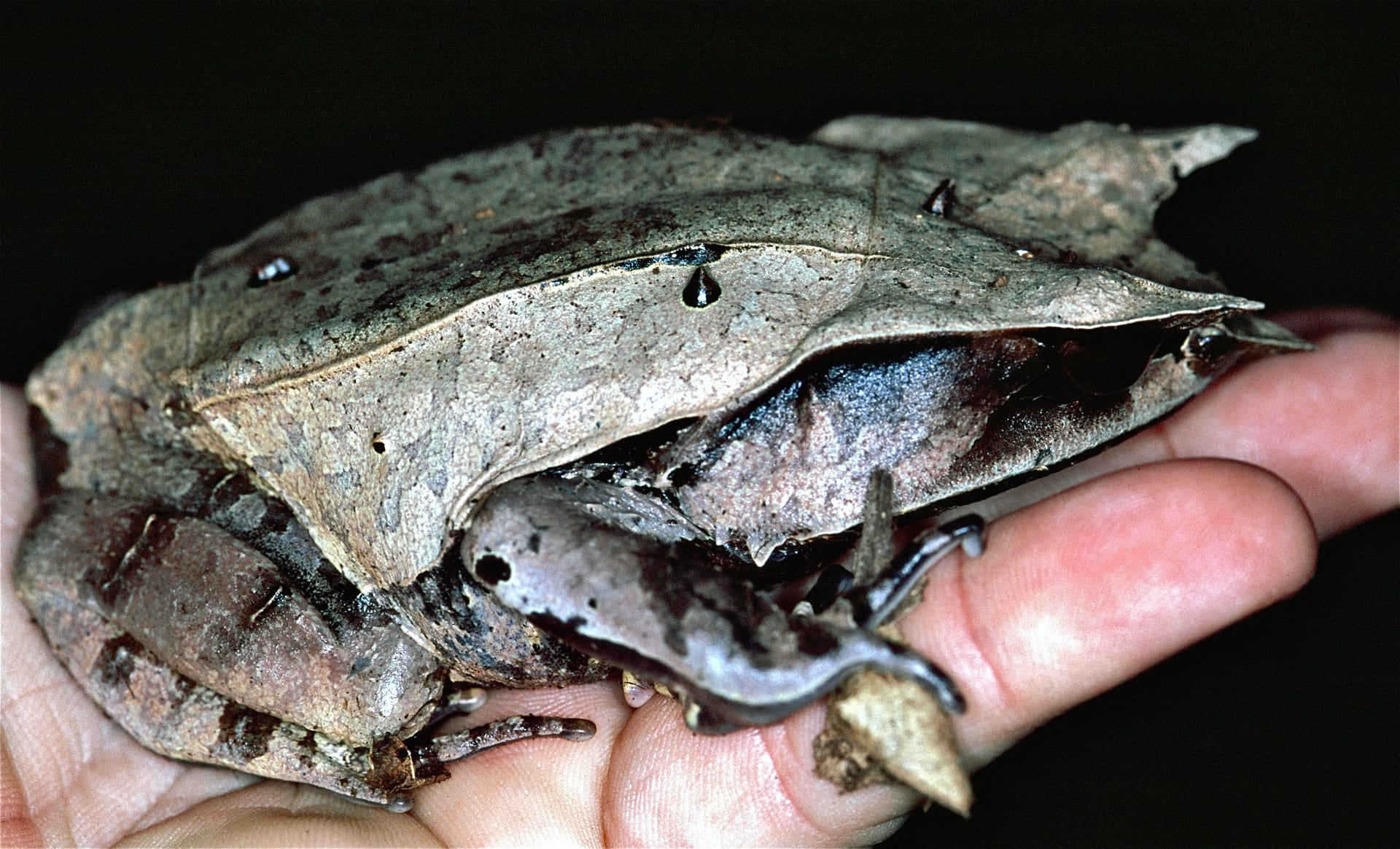
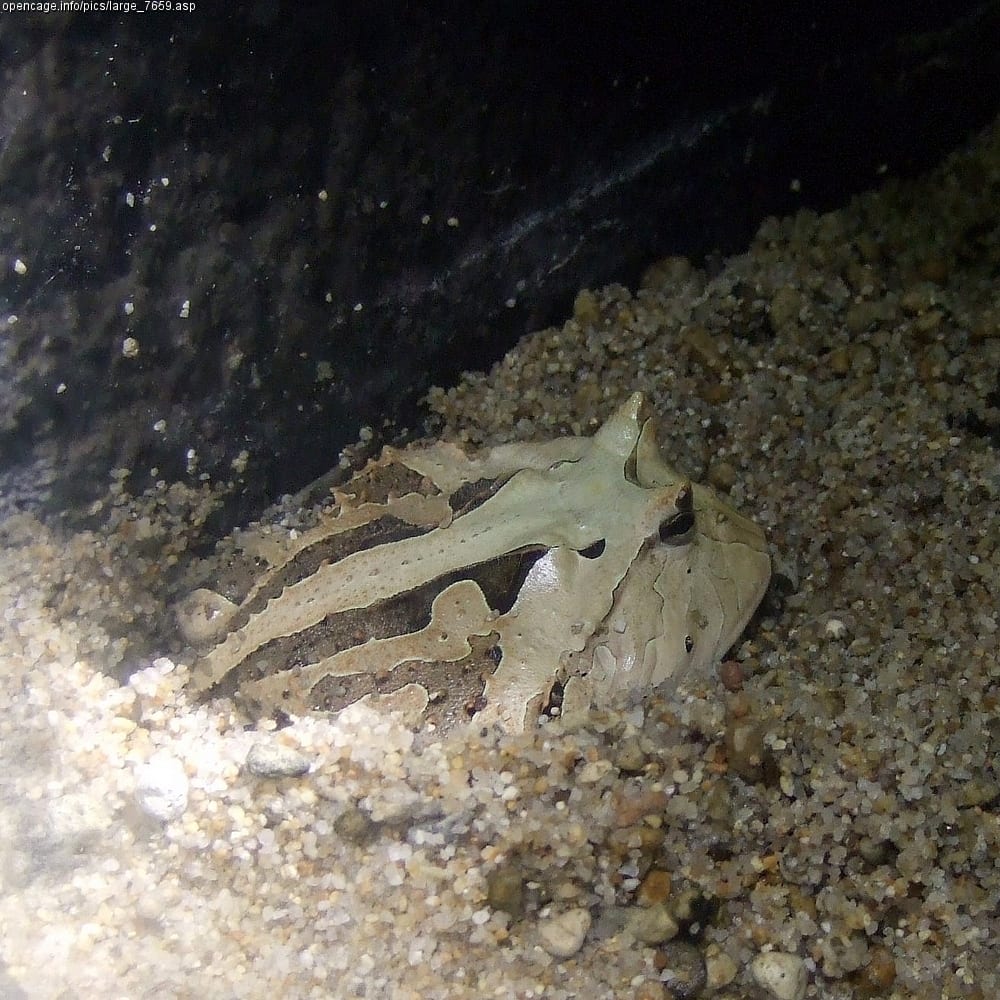
A horned frog of the Amazon basin rainforest, distinguished by projections above the eyes that are unusually long and slender for the genus. It buries itself in leaf litter on the forest floor to ambush prey, and reaches 7-15 cm, with females larger than males.
Difficulty
Intermediate
Temperature
24〜27℃
Lifespan
10-15 years in captivity
Size
7-15cm, up to 20cm; males about 7.2cm
Humidity
60〜80%
Diet
Crickets, roaches and other insects, plus fish
About
Ceratophrys cornuta is a frog of the family Ceratophryidae found in Amazon basin rainforest in South America. It measures 7 to 15 cm, females being larger while males reach only about 7.2 cm, and is reported to attain 20 cm at most. The colour is orange-tinted light brown, dark green or yellowish green, thought to act as camouflage among fallen leaves. The throat is black and the projections above the eyes are unusually long and slender for the genus. The limbs are short with dark barring. It lives in open situations within forest below 400 m and is nocturnal, though juveniles and subadults are also active by day. It buries itself in leaf litter to ambush prey, taking ants, beetles and other insects as well as frogs, small reptiles and small mammals, sometimes swallowing prey amounting to more than half its own volume; wild animals have been found dead with prey they could not swallow. Females lay 300 to 600 eggs in temporary pools at the start of the rainy season; these hatch in 3 to 25 days and metamorphose in about 90 days, with sexual maturity at three to four years. Wild-caught animals are traded and are notably nervous.
Source: Wikipedia (CC BY-SA 4.0)
Lifespan of the Surinam Horned Frog
The Surinam Horned Frog lives 10-15 years in captivity.
Size of the Surinam Horned Frog
The Surinam Horned Frog grows to 7-15cm, up to 20cm; males about 7.2cm.
Temperature & humidity for the Surinam Horned Frog
The ideal temperature for the Surinam Horned Frog is 24〜27℃. Ideal humidity is 60〜80%.
Basic Info
Origin
Care Specifications
AggressiveSolitaryBreeding: Hard
Sources: Reptiles Magazine: Horned Frog Care Sheet / The Bio Dude: Care and Bioactive Maintenance of the Pacman Frog / Wikipedia (English) / Wikipedia (Japanese)
References & Sources
Edited & verified by: BreederDirect editorial team
The taxonomic, regulatory, and husbandry data on this page are compiled and verified against the authoritative primary sources below.
Taxonomy & Authority
Regulations & Conservation Status
Not CITES-listedIUCN LC · Least Concern
It is not listed in the CITES appendices. It does not fall under either the designated animals specified in the Act on Welfare and Management of Animals Enforcement Decree or the designated invasive species under the Invasive Species Law.
Sources: CITES Appendices (species not listed) / IUCN Red List
Regulations may change. Always verify the latest information with the relevant authorities.
Surinam Horned Frog Listings
Loading latest listingsFind listings for this species