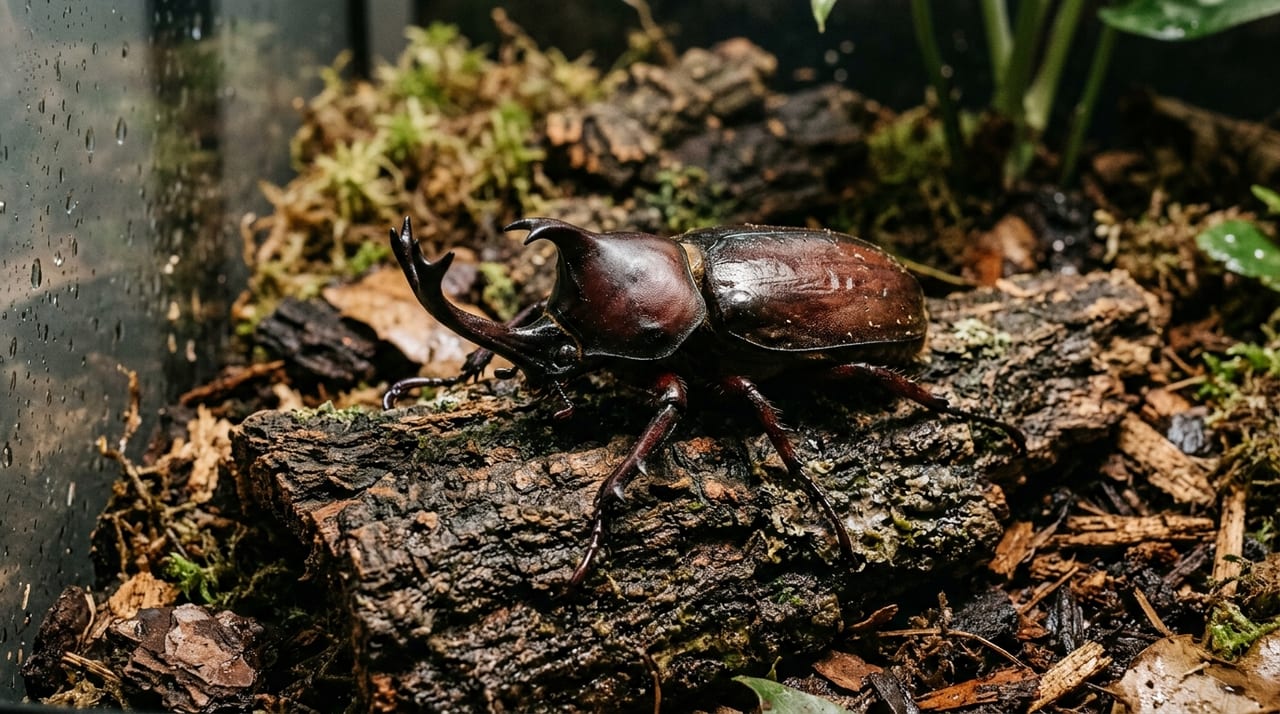
Longhorn Beetle Care Guide | Capturing, Rearing, and Specimen Making of Rosalia and Miyama Longhorn Beetles | ブリちょく
Insects| ✍️ BreederDirect Editorial
Longhorn Beetle Care Guide | Capturing, Rearing, and Specimen Making of Rosalia and Miyama Longhorn Beetles
A comprehensive guide to collecting, rearing, and specimen preparation of longhorn beetles (Rosalia, Miyama longhorn beetles, and more). Covers key points for adult rearing environments, feeding, egg-laying, and larval management, as well as detailed tips on spreading, drying, and pest prevention.
Key Takeaways
A comprehensive guide to collecting, rearing, and specimen preparation of longhorn beetles (Rosalia, Miyama longhorn beetles, and more). Covers key points for adult rearing environments, feeding, egg-laying, and larval management, as well as detailed tips on spreading, drying, and pest prevention.
Longhorn beetles (Family Cerambycidae) are characterized by their long antennae and wood-eating larvae. Over 700 species inhabit Japan, ranging from beautifully jewel-like species such as the Rosalia longhorn beetle to the enormous Miyama longhorn beetle. Popular among insect enthusiasts, they offer diverse enjoyment through collecting, rearing, and specimen preparation.
✍️
BreederDirect Editorial
The BreederDirect editorial team specializes in care information for animals, covering veterinary care and breeding to deliver beginner-friendly guides.
Find Insects on BreederDirect
Buy directly from verified breeders
Browse Related Listings
Find Insects listings related to this article on BreederDirect. Buy directly from verified breeders.
Body length 15–30 mm. Called "the jewel of insects" for its beautiful appearance with grayish-blue coloring and scattered black spots. Lays eggs on dead wood of Fagaceae species (beech, oak, chestnut), with larvae feeding inside the wood as they grow. Adults emerge around July–August and are active during the day. Can be found in foothills around beech forests, though encounters are precious due to their small population numbers.
Miyama Longhorn Beetle (Massicus raddei)
One of Japan's largest longhorn beetles, reaching 40–55 mm in body length. Lays eggs on large trees such as konara oak, stumpy oak, and mulberry. Adults are nocturnal and active in July–August, sometimes attracted to artificial lights. The appeal lies in its subtle appearance with a brown base covered in fine, dense setae.
Body length 35–55 mm. A large species with beautiful white linear markings on a black background. It sometimes lays eggs on living trees such as mulberry, poplar, and oak, so it may be considered an "agricultural pest." Adults emerge from June–September and are nocturnal.
Mulberry Longhorn Beetle (Apriona japonica)
Body length 35–45 mm. Known as a pest of mulberry and fig trees, though it is also popular among specimen collectors.
Collection Methods
Collection Periods and Locations
Species
Collection Period
Recommended Locations
Rosalia longhorn beetle
July–August (daytime)
Dead wood in beech forests
Miyama longhorn beetle
July–August (nighttime)
Stumpy oak and konara oak groves
White-striped longhorn beetle
June–August (nighttime)
Large mulberry and poplar trees
Daytime Collection: Species active during the day, such as the Rosalia longhorn beetle, can be found by directly observing dead wood and stumps of their host plants (beech, oak, etc.). Since they remain relatively still, search by slowly surveying the area.
Nighttime Collection: For nocturnal longhorn beetles, light-trapping is effective. Spreading a white sheet beneath mercury lamps or white fluorescent lights makes it easier to spot attracted individuals. Areas where tree sap is flowing from konara and stumpy oak trees are also good collecting spots.
Collection Tools
- Insect net (with a longer handle)
- Storage containers (ziplock bags or specimen cases)
- Headlamp (for nighttime collecting)
- Work gloves (large species have powerful mandibles and can deliver painful bites)
Collection Precautions
Many longhorn beetle species are designated as agricultural or forestry pests. Collection should be done for personal enjoyment only; avoid mass collecting. Additionally, collection may be restricted in national forests and nature parks, so check local regulations in advance.
Adult Rearing Methods
Preparing the Rearing Container
Container Size
- Small species (30 mm or less): Medium fruit fly container (~160×110×170 mm)
- Large species (40 mm or more): Large to extra-large fruit fly container
Container Setup
1. Spread 3–5 cm of leaf mold or broadleaf tree substrate on the bottom
2. Perches: Install dead branches of host plants or commercial insect perches
3. Bark: Place pieces of decaying wood bark to provide hiding spots
Feeding and Hydration
Main Adult Foods
- Insect jelly (either high-protein or fruit-flavored)
- Bark pieces of konara and stumpy oak with oozing tree sap
- Fruits such as watermelon and apple (also provide hydration)
Important Notes: In the wild, adult longhorn beetles also feed on tree bark and new shoots. In captivity, jelly is the most convenient and hygienic option. Since they weaken without sufficient moisture, it's reassuring to include fruits or cotton pads saturated with water.
Temperature and Humidity Management
The ideal temperature range is 20–28°C. In hot and humid environments, fungi and mites proliferate easily, so use a container with good ventilation and place it in a cool location away from direct sunlight.
Egg-Laying and Larval Management
Creating an Egg-Laying Setup
If you wish to breed longhorn beetles, prepare egg-laying wood.
Materials: Logs of broadleaf trees such as konara oak, stumpy oak, or beech (5–15 cm in diameter)
Wood Condition: From freshly cut to slightly dried (preferences vary by species)
Setup Method: Spread 3–5 cm of moistened broadleaf tree substrate on the container bottom and place the egg-laying wood on top
Moisture: Maintain the wood in a moderately moist state (overly dry wood will not receive eggs)
Making small holes (1–3 mm) in the egg-laying wood or partially removing the outer bark encourages egg-laying.
Larval Rearing
Longhorn beetle larvae grow by feeding inside wood material.
Wood Rearing (Most Natural Method)
Place the entire egg-bearing wood in the container and ensure it does not dry out. Since larvae feed inside the wood as they grow, they are usually not visible from the outside. When the wood starts to deteriorate, add fresh material.
Substrate Rearing (Easier to Observe Progress)
A method in which broadleaf tree fermented substrate is packed into plastic bottles and individual larvae are reared separately. While some species may not adapt to this method, it is less expensive and easier to manage than mushroom spawn bottles.
Pupation and Emergence
The larval period varies by species, ranging from 1–3 years. Larvae create a pupal chamber inside the wood and pupate. Newly emerged adults remain in the container for 1–3 weeks to harden their bodies. Leave them undisturbed to rest during this period.
Specimen Preparation
Longhorn beetles are popular among specimen collectors for their beautiful appearance.
Required Tools
Spreading board
Insect pins (sizes 0–2)
Tweezers and insect spray adhesive
Drying case (with silica gel)
Insecticides (naphthalene or paradichlorobenzene)
Spreading Procedure
Softening: Specimens hardened after death are softened in a softening box (placed on moistened sand or absorbent paper for several days) to make the joints flexible
Pinning: Insert an insect pin vertically through the center of the pronotum, slightly to the right
Antenna Fixing: Extend the long antennae forward and pin them in place
Wing Spreading: For large species, spread the wings and fix them to the spreading board (though most longhorn beetle specimens are not spread—this is the standard practice)
Drying: Dry completely in a drying case with silica gel for 1–4 weeks
Pest Prevention: Store in a specimen box containing insecticide
Conclusion
Longhorn beetles offer multifaceted enjoyment through collecting, rearing observation, and specimen preparation. The striking blue beauty of the Rosalia longhorn beetle encountered in summer mountain beech forests, or the thrill of Miyama longhorn beetles arriving at nighttime light traps, are particularly memorable experiences. Rearing difficulty is relatively low, though obtaining host plants presents a challenge; once resolved, long-term rearing is entirely possible. Experience the world of longhorn beetles from collection through specimen preparation.