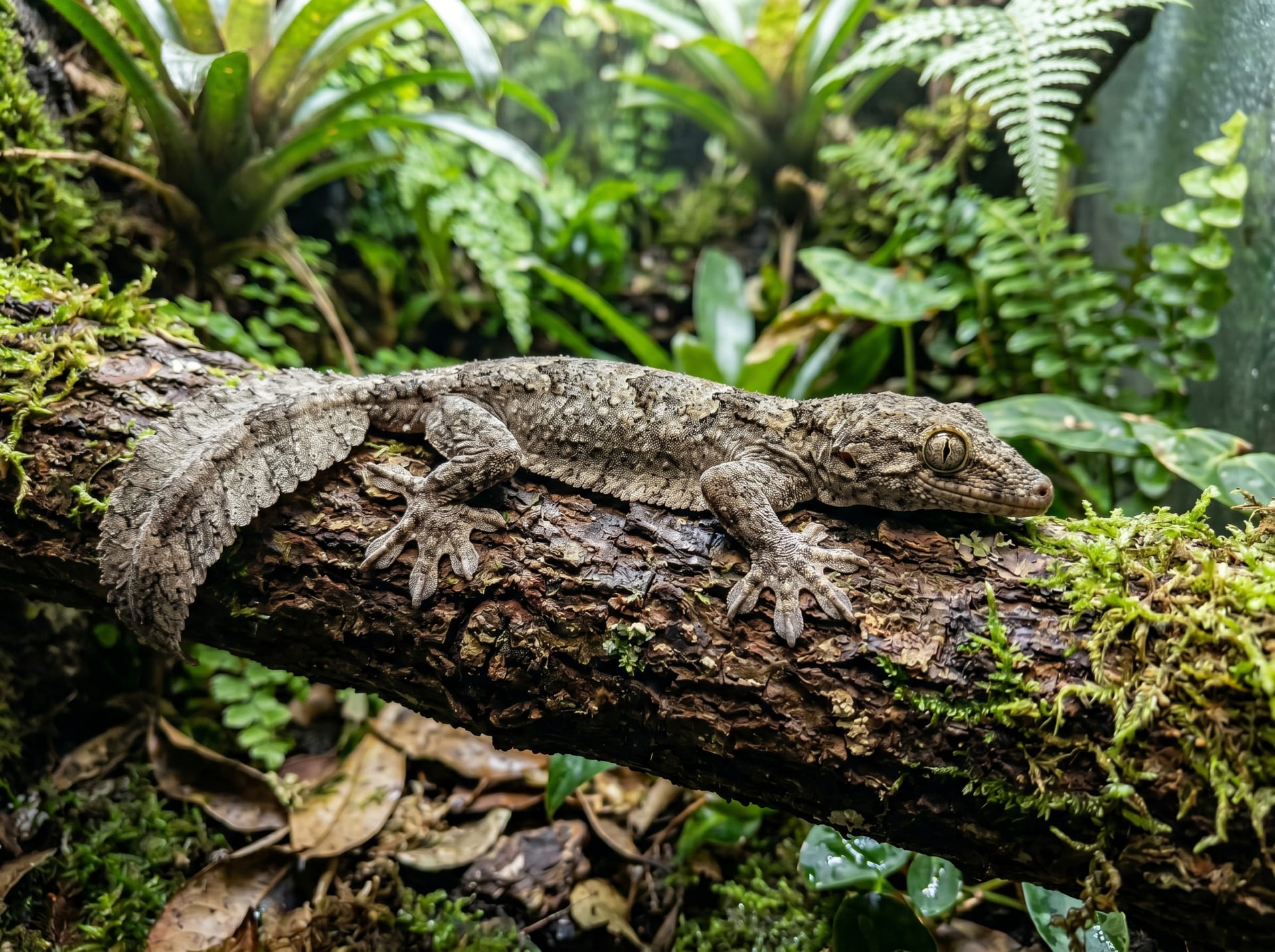
Flying Gecko
The flying gecko is a striking species known for the skin flaps along its body, limbs, and tail that let it glide between trees. Its flattened body and bark-like patterning give it exceptional camouflage, so it often looks like a piece of tree bark rather than an animal. Nocturnal and generally calm, it tends to prefer being observed over being handled, making it a rewarding gecko for keepers who enjoy watching natural behavior. Because it favors vertical movement, a tall enclosure with bark-textured hides helps it feel secure and display its instincts. With its dramatic appearance and fascinating gliding adaptation, it's a popular choice among reptile enthusiasts.
View Flying Gecko encyclopedia →0% commission on your first sales!Register by September 30, 2026 and your first 2 sales are commission-free!
Breeder Wanted!
List on BreederDirect and sell directly to customers nationwide!
6 Transparency Promises from Br-Choku
Every Reptiles & Amphibians from verified Breeder breeders includes complete information: morph, genetics, feeding requirements, and temperament details.
- Morph Information
- Actual Photos
- Feeding Information
- Temperament Information
- Genetics Information
- Age (Months)
Browse all 280 breeds
Difficulty Level
Feeding Type
Temperament
Verified breeders wanted for Reptiles & Amphibians
Breeders are signing up now ahead of launch. Subscribe to be notified when new listings go live.
Getting alerts is free with a member account. When new listings match your saved search, we'll notify you by email and in-app.
Browse other categories
Verified breeders (preview)
Are you raising reptiles & amphibians?
Register as a breeder and connect with buyers directly.
Apply as a breederFlying Gecko key facts
- Care level
- Intermediate
- Lifespan
- 5-8 years
- Size
- 15-20cm
- Temperature
- 24〜28℃
- Humidity
- 70〜80%
- Diet
- Insects
- Housing
- Set up a tall enclosure with bark-like hides such as cork bark. It rests camouflaged against bark, so provide plenty of surfaces to cling to.
- Temperature & Humidity
- Maintain 24-28°C and high humidity of 70-80%. Mist regularly and never let the enclosure dry out.
- Diet & Feeding
- Nocturnal, feeding on insects and small arthropods. Dust crickets and similar with calcium and offer them in the evening or later.
- Notes
- Nervous, not suitable for handling
About Flying Gecko
Flying gecko care guide: a bark-mimicking, gliding species. Adult size 15-20cm, lifespan 5-8 years, best suited to intermediate keepers.
7 things to know before welcoming a Flying Gecko
1Needs a Tall Enclosure
Flying geckos are arboreal and spend most of their time climbing vertical surfaces. Choose a tall enclosure over a wide one, and add climbing branches with several bark-textured hides.
2A Master of Camouflage
Their bark-like coloring lets them stay motionless and nearly invisible against tree bark. Many individuals are shy, so this species suits an observation-focused keeping style rather than frequent handling.
3Primarily an Insectivore
Their diet centers on insects such as crickets, offered at night to match their nocturnal activity. Dusting feeder insects with a calcium supplement helps round out their nutrition.
4Humidity Is Key
Coming from tropical rainforest habitats, they prefer relatively high humidity. Regular misting helps maintain moisture, but good airflow is equally important to prevent stagnant, overly damp conditions.
5Nocturnal Lifestyle
They rest quietly in their hides during the day and become active after dark. Not seeing them during daytime hours is normal behavior, not necessarily a sign of a problem.
6Delicate, Thin Skin
Their thin body and delicate skin mean rough handling can easily cause injury. Keep handling to a minimum and check the enclosure for any sharp edges on decor.
7Why It Suits Intermediate Keepers
Managing humidity, temperature, and enclosure layout together, while handling a delicate-bodied animal with care, is why this species is considered better suited to intermediate keepers. Prior experience with reptile husbandry basics is recommended before bringing one home.
Frequently asked questions about Flying Gecko
- Q.Can flying geckos really fly?
- A.Not exactly — they glide rather than fly. By spreading the skin flaps along their body and toes, they use air resistance to glide from a higher point to a lower one, rather than flapping to gain lift.
- Q.Can I handle my flying gecko?
- A.Because their body is thin and delicate, frequent handling isn't recommended. Many individuals are also shy by nature, so it's best to enjoy them mainly through observation.
- Q.What should I keep in mind for enclosure layout?
- A.Since they're arboreal, choose a tall enclosure over a wide one. Adding climbable branches and several bark-textured hides that match their coloring helps them settle in comfortably.
- Q.How big do they get and how long do they live?
- A.Adults typically reach about 15-20cm in length. Their lifespan is generally around 5-8 years, so it's worth planning care with that timeframe in mind.
- Q.Are any permits required to keep a flying gecko?
- A.The flying gecko is not listed under CITES. Before bringing one home, focus on preparing the basics such as enclosure setup and food.
Useful tools for Flying Gecko care
Learn more about Flying Gecko in the encyclopedia
View Flying Gecko encyclopedia entry →
Care difficulty, lifespan, size and diet — all basics covered.
More in this category
Can't find the one you're looking for?
Post your wishes for free and breeders with matching animals will contact you with introductions.