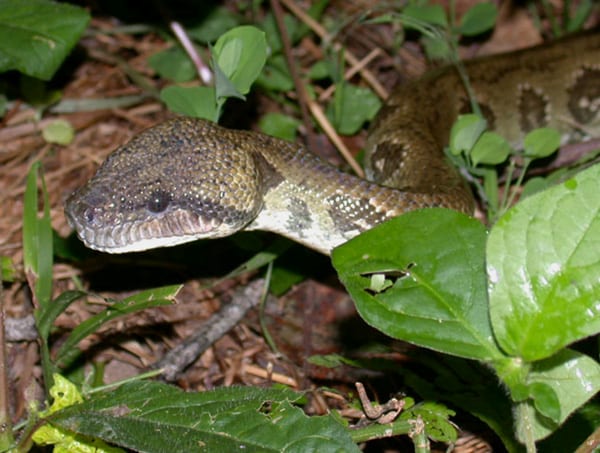
 © Tom Junek / CC BY-SA 3.0
Madagascar Tree Boa
The Madagascar Tree Boa, often called Sanzinia by hobbyists, is an arboreal boa native to the waterside forests of eastern Madagascar. Rows of heat-sensing pits along its upper and lower lips let it detect prey with precision even in total darkness. Hatchlings are strikingly red, gradually shifting to green or brown tones as they mature — a transformation many keepers find fascinating. Between its striking looks and its need for careful humidity control and generous vertical space, this snake is best suited to experienced keepers rather than first-time reptile owners.
View Madagascar Tree Boa encyclopedia →0% commission on your first sales!Register by September 30, 2026 and your first 2 sales are commission-free!
Breeder Wanted!
List on BreederDirect and sell directly to customers nationwide!
6 Transparency Promises from Br-Choku
Every Reptiles & Amphibians from verified Breeder breeders includes complete information: morph, genetics, feeding requirements, and temperament details.
- Morph Information
- Actual Photos
- Feeding Information
- Temperament Information
- Genetics Information
- Age (Months)
Browse all 280 breeds
Difficulty Level
Feeding Type
Temperament
Verified breeders wanted for Reptiles & Amphibians
Breeders are signing up now ahead of launch. Subscribe to be notified when new listings go live.
Getting alerts is free with a member account. When new listings match your saved search, we'll notify you by email and in-app.
Browse other categories
Verified breeders (preview)
Are you raising reptiles & amphibians?
Register as a breeder and connect with buyers directly.
Apply as a breederMadagascar Tree Boa key facts
- Care level
- Advanced
- Lifespan
- 15-20 years
- Size
- 122-152cm, with 183-213cm specimens not uncommon
- Diet
- Thawed frozen mice and rats
- Temperature & Humidity
- It is an adaptable snake whose range in eastern Madagascar spans rainforest, cooler uplands and coastal country, always favouring the vicinity of water. Provide a thermal gradient and fairly high humidity, and adjust from measured readings rather than assumptions.
- Enclosure
- It is arboreal, living in trees and shrubs near water. Fit horizontal branches of varying thickness up to the top of the enclosure, giving several places where it can coil and rest. Since some individuals exceed 2 m, it needs both floor space to stretch out and substantial height.
- Diet & Feeding
- In the wild it takes bats, birds and other small mammals, and will leave the trees to hunt on the ground. In captivity offer thawed frozen mice or rats sized to the snake. It locates prey by heat through its labial pits, so warm the food thoroughly and present it on long tongs.
- Temperament
- Nocturnal, spending the day coiled on a branch. Keep it singly: wild males fight hard in the breeding season, and in the confines of a vivarium such fights can end in serious injury or death.
- Notes
- Listed on CITES Appendix I since 4 February 1977. In Japan it is a designated internationally endangered species, so transfer and display require a registration certificate under the Species Conservation Act. The IUCN Red List classified it as Vulnerable in 2006 but now assesses it as Least Concern, being widespread and under no known major threat. The population from Nosy Komba was separated in 2014 as Sanzinia volontany, though the split is disputed for lacking morphological characters, so the two cannot reliably be told apart by appearance; check locality and the scientific name on registration documents.
About Madagascar Tree Boa
Sanzinia, the Madagascar Tree Boa, is an arboreal species from eastern Madagascar's waterside forests, known for heat-sensing lip pits and a striking color change from red hatchling to green or brown adult. An advanced-keeper species.
7 things to know before welcoming a Madagascar Tree Boa
1Tall, Spacious Enclosure
This species is strongly arboreal and prefers climbing to crawling, so a tall enclosure matters more than floor space. Provide several sturdy branches or driftwood pieces where it can coil comfortably.
2High Humidity Needs
Originating from humid waterside forests in eastern Madagascar, this boa prefers relatively high humidity. Mist the enclosure regularly or use a humidifier to avoid dry spells, and keep humidity levels consistent.
3Heat-Sensing Lip Pits
Rows of pits along the upper and lower lips detect the body heat of prey, letting the snake gauge distance accurately even in darkness. This sense organ makes for fascinating nighttime activity.
4Dramatic Color Change With Age
Hatchlings display a vivid red coloration that gradually shifts to green or brown tones as they mature. Watching this transformation unfold over the years is one of the species' unique rewards.
5Best Suited to Experienced Keepers
Because it demands careful temperature and humidity control along with confident handling, this is generally not recommended for first-time reptile keepers. Prior experience with other boas or pythons is a strong advantage.
6Handle With a Calm, Steady Approach
Some individuals can be defensive and may bite if startled, so slow, deliberate movements are important when interacting with them. Avoid frequent handling and let the snake acclimate at its own pace.
7Set Up the Habitat Before Bringing One Home
Set up a tall enclosure with heating equipment, a hygrometer, and climbing branches in advance, and let temperature and humidity stabilize before bringing your snake home. Also plan ahead for appropriately sized prey, such as mice, matched to its growth stage.
Frequently asked questions about Madagascar Tree Boa
- Q.Can beginners keep a Madagascar Tree Boa?
- A.This species requires specialized knowledge of humidity control and handling, so it is considered suitable for experienced keepers. It's best to gain reptile-keeping experience before taking one on.
- Q.Does its color really change as it grows?
- A.Yes. Hatchlings are bright red, and the color gradually shifts to green or brown as they mature. The exact timing and shade vary by individual, making the change enjoyable to watch over time.
- Q.How big does it grow?
- A.Adults typically reach around 122 to 152 cm, though individuals of 183 to 213 cm are not uncommon. Choose an enclosure with your snake's eventual adult size in mind.
- Q.Is it nocturnal, or active during the day too?
- A.Thanks to its heat-sensing pits, it can locate prey in darkness and tends to be most active at night and dusk. During the day it usually stays still, tucked among branches or foliage.
- Q.What should I feed a Madagascar Tree Boa?
- A.Rodents such as mice, sized appropriately for the snake, are the typical diet. Adjust prey size and feeding frequency as the snake grows.
Useful tools for Madagascar Tree Boa care
Learn more about Madagascar Tree Boa in the encyclopedia
View Madagascar Tree Boa encyclopedia entry →
Care difficulty, lifespan, size and diet — all basics covered.
More in this category
Can't find the one you're looking for?
Post your wishes for free and breeders with matching animals will contact you with introductions.