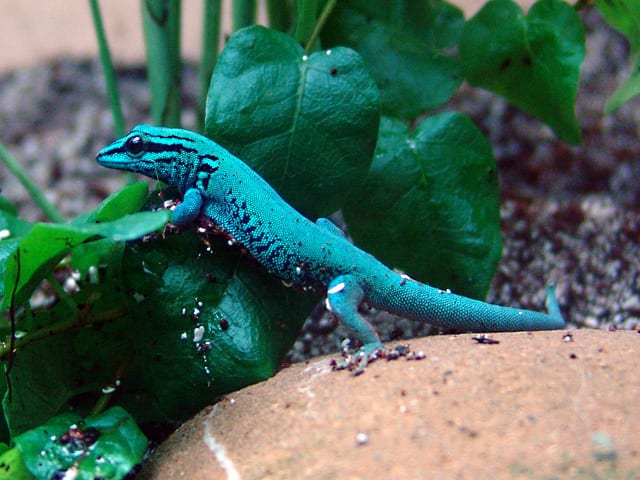
 © Esther Böck; AnimalBase.info / CC BY-SA 3.0
Electric Blue Gecko
The Electric Blue Gecko is a small, diurnal gecko species, typically 7 to 9 cm in length, prized for the vivid turquoise-blue coloration that mature males develop. Females and juveniles wear a more subdued bronze-to-olive tone, making the males' transformation into brilliant blue one of the species' standout traits. Quick and agile, these geckos are active climbers that spend much of their time in the trees. Found only in a small pocket of forest in Tanzania, the species is considered critically endangered by the IUCN. Because of its delicate build and specific care needs, it's generally recommended for experienced reptile keepers rather than beginners.
View Electric Blue Gecko encyclopedia →0% commission on your first sales!Register by September 30, 2026 and your first 2 sales are commission-free!
Breeder Wanted!
List on BreederDirect and sell directly to customers nationwide!
6 Transparency Promises from Br-Choku
Every Reptiles & Amphibians from verified Breeder breeders includes complete information: morph, genetics, feeding requirements, and temperament details.
- Morph Information
- Actual Photos
- Feeding Information
- Temperament Information
- Genetics Information
- Age (Months)
Browse all 280 breeds
Difficulty Level
Feeding Type
Temperament
Verified breeders wanted for Reptiles & Amphibians
Breeders are signing up now ahead of launch. Subscribe to be notified when new listings go live.
Getting alerts is free with a member account. When new listings match your saved search, we'll notify you by email and in-app.
Browse other categories
Verified breeders (preview)
Are you raising reptiles & amphibians?
Register as a breeder and connect with buyers directly.
Apply as a breederElectric Blue Gecko key facts
- Care level
- Advanced
- Lifespan
- 5-8 years
- Size
- 7-9cm total length; some sources give about 7.6cm for males and 6.4-7cm for females
- Temperature
- Humidity
- 60〜80%
- Diet
- Fruit flies, micro crickets and other small insects, plus nectar and fruit
- Temperature & Humidity
- Create a localised basking spot of 32-35C, with the top of the enclosure at 27-29C and daytime ambient at 24-27C. Simply switching off heat and lights lets the temperature fall to 16-26C overnight, which is fine. Hold humidity at 60-80 per cent, keeping the floor more humid than the top. Rising to near 100 per cent after lights out is harmless, but because the gecko is so small, dry conditions dehydrate it rapidly.
- Enclosure
- A tall front-opening enclosure of about 30 x 30 x 30 cm, roughly 8 gallons, is the usual guide for one adult. Reproduce the screwpine leaf crown with slender leaves and vertical branches set at several heights so the gecko can choose its temperature. Lay 5 to 8 cm of moisture-retentive substrate and plant live plants watered several times a week to stabilise humidity. It is tiny and escapes easily, so watch every gap around openings.
- Diet & Feeding
- It takes nectar and fruit as well as insects. Its very small size makes finding suitably sized prey a challenge, so provide fruit flies and micro crickets that fit its mouth, optionally alongside a prepared fruit-based gecko diet. Dust feeders with calcium.
- Temperament
- It is diurnal, and well-coloured males perch conspicuously, but it is too small and delicate for handling. Males fight fiercely and must not be housed together. In the wild each leaf crown holds one animal or a pair, so keep it singly or in pairs.
- Notes
- It has been listed on CITES Appendix I since 2 January 2017. Under Japan's Species Conservation Act it is an internationally endangered species, and transferring one within Japan requires an individual registration certificate; trading or transferring an unregistered animal breaches that Act. It is neither a specified animal nor an invasive alien species under Japanese law. Its eggs show temperature-dependent sex determination, with daytime averages of 21-24C producing females, 26-27C producing both sexes and 28C or above producing males, hatching in 60 to 120 days. Captive breeding does occur, but rearing the young is demanding and no large-scale production is established. Illegally wild-caught animals have been reported sold as captive-bred, so always check the registration certificate and the origin.
About Electric Blue Gecko
The Electric Blue Gecko is a small, 7-9 cm gecko species whose males develop vivid turquoise-blue coloration. Native to a limited forest area in Tanzania, it's a rare species suited to experienced keepers.
7 things to know before welcoming a Electric Blue Gecko
1Only Males Turn Blue
The gecko's striking turquoise-blue color appears only in mature males. Females and juveniles have a more subdued bronze-to-olive tone, which is completely normal rather than a sign of poor health. When choosing an individual, it helps to understand that coloration varies by sex and age.
2Set Up a Tall, Arboreal Terrarium
In the wild, this species lives in trees, so a tall enclosure with climbing branches and plants matters more than floor space. Providing multiple hiding spots also helps reduce stress.
3Quick and Skittish by Nature
This gecko is fast-moving and easily startled. It's best kept as a species to observe rather than handle regularly, so sudden movements or bright light should be avoided during care.
4Feed Small Insects and Supplements
Because of its small size, feed appropriately sized insects such as fruit flies or small crickets, dusted with calcium and vitamin supplements. Some individuals also enjoy fruit-based nectar products in addition to insects.
5Delicate Temperature and Humidity Needs
Recreating the humid forest conditions of its native habitat requires maintaining proper humidity and a temperature gradient. Excessive dryness can lead to shedding problems, so regular misting and monitoring with a hygrometer are essential.
6Best Kept Individually or in Pairs
Males are territorial and will fight if housed together, so they should never be kept with other males. If keeping multiple geckos, one male with several females is the standard grouping, and the enclosure needs enough space and hiding spots for everyone.
7Choose Responsibly Sourced Individuals
This species is found only in a small pocket of forest in Tanzania and is classified as critically endangered by the IUCN. Choosing captive-bred individuals helps reduce pressure on the remaining wild population.
Frequently asked questions about Electric Blue Gecko
- Q.Do all individuals turn bright blue?
- A.No, only mature males develop the vivid turquoise-blue color. Females and juveniles have a normal bronze-to-olive coloration.
- Q.Is this gecko suitable for beginners?
- A.It's generally considered a species for experienced keepers, since it requires careful management of temperature, humidity, and feeding. Prior reptile-keeping experience is recommended before taking one on.
- Q.How big does this gecko get as an adult?
- A.It's a small species, reaching about 7 to 9 cm in total length. Some sources report males around 7.6 cm and females around 6.4 to 7 cm.
- Q.Can multiple geckos be kept together?
- A.Males are territorial and shouldn't be housed together, as they tend to fight. If keeping a group, the standard approach is one male with several females.
- Q.Is this species regulated under CITES?
- A.Electric Blue Gecko is listed in CITES Appendix I. In Japan it is an "internationally endangered species" under the Act on Conservation of Endangered Species of Wild Fauna and Flora, so only registered individuals may be sold or transferred, and the registration certificate goes with the animal. Always check that the certificate is provided.
Useful tools for Electric Blue Gecko care
Learn more about Electric Blue Gecko in the encyclopedia
View Electric Blue Gecko encyclopedia entry →
Care difficulty, lifespan, size and diet — all basics covered.
More in this category
Can't find the one you're looking for?
Post your wishes for free and breeders with matching animals will contact you with introductions.