Source: Wikimedia Commons
Electric Blue Gecko
AdvancedLygodactylus williamsi
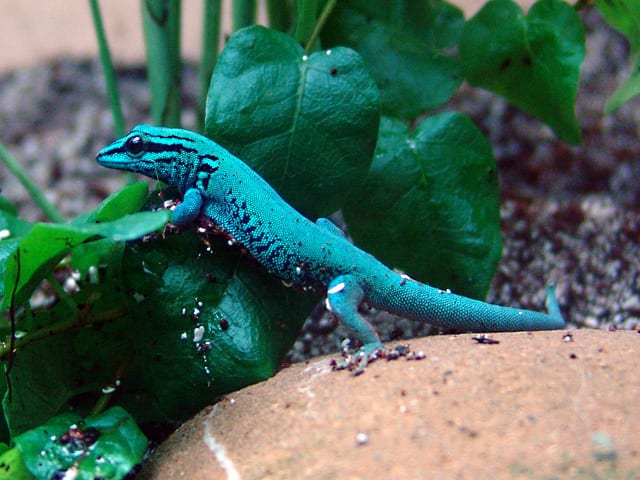
A small gecko of 7-9 cm in which adult males turn a brilliant turquoise blue. Endemic to a very small area of forest in Tanzania and found nowhere else, it is listed as Critically Endangered by the IUCN and is a species for experienced keepers.
Difficulty
Advanced
Lifespan
5-8 years
Size
7-9cm total length; some sources give about 7.6cm for males and 6.4-7cm for females
Humidity
60〜80%
Diet
Fruit flies, micro crickets and other small insects, plus nectar and fruit
About
Lygodactylus williamsi is a diurnal gecko of the family Gekkonidae endemic to a very small area of forest in eastern Tanzania. It is small at 7 to 9 cm and strongly sexually dimorphic: dominant adult males are a brilliant turquoise blue over the whole upper surface, with a broad black streak running from the nostril through the eye to the nape, while females and subordinate males remain greenish brown. In the wild it lives exclusively on the screwpine Pandanus rabaiensis, in the leaf crowns of large trees whose leaves exceed a metre in length; a single leaf crown typically holds one animal, or an adult pair with juveniles. It eats small insects and fruit, drinks water from the leaves and is fond of nectar. Its range covers only about 8 square kilometres at 170 to 480 m. Illegal collection for the international pet trade is the greatest threat, and habitat destruction follows from it, as collectors fell the screwpines to reach geckos in the leaf crests. The IUCN lists it as Critically Endangered, with the population thought to be declining rapidly.
Source: Wikipedia (CC BY-SA 4.0)
Lifespan of the Electric Blue Gecko
The Electric Blue Gecko lives 5-8 years.
Size of the Electric Blue Gecko
The Electric Blue Gecko grows to 7-9cm total length; some sources give about 7.6cm for males and 6.4-7cm for females.
Basic Info
Origin
About 8 square kilometres at 170-480 m in the foothills of the Uluguru Mountains in eastern Tanzania, including the Kimboza and Ruvu Forest Reserves
Lifespan
5-8 years
Care Specifications
Semi-aggressivePairBreeding: Hard
Sources: Reptiles Magazine: Electric Blue Gecko Care and Breeding Information / Reptiles Magazine: Essential Care for the Electric Blue Day Gecko / Wikipedia (English) / Reptile Database
References & Sources
Edited & verified by: BreederDirect editorial team
The taxonomic, regulatory, and husbandry data on this page are compiled and verified against the authoritative primary sources below.
Taxonomy & Authority
Accepted name: Lygodactylus williamsi Loveridge, 1952
Synonyms: Lygodactylus picturatus williamsi Loveridge, 1952
Authority databases: GBIF · Reptile Database
Nomenclature follows global taxonomic authority databases.
Regulations & Conservation Status
CITES Appendix IIUCN CR · Critically Endangered
Listed under Washington Convention Appendix I as of January 2, 2017. It qualifies as an internationally rare wild animal or plant species under the Act on Conservation of Endangered Species of Wild Fauna and Flora, and a registration certificate for each individual is required for domestic transfer or equivalent transactions. Sale or transfer of individuals without a registration certificate constitutes a violation of the Act. It is neither listed as a specified animal under the Ordinance for the Enforcement of the Act on the Welfare and Management of Animals, nor designated as a specified alien species under the Invasive Species Act.
Sources: CITES Appendices (Lygodactylus williamsi, Appendix I, effective 2 January 2017) / IUCN Red List
Regulations may change. Always verify the latest information with the relevant authorities.
Electric Blue Gecko Listings
Loading latest listingsFind listings for this species