Source: Wikimedia Commons
Chinese Crocodile Lizard
AdvancedShinisaurus crocodilurus
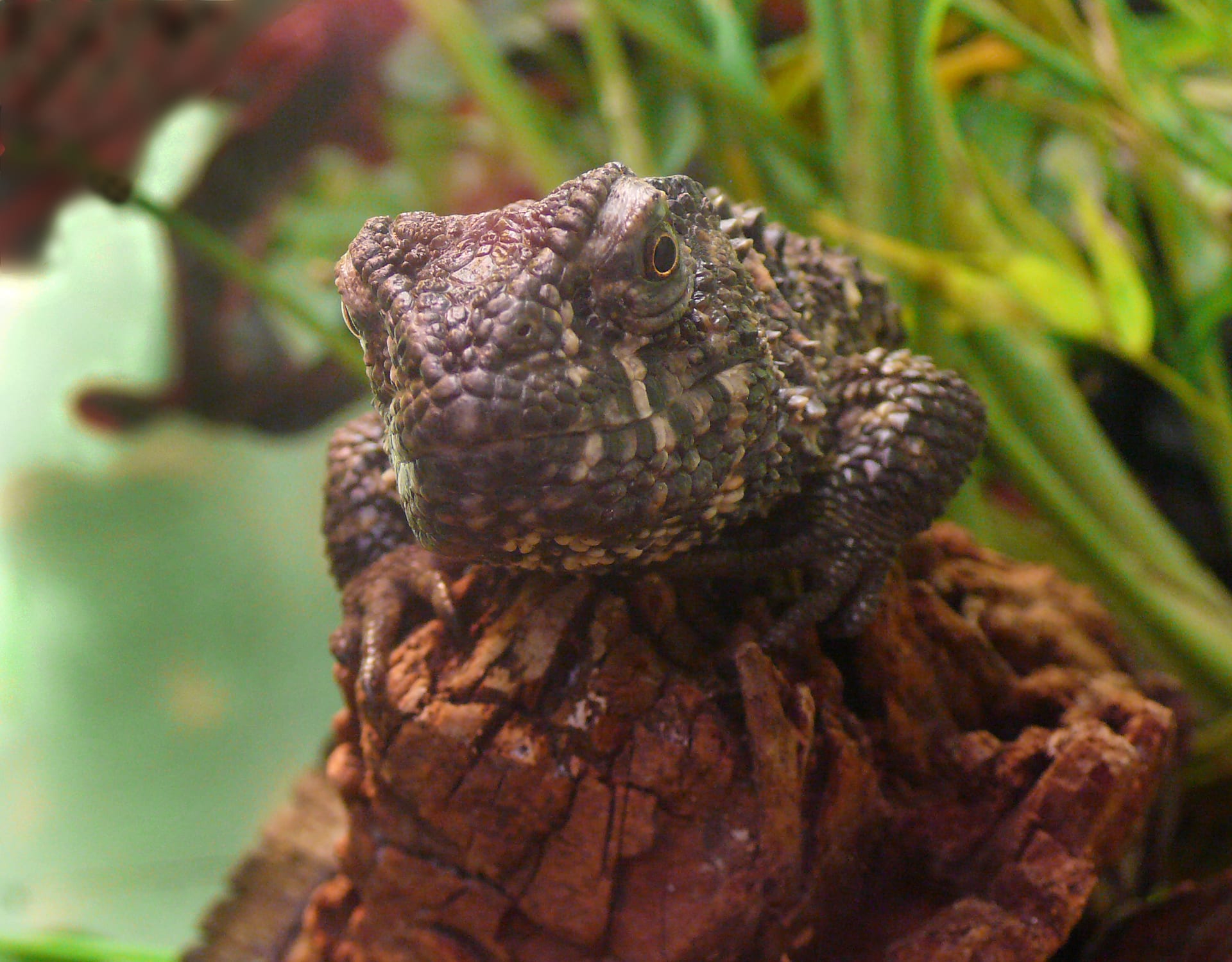
A semiaquatic lizard living along streams in southern China and north-eastern Vietnam. Rows of raised bony scales running down the back and tail recall a crocodile, and give the animal its name. It reaches 40-46 cm and is brown, some individuals marked with red or yellow.
Difficulty
Advanced
Lifespan
Well over 10 years in captivity; one imported male was estimated by its keeper at more than 15 years
Size
Total length 40-46cm, males slightly larger
Humidity
40〜70%
Diet
Carnivorous: insects, earthworms, tadpoles, small fish and frogs
About
The Chinese crocodile lizard (Shinisaurus crocodilurus) is a semiaquatic lizard confined to Guangxi and Guangdong in southern China and to north-eastern Vietnam. It is the only living species in the family Shinisauridae and the genus Shinisaurus, the survivor of a lineage whose fossil record reaches back to the Early Cretaceous more than 120 million years ago. It lives along streams in subtropical evergreen broadleaf forest at 200-760 m, basking on rocks and on branches overhanging the water and diving in to escape danger. That habit has earned it the local name luoshuigou, the dog that falls in the water, while its long motionless spells have given it the name dashuishe, the great sleeping snake. It is a sit-and-wait predator, taking insects, earthworms, tadpoles and small fish. Habitat destruction from dams and mining, bycatch from poison and electrofishing, and illegal collection for the pet trade have caused a steep decline, and the IUCN assesses it as Endangered.
Source: Wikipedia (CC BY-SA 4.0)
Lifespan of the Chinese Crocodile Lizard
The Chinese Crocodile Lizard lives Well over 10 years in captivity; one imported male was estimated by its keeper at more than 15 years.
Size of the Chinese Crocodile Lizard
The Chinese Crocodile Lizard grows to Total length 40-46cm, males slightly larger.
It is viviparous, with a gestation of about nine months and two to seven young born in April and May, each 10-15 cm long and weighing around 4 g.
Basic Info
Origin
Southern China (Guangxi, Guangdong, Guizhou and Hunan, although the Hunan population is believed extirpated) and north-eastern Vietnam (Bac Giang and Quang Ninh), along streams in subtropical evergreen broadleaf forest at 200-760 m
Care Specifications
Semi-aggressiveSolitaryBreeding: Very hard
Sources: Reptiles Magazine: Chinese Crocodile Lizard / Reptile Database: Shinisaurus crocodilurus / Wikipedia (Japanese): Chinese crocodile lizard / Wikipedia (English)
References & Sources
Edited & verified by: BreederDirect editorial team
The taxonomic, regulatory, and husbandry data on this page are compiled and verified against the authoritative primary sources below.
Taxonomy & Authority
Accepted name: Shinisaurus crocodilurus Ahl, 1930
Authority databases: GBIF · Reptile Database
Nomenclature follows global taxonomic authority databases.
Regulations & Conservation Status
CITES Appendix IIUCN EN · Endangered
Listed in Washington Convention Appendix I since January 2, 2017. Constitutes an international rare wild fauna and flora species under the Law for Conservation of Endangered Species of Wild Fauna and Flora; domestic transfer and equivalent transactions require individual registration certificates. Sale and transfer of individuals lacking registration certificates constitute violations of this law. Does not fall under the specified animals listed in the schedule of the Animal Welfare and Management Law Enforcement Ordinance, nor is it designated as a specified alien species under the Alien Species Act. Originally listed in Appendix II on January 18, 1990, it was transferred to Appendix I in 2017. In the People's Republic of China, it is designated as a Grade 1 Key Protected Wild Animal.
Sources: CITES Species+ (Shinisaurus crocodilurus, Appendix I, effective 2 January 2017) / IUCN Red List
Regulations may change. Always verify the latest information with the relevant authorities.
Chinese Crocodile Lizard Listings
Loading latest listingsFind listings for this species