Source: Wikimedia Commons
Madagascar Tree Boa
AdvancedSanzinia madagascariensis
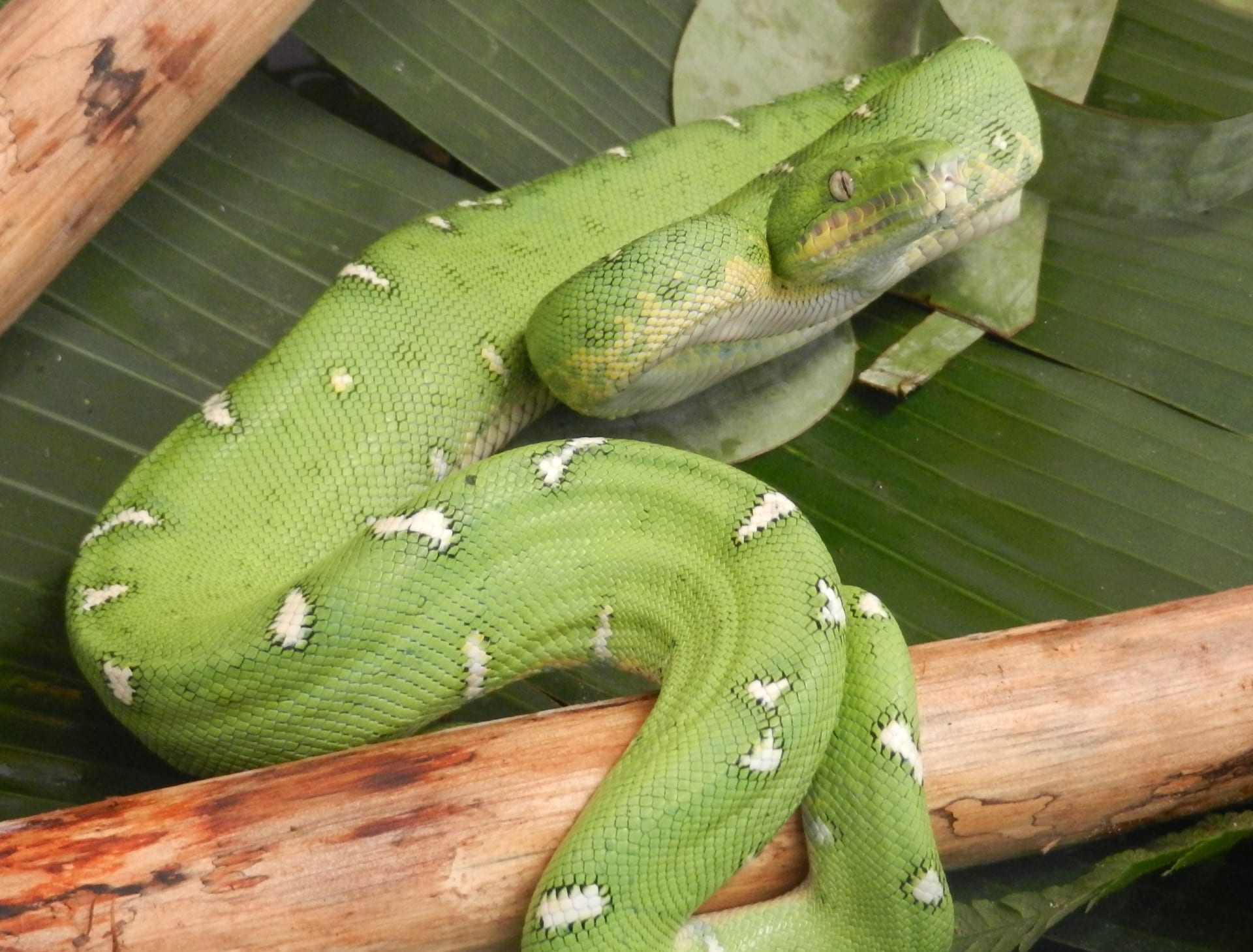
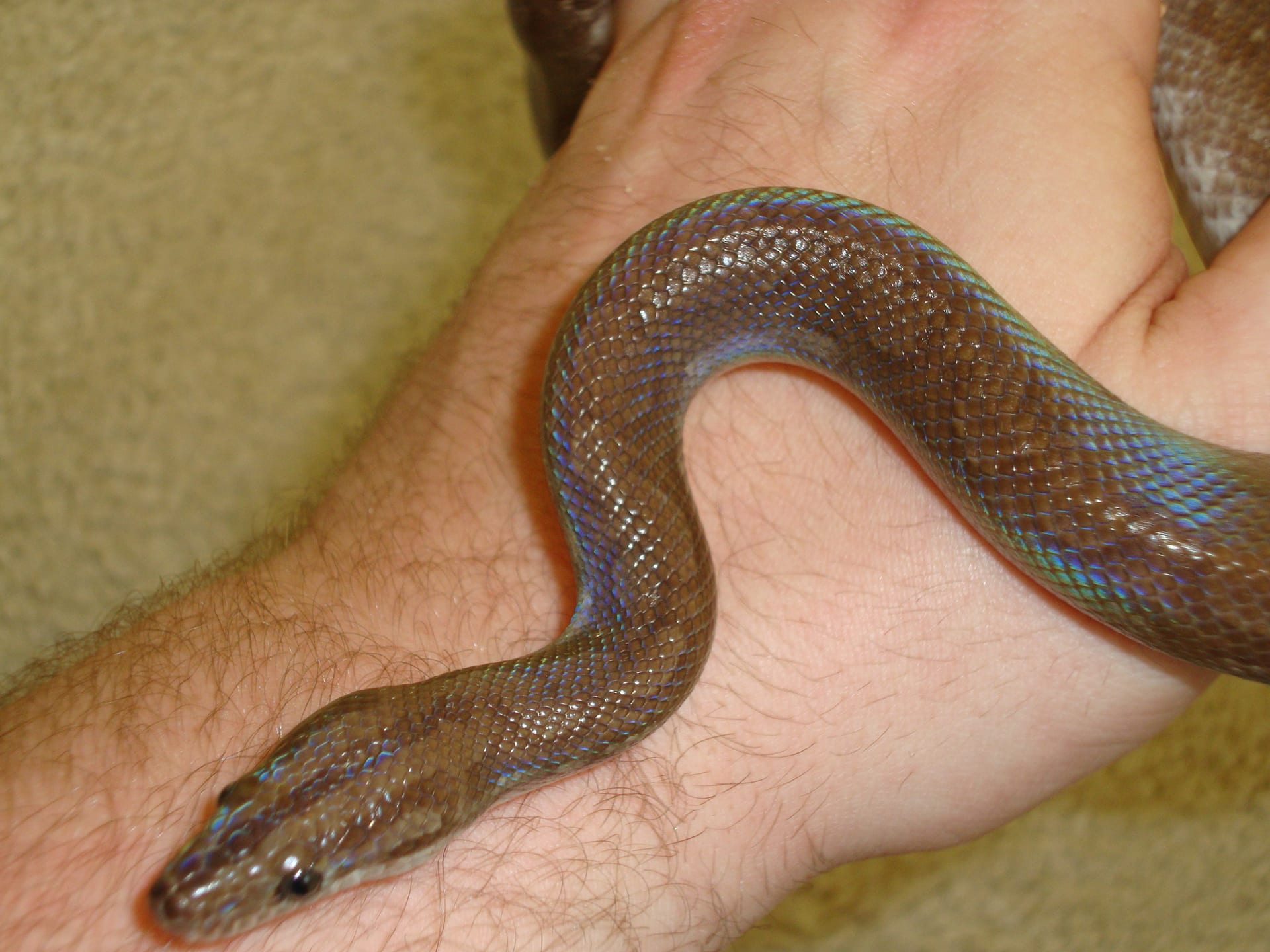
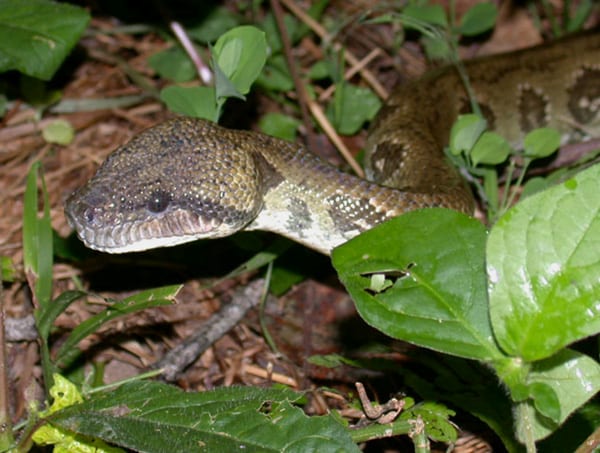
An arboreal boa endemic to eastern Madagascar. Heat-sensing pits along both lips let it find prey in complete darkness. Neonates are bright red and change to the green or brown of adults as they grow.
Difficulty
Advanced
Temperature
25〜32℃
Lifespan
15-20 years
Size
122-152cm, with 183-213cm specimens not uncommon
Humidity
40〜70%
Diet
Thawed frozen mice and rats
About
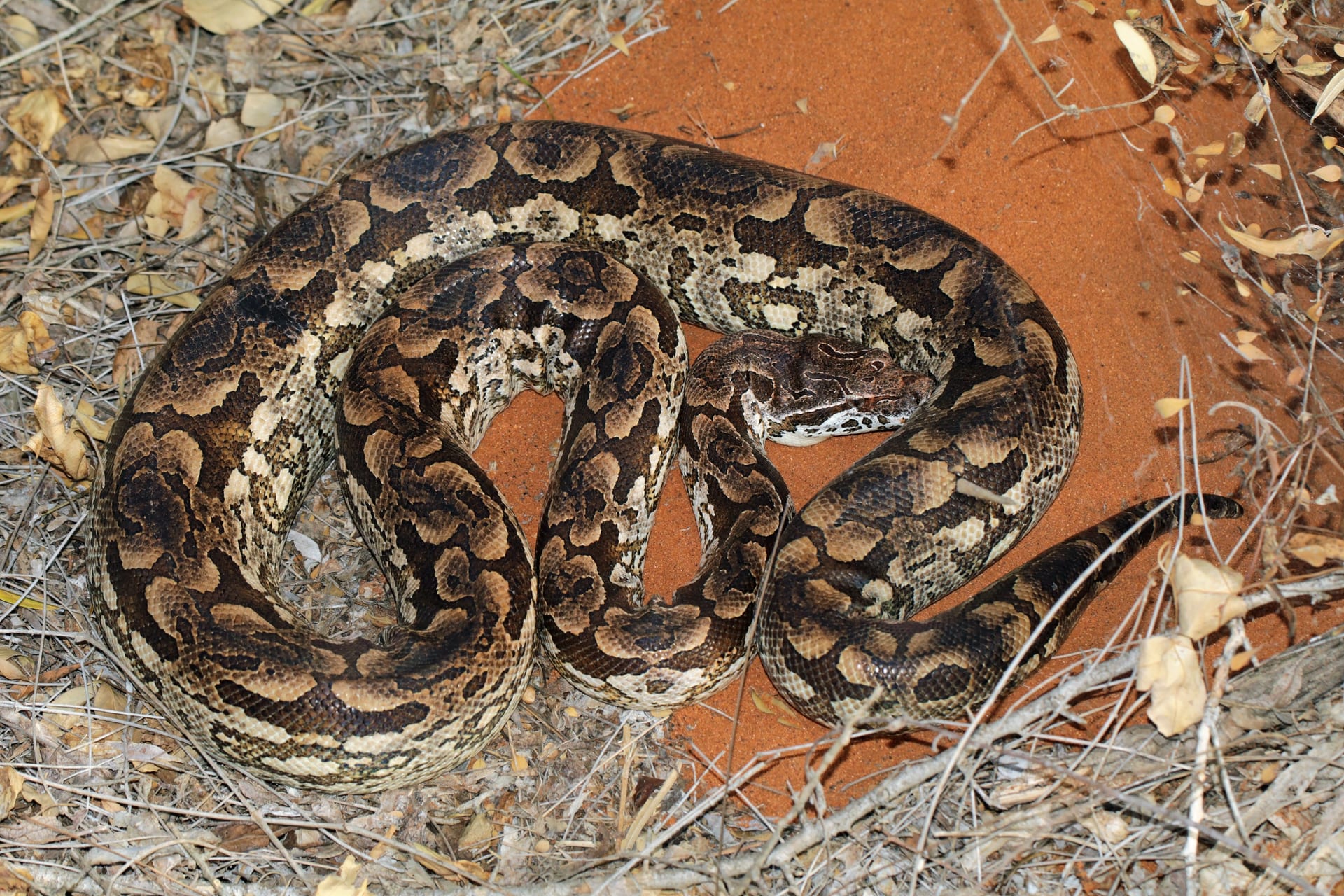
Sanzinia madagascariensis is a boid endemic to eastern Madagascar and Nosy Be. Adults average 122-152 cm, with 183-213 cm specimens not uncommon, and females grow larger than males. Heat-sensitive pits sit between the labial scales along both lips, letting it locate prey in complete darkness. Ground colour runs from dark green to blue-green in the north-east and towards beige and brown in the south-west, with irregular paler cross-bands along the body. It is arboreal and nocturnal, favouring trees and shrubs near streams, rivers, ponds and swamps, and feeds on bats, birds and small mammals, sometimes descending to hunt on the ground. It is ovoviviparous, bearing up to 12 young of about 38 cm. Gravid females darken, returning to normal colour at the shed after giving birth.
Source: Wikipedia (CC BY-SA 4.0)
Lifespan of the Madagascar Tree Boa
The Madagascar Tree Boa lives 15-20 years.
Size of the Madagascar Tree Boa
The Madagascar Tree Boa grows to 122-152cm, with 183-213cm specimens not uncommon.
Basic Info
Origin
Eastern Madagascar and Nosy Be, in trees and shrubs near streams, rivers, ponds and swamps
Lifespan
15-20 years
Size
122-152cm, with 183-213cm specimens not uncommon
Temperature
25〜32℃
Care Specifications
Semi-aggressiveSolitary
Sources: Wikipedia (English) / Wikipedia (German): Madagaskar-Hundskopfboa / Reptile Database
References & Sources
Edited & verified by: BreederDirect editorial team
The taxonomic, regulatory, and husbandry data on this page are compiled and verified against the authoritative primary sources below.
Primary sources
Taxonomy & Authority
Accepted name: Sanzinia madagascariensis (Duméril & Bibron, 1844)
Synonyms: Xiphosoma madagascariensis Duméril & Bibron, 1844, Corallus madagascariensis (Duméril & Bibron, 1844), Boa manditra Kluge, 1991
Authority databases: GBIF · Reptile Database
Nomenclature follows global taxonomic authority databases.
Regulations & Conservation Status
CITES Appendix IIUCN LC · Least Concern
Listed in Appendix I since February 4, 1977 (Species+). As an Appendix I species, it constitutes an internationally rare wild fauna and flora species in Japan, and a registration certificate based on the Species Conservation Law is required for transfer, delivery, or exhibition. This species is not included in the designated animals listed in the Ordinance for the Enforcement of the Law Concerning the Protection and Management of Animals.
Sources: CITES Appendices (Sanzinia madagascariensis, Appendix I, effective 4 February 1977) / IUCN Red List / Act on Conservation of Endangered Species of Wild Fauna and Flora (registration of internationally endangered species)
Regulations may change. Always verify the latest information with the relevant authorities.
Madagascar Tree Boa Listings
Loading latest listingsFind listings for this species