Source: Wikimedia Commons
Colombian Rainbow Boa
IntermediateEpicrates maurus
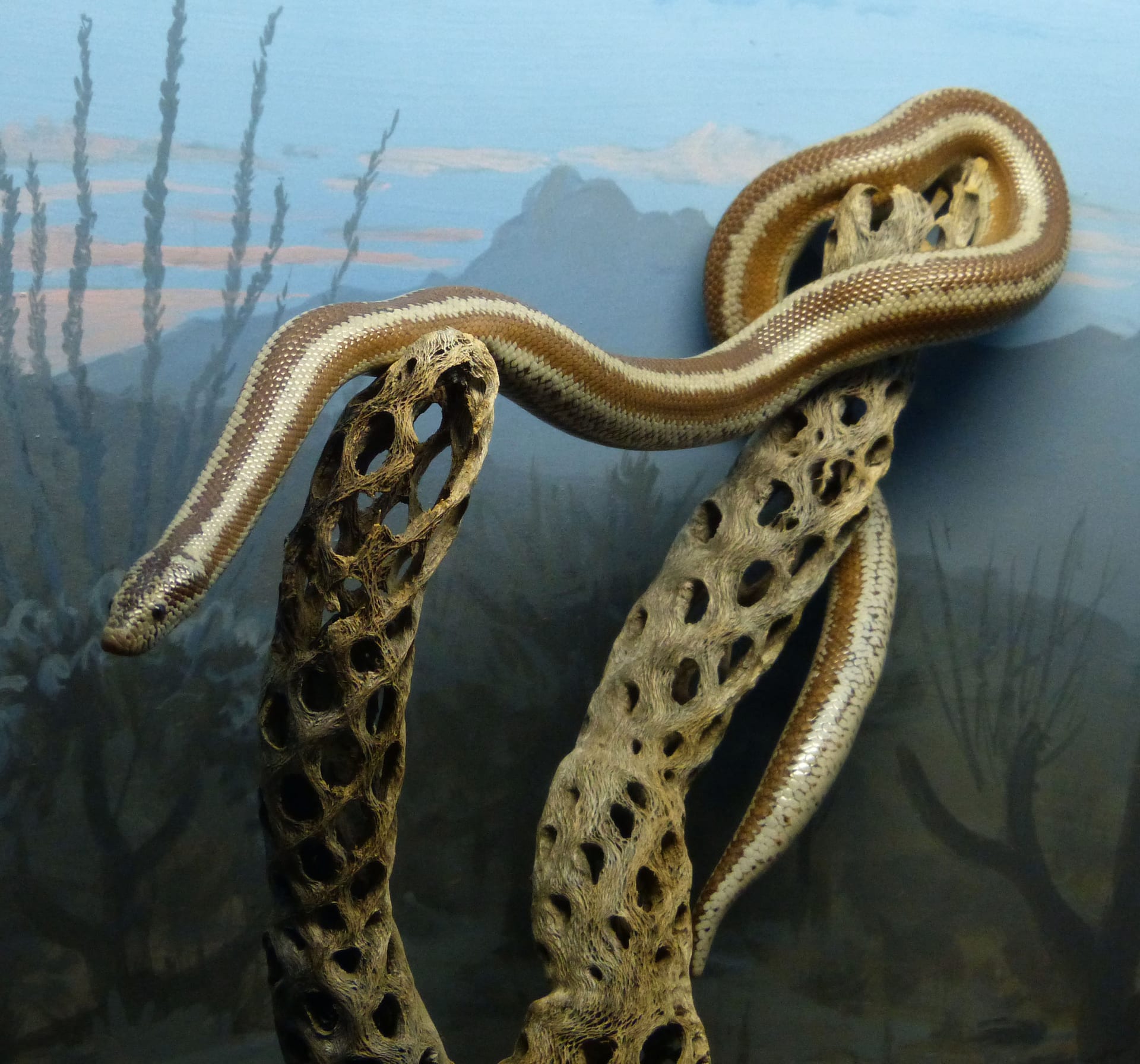
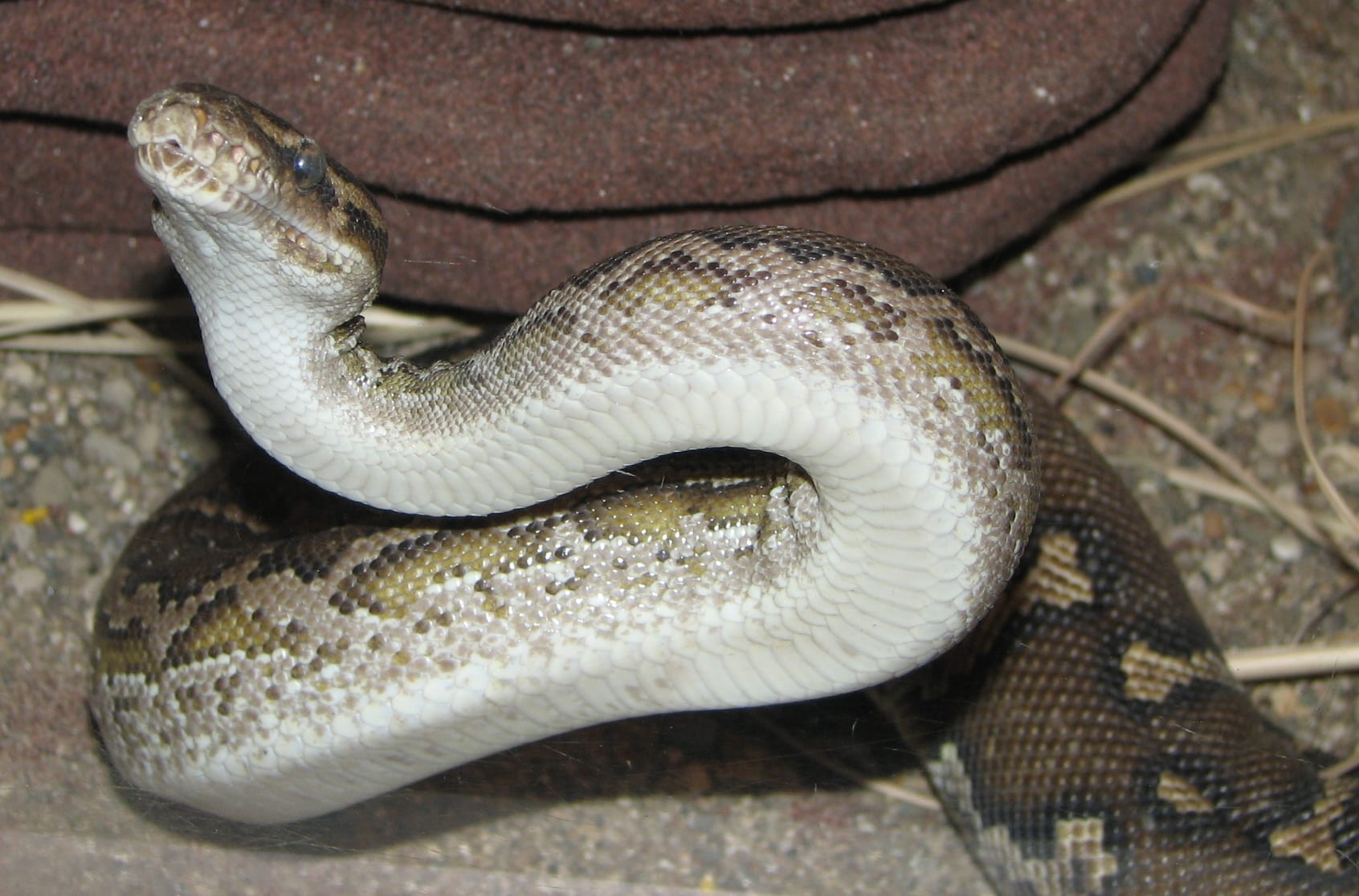
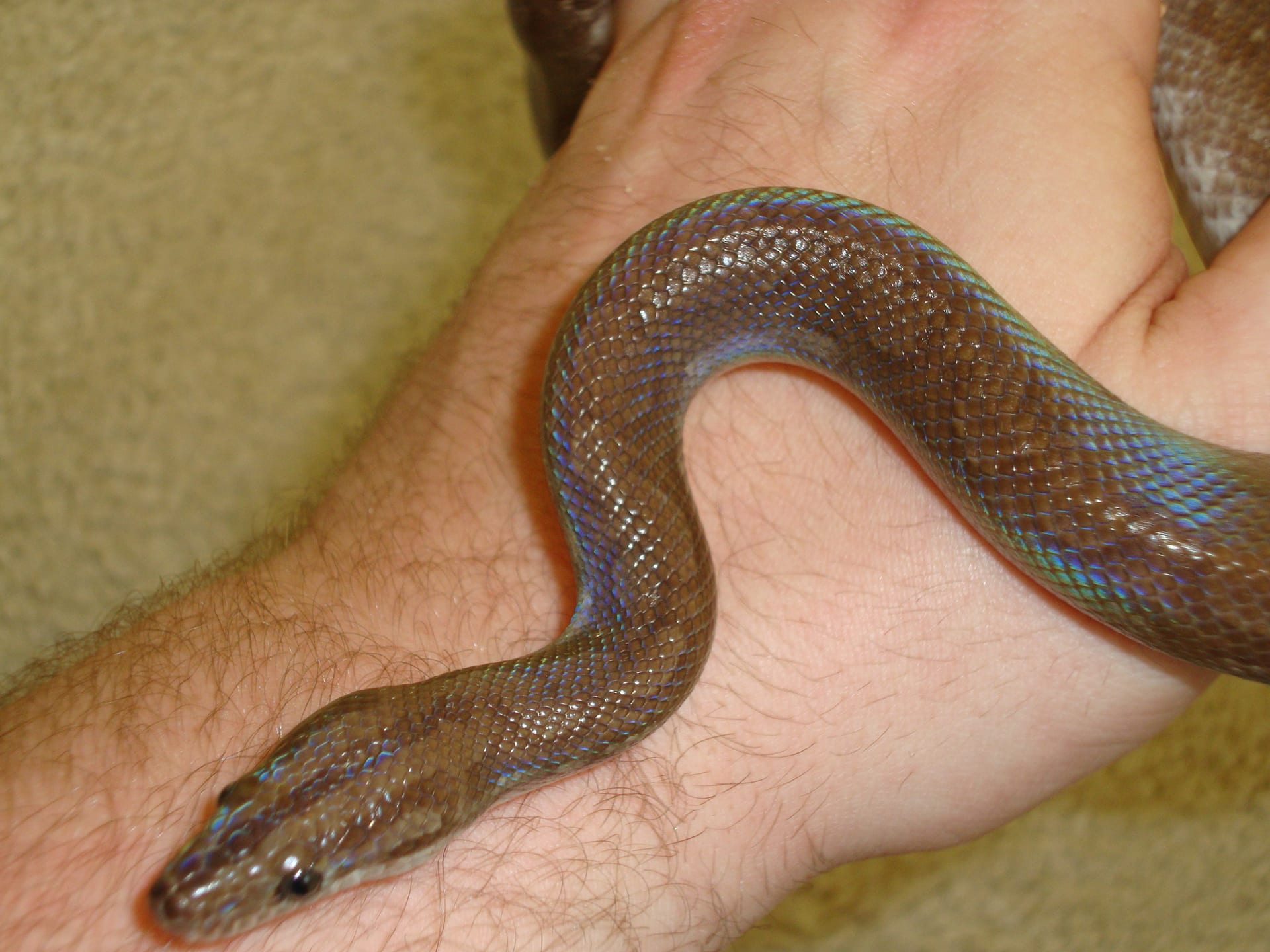
The smallest rainbow boa, ranging from southern Central America into northern South America. Dark-edged rings with pale centres mark a uniform brown ground, and the scales shimmer iridescent in sunlight. At night the animal pales to an almost silver tone.
Difficulty
Intermediate
Temperature
21〜29℃
Lifespan
Over 20 years in captivity
Size
90-180cm
Humidity
50〜70%
Diet
Mice and rats, frozen-thawed
About
Epicrates maurus is a non-venomous boid ranging from southern Central America through Trinidad and Tobago into northern South America, and is the smallest of the rainbow boas. It averages 90-150 cm, while E. m. colombianus, the subspecies that dominates the trade, reaches 150-180 cm and matures at four to six years. Females are clearly larger than males. The ground colour is a uniform brown with dark-edged rings whose pale centres form saddles, and in sunlight the scales shimmer with the iridescence that gives the group its name. Through metachrosis the animal changes colour between day and night, paling to an almost silver tone after dark. It is semi-arboreal, climbing trees and shrubs as a juvenile to forage and avoid predators but becoming largely terrestrial with age. It is nocturnal and most active in the middle of the night. In captivity it is extremely sensitive to temperatures above 32 C, so a thermostat is essential. It tolerates lower humidity and cooler nights than its relatives, which makes it the easier rainbow boa to keep.
Source: Wikipedia (CC BY-SA 4.0)
Lifespan of the Colombian Rainbow Boa
The Colombian Rainbow Boa lives Over 20 years in captivity.
Size of the Colombian Rainbow Boa
The Colombian Rainbow Boa grows to 90-180cm.
Temperature & humidity for the Colombian Rainbow Boa
The ideal temperature for the Colombian Rainbow Boa is 21〜29℃. Ideal humidity is 50〜70%.
Basic Info
Origin
Southern Central America, Trinidad and Tobago, and northern South America, from rainforest to drier coastal clearings
Care Specifications
Semi-aggressiveSolitaryBreeding: Moderate
Sources: Reptiles Magazine: Colombian Rainbow Boa / Reptiles Magazine: Rainbow Boa Care Sheet / ReptiFiles: Brazilian Rainbow Boa Care / Wikipedia (English)
References & Sources
Edited & verified by: BreederDirect editorial team
The taxonomic, regulatory, and husbandry data on this page are compiled and verified against the authoritative primary sources below.
Primary sources
Taxonomy & Authority
Accepted name: Epicrates maurus Gray, 1849
Synonyms: Epicrates cenchria maurus Gray, 1849, Epicrates maurus colombianus Matz, 2005, Epicarsius cupreus Fischer, 1856
Authority databases: GBIF · Reptile Database
Nomenclature follows global taxonomic authority databases.
Regulations & Conservation Status
CITES Appendix IIIUCN LC · Least Concern
Listed in CITES Appendix II as Boidae spp. since February 4, 1977 (Species+). As an Appendix II species, registration certificates for international rare wildlife are not required. Among boid snakes designated as designated animals in the Animal Protection and Management Act Enforcement Order, only two species—boa constrictors and green anacondas—are regulated, and this species does not qualify.
Sources: CITES Appendices (ボア科 Boidae spp. 附属書II) / IUCN Red List / Order for Enforcement of the Act on Welfare and Management of Animals, Appended Table
Regulations may change. Always verify the latest information with the relevant authorities.
Colombian Rainbow Boa Listings
Loading latest listingsFind listings for this species