Source: Wikimedia Commons
Yellow Anaconda
AdvancedEunectes notaeus
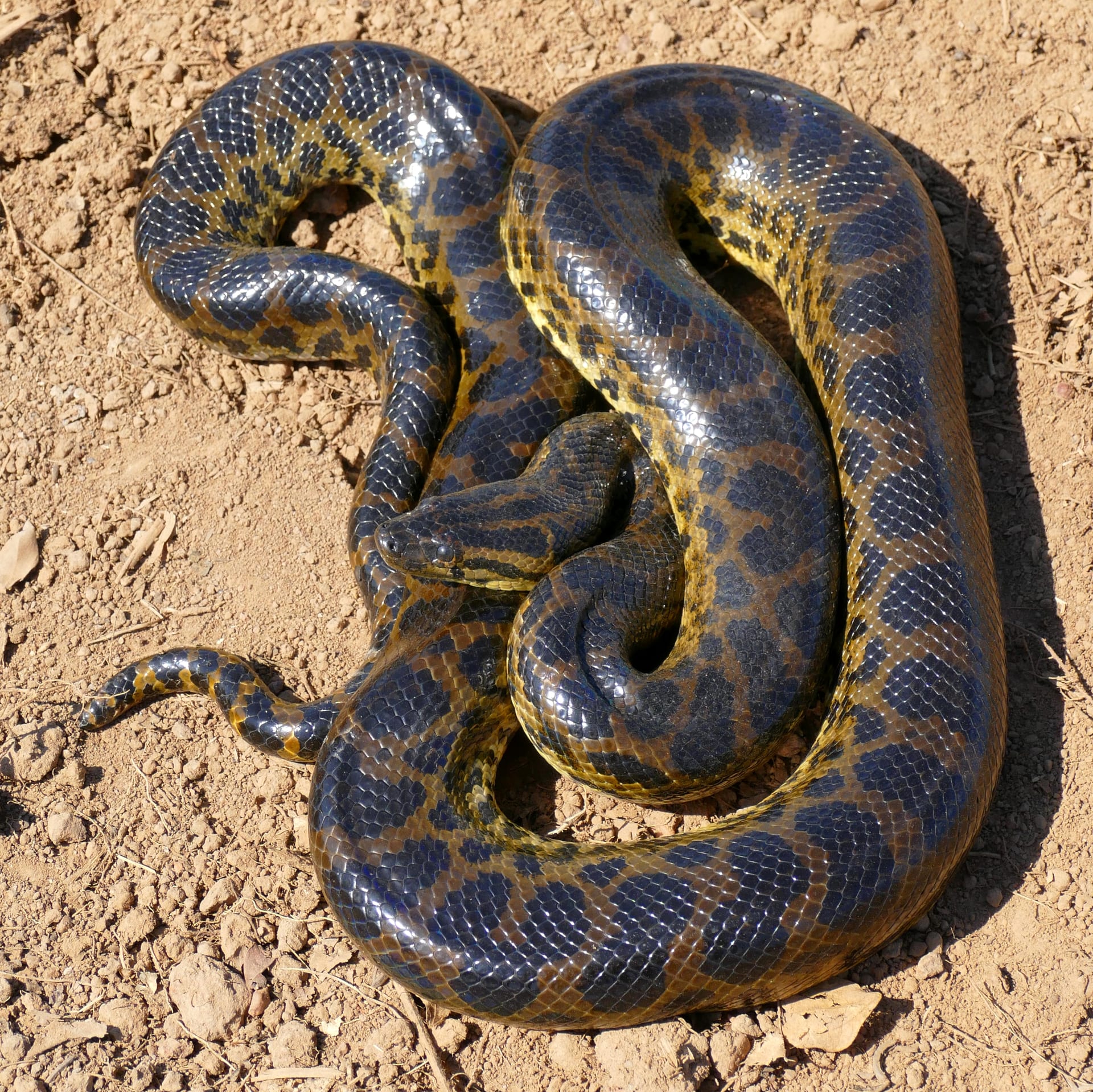
A large semi-aquatic boa endemic to the Paraguay River basin. Black saddles and blotches mark a yellow to golden-tan ground colour, and adults average 3.7 m. It is smaller than the green anaconda but still one of the world's largest snakes.
Difficulty
Advanced
Temperature
26〜33℃
Lifespan
15-20 years
Size
Average 3.7m, females up to 4.6m
Humidity
60〜70%
Diet
Thawed frozen rats and rabbits
About
Eunectes notaeus is a boid endemic to the drainage of the Paraguay River and its tributaries in southern South America. Adults average 3.7 m in total length, with females larger than males and recorded to 4.6 m. Black or dark brown saddles, blotches and streaks overlay a yellow, golden-tan or greenish-yellow ground colour. It is semi-aquatic, favouring swamps, marshes and the brush-covered banks of slow-moving rivers and streams, and kills prey by constriction. Though smaller than the green anaconda, an adult is powerful, and keeping one demands a large land and water area, reliable heating, and the experience and extra hands to handle it safely.
Source: Wikipedia (CC BY-SA 4.0)
Lifespan of the Yellow Anaconda
The Yellow Anaconda lives 15-20 years.
Size of the Yellow Anaconda
The Yellow Anaconda grows to Average 3.7m, females up to 4.6m.
They commonly weigh 25 to 35 kg, although specimens over 55 kg have been observed.
Temperature & humidity for the Yellow Anaconda
The ideal temperature for the Yellow Anaconda is 26〜33℃. Ideal humidity is 60〜70%.
Basic Info
Origin
The Paraguay River drainage of southern South America, from the Pantanal of Bolivia, Paraguay and western Brazil to north-eastern Argentina and northern Uruguay, in swamps, marshes and brushy banks of slow rivers
Care Specifications
Semi-aggressiveSolitaryBreeding: Hard
Sources: Reptiles Magazine: Yellow Anaconda Care Sheet / Wikipedia (English) / Reptile Database
References & Sources
Edited & verified by: BreederDirect editorial team
The taxonomic, regulatory, and husbandry data on this page are compiled and verified against the authoritative primary sources below.
Taxonomy & Authority
Accepted name: Eunectes notaeus Cope, 1862
Synonyms: Eunectes wieningeri Steindachner, 1903, Epicrates wieningeri Steindachner, 1903
Authority databases: GBIF · Reptile Database
Nomenclature follows global taxonomic authority databases.
Regulations & Conservation Status
CITES Appendix IIIUCN LC · Least Concern
Listed on Appendix II as Boidae spp. since March 7, 1978 (Species+). As it is listed on Appendix II, no international endangered species certificate is required. Of the Anaconda genus, only the Giant Anaconda (Eunectes murinus) is designated as a specified animal under the Animal Welfare and Management Law Enforcement Decree, and this species does not apply.
Sources: CITES Appendices (Boidae spp., Appendix II, effective 7 March 1978) / IUCN Red List / Order for Enforcement of the Act on Welfare and Management of Animals, Appended Table
Regulations may change. Always verify the latest information with the relevant authorities.
Yellow Anaconda Listings
Loading latest listingsFind listings for this species