Breeding Guide for Chinese Water Dragons (Physignathus cocincinus) | Nesting Substrate, Egg Management, and Hatching
A comprehensive guide to breeding Chinese Water Dragons (Physignathus cocincinus). Learn how to confirm sexual maturity, perform cooling procedures and set temperature parameters, observe mating behavior, prepare nesting substrates (depth and humidity), manage artificial egg incubation (28–30°C), feed hatchlings, and guide them through their first stages of growth.
Key Takeaways
A comprehensive guide to breeding Chinese Water Dragons (Physignathus cocincinus). Learn how to confirm sexual maturity, perform cooling procedures and set temperature parameters, observe mating behavior, prepare nesting substrates (depth and humidity), manage artificial egg incubation (28–30°C), feed hatchlings, and guide them through their first stages of growth.
Related Species
Before Attempting to Breed Chinese Water Dragons
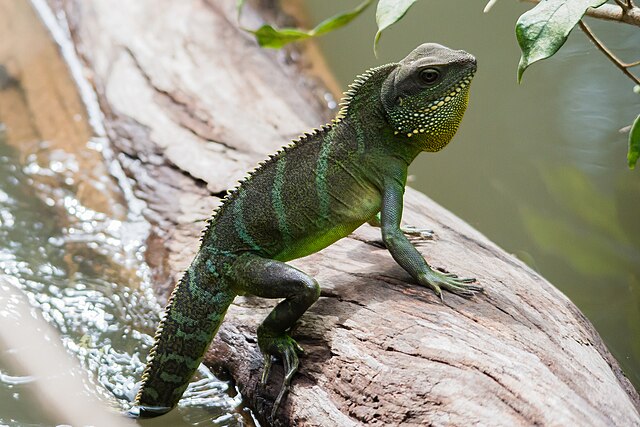
The Chinese Water Dragon (scientific name: Physignathus cocincinus, Japanese name: Water Lizard) is a beautiful agamid lizard native to Southeast Asia. Adult males display vibrant emerald-green coloration with a prominent crest along their back and reach 60–90 cm in length, making them a popular choice for intermediate keepers.
While basic husbandry methods are well-established, successful breeding requires far more preparation and knowledge than general care. This guide focuses specifically on breeding-related topics: confirming sexual maturity, cooling procedures, mating, nesting substrate setup, egg management, hatching, and hatchling care—presented systematically from start to finish.
Conditions for Breeding-Ready Individuals
Sexual Maturity Age and Body Size
| Sex | Breeding Age | Body Length Guide |
|---|---|---|
| Male | 18–24 months and older | 55 cm or larger (snout-to-vent: 25 cm or larger) |
| Female | 18–24 months and older | 50 cm or larger (200 g or heavier is ideal) |
Breeding with immature or underweight females carries an extremely high risk of egg binding (egg retention). It is particularly important to wait until females have developed sufficient body mass to properly accumulate calcium before breeding.
Health Status Confirmation
Before breeding, verify the following:
- Appropriate body weight: No protruding bones or sunken abdomen
- Freedom from parasites: Fecal examination (by veterinarian) shows no roundworms, flagellates, or other infections
- No metabolic bone disease (MBD): No deformities in jaw or limbs, no tremors
- Normal appetite: Feeding normally up to the breeding season
Sexual Dimorphism
Chinese Water Dragons are among the easier reptiles to sex.
| Feature | Male | Female |
|---|---|---|
| Head size | Larger, with expanded gular folds | Relatively smaller and more streamlined |
| Dorsal crest | Tall, extending from head to back | Lower profile |
| Body coloration | Throat becomes vibrant orange-yellow during breeding season | Pale green to white |
| Femoral pores (inner thigh) | Prominent and well-developed | Inconspicuous |
| Swelling behind cloaca | Two hemipenal bulges visible | No bulging |
The most reliable method of sexing is inspecting for hemipenal bulges. If you observe two hemispherical swellings at the base of the tail (just behind the cloaca), the individual is male.
Breeding Season and Cooling
Natural Breeding Cycle in the Wild
In nature, Chinese Water Dragons breed during the dry season (approximately October–February) and lay eggs as the rainy season begins (March–June). In captivity, we artificially recreate this seasonal variation through "cooling" (temperature reduction) and "photoperiod" (day-length) manipulation.
Cooling Procedure
Cooling is a technique in which slightly lower water and ambient temperatures are applied over winter to trigger breeding behavior.
Start timing: October–November (autumn in temperate regions)
Procedure:
- Gradually reduce feeding (mid-October through October)
- Daily feeding → Every 3 days → Once weekly → Complete cessation
- Allow food remaining in the digestive tract to pass before cooling begins
- Lower temperature in stages (November–January)
- Basking spot: 30–32°C → 22–25°C
- Ambient temperature: 25–27°C → 18–22°C
- Do not drop below 15°C (immune function declines dangerously)
- Shorten photoperiod
- Normal: 12–14 hours → Cooling period: 8–10 hours
- Maintain water access
- Even at lower temperatures, drinking and water soaking are essential. Keep water temperature at 15°C or above
- Cooling duration: 8–12 weeks (2–3 months)
Cooling Completion (Warming Up)
From February–March onward, gradually restore temperature and photoperiod.
- Increase temperature gradually over 1–2 weeks
- Resume feeding simultaneously, offering high-protein and high-calcium diets generously
- During this period, male courtship behaviors (head-bobbing, color changes) become apparent
Mating and Pre-Egg-Laying Behavior
Courtship Display
Once warming is complete, males exhibit the following courtship behaviors:
- Head-bobbing: Rapid up-and-down head movement to assert presence
- Color change: The throat area turns vibrant orange-yellow
- Female pursuit: Males attempt to stay close to females within the enclosure
Copulation
The male approaches the female and bites the neck while mating. If the female rejects him, she flees vigorously; if she accepts, she remains still.
- Copulation duration: Several minutes to approximately 30 minutes
- Multiple copulations often occur
- If the female appears severely bitten, temporarily separate the pair
Signs of Female Pregnancy
Two to four weeks after copulation, signs of pregnancy (egg development) appear in the female:
- Obvious abdominal swelling and increased weight
- Increased appetite (decreasing 2–3 weeks before laying)
- Restless nesting behavior seeking suitable laying sites
- Weight gain (females may be 25–40% heavier before laying compared to after)
Nesting Substrate Setup
A nesting substrate is a moist soil area into which the female can dig to deposit eggs. Without proper nesting substrate, females cannot find appropriate laying sites and face a high risk of egg binding.
Nesting Substrate Size
- Minimum dimensions: 40 cm × 30 cm × 30 cm (depth is critical)
- Recommended dimensions: 60 cm × 40 cm × 40 cm or larger (deeper substrates improve laying success)
Nesting Substrate Composition
A mixture of vermiculite and soil is most standard.
- Mixing ratio: 50% vermiculite + 50% fine red volcanic soil or coconut fiber
- Moisture level: Should clump when squeezed but crumble when touched with a finger (consistency of a sand castle after hand-washing)
- Excess moisture: Increases egg rot
- Insufficient moisture: Eggs desiccate and die; females cannot dig and may abandon laying
Nesting Substrate Placement
- Position near the basking spot or on the warm side of the enclosure
- Females prefer dimly lit, enclosed-feeling spaces (placing opaque cloth over the substrate box increases comfort)
Egg Management
Post-Laying Female Care
Females are severely depleted after egg-laying.
- Move the female back to the basking area immediately after laying
- Provide high-protein, high-calcium diets in increased amounts for 2–4 weeks until body weight recovers
- Administer calcium supplements (with D3) at every feeding
- Increase misting to enhance hydration
Checking for egg binding: If the female's abdomen remains swollen after laying or she loses appetite, egg retention (unshelled eggs remaining inside) may be present. Consider consulting a reptile veterinarian.
Egg Management (Artificial Incubation)
Egg Collection
Collect eggs immediately after laying.
- Carefully excavate the nesting substrate and locate the eggs
- Mark the upper surface with a small marker to ensure orientation is never reversed during handling
- Fertilized eggs appear chalky white and uniform; unfertilized eggs are yellowish and often shriveled
- Typical clutch size: 5–15 eggs
Incubator Preparation
| Parameter | Recommended Value |
|---|---|
| Incubation temperature | 28–30°C (±0.5°C precision is ideal) |
| Humidity | 80–90% (managed via incubation substrate) |
| Incubation duration | 60–80 days |
Incubation substrate preparation:
- Mix vermiculite and water in a 1:1 weight ratio
- Spread 3–4 cm in a plastic container
- Embed eggs approximately halfway (do not completely bury)
- Loosely seal the lid to allow air exchange
Incubation Considerations
- Temperature fluctuations are lethal: Use a reliable incubator with backup power during outages
- Fungal growth management: Carefully remove any visibly moldy eggs
- Candling (egg inspection): Shine a flashlight through eggs to confirm fertility; visible blood vessels after 2–3 weeks indicate a fertile egg
- Remove infertile/dead eggs: Discard yellowing or shriveled eggs
Hatching and Hatchling (Baby) Care
Pre-Hatching Signs
Shortly before hatching (around day 70 of incubation):
- Water droplets form on the egg surface (sweating)
- Eggs shrivel and develop a wavy appearance (dimpling)
- Eggs develop a slit or crack from the hatchling's egg tooth
Post-Hatching Care (First 24–48 Hours)
Newborn hatchlings are still absorbing the yolk sac and should not be fed immediately.
- Gently remove hatchlings from the incubation container
- Transfer to a small, humidity-controlled enclosure (25–30°C)
- Attempt first feeding 48–72 hours after hatching
Hatchling Enclosure Setup
| Parameter | Recommended Value |
|---|---|
| Enclosure size | 30–45 cm (individual housing) |
| Basking temperature | 38–42°C (localized) |
| Ambient temperature | 27–30°C |
| Nighttime temperature | 22–24°C |
| Humidity | 70–80% |
Hatchling Feeding
| Age | Primary Foods | Frequency |
|---|---|---|
| 0–1 month | 1–2 week-old crickets (small), fruit flies | Daily |
| 1–3 months | 2–3 week-old crickets, small worms | Daily to every 2 days |
| 3–6 months | Medium crickets, dubia roaches (small) | Every 2 days |
| 6 months and older | Adult crickets, dubia roaches, vegetables (gradually introduce greens like kale) | Every 3 days |
Dust all feedings with calcium supplement powder (D3-fortified). Metabolic bone disease (MBD) is common and fatal in hatchlings, making calcium management critically important.
Summary: Keys to Breeding Success
While Chinese Water Dragon breeding is challenging, adhering to the following points significantly improves success rates:
- Select healthy, sexually mature individuals and have a fecal examination performed before breeding
- Execute cooling reliably to trigger mating behavior
- Prepare nesting substrate with adequate depth and moisture to prevent egg binding
- Maintain stable incubation temperatures at 28–30°C to maximize hatch rates
- Dust hatchling feeders with calcium every time without exception
Successfully raising Chinese Water Dragon hatchlings is one of the greatest rewards of reptile keeping. We encourage you to give it a try.